Imagine catching a fish that can breathe air, survive on land for days, and threaten entire ecosystems. That is exactly why the northern snakehead fish has become a growing concern across the United States. This invasive predator, often called the “Frankenfish,” has now been spotted in New York for the first time.
Wildlife officials are warning anglers to take immediate action if they catch one. In this article, you’ll learn why the northern snakehead fish is dangerous, how it spreads, what makes it unique, and what officials are doing to stop it from becoming established in new waterways.
The first New York sighting raises concerns
The northern snakehead fish was first detected in United States waters in 2002. Since then, the invasive species has spread across much of the Mid-Atlantic and Eastern United States, creating concerns among wildlife officials and conservation groups.
The latest discovery occurred at Lily Pond in Suffolk County on Long Island. A fisherman caught one of the unusual predators, marking the first reported sighting in New York. The discovery prompted the New York Department of Environmental Conservation to increase its efforts to prevent the species from becoming established in the state.
Why the northern snakehead is a threat
The northern snakehead is a predatory fish native to Asia. It has earned a reputation for aggressive hunting behavior and for outcompeting native species for food and habitat. Wildlife experts worry that its presence could disrupt natural ecosystems.
According to officials, the fish has no natural predators in many of the areas where it has been introduced. It feeds on fish, frogs, crayfish, and other aquatic animals. Because it consumes a wide variety of prey, it can significantly affect native fish populations and alter the balance of aquatic environments.
Unique abilities help it survive
One of the most unusual features of the northern snakehead is its ability to breathe air. As long as its skin remains moist, the fish can survive out of water for several days. This ability allows it to move between bodies of water under suitable conditions.
Simply leaving a captured snakehead on shore may not be enough to kill it. Because of its remarkable survival skills, officials are advising anglers to take stronger measures if they catch one. The fish’s ability to live both in and out of water has made controlling its spread much more challenging.
Rapid reproduction fuels its expansion
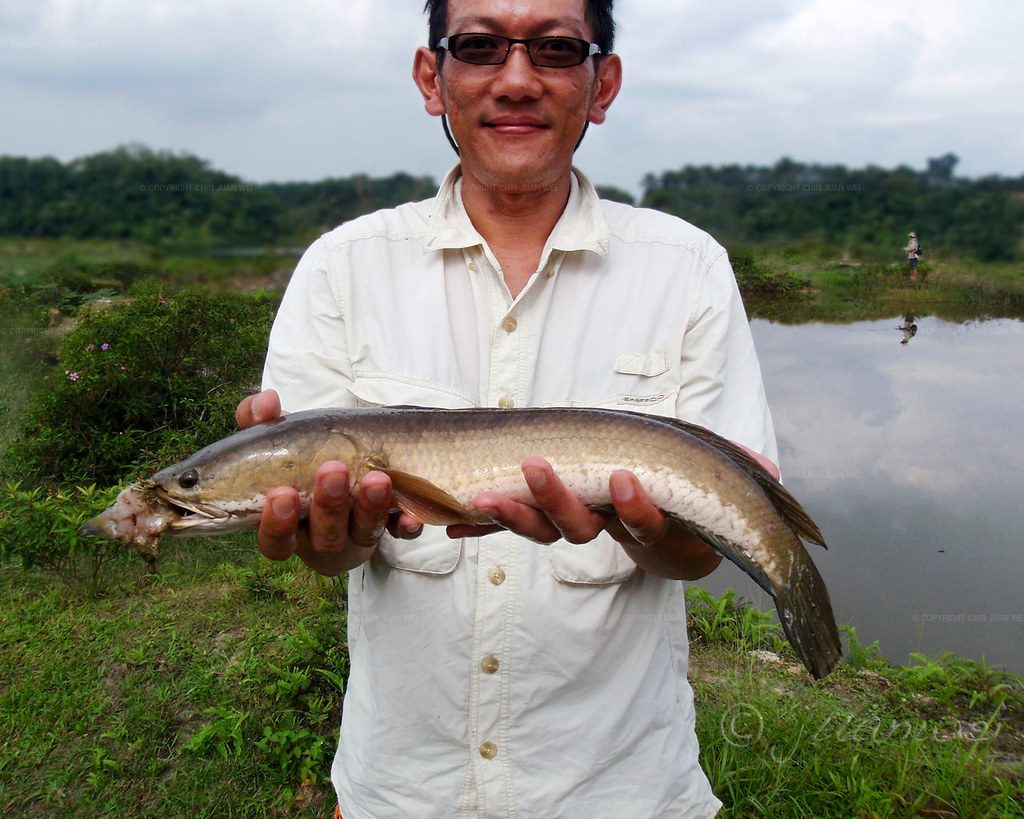
The northern snakehead can reproduce at an alarming rate. Females are capable of laying up to 15,000 eggs at one time and may spawn as many as five times in a single year. The eggs hatch within only a few days.
This rapid reproductive cycle allows populations to grow quickly once the species becomes established. As more fish hatch and mature, they can spread through connected waterways, adding additional pressure on native species that already compete for limited resources.
Identifying the invasive predator
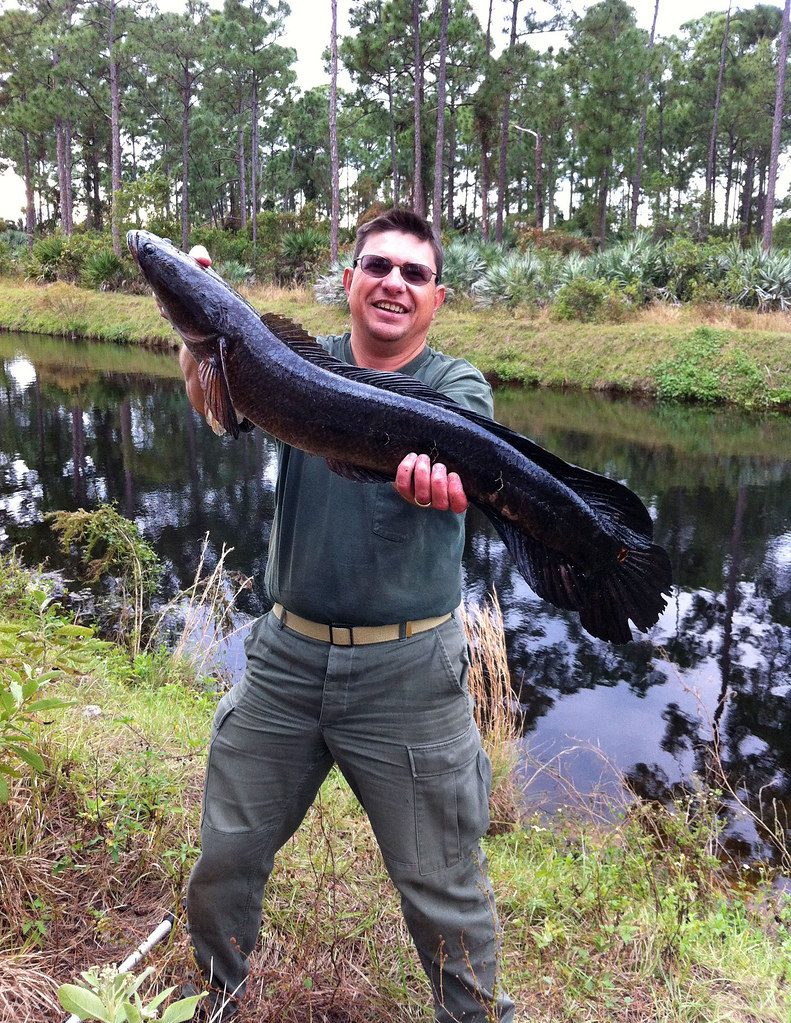
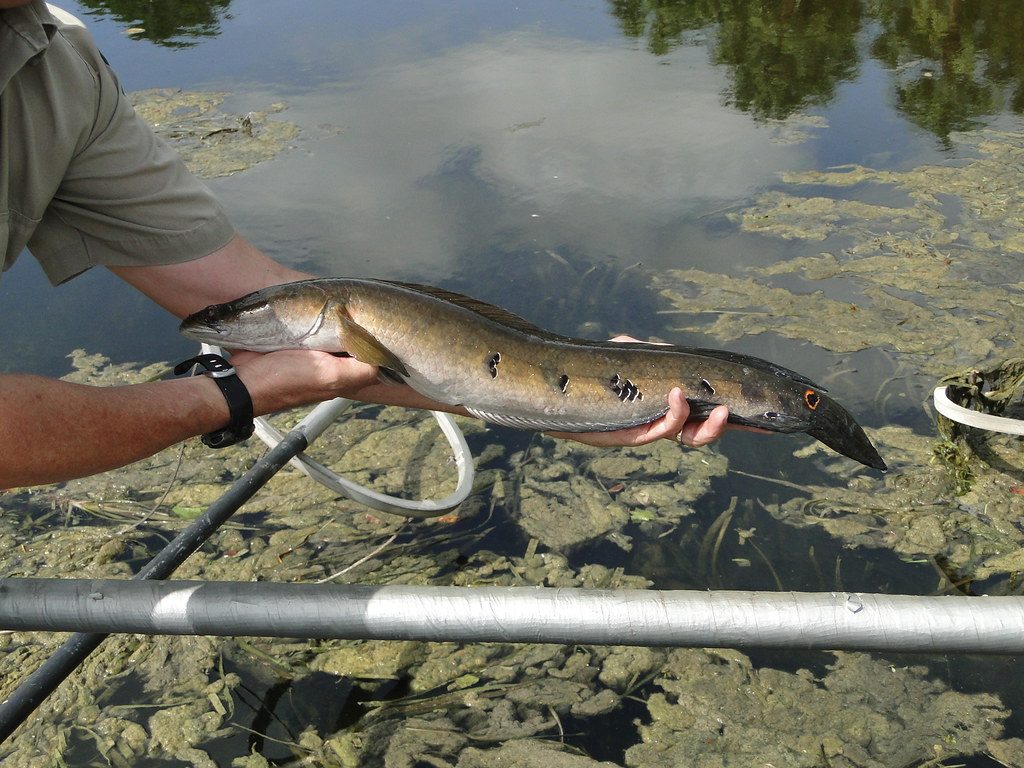
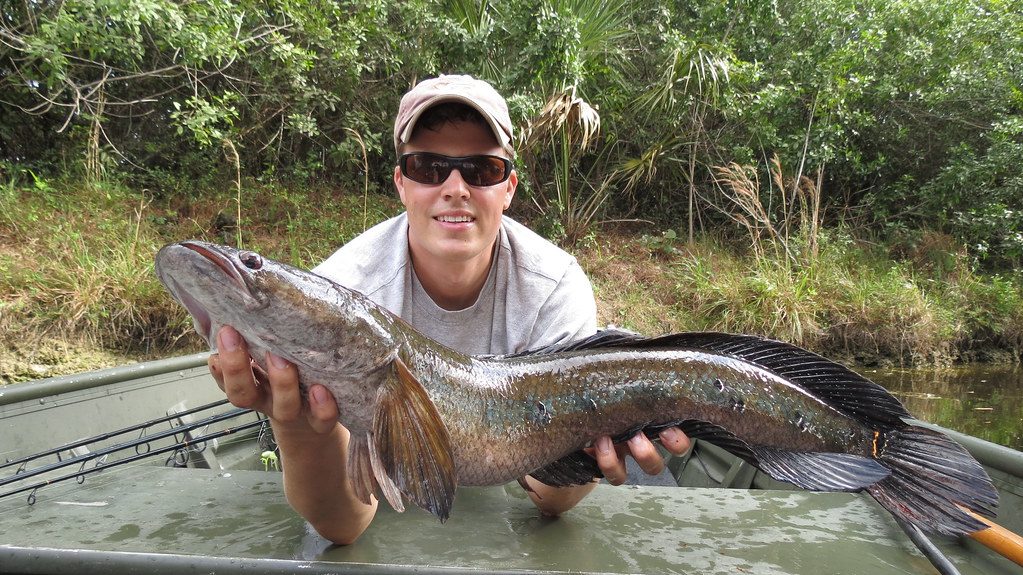
The northern snakehead has a distinctive appearance that makes it easier to recognize. It has a long, slender body and an extended dorsal fin that runs along much of its back. Its brown, mottled pattern resembles a boa constrictor’s markings.
Fully grown adults can reach about three feet in length. The fish is commonly found in freshwater ponds, wetlands, rivers, and slow-moving streams, especially in areas with stagnant water. Its snake-like appearance is one reason it earned the nickname “Frankenfish.”
Research offers clues for future control
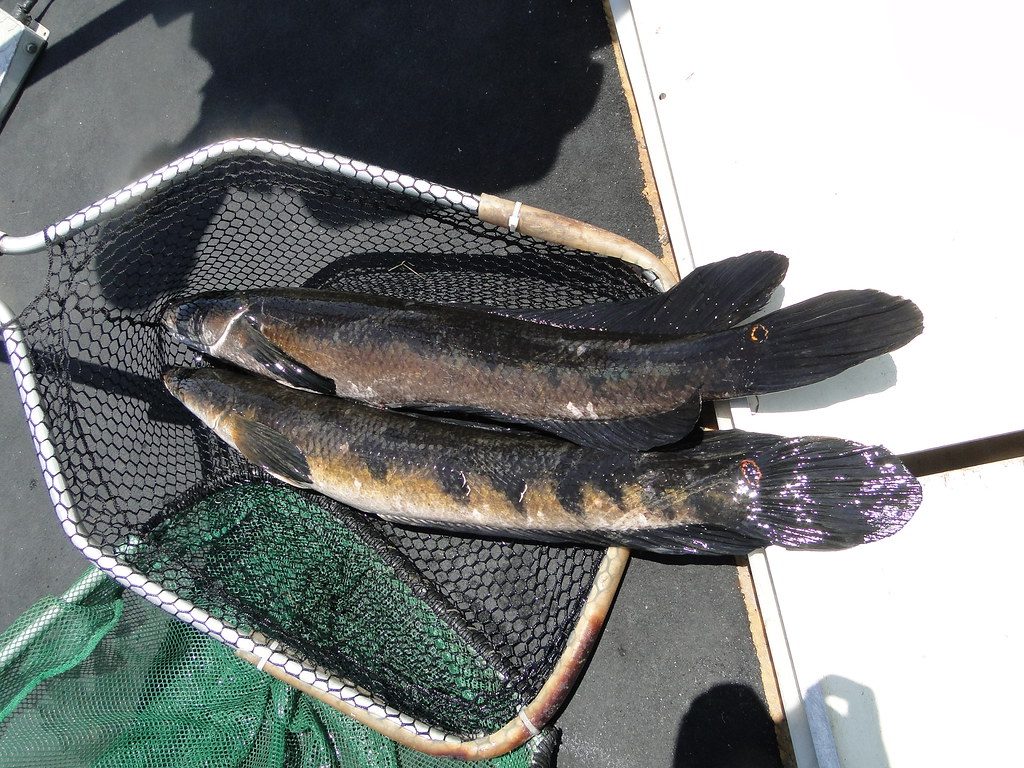
Scientists have been studying why northern snakeheads leave the water. In one experiment, researchers tested fish collected in Maryland under different environmental conditions, including warmer water, higher salinity, increased acidity, pollution, overcrowding, darkness, and low oxygen levels.
The fish tolerated most conditions surprisingly well. However, researchers found that highly acidic water, elevated salinity, and stagnant water rich in carbon dioxide often caused the fish to emerge from the water in search of better conditions. Some remained on land for only seconds, while others stayed out of the water for as long as twenty minutes. Researchers believe these findings may help officials better predict movements and develop strategies to contain the species.
Leave a Reply