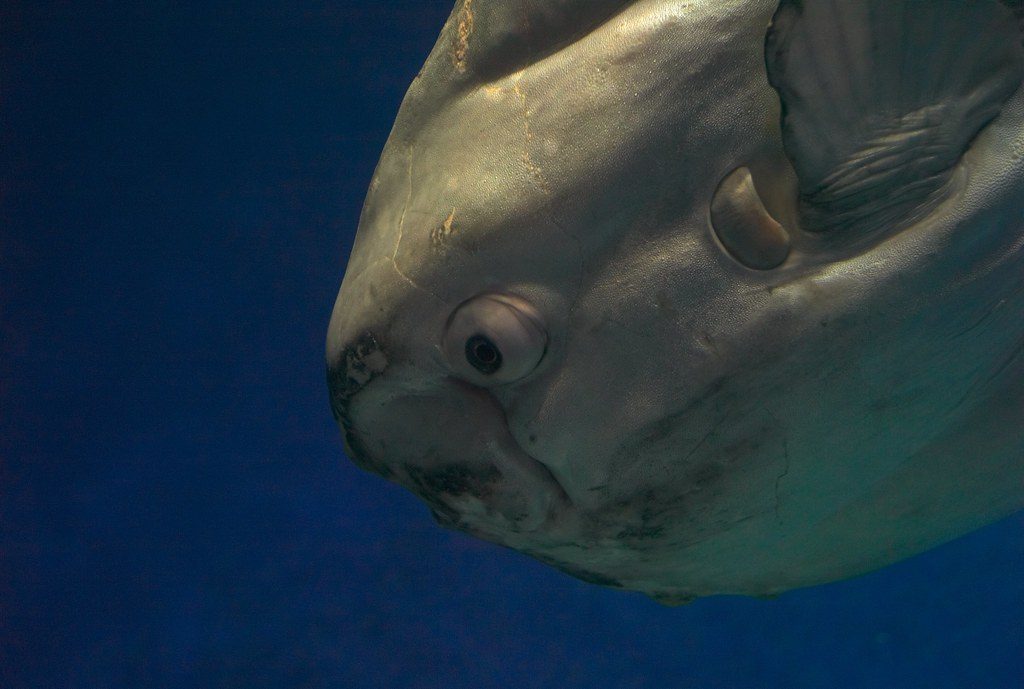
At first glance, the ocean sunfish looks like an evolutionary mistake. It has no true tail, lacks the powerful side muscles that most fish use for swimming, and looks as if someone forgot to finish building it. Yet this strange animal is one of the greatest success stories in the ocean. The ocean sunfish, also known as the mola, is the heaviest bony fish on Earth and can weigh as much as a small SUV.
Instead of following the blueprint used by most fish, it evolved a completely different body design. That unusual shape allows it to travel vast distances, feed on prey that other animals often ignore, and thrive in oceans around the world. Understanding the ocean sunfish reveals how evolution sometimes succeeds not by improving an existing design but by creating an entirely new one.
The fish that looks unfinished
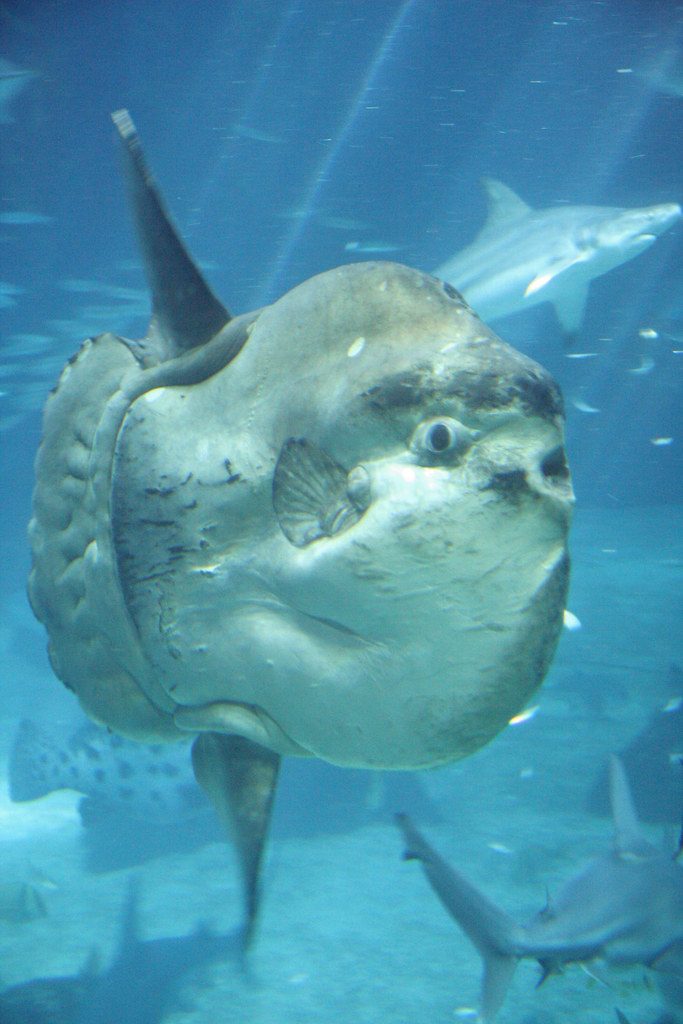
Most fish have a long body, a strong tail, and muscles that run along their sides to power swimming. The ocean sunfish breaks nearly all of these rules. Its body ends abruptly in a structure called a clavus rather than a traditional tail. The clavus acts like a rudder, helping the fish steer through the water instead of providing propulsion. Scientists believe this unusual structure developed when the tail folded into the body during the species’ evolution. The result is a fish that looks more like a giant swimming head than a typical fish.
Its appearance has confused people for centuries. The body is flattened from side to side and can grow nearly as tall as it is long when the dorsal and anal fins are fully extended. While the shape may seem awkward, it is not a defect. Every part of the sunfish’s body has been shaped by millions of years of evolution. What appears strange to humans is actually a highly specialized design that works remarkably well in the open ocean.
Why the sunfish gave up its tail
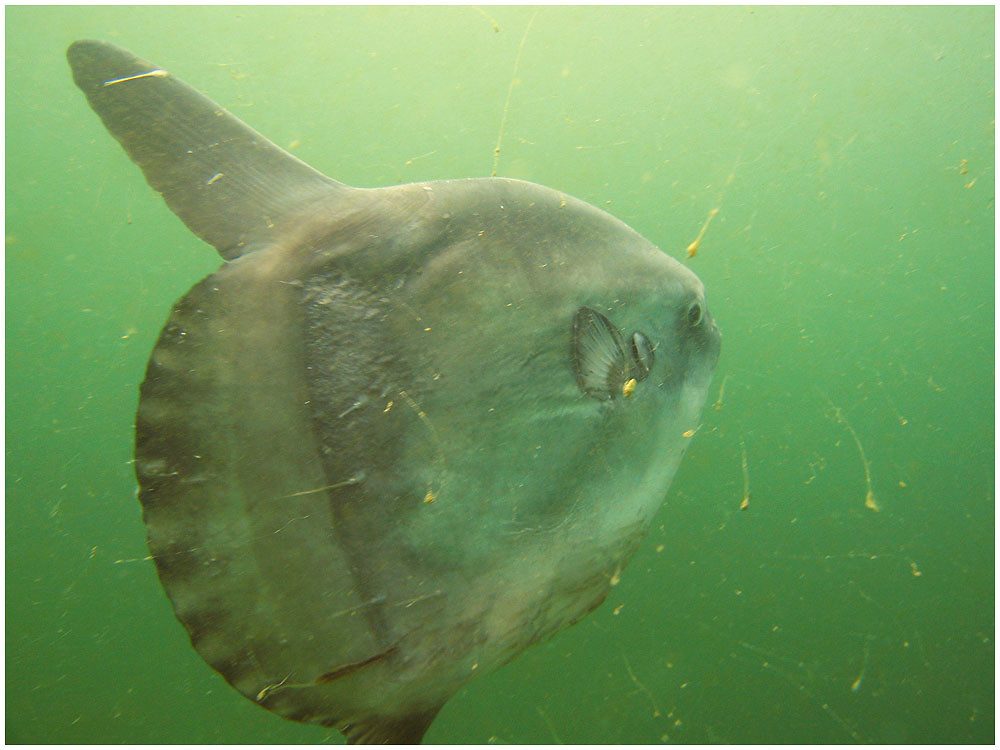
The loss of a true tail is one of the most remarkable features of the ocean sunfish. Most fish rely on side-to-side tail movements to generate thrust. The sunfish abandoned this system entirely. Instead of a caudal fin, it developed the clavus, a rigid structure that helps control direction while other body parts provide movement. This change allowed the species to evolve away from the standard fish blueprint.
Scientists studying sunfish anatomy have found that adult sunfish lack the large axial swimming muscles that power most fish. Without these muscles, the animal cannot swim using traditional tail beats. Rather than being a disadvantage, this shift allowed the fish to build a completely different locomotion system. Evolution effectively redesigned how the animal moves through the water, proving that there is more than one way to be a successful fish.
A new way to swim through the ocean
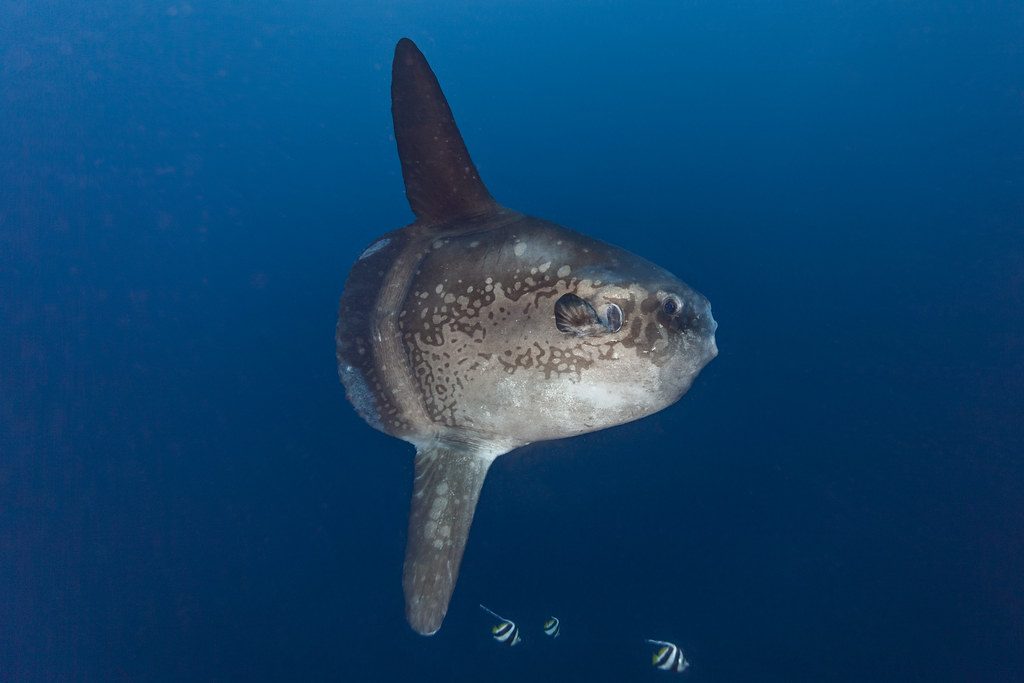
Instead of moving its body from side to side, the ocean sunfish propels itself by flapping its enormous dorsal and anal fins. These fins move in a synchronized motion, acting almost like wings. The fish glides through the water using lift-based propulsion, a swimming method rarely seen on such a large scale among fish. Researchers have compared the movement to underwater flight.
To many observers, the sunfish appears slow and clumsy. In reality, it is capable of efficient long-distance travel. Studies have shown that sunfish can maintain steady movement across large areas of the ocean. Young sunfish are especially active predators and can achieve cruising speeds comparable to much faster-looking fish. Their unusual swimming style demonstrates that appearance can be misleading in the animal kingdom.
How a giant fish became the heaviest bony fish on Earth
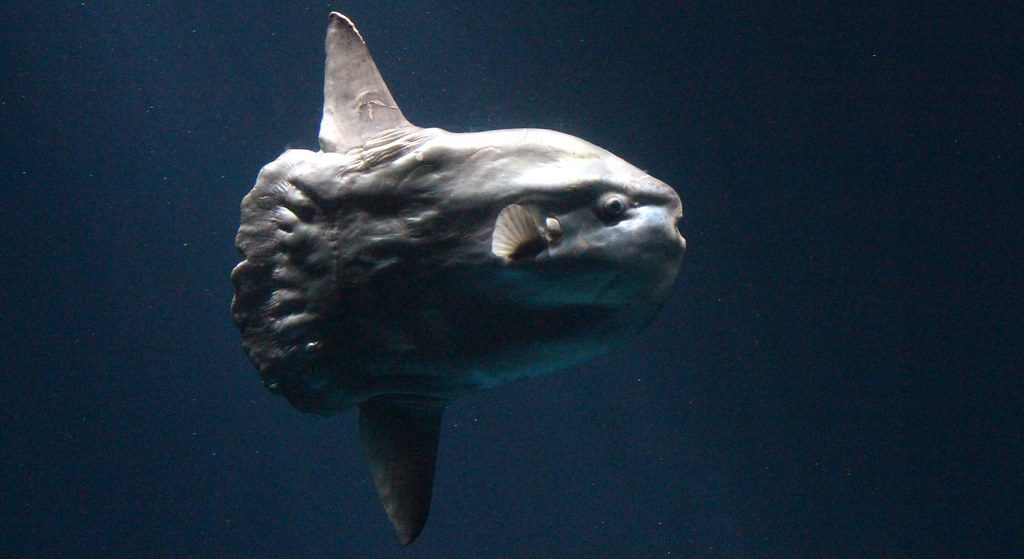
The ocean sunfish is famous for its incredible size. Adult individuals commonly weigh around 2,200 pounds, while the largest specimens can exceed 4,000 pounds. Closely related sunfish species have reached more than 5,000 pounds, making the family the heaviest group of bony fish on Earth. Unlike sharks, which have skeletons made of cartilage, sunfish belong to the group known as bony fish.
Growing this large offers several advantages. A massive body makes the fish less vulnerable to many predators and helps conserve energy during long migrations. The sunfish’s thick layer beneath the skin also contributes to buoyancy and movement. This layer helps support its enormous size while reducing the energy needed to remain stable in the water. Rather than being a burden, its giant body is a key part of its success.
Feeding on food that others ignore
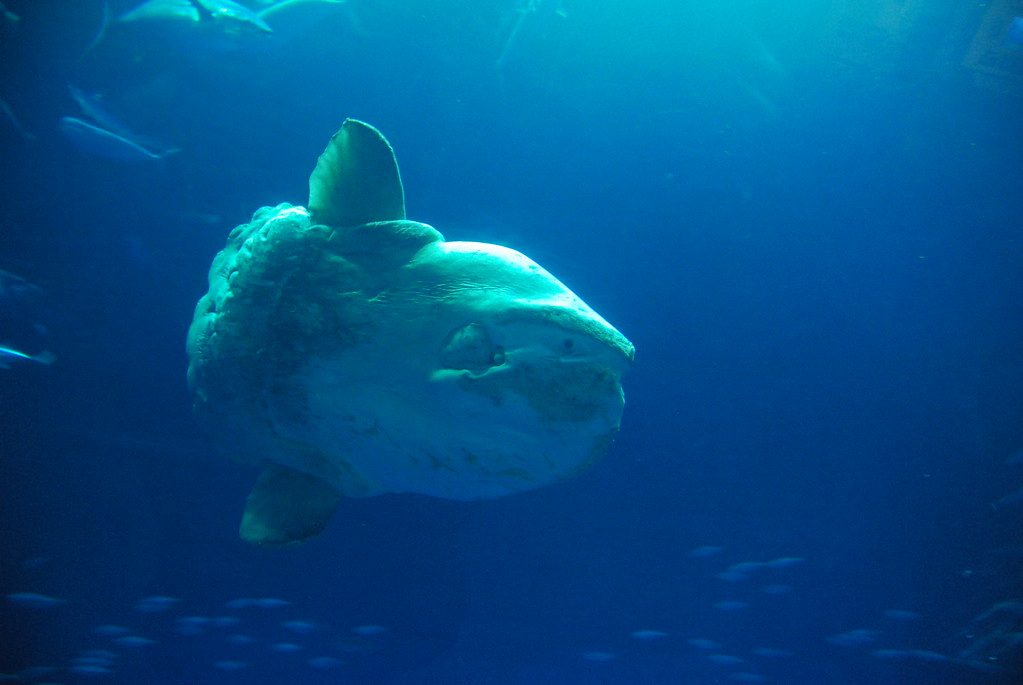
One reason the sunfish thrives is that it occupies a unique feeding niche. It often eats jellyfish and other soft-bodied animals that many predators overlook. While jellyfish may seem like poor food because they contain large amounts of water, the ocean is full of them. This gives the sunfish access to a food source that is widely available across vast areas.
Scientists now know that sunfish diets are more varied than once believed. They also consume squid, crustaceans, small fish, and other marine organisms. By taking advantage of different food sources, the fish can survive in changing ocean conditions. Its feeding strategy reduces competition with many other large predators and allows it to make use of resources that are abundant but often underused.
Why this unusual design works so well
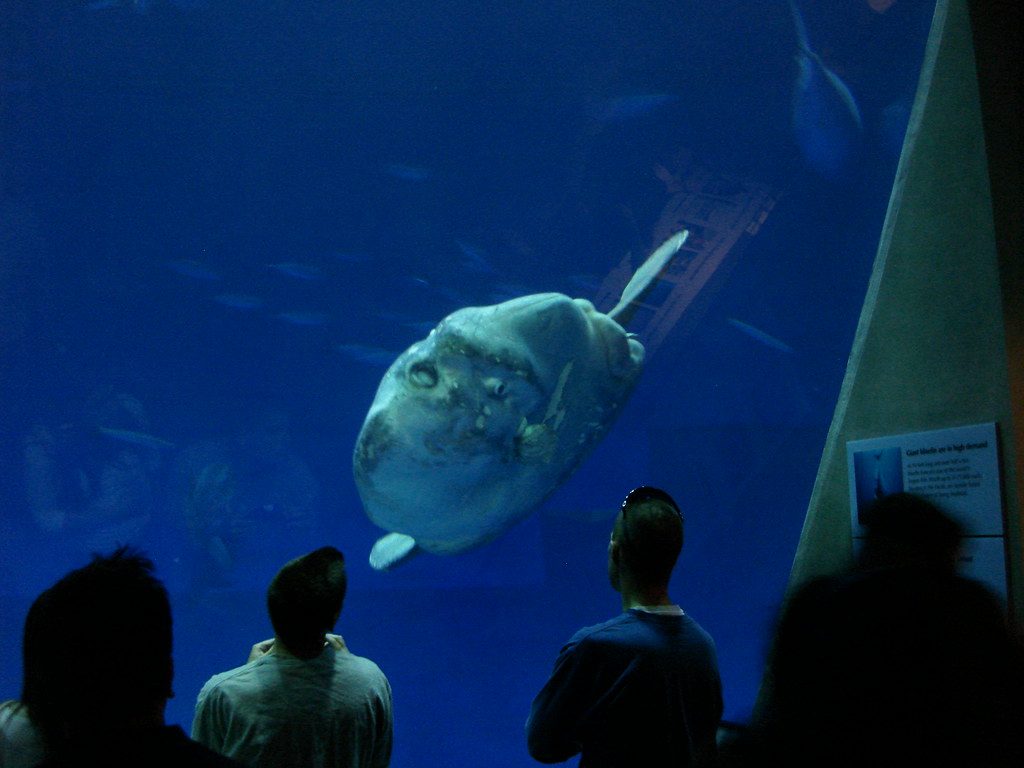
The ocean sunfish proves that evolution does not always move toward familiar designs. Instead of perfecting the traditional fish body, evolution created something radically different. The loss of the tail, the development of fin-powered swimming, and the ability to grow to enormous sizes combined to create an animal perfectly suited for life in the open ocean. What looks strange to humans is actually a highly specialized adaptation.
Its success can be measured by its global distribution. Ocean sunfish are found in temperate and tropical waters around the world. They travel across huge distances, survive in a variety of environments, and continue to thrive despite their unconventional appearance. Far from being an evolutionary mistake, the sunfish represents one of evolution’s boldest experiments, and one that clearly worked.
Leave a Reply