
Have you ever wondered what it means when an animal starts acting strangely in the wild? In some cases, unusual behavior is not random at all. It can be a sign that something important is happening nearby. That is exactly what happened when workers noticed a bald eagle acting in an unusual way and decided to investigate further.
In this article, you will learn how a bald eagle’s odd behavior led to a surprising discovery, what experts know about bald eagle habits, and why these powerful birds sometimes act in unexpected ways. You will also understand how wildlife workers safely respond when nature gives hidden clues. By the end, you will see how one eagle’s actions helped reveal something important in the natural world.
What made the bald eagle act strangely

Workers first noticed that the bald eagle was not behaving like a typical bird of prey. Instead of flying long distances to hunt or resting high in the treetops, it kept returning to the same spot again and again. It also became very protective of one area, diving toward anyone who came too close.
This kind of behavior caught attention because bald eagles are usually careful but predictable hunters. They normally spend their time near water, watching for fish and guarding their territory from a distance. When an eagle suddenly becomes overly focused on one location, it often signals that something important, like a nest or young chicks, may be nearby.
Why bald eagles show unusual behavior

Bald eagles are known for strong territorial instincts, especially during nesting season. When they are protecting eggs or eaglets, they can become extremely defensive. They may swoop down, call loudly, or repeatedly circle one area to warn others away.
Experts explain that this behavior is completely natural. Bald eagles often reuse the same nests for many years and continue adding new sticks and materials each season. Some of these nests can become massive over time, sometimes weighing hundreds or even thousands of pounds. Because of this, eagles will guard their nesting sites with great care, especially when young birds are present.
How workers noticed the pattern
Wildlife workers began paying closer attention after seeing the eagle return to the same location multiple times a day. They also observed that it reacted strongly to nearby movement, even from far away. This level of alertness suggested that the bird was protecting something valuable.
To understand the situation better, workers quietly monitored the area without disturbing the bird. They used safe observation methods, keeping a distance so the eagle would not feel threatened. Over time, they began to notice signs that confirmed their suspicions. The eagle was not acting randomly. It was guarding a hidden nest.
The surprising discovery in the area

After careful observation, workers eventually discovered what the eagle had been protecting. Hidden within a large tree near the water was a nest containing young eaglets. The nest had been carefully built and blended into the surroundings, making it difficult to spot at first glance.
Inside the nest were signs of active care, including fresh food remains and protective positioning by the adult eagle. This explained the bird’s strange behavior all along. It was not lost or confused. It was a parent doing everything possible to protect its young during a critical stage of development.
Why is this discovery important for wildlife experts

Findings like this help scientists and wildlife workers better understand bald eagle behavior in the wild. Bald eagles are powerful birds, but they are also sensitive during nesting periods. They depend on quiet, safe environments to raise their young successfully.
This discovery also highlights how human observation can help protect wildlife. By noticing unusual patterns instead of ignoring them, workers were able to confirm the presence of a nest without disturbing it. This allows conservation teams to monitor the area and ensure the eagles remain safe from human interference or environmental threats.
How bald eagle behavior helps protect their young
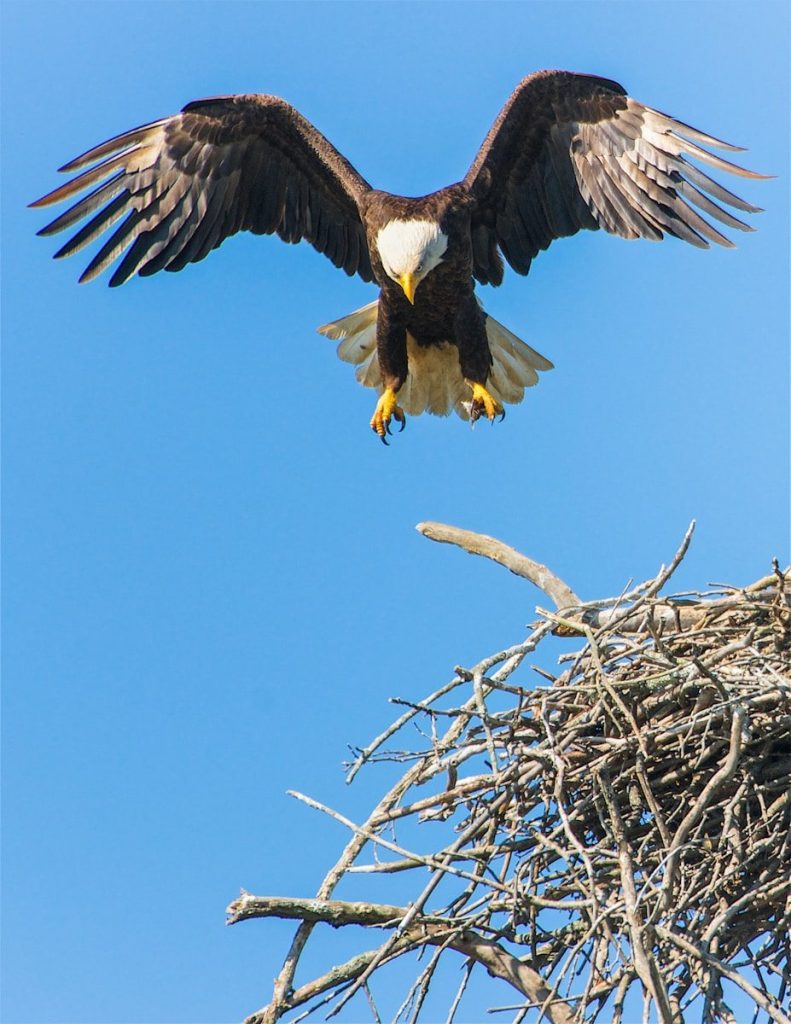
Bald eagles use a range of behaviors to keep their young safe. They may fly in wide circles above their territory or sit quietly in tall trees watching for danger. If they feel threatened, they can react quickly with strong defensive dives.
These behaviors are especially important because eaglets are vulnerable in their early weeks. They rely completely on their parents for food and protection. By staying alert and aggressive when needed, adult eagles increase the chances that their young will survive and grow strong enough to leave the nest.
Leave a Reply