
Have you ever wondered what the biggest scorpion in history looked like? Recent research has answered that question with the discovery of a giant prehistoric scorpion that lived long before dinosaurs appeared. Scientists now believe this animal, called Praearcturus gigas, may be the largest scorpion ever identified.
It lived around 415 million years ago in what is now England and Wales and reached a size that dwarfs modern scorpions. Still, there is some debate online about exactly how large it was. Different sources describe it as being as big as a dog, a Labrador, or just over 3 feet long. In this article, you will learn what scientists discovered, why experts are excited, how big the animal really was, and what its ancient world looked like.
Scientists finally solved a 150-year mystery

The fossils of this giant creature are not new. In fact, some of the fossil pieces were first found in the 1870s in parts of England and Wales. For more than a century, scientists argued about what kind of animal these remains belonged to. Early researchers thought the fossils came from a giant crustacean related to lobsters or sea bugs. Others believed they might belong to an ancient scorpion, but there was not enough evidence to be certain because the fossils were incomplete and lacked some of the features scientists expected to see.
That changed when researchers used modern imaging methods and compared the fossils with other ancient scorpions discovered in recent years. Their work showed that the fossils belong to a species called Praearcturus gigas. The findings were published in a scientific journal in 2026 and have been welcomed by many experts. The discovery is important because it confirms that giant scorpions evolved much earlier than scientists once believed. It also proves that some of the oldest predators on land grew to enormous sizes even before forests and large land animals existed.
How big was the giant scorpion really

One reason this discovery became popular online is because of the animal’s impressive size. Scientists estimate that Praearcturus gigas measured more than 3 feet, or around 1 meter, in length. Its pincers alone may have reached about 6 inches long. That makes it much larger than any scorpion alive today. The world’s largest living scorpions usually grow to less than a foot in length, meaning this prehistoric species was several times larger than its modern relatives.
However, there is some discussion about the exact size. Some news stories have called it “dog-sized” or “the size of a Labrador.” These descriptions are meant to help readers imagine the animal, but they can be misleading. Current scientific estimates place its length at roughly 3.3 feet. That is certainly enormous for a scorpion, but it is not the same size as a full-grown Labrador retriever in weight or height. Because the fossils are incomplete, scientists may refine these estimates in the future. For now, researchers agree on one important point: this was the largest scorpion species ever identified based on available evidence.
The ancient world it lived in looked very different

When Praearcturus gigas was alive, Earth looked nothing like it does today. The animal lived during the Early Devonian Period around 415 million years ago. At that time, there were no dinosaurs, no birds, and no mammals. Trees had not yet spread across the land, and forests as we know them did not exist. Most land plants were small and simple, creating open landscapes with few large living things.
Because there were so few large animals on land, this giant scorpion likely had little competition. Scientists think that helped it grow so large and become one of the top predators of its time. The floodplains and shallow waters where it lived would have been filled with smaller creatures, giving it many feeding opportunities. Its size alone would have made it an intimidating hunter in an environment where most other animals were tiny compared with it.
Was the giant scorpion a land animal or a water hunter
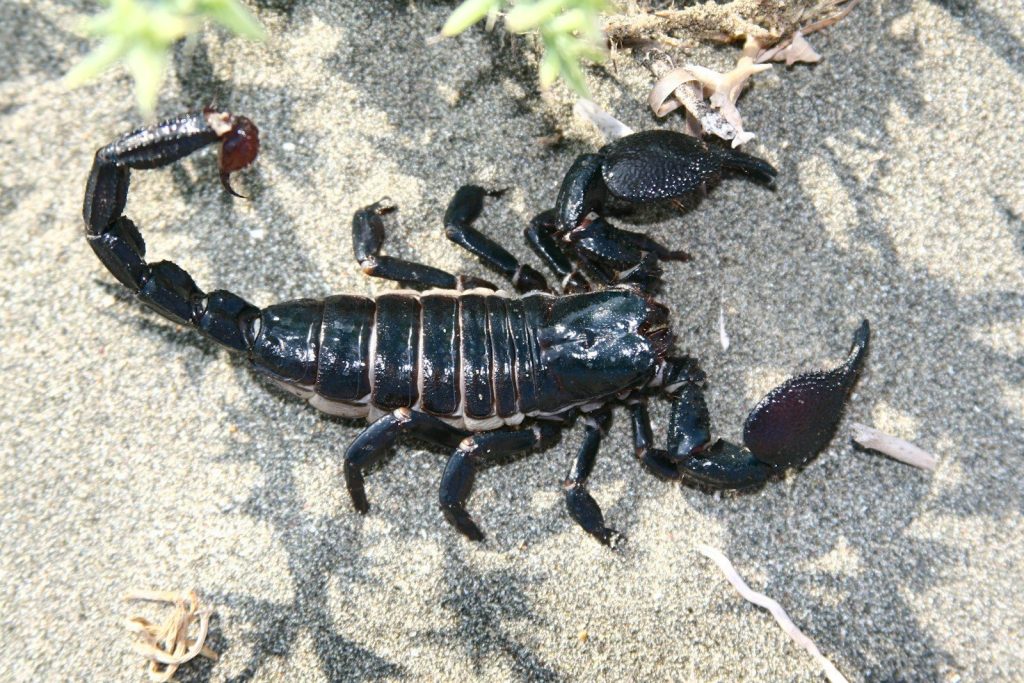
Researchers believe this giant scorpion probably spent time both on land and in water. This idea comes from special body structures found in the fossils. Some parts of its body have flap-like features called epimera. These are similar to structures seen in modern lobsters and crabs, which use them for support and protection. The presence of these features suggests that Praearcturus gigas may have been comfortable in shallow water environments.
Scientists think the animal could have hunted in rivers, lagoons, or flooded areas while also moving across land. If this is true, it would explain how such a large creature supported its weight. Water helps support heavy bodies, making movement easier for giant animals. Many prehistoric creatures that grew to extraordinary sizes spent at least part of their lives in aquatic habitats. This mixed lifestyle may have given the giant scorpion access to more food and helped it dominate its environment for millions of years.
What did the giant scorpion eat

Although scientists cannot observe its behavior directly, they can make educated guesses based on its body shape and the environment it lived in. The large pincers of Praearcturus gigas suggest it was an active predator that grabbed and held prey. Researchers think it probably fed on smaller arthropods, which are animals related to insects, spiders, and crabs. These creatures were common during the Devonian Period and would have been easy targets for a hunter of this size.
If the scorpion hunted in water as well, its menu may have been even larger. Scientists believe it could have preyed on small fish and other aquatic animals living in shallow waters. Its strong claws would have been useful for catching slippery prey or crushing hard shells. While there is no direct evidence showing exactly what it ate, experts agree that it was likely one of the most powerful predators in its ecosystem. Few animals of its time would have been able to challenge a creature of this size and strength.
Why this discovery matters to science

The discovery of Praearcturus gigas is exciting because it changes what scientists know about the history of life on Earth. Before this research, many experts believed giant arthropods appeared much later, during periods when forests covered the land and ecosystems were more developed. This giant scorpion lived at least 50 million years before famous giant creatures like huge millipedes and giant dragonfly relatives. Its existence shows that animals evolved large sizes much earlier than researchers expected.
The finding also highlights the value of museum collections. The fossils used in this study had been stored for more than 150 years. New technology allowed scientists to examine them in ways that were impossible in the past. This means other important discoveries may still be hidden in museum drawers around the world. As technology improves, researchers may uncover more ancient species that reshape our understanding of evolution and the history of life.
Leave a Reply