
A snake in the yard can be harmless, but some are not. In the United States, only a small number of native snakes are medically dangerous to people, yet those are the ones homeowners worry about most. The main risk is not that snakes “hunt” humans, but that someone steps too close, reaches into the brush, or surprises one hiding under debris.
The phrase snakes you never want to find in your yard usually means species that can deliver a serious venomous bite, especially around homes where kids and pets play. Most snakes avoid people and strike only when cornered, but a hidden snake in grass, wood piles, or flower beds can lead to a dangerous surprise. This guide covers six snakes in the U.S. that deserve extra caution and what makes each one a concern.
Eastern copperhead

The copperhead is one of the most common venomous snakes found near homes in the eastern United States. It often hides in leaf piles, under boards, and near rock edges, which makes suburban yards a common place for accidental encounters.
Its body has dark hourglass-shaped bands, and that pattern helps it blend almost perfectly into dry leaves. Because it stays still when frightened instead of fleeing, many bites happen when someone steps on it without seeing it first.
Eastern diamondback rattlesnake

The eastern diamondback is the largest venomous snake in North America. It lives mostly in the southeastern U.S. and can sometimes move through large rural yards, wooded lots, and overgrown property edges.
Its thick body and loud rattle make it easy to notice when it warns you, but that warning does not happen every time. Experts note that rattlesnakes may strike without rattling first, especially when startled at close range.
Timber rattlesnake

The timber rattlesnake lives in forests, rocky hills, and wooded neighborhoods across much of the eastern U.S. A yard that backs onto woods or stone walls can become part of its travel path, especially during warm months.
This species often lies quietly in sunlit spots like stone borders, old logs, or the edge of a shed. It can stay motionless for a long time, which means people may not notice it until they are only a few feet away.
Cottonmouth

The cottonmouth, also called the water moccasin, is a heavy-bodied venomous snake found mainly in the Southeast. It is strongly tied to ponds, drainage ditches, creeks, and marshy backyard areas, so homes near water see them more often.
When threatened, it may open its mouth to show the bright white inside, which gives it the name cottonmouth. People often confuse harmless water snakes with cottonmouths, so the safest rule is to keep a distance from any thick snake near water.
Coral snake

The coral snake looks very different from pit vipers because it has bright red, yellow, and black bands. It usually stays hidden in loose soil, mulch, and leaf litter, which means it may be in a yard without being noticed.
It is less commonly seen than many other venomous snakes, but its venom affects the nervous system. Bites are uncommon because coral snakes are shy, yet they still require immediate medical care.
Western diamondback rattlesnake

The western diamondback is common in parts of Texas, Arizona, New Mexico, and nearby states. It often enters yards in dry regions where rock landscaping, brush piles, and rodent activity create shelter and food.
This species is strong, defensive, and known for standing its ground when disturbed. It may coil near patios, garages, and under outdoor equipment, especially in places where mice are present.
Pygmy rattlesnake
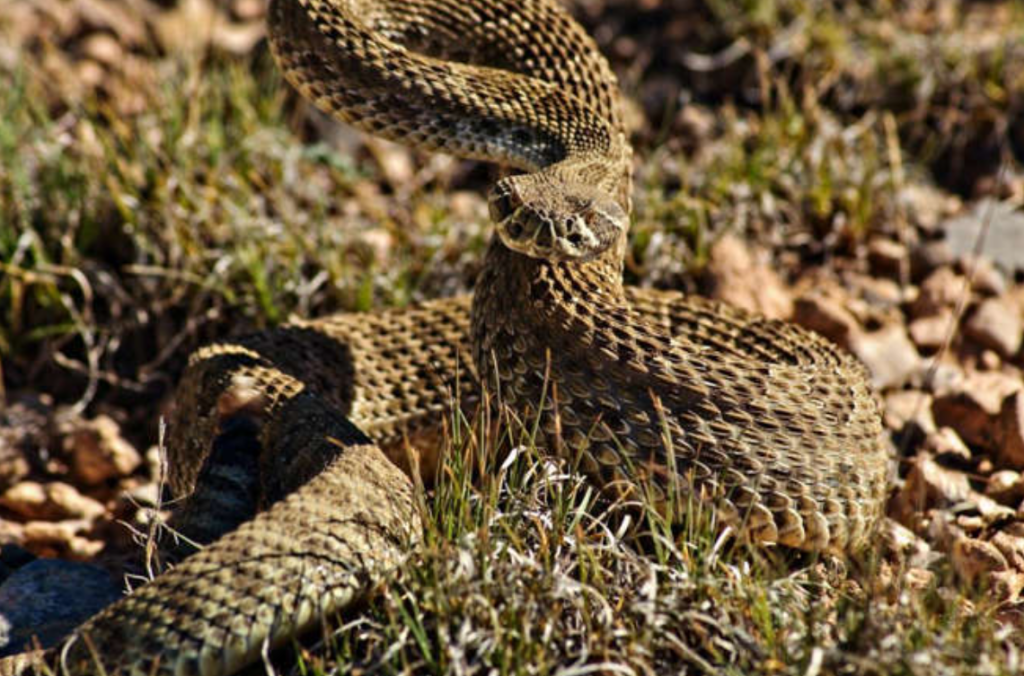
The pygmy rattlesnake is much smaller than most rattlesnakes, but it can still deliver a venomous bite. Its small size makes it especially easy to miss in grass, garden beds, and around low shrubs.
Many people do not hear its rattle because it is tiny and soft compared with larger rattlesnakes. That makes it one of the easier dangerous snakes to overlook while doing yard work.
Leave a Reply