
Have you ever wondered what makes a shark a shark? It sounds like a simple question, but scientists still debate the answer. For more than a century, researchers have studied shark bodies, fossils, and DNA, yet there is still no single definition that everyone accepts.
This debate matters because sharks are among the oldest animals on Earth, and understanding what they are helps scientists learn how life evolved in the oceans. In this article, you will discover why defining sharks is harder than it seems, how their relatives complicate the picture, and why new discoveries keep changing what scientists think.
Sharks seem easy to recognize at first
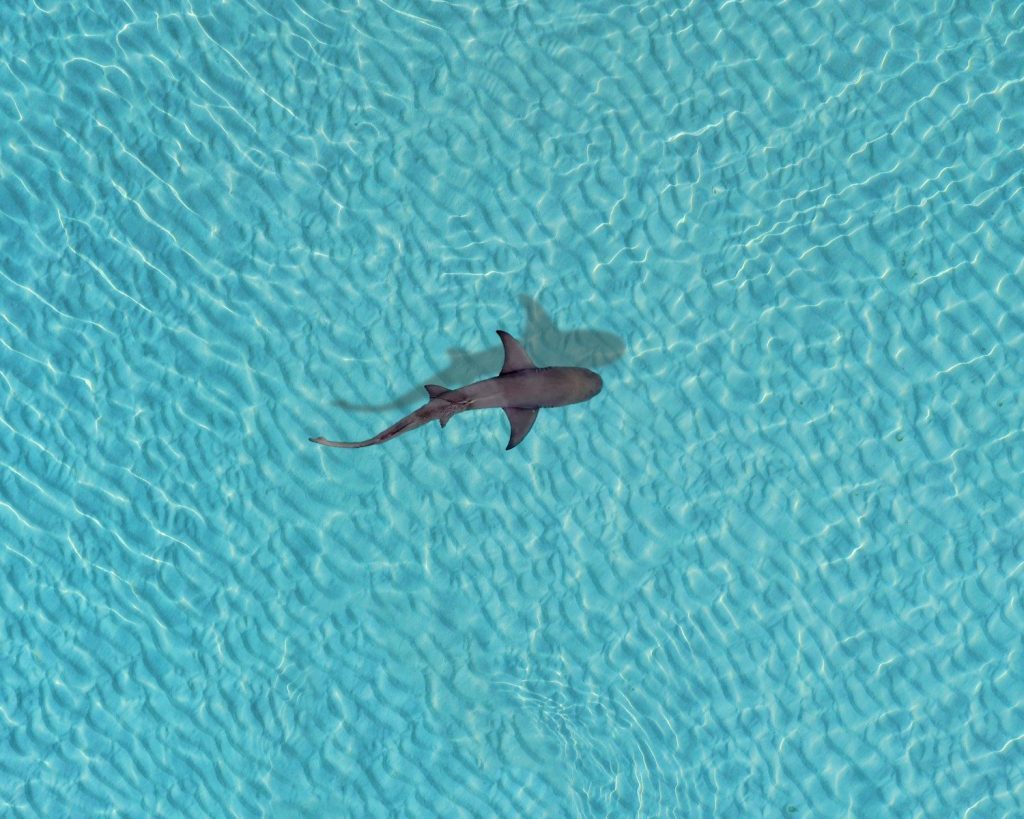
Most people think they know a shark when they see one. Sharks usually have a long body, sharp teeth, exposed gill slits, and a strong tail that helps them swim. Famous species like the great white, tiger shark, and hammerhead fit this image perfectly. Scientists also agree that sharks are fish with skeletons made mostly of cartilage instead of bone. This group of cartilaginous fish is called Chondrichthyes, which also includes rays, skates, and chimaeras. Sharks have existed for more than 400 million years, making them older than dinosaurs and even older than trees.
The problem begins when scientists try to draw a line between sharks and their relatives. Some sharks do not look like typical sharks at all. Angel sharks have flat bodies and resemble rays. Sawsharks have long, saw-like snouts. Frilled sharks look more like eels than the fierce predators people imagine. At the same time, rays and skates share many of the same features as sharks, including cartilage skeletons, similar skin scales, and related body structures. Because of these similarities, scientists have long argued over where sharks end and their relatives begin.
The shark family tree is more confusing than expected

Scientists classify living things by building family trees that show how species are related. Ideally, a group should include a common ancestor and all of its descendants. This is called a monophyletic group. For many years, researchers believed sharks formed such a group. They placed sharks in a division called Selachii and rays in a separate group called Batomorphi, both inside the subclass Elasmobranchii.
However, modern genetic studies have raised new questions. DNA research suggests that some animals traditionally called sharks may not fit neatly inside the same evolutionary group as other sharks. One recent study proposed that ancient shark groups such as cow sharks and frilled sharks may have branched off earlier than expected. If this idea proves correct, rays and skates could actually be more closely related to some sharks than certain sharks are to one another. This possibility would mean the word “shark” describes a body shape rather than a perfectly defined evolutionary group, which is why scientists continue to debate the issue.
Rays and sharks are closer relatives than many realize

Most people think rays are completely different from sharks because their bodies look so unusual. Rays are flat and wide, while sharks are usually long and streamlined. Rays often glide near the ocean floor, and sharks are famous for swimming through open water. Despite these differences, scientists know that the two groups are extremely close relatives. Both belong to Elasmobranchii, a major branch of cartilaginous fish that shares many important traits.
Rays and sharks have skin covered in tiny tooth-like scales called placoid scales. They have similar teeth structures, internal fertilization, and skeletons made from cartilage. Even their embryos develop in similar ways. Some scientists now believe the classic shark body may have appeared before rays evolved their flattened shape. In that case, rays could simply be highly specialized descendants of ancient shark-like ancestors. This idea challenges the simple picture many people have of sharks and shows why drawing strict boundaries between these animals is not easy.
Fossils do not always provide clear answers
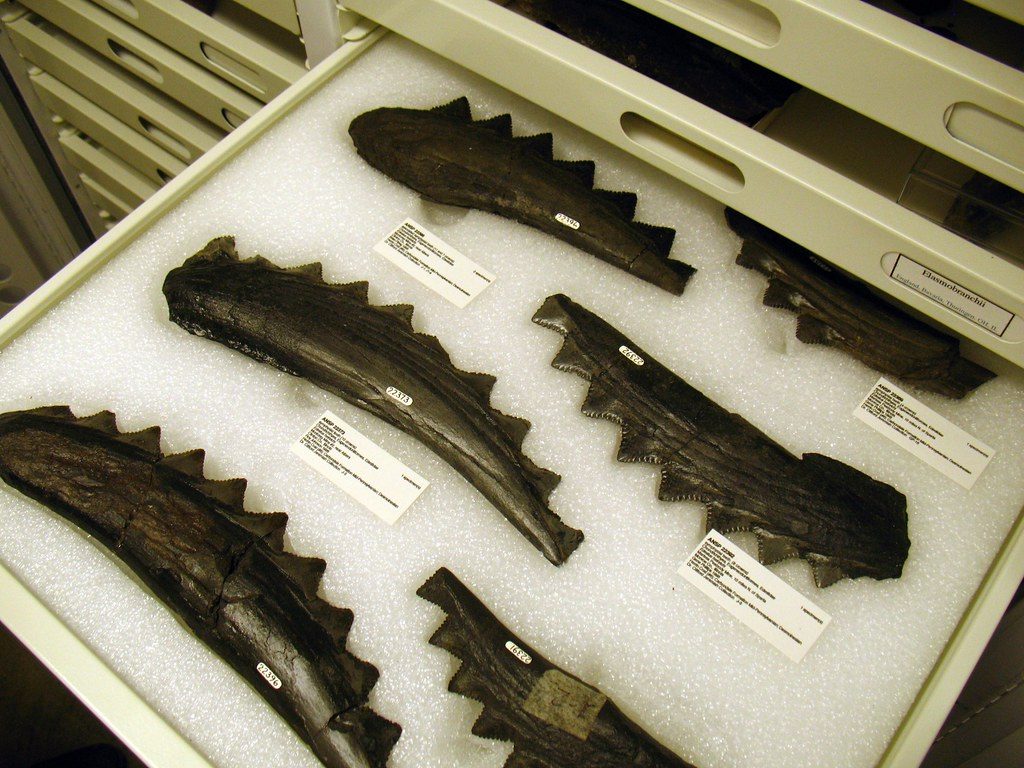
Studying fossils is one of the best ways to understand ancient animals, but sharks create a special challenge. Their skeletons are made mostly of cartilage, which breaks down much faster than bone. Because of this, complete shark fossils are rare. Scientists often find only teeth, scales, or fin spines. These pieces can reveal useful clues, but they do not always tell the whole story.
Early shark-like animals appeared more than 400 million years ago during the Devonian Period, often called the Age of Fishes. Some ancient species looked very different from modern sharks. Others shared features with both sharks and rays. Over time, scientists have discovered fossils that blur the lines between groups and make classification harder. A fossil may have teeth like a shark, fins like a ray, and body features unlike either one. As new fossils are found and old specimens are reexamined, scientists sometimes change the evolutionary tree, leading to fresh debates about what truly counts as a shark.
DNA is changing what scientists know

For decades, scientists relied mostly on anatomy to classify sharks. They compared jaws, fins, teeth, and gill openings to decide how species were related. Today, DNA technology allows researchers to study millions of genetic letters and compare species at a much deeper level. This has transformed shark science and revealed relationships that were impossible to see before.
Yet DNA has not solved every mystery. In some cases, genetic evidence supports older classifications, while in others it challenges them. Researchers studying dozens of shark genomes have discovered that certain groups may be more ancient and separate than previously believed. These findings sometimes conflict with evidence from fossils or body structure. As a result, scientists must weigh different kinds of evidence and decide which tells the most accurate story. This process is slow and careful, which is why disagreements remain even as technology improves.
Scientists may never settle on one definition

Many people assume science always produces one final answer, but that is not always true. Scientific definitions often change as new evidence appears. The definition of a shark is a good example. Some scientists prefer a definition based on body features. Others believe evolutionary relationships should matter most. A few researchers argue that sharks should be viewed as a broad collection of related animals rather than a perfectly defined group.
This ongoing debate does not mean scientists are confused or that previous research was wrong. Instead, it shows how science works. Researchers test ideas, challenge old assumptions, and update theories when better evidence appears. Sharks have survived for hundreds of millions of years and evolved into many different forms. Because their history is so ancient and complex, there may never be a single definition that satisfies everyone. What scientists do agree on is that sharks are among the most fascinating animals on Earth, and studying them continues to reveal new surprises about the history of life.
Leave a Reply