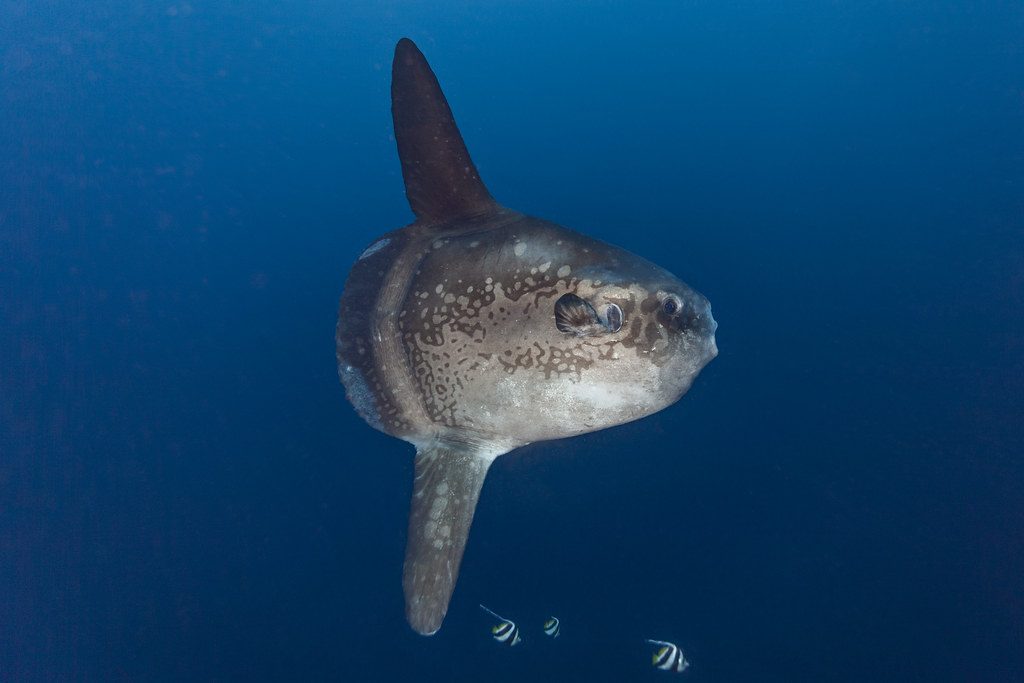
Have you ever looked at a sunfish and wondered how such a strange-looking animal can swim? The surprising way a sunfish moves through the ocean has fascinated scientists for years. Unlike most fish, it does not rely on a powerful tail to push itself forward. Instead, it uses a swimming style that looks gentle, almost like flying underwater.
In this article, you’ll discover how sunfish move, why their bodies are so unusual, and what scientists have learned from tracking these giant fish. You will also learn how their strange swimming style helps them travel huge distances, dive deep into the ocean, and survive in waters around the world. The more researchers study sunfish, the more impressive these gentle giants become.
A giant fish with a very unusual body
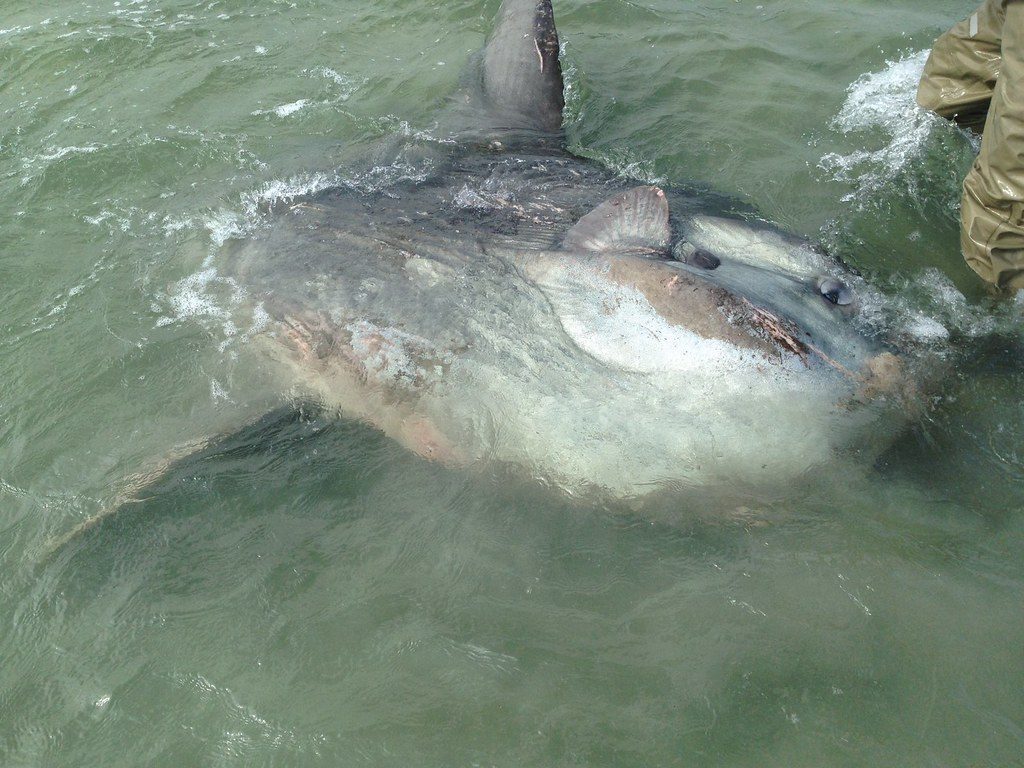
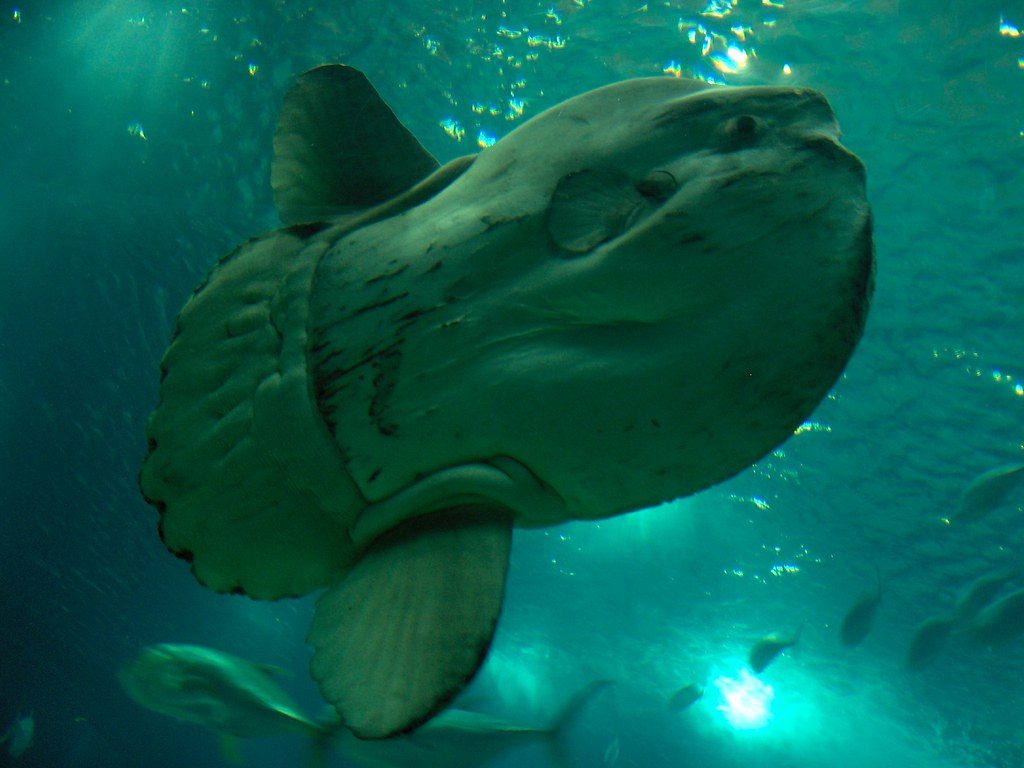
The ocean sunfish, also called Mola mola, is the heaviest bony fish alive today. Some adults weigh more than 5,000 pounds and can stretch more than 14 feet from the tip of their top fin to the tip of their bottom fin. Yet despite their massive size, they do not look like other fish. Their bodies are flat and round, almost like a giant disk. They have tiny pectoral fins on their sides and lack the large tail that most fish use for swimming. Instead of a true tail fin, they have a rounded structure called a clavus, which acts mainly like a rudder to help steer.
This unusual body shape confused scientists for a long time. Early researchers thought sunfish simply drifted with ocean currents because they seemed too awkward to swim efficiently. Modern studies proved that idea wrong. Sunfish are active animals that travel long distances across the ocean and dive hundreds of feet below the surface. Their strange bodies are not a weakness. In fact, they are part of a unique design that allows these fish to move in a way unlike almost any other large fish on Earth.
Sunfish swim without using a tail
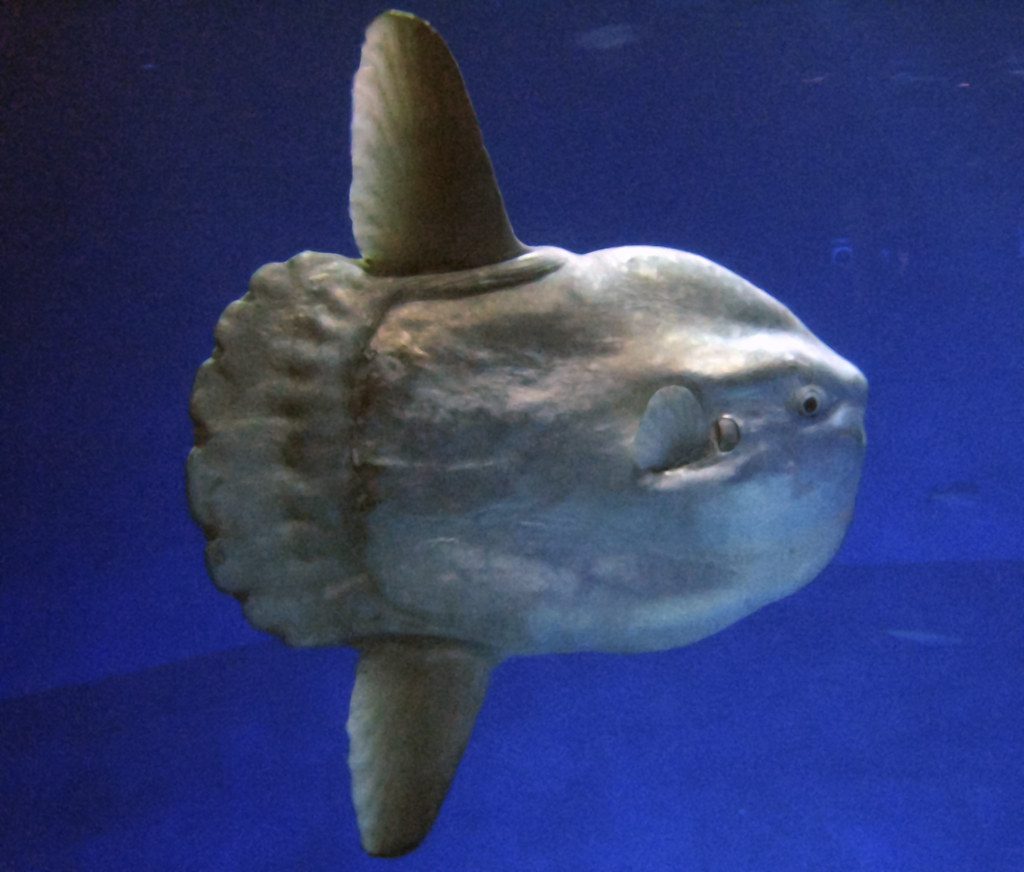
Most fish swim by moving their tails back and forth. Tuna, sharks, and salmon all use this method because it creates strong thrust and allows for high speeds. Sunfish are different. Their tails never fully develop as they grow. Instead, they propel themselves by moving their tall dorsal fin on top and their long anal fin on the bottom at the same time. These fins flap together in a synchronized motion, pushing water backward and moving the fish forward.
Scientists call this style of movement median and paired fin propulsion. The fins tilt and flap in the same direction, creating lift that pushes the fish through the water. Because the fins are so large, the sunfish does not need to flap them very quickly. The movement looks smooth and graceful, almost as if the fish is flying underwater. Researchers once believed this swimming style was slow and inefficient, but studies now show that sunfish are surprisingly capable swimmers that use energy effectively despite their unusual shape.
Their movement is more efficient than it looks

At first glance, a sunfish appears clumsy. Its body is bulky, and its swimming looks gentle rather than powerful. However, scientists who tracked sunfish in the wild discovered that they move with surprising efficiency. They can cruise at speeds of around two miles per hour and travel many miles in a single day. Their bodies are designed to reduce unnecessary movement, allowing them to glide steadily through the ocean while using less energy.
Another reason for their efficiency is their skeleton. Unlike many bony fish, much of a sunfish’s skeleton is made of lighter, cartilage-like tissue. They also lack a swim bladder, the gas-filled organ many fish use to control buoyancy. Instead, they rely on a thick, jelly-like layer beneath their skin that helps provide buoyancy and support. This lightweight structure makes it easier for the fish to stay balanced and move smoothly despite its huge size.
Sunfish travel up and down the ocean
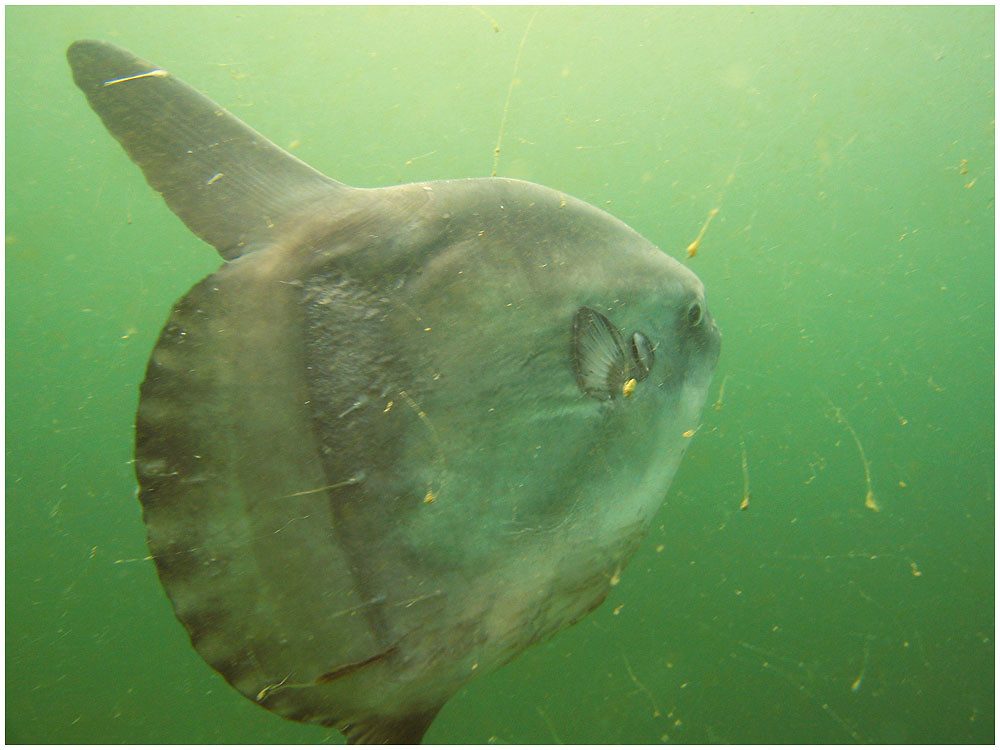
The surprising way a sunfish moves is not limited to swimming across the surface. These fish are also impressive divers. Researchers using satellite tags discovered that sunfish regularly dive hundreds of feet below the ocean surface in search of food. Some individuals have been recorded diving deeper than 2,000 feet. During these dives, they search for jellyfish, squid, crustaceans, and other soft-bodied prey that live in darker, colder waters.
After spending time in cold, deep water, sunfish often return to the surface and lie on their sides near the sun. Scientists believe this behavior helps warm their bodies after deep dives. The sight of a giant fish floating sideways once led people to think sunfish were sick or dying. In reality, this behavior may be an important part of their daily routine. By warming themselves near the surface, they prepare for another trip into the chilly depths of the ocean.
Scientists changed their minds about sunfish

For many years, sunfish had a poor reputation among scientists and the public. Their strange shape and slow appearance caused people to believe they were passive drifters with little control over their movement. As technology improved, researchers began attaching satellite tags to sunfish and tracking their journeys. The results were surprising. These giant fish were not drifting aimlessly at all. They were swimming with purpose, choosing where to go and diving regularly to find food.
Modern research has shown that sunfish are much more athletic than people once believed. They migrate across large parts of the ocean, adjust their depth depending on water temperature, and use their unusual fins with impressive coordination. Engineers have even studied sunfish movement to design underwater robots. The way their fins create thrust while keeping the body stable has inspired new ideas for energy-efficient swimming machines. What once seemed like an awkward fish is now seen as a remarkable example of nature’s creativity.
Their strange swimming helps them survive
The sunfish’s unusual movement gives it several advantages in the wild. Its steady swimming style allows it to travel long distances without using huge amounts of energy. This is important because food sources such as jellyfish can be spread out across vast areas of the ocean. By swimming efficiently and diving when needed, sunfish can search for prey in different habitats while conserving energy.
Their movement also helps them deal with parasites. Sunfish are known to carry many parasites on their skin. To get rid of them, they sometimes leap out of the water and crash back down, shaking loose unwanted hitchhikers. They also spend time near the surface, where seabirds and smaller fish pick parasites from their skin. These behaviors may look unusual, but they are an important part of staying healthy. The sunfish’s strange body and surprising swimming style have helped it thrive in oceans around the world for millions of years.
Leave a Reply