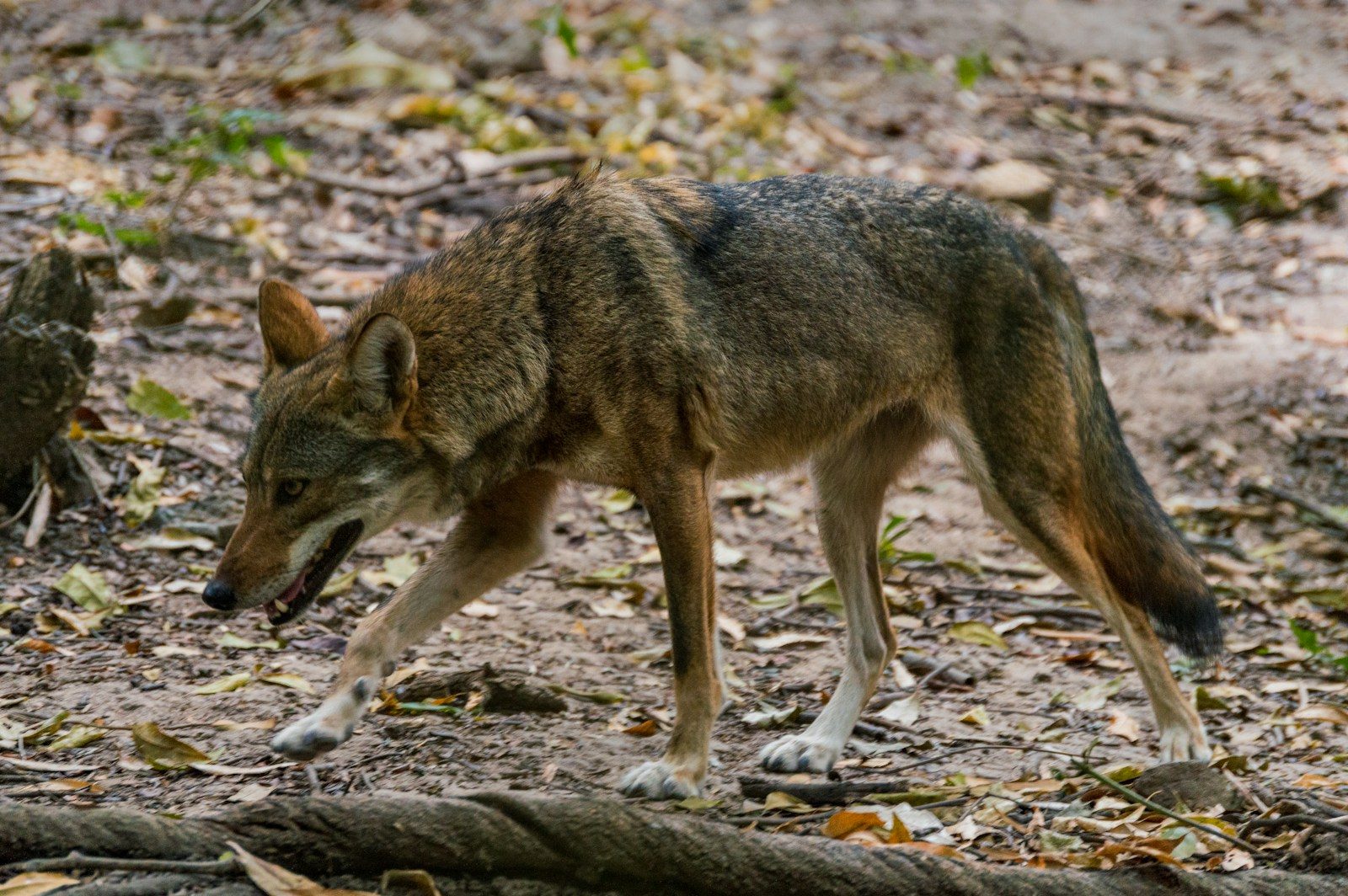
Imagine looking into your backyard and seeing an unfamiliar black animal playing with your dog. That strange sight became real for families around metro Atlanta when Carmine the coyote began appearing in neighborhoods. Carmine was a wild black coyote, but his behavior surprised researchers. He jumped fences, entered yards, and repeatedly tried to play with pet dogs.
He still avoided close contact with people and was not openly aggressive toward them. His unusual adventures eventually put him in danger, so experts made a difficult decision to capture him. Carmine was taken to Yellow River Wildlife Sanctuary, where another coyote named Wilee was waiting. Their first meeting gave Carmine something he had repeatedly searched for outside: another canine companion.
Carmine began appearing in Georgia backyards
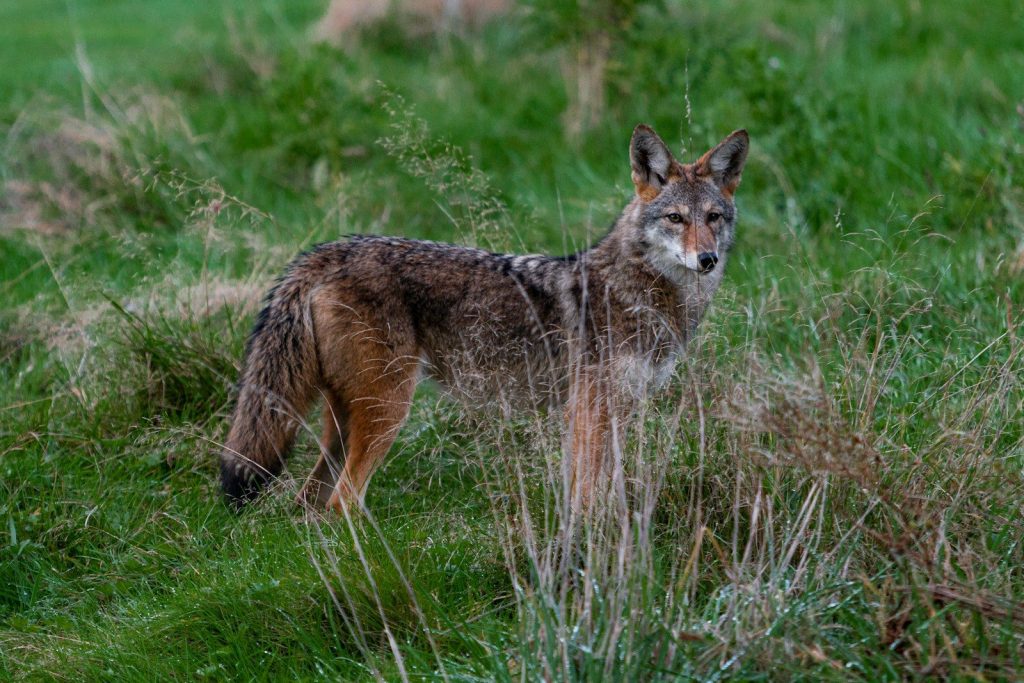
Carmine first drew serious attention in late December 2019. People around Smyrna and Vinings, Georgia, began reporting a strange black animal entering their neighborhoods. Some initially thought they were seeing a dog. Carmine’s dark coat made him look different from the coyotes many residents expected to see. Experts eventually confirmed that he was a melanistic coyote, meaning his coat was unusually dark because of a genetic trait.
His color was unusual, but his behavior attracted even more attention. Carmine jumped fences and entered yards where dogs lived. Instead of simply passing through, he tried to play with them. He sometimes followed people who were walking their dogs. He stole dog toys, rested under a trampoline, slept on a porch, and even attempted to use dog doors. Researchers eventually collected more than 80 reported sightings of Carmine.
His love of dogs surprised researchers
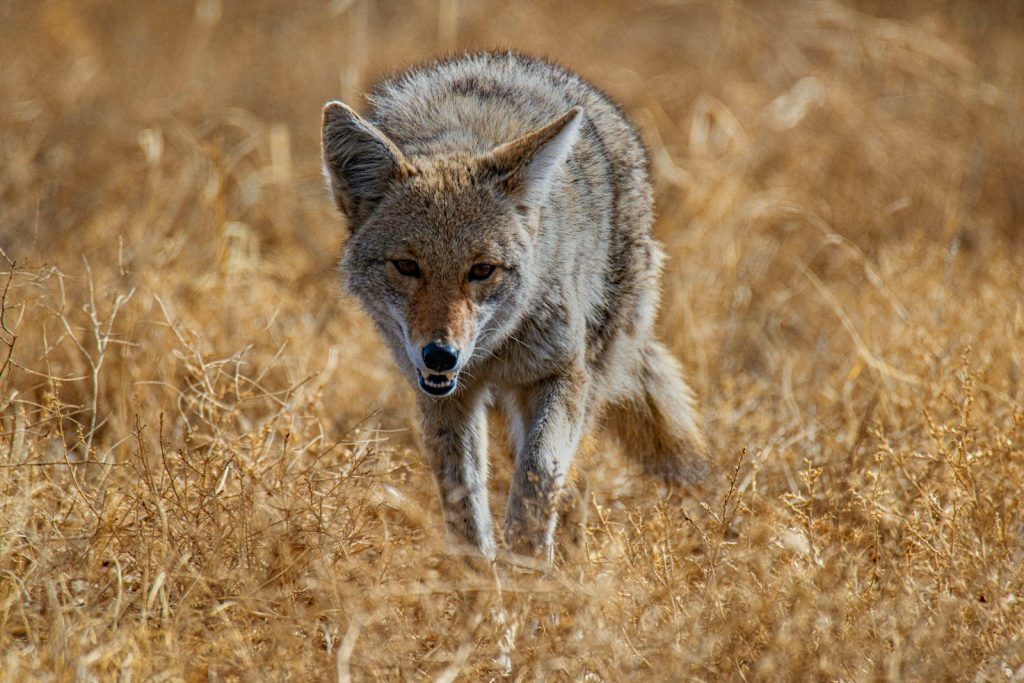
Coyotes normally try to avoid close contact with people, which made Carmine’s behavior stand out. He remained cautious around humans, but domestic dogs seemed to attract him. Reports showed him trying to play with both male and female dogs. Researchers noted that these attempts happened when other coyotes were not around.
Scientists wanted to know whether Carmine might actually be a dog or a recent dog-coyote mix. Genetic testing provided a clearer answer. Researchers estimated that about 92.8% of his ancestry was coyote, 5.5% was from domestic dogs, and 1.7% was from gray wolves. However, the dog’s ancestry was estimated to have entered his family line several generations earlier. The Atlanta Coyote Project, therefore, describes Carmine as a coyote rather than as a recent dog-and-coyote hybrid.
Carmine traveled through a dangerous urban area
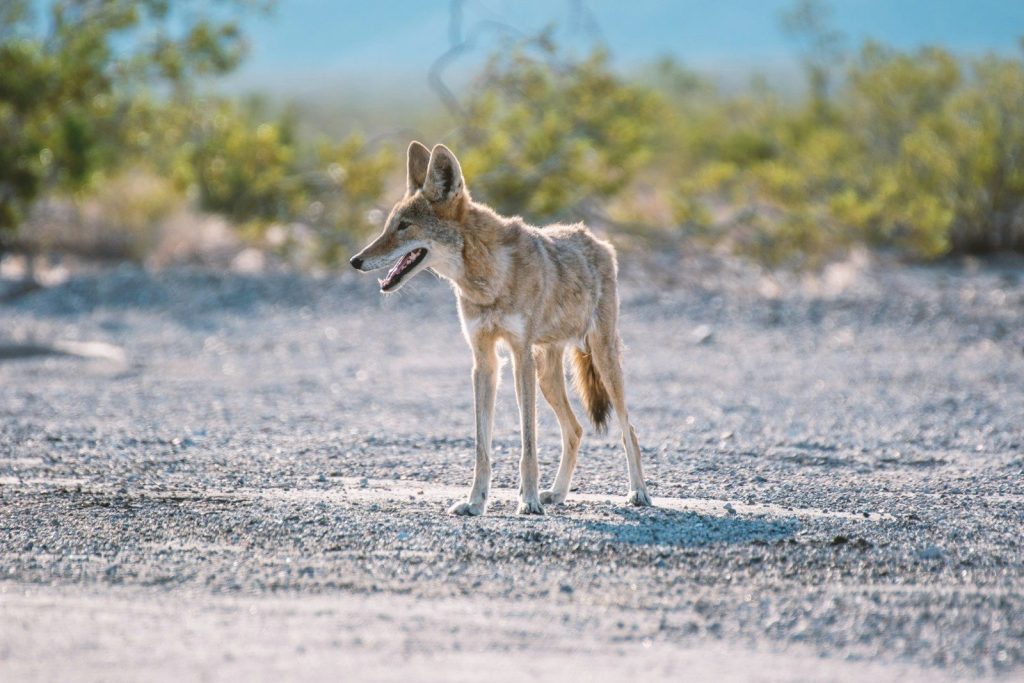
Carmine did much more than visit a few neighboring homes. Researchers tracked sightings across a large part of metro Atlanta. For about seven weeks, reports placed him across roughly 24 square kilometers around Smyrna and Vinings. His movements took him through an area filled with homes, roads, and other signs of human development.
One major concern was Interstate 285, one of the busiest highways around Atlanta. Carmine appeared to use large culverts to move beneath the highway rather than crossing traffic directly. At one point, he traveled about 16.1 kilometers between reported locations in roughly a day. His constant movement meant that researchers could not easily predict where he would appear next. Every trip through this busy urban landscape also created another chance for something to go wrong.
Experts decided Carmine needed to be captured
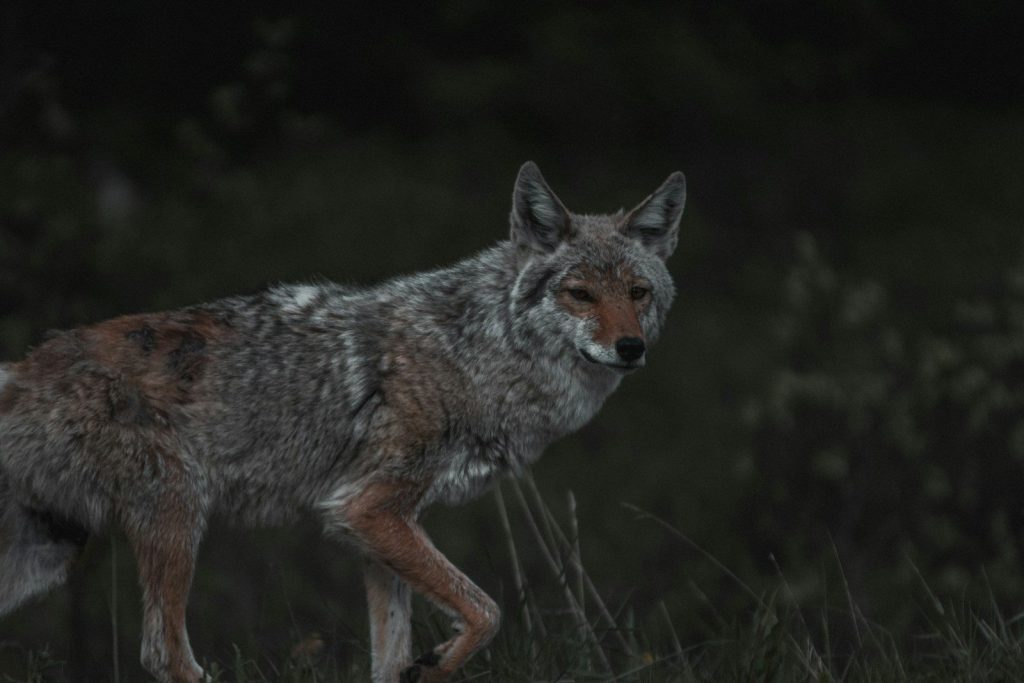
Researchers do not normally remove a healthy wild coyote simply because people see it. Carmine presented an unusual problem because he was becoming highly visible while continuing to enter yards and interact with dogs. Some residents were worried, and researchers learned about threats to kill him. Traffic also remained a serious danger because of the busy highways in the area.
A solution became possible when the Yellow River Wildlife Sanctuary agreed to provide Carmine with a permanent home. The Georgia Department of Natural Resources gave special permission for the relocation. Capturing him was not easy. Researchers tracked him for weeks, and the scientific study reports 49 days of trapping effort before Carmine was finally caught on February 17, 2020. He was estimated to be about 1 year old and weighed 17.2 kilograms, or roughly 38 pounds.
Carmine finally met another coyote named Wilee
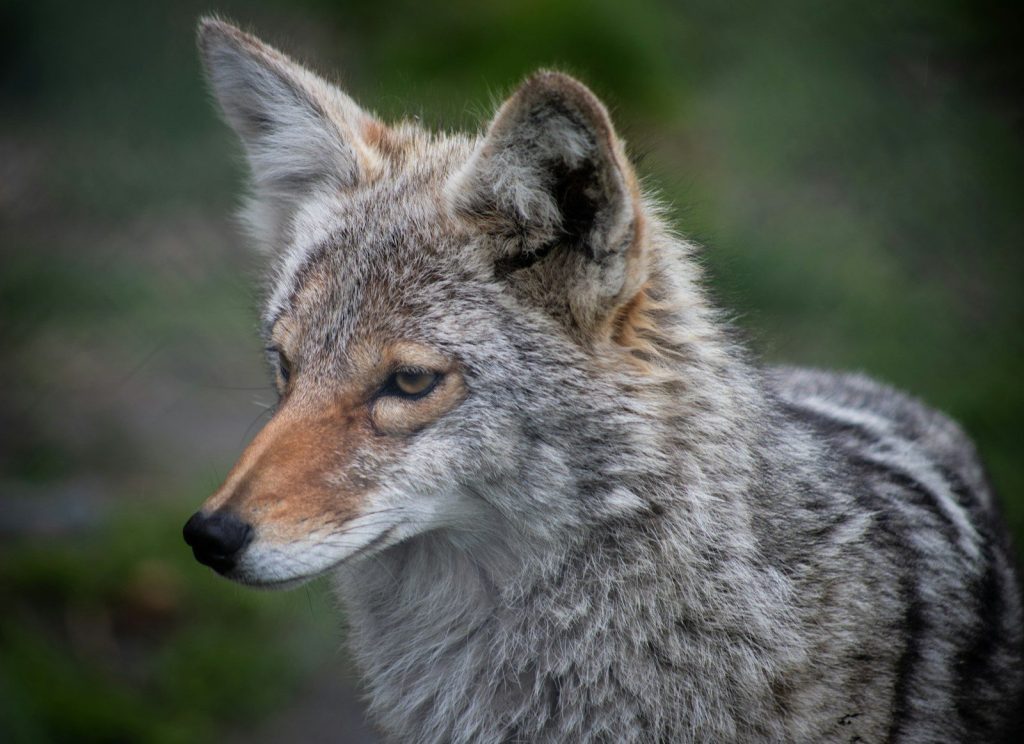
Carmine’s capture was only the beginning of his move to sanctuary life. He first needed time before meeting the coyote already living there. The sanctuary’s resident coyote was Wilee, a female originally from South Carolina. Unlike Carmine, Wilee had been raised as a pet before eventually living at the sanctuary.
Carmine was tested, vaccinated, and kept separately before the introduction. Wilee was first placed in an area next to him so the animals could become familiar with each other. Eventually, the barriers between them were opened. According to the scientific report, Carmine and Wilee immediately began playing when they were placed together. Other accounts describe them becoming friends right away. Carmine, who had spent months seeking interaction with neighborhood dogs, finally had another coyote as a regular companion.
Carmine’s story became useful for coyote research
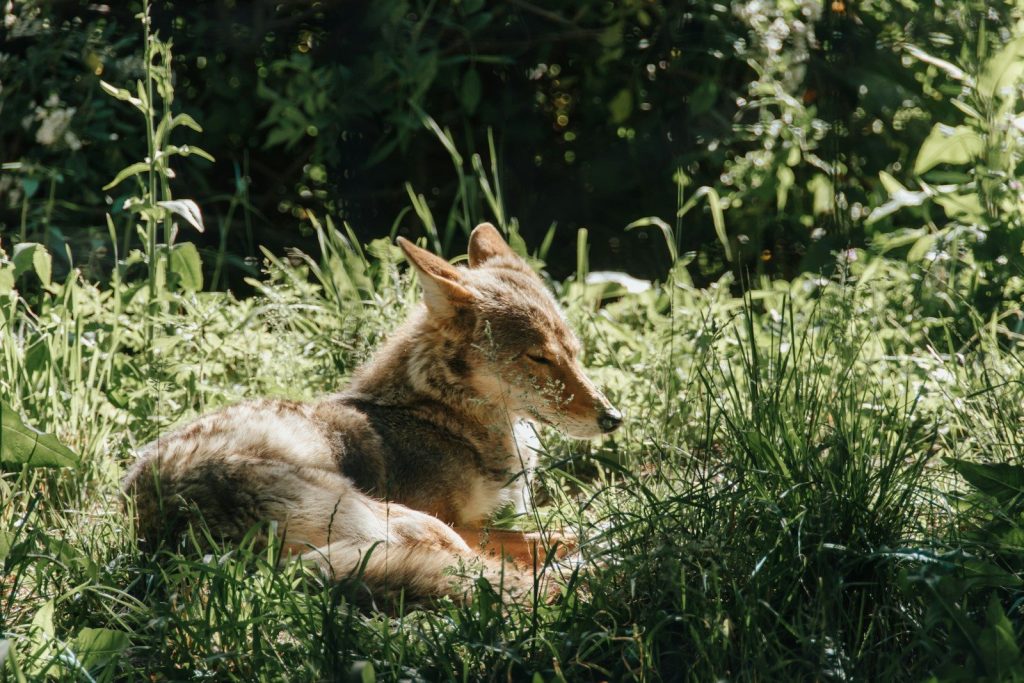
Carmine’s story did not end after he entered the sanctuary. His unusual behavior gave scientists an opportunity to study how individual coyotes can behave very differently. Researchers examined his movements, genetics, dark coat, and unusual interest in domestic dogs. Their findings were eventually published in the scientific journal Diversity.
Carmine even demonstrated that his interest in dogs had not disappeared. In May 2020, only days after moving into his permanent enclosure with Wilee, he climbed over a roughly 2-meter fence and escaped. His GPS collar showed that he went to a nearby neighborhood and started playing with dogs again. He also crossed the nearby Yellow River several times. Carmine remained loose for four days before being caught again and returned to the sanctuary.
Featured Image: Photo by Crisoforo Gaspar Hernandez on Unsplash
Leave a Reply