Orcas have huge brains, close families, and remarkable ways of hunting together. They can learn skills from other whales and belong to groups with their own calls and feeding traditions. All of this raises a fascinating question. How smart are orcas compared with humans? There is no scientific test that can simply rank the two species. Intelligence is much more complicated than brain size alone.
Still, decades of research have revealed impressive abilities in killer whales. Their social lives, communication, hunting skills, and ability to pass knowledge between generations show that intelligence can develop in very different ways. Understanding orca intelligence means looking beyond one number and studying how these animals actually live.
Orcas have remarkably large and complex brains
The brain of an orca is much heavier than the average human brain. This sounds like strong evidence that killer whales should be more intelligent than people, but brain weight cannot answer that question. Orcas also have much larger bodies. Scientists, therefore, need to consider brain structure, body size, behavior, learning, memory, social relationships, and other factors when trying to understand intelligence. Simply placing two brains on a scale does not tell us which animal has greater mental abilities.
Orca brains are also highly folded. These folds allow more brain tissue to fit inside the skull and increase the surface area available for processing information. Yet brain structure still cannot be turned into a simple intelligence score. A brain develops around the needs of the animal using it. Humans and orcas have faced very different challenges during their evolution. Humans live mostly on land and rely heavily on their hands, language, and tools. Orcas evolved to survive in a large underwater world where sound, social cooperation, navigation, and hunting are extremely important.
Orca families can remain together for years
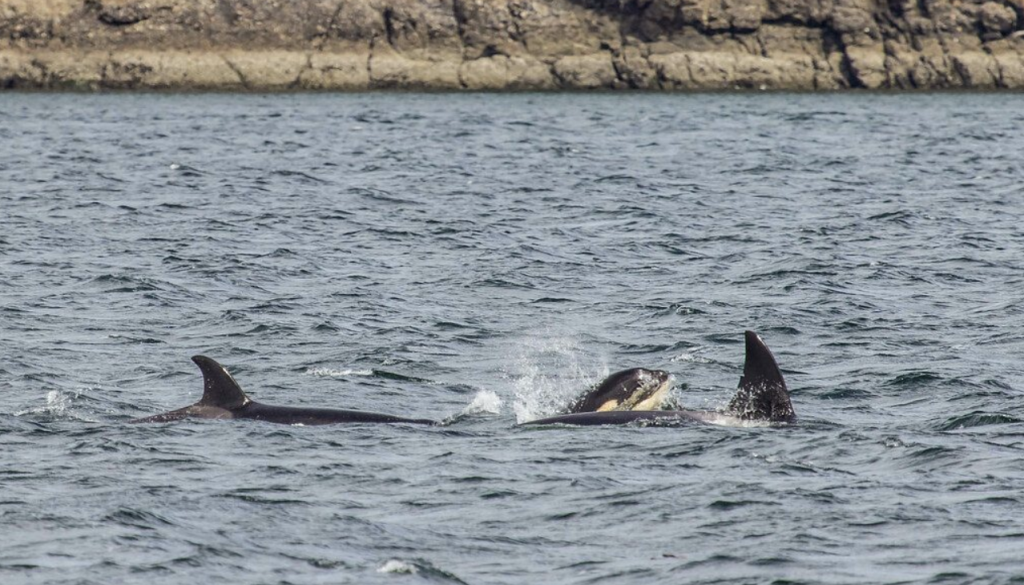
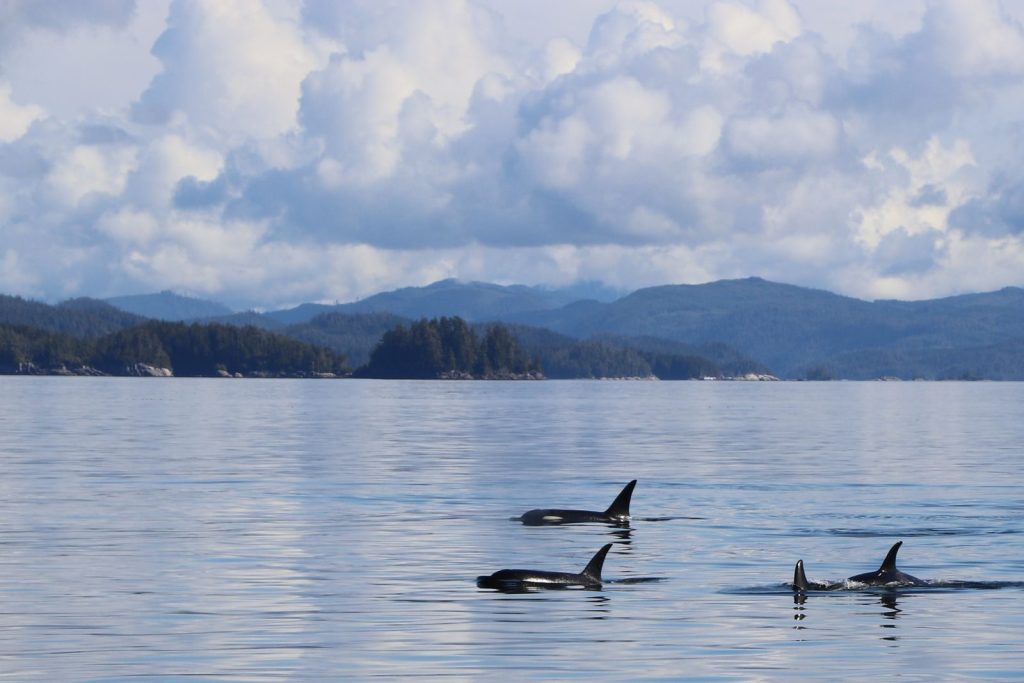
Social life is one of the clearest signs of the complexity of killer whale behavior. NOAA describes killer whales as highly social animals. Many live in pods containing closely related individuals. In well-studied populations, individual whales can remain strongly connected with their maternal family groups. These long relationships create many chances for younger animals to observe experienced family members and learn from them.
This family structure matters because an orca does not need to discover every survival skill by itself. Young whales can grow up surrounded by animals that already know where to find food and how their group hunts. Different killer whale populations can develop very different feeding habits even when they belong to the same species. NOAA says culture, including learned hunting tactics, plays a major role in determining what different orca groups eat. Some populations specialize mainly in fish, while others hunt marine mammals or other prey.
Killer whales learn complicated hunting methods
Orcas do not all hunt in the same way. Different populations use techniques suited to their environment and preferred prey. Some hunt fish cooperatively. Others pursue marine mammals. One of the most striking examples comes from Antarctic waters, where killer whales have been documented working together to create waves that can move seals from floating ice. The whales coordinate their movement instead of simply rushing toward the prey individually.
Researchers studying this behavior observed 22 attacks involving wave production. The killer whales created 120 waves and successfully removed seals from ice during many of the attacks. The observations provide strong evidence of organized group hunting. These skills also require young animals to learn how their group operates. An orca born into one population can therefore grow up with hunting traditions very different from those of another population thousands of miles away.
Orca pods can develop their own calls
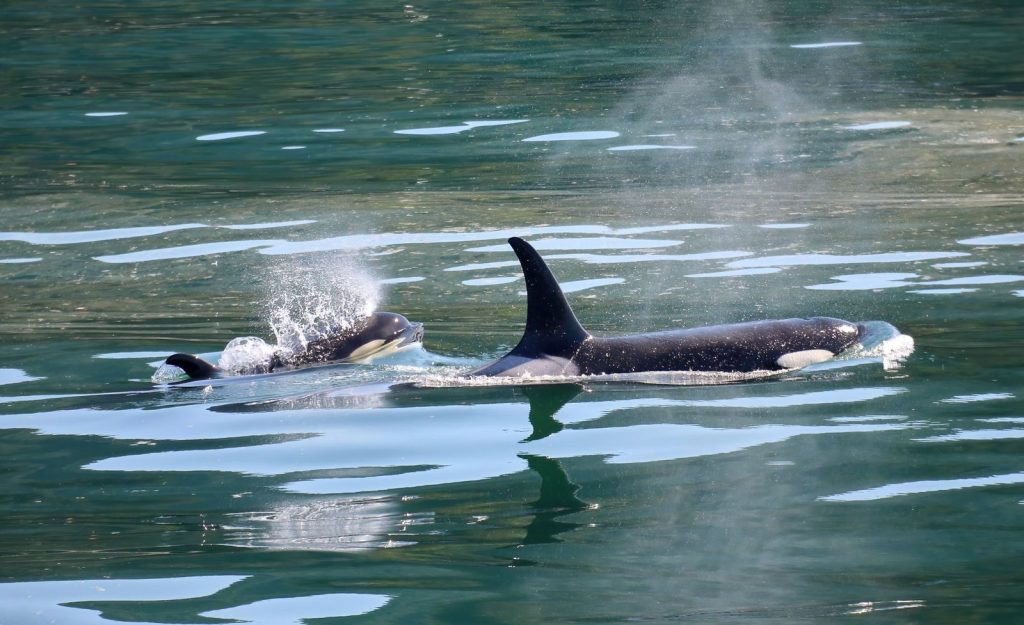
Hunting is not the only behavior passed through orca groups. Sound plays a huge role in their lives because vision has limits underwater. Killer whales produce clicks, whistles, and pulsed calls. Sound helps them navigate, find food, communicate, and remain connected with other members of their group.
Some of the best studied killer whale populations have distinctive collections of calls often described as dialects. NOAA says pods in the Pacific Northwest possess unique sets of calls that are learned and culturally transmitted. These calls help whales maintain group cohesion and can act as family badges. Research has also found that killer whale dialects can remain stable over long periods.
Orcas show something scientists call culture
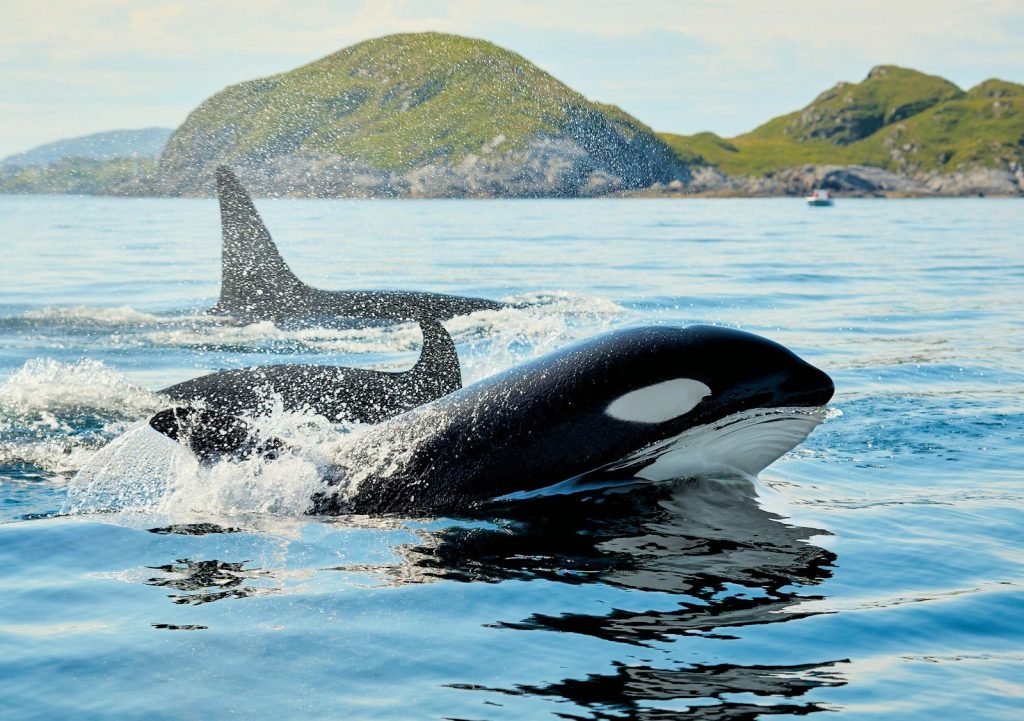
Culture is often treated as something uniquely human, but biologists can use the word more broadly. In animal research, culture can describe behavior or knowledge that individuals learn socially and pass to others, rather than receiving only through genes. Orcas provide some of the clearest examples of this process among marine mammals.
Their hunting behavior shows why. A group that specializes in one kind of prey can pass the needed techniques to younger animals. Vocal behavior can also be learned. NOAA specifically describes killer whale calls as culturally transmitted and says the diets of different ecotypes are strongly shaped by learned hunting tactics. This means two groups of the same species can behave differently because they grow up with different traditions. An orca calf is not simply born knowing every detail of how its family lives. It spends years around older whales and can learn important parts of life from them.
Humans and orcas cannot be ranked by brain size
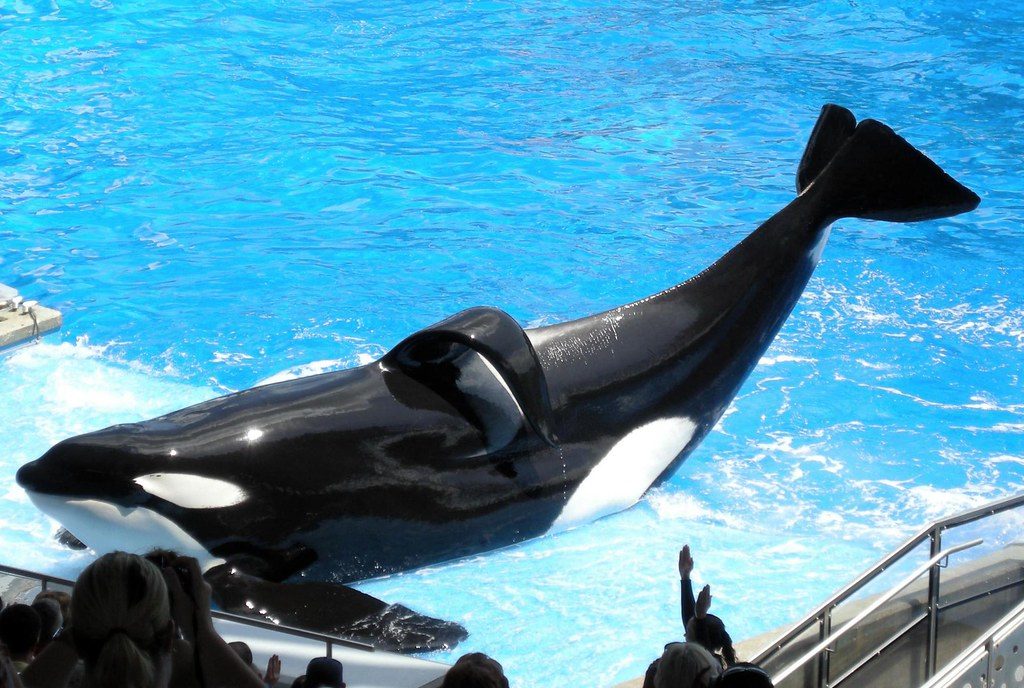
So are orcas smarter than humans? Science does not provide a simple yes or no ranking based on brain weight. Humans have developed complex spoken and written languages, mathematics, science, large technological systems, and tools that can preserve information across many generations. Nothing currently documented in orcas matches that entire range of human abilities.
That does not make orca intelligence simple. Killer whales have evolved mental abilities suited to a completely different world. They navigate huge marine environments, maintain complex social relationships, coordinate during hunts, learn specialized feeding methods, and use group-specific calls. Their behavior shows that sophisticated intelligence does not have to follow the same path as human intelligence.
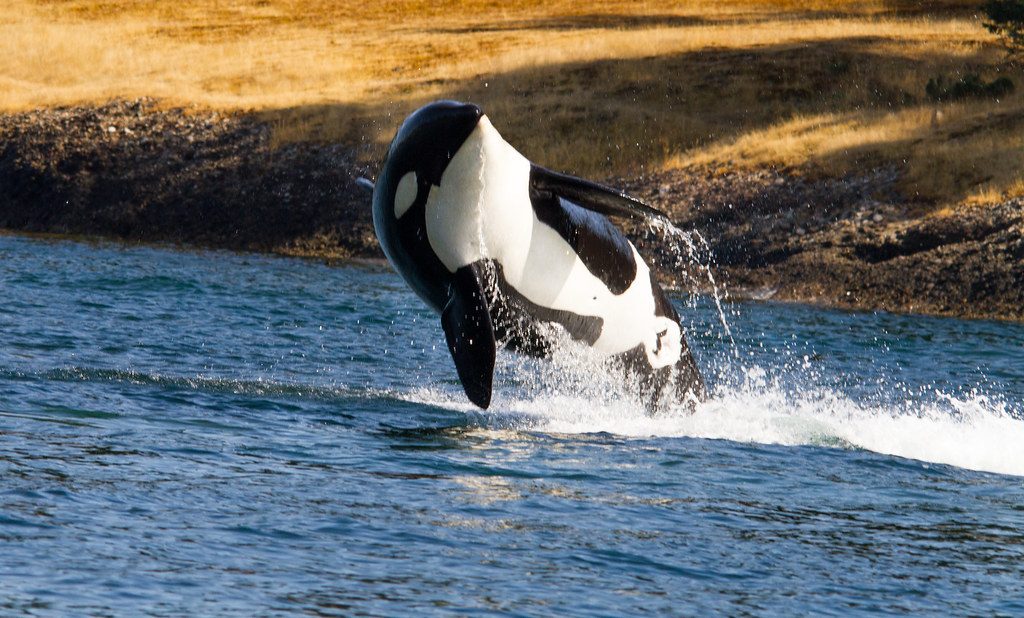
Featured Image: “Killer Whale (Resident Orca)” by Shawn McCready is licensed under CC BY-ND 2.0
Leave a Reply