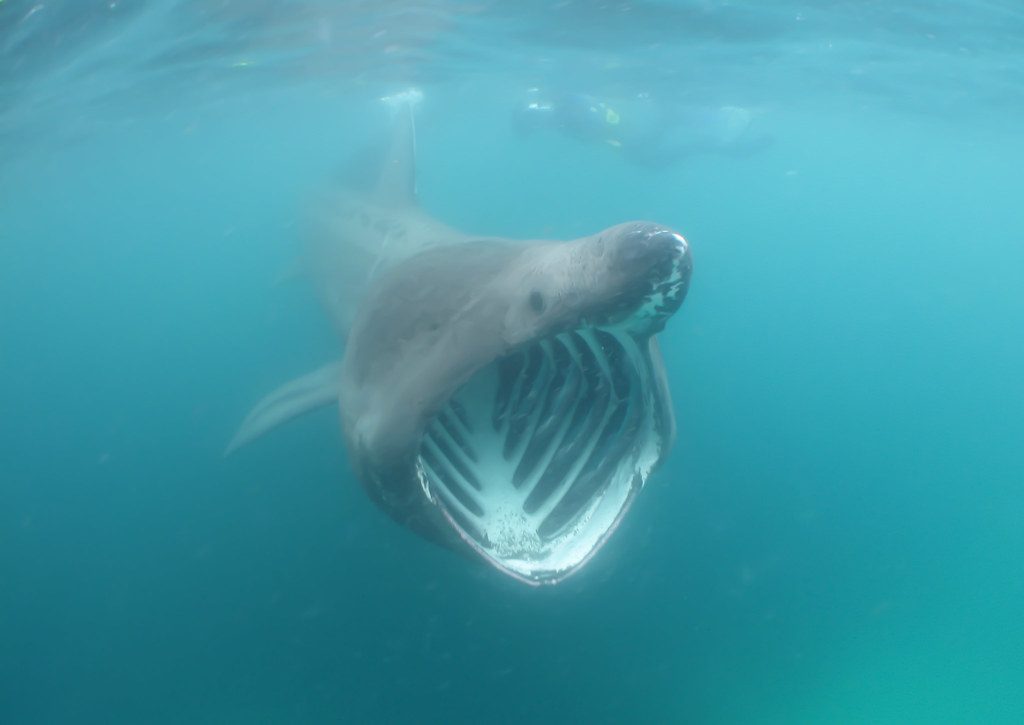
Few ocean animals are as surprising as the basking shark. With its enormous mouth and massive body, it can look like a prehistoric predator from another age. Yet this gentle giant spends its days filtering tiny plankton from the water instead of hunting large animals.
A recent rare sighting off the coast of San Diego amazed researchers and whale watchers, offering an unforgettable glimpse of one of the world’s largest and least understood sharks. This article explains why basking sharks are so special, how they feed, and why seeing one in the wild is an extraordinary event.
A rare sighting thrilled researchers
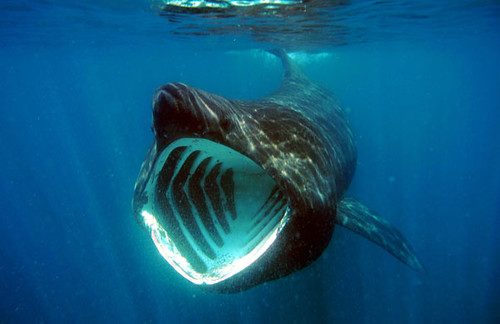
Scientists and whale watchers aboard a Scripps Oceanography expedition unexpectedly spotted a basking shark off the coast of San Diego. The encounter happened during a whale watching trip, making it an exciting surprise for everyone on board.
Researchers described the experience as a once-in-a-lifetime opportunity because the shark remained close enough for detailed observation. Seeing a basking shark calmly feeding near the surface is uncommon along the California coast.
One of the largest fish on Earth
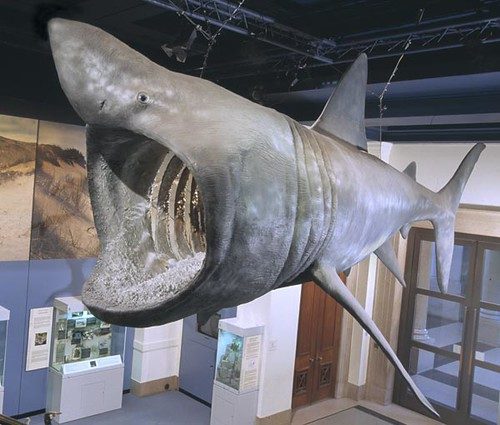
The basking shark is the second-largest living fish, surpassed only by the whale shark. Adults commonly reach about 8 meters in length, while exceptionally large individuals can grow beyond 10 meters.
Despite their impressive size, basking sharks are gentle animals that pose little danger to people. Their enormous mouths are designed for filtering tiny food rather than capturing large prey.
Tiny food powers a giant shark

Instead of hunting seals or fish, basking sharks feed mainly on zooplankton, krill, and other tiny drifting animals. As they swim slowly with their mouths open, specialized gill rakers trap food while seawater flows back out.
Researchers estimate that a feeding basking shark can filter around 2,000 tons of seawater every hour. This remarkable feeding strategy allows the shark to consume enormous amounts of microscopic prey every day.
Why are they called basking sharks
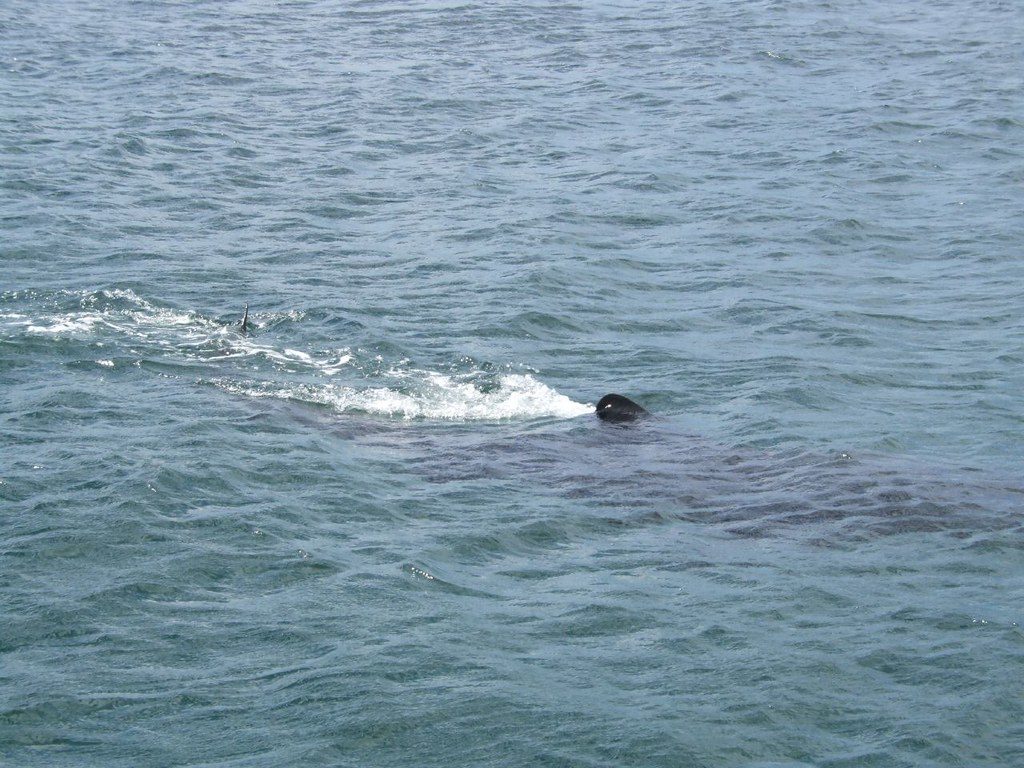
The species gets its name because it often feeds near the ocean’s surface, appearing to bask in the sunlight. In reality, it is following dense patches of plankton rather than relaxing.
These sharks are migratory and travel long distances to locate productive feeding areas. Their movements often follow seasonal changes in plankton abundance across temperate oceans.
Gentle giants face real threats
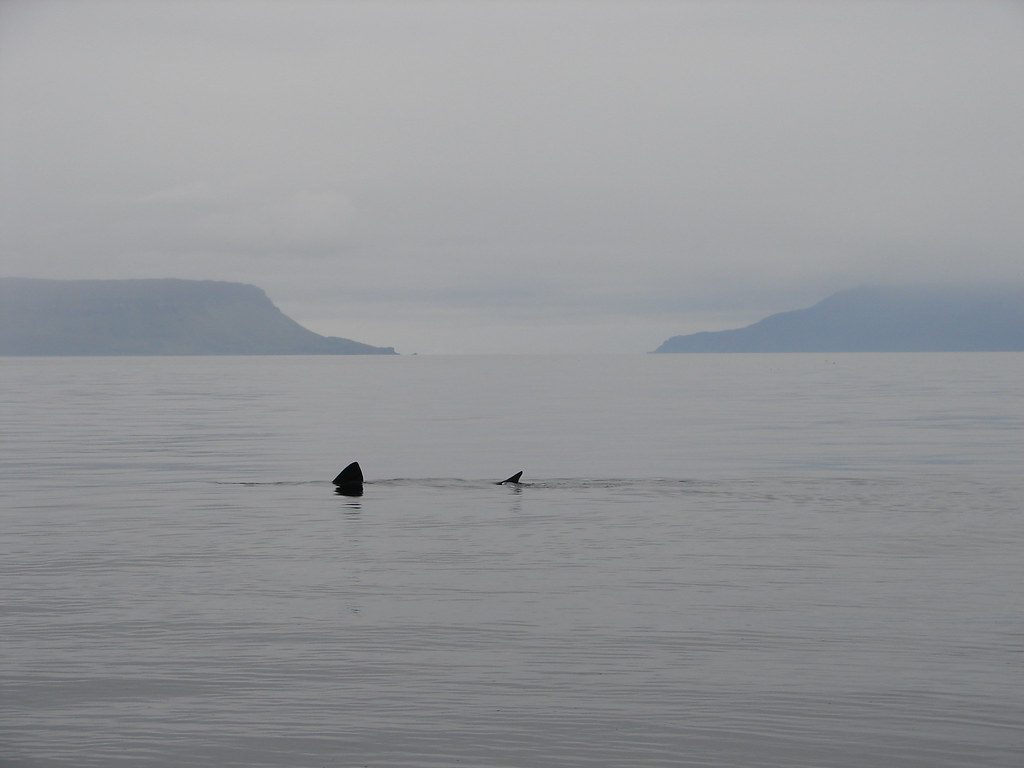
Although basking sharks are harmless, they have faced serious population declines because of historical fishing for their meat, fins, and liver oil. Today, they remain protected in many parts of the world.
Scientists continue tracking basking sharks to better understand their migration routes, breeding habits, and habitat needs. This information is important for protecting the species in the future.
Every rare encounter matters
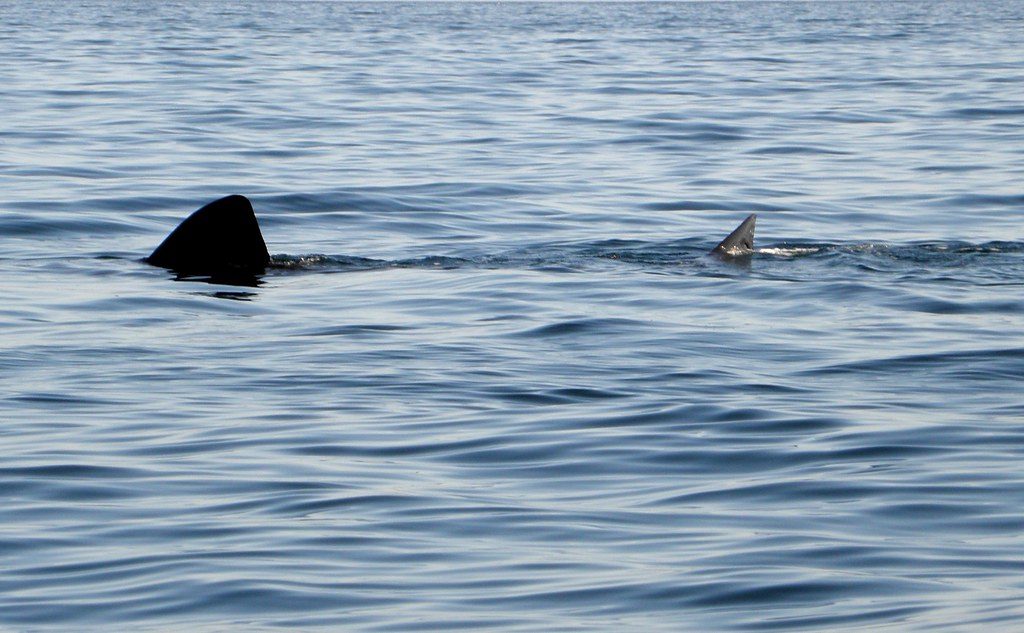
Because basking sharks spend much of their lives moving across vast oceans, sightings provide valuable scientific information. Each observation helps researchers learn more about where the sharks travel and how they behave.
The San Diego encounter reminded everyone that some of the ocean’s most spectacular animals are also among its most peaceful. Even one brief sighting can improve scientific understanding while inspiring greater appreciation for these remarkable, gentle giants.
Leave a Reply