What if some of the world’s oldest animals were still swimming in rivers and oceans today? Long before dinosaurs walked the Earth, ancient fish were already living in the water. While many prehistoric creatures disappeared during mass extinctions, a few remarkable fish lineages survived and continue to exist today.
These ancient fish, older than dinosaurs, provide scientists with valuable clues about evolution, genetics, and the origins of important features such as limbs and lungs. Although they are often called “living fossils,” they have continued to evolve. Their long history and unique traits make them some of the most fascinating animals on the planet. Here are six ancient fish lineages that have survived for hundreds of millions of years.
Coelacanth survived one of the biggest surprises in science
The coelacanth is one of the most famous ancient fish in the world. Scientists believed it had disappeared about 65 million years ago. That changed in 1938 when a living coelacanth was discovered off the coast of South Africa. The finding became one of the greatest zoological surprises of the 20th century.
This deep-sea fish belongs to a group of lobe-finned fishes that dates back roughly 400 million years. Its fleshy fins once led scientists to think it was closely linked to the move from water to land. Later genetic studies showed that lungfish are actually closer relatives to land animals. Researchers also found that coelacanth genes evolve very slowly. Studies suggest these fish may live for around 100 years and carry their young for about five years, making them especially vulnerable to fishing pressure.
Sturgeon has changed very little over time
Sturgeons are large bottom-feeding fish covered with bony plates. Their lineage stretches back more than 200 million years. Because their appearance has changed very little, modern sturgeons still look much like their ancient ancestors found in the fossil record.
Scientists sequenced the sterlet sturgeon genome in 2020 and discovered that its entire genome duplicated around 180 million years ago. This left the fish with four sets of chromosomes. Despite this major genetic event, its proteins evolved slowly compared with those of many other animals. Today, many sturgeon species face serious threats from habitat loss, dams, pollution, and the caviar trade.
Lungfish offer clues about life on land
Lungfish are unusual because they can breathe air. They are also among the closest living fish relatives of land vertebrates. As members of the lobe-finned fish group, they share an ancient connection with animals that eventually evolved to live on land.
Modern lungfish use lungs to gulp air and survive in waters with very little oxygen. Some species can even endure drought conditions by slowing their metabolism inside mud cocoons. Recent genome research has revealed that lungfish possess some of the largest animal genomes ever studied. The South American lungfish has about 91 billion DNA bases, roughly 30 times as many as humans. Scientists use this information to better understand the genetic changes that helped ancient vertebrates move onto land.
Lamprey preserves a very ancient body plan
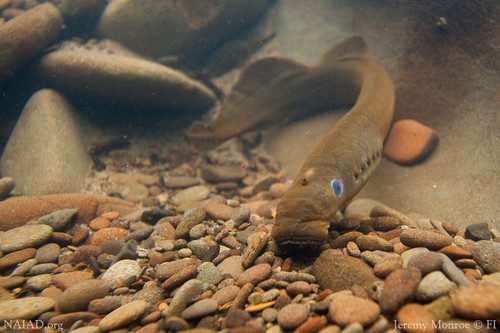
Lampreys look very different from most fish alive today. These eel-like animals have no jaws and instead use circular mouths lined with teeth. Some species attach themselves to other fish and feed on blood and body fluids.
Their lineage has survived for more than 340 million years. Lampreys separated from the evolutionary line leading to jawed vertebrates before features such as jaws, paired fins, and bony skeletons became common. Even with their primitive appearance, lampreys are important to science. Researchers have found that the sea lamprey’s hindbrain develops using genetic tools that are remarkably similar to those found in humans. Scientists continue to discover previously unknown lamprey populations, showing that these ancient fish still hold many secrets.
Hagfish reveal secrets of early vertebrates
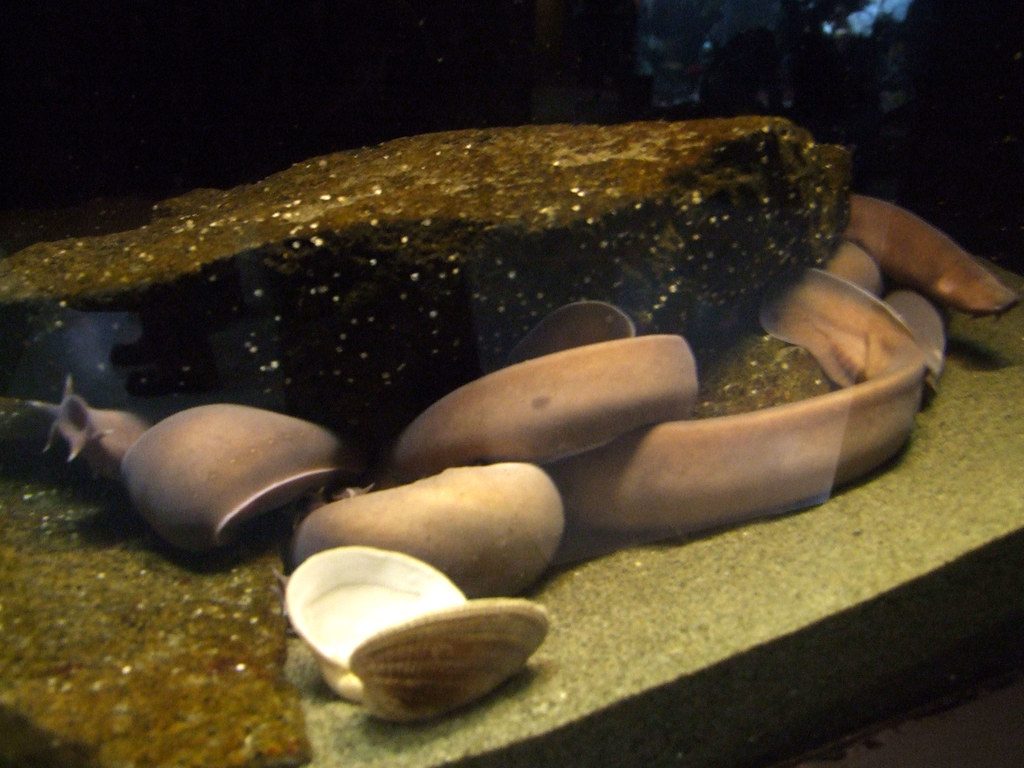
Hagfish are famous for producing large amounts of slime when threatened. This mucus can clog a predator’s gills and help the hagfish escape. They have no jaws and lack a true vertebral column like most familiar vertebrates.
Their lineage dates back around 500 million years, making them among the oldest vertebrate groups still alive. For years, scientists struggled to study hagfish genetics because their genomes are unusually complex. Major genome studies published in 2024 helped researchers better understand early vertebrate evolution. Scientists discovered that hagfish experienced major genomic changes over time, including chromosome fusions and the loss of genes linked to organs such as eyes and cartilage. At the same time, genes related to slime production expanded, helping create one of the animal kingdom’s most unusual defense systems.
Paddlefish carries an ancient genetic legacy
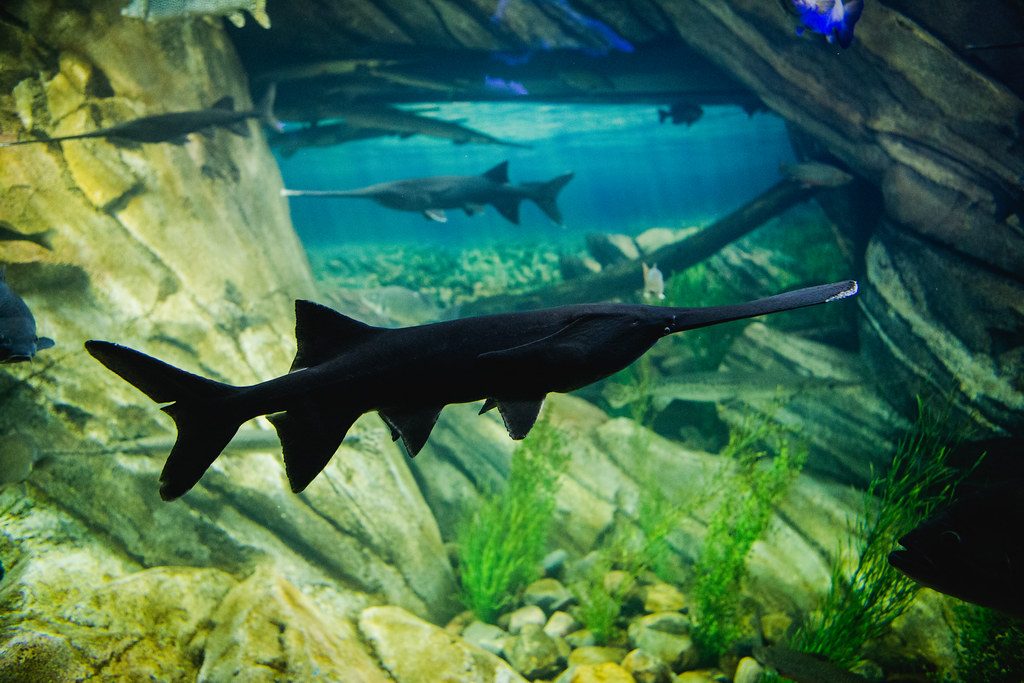
The American paddlefish has a distinctive appearance, with a shark-like body, a wide mouth, and a long, blade-shaped snout called a rostrum. This snout contains sensors that help the fish detect tiny prey in cloudy river waters.
Paddlefish belong to the same ancient order as sturgeons, a group believed to have originated between 300 and 350 million years ago or even earlier. Recent genome studies showed that paddlefish experienced a whole-genome duplication, meaning their entire genetic code was copied. Researchers also found evidence that paddlefish and sturgeons share an ancient genome duplication event that likely occurred more than 200 million years ago, around the time of the Permian-Triassic mass extinction. These discoveries continue to help scientists understand how ancient fish survived major changes in Earth’s history.
Leave a Reply