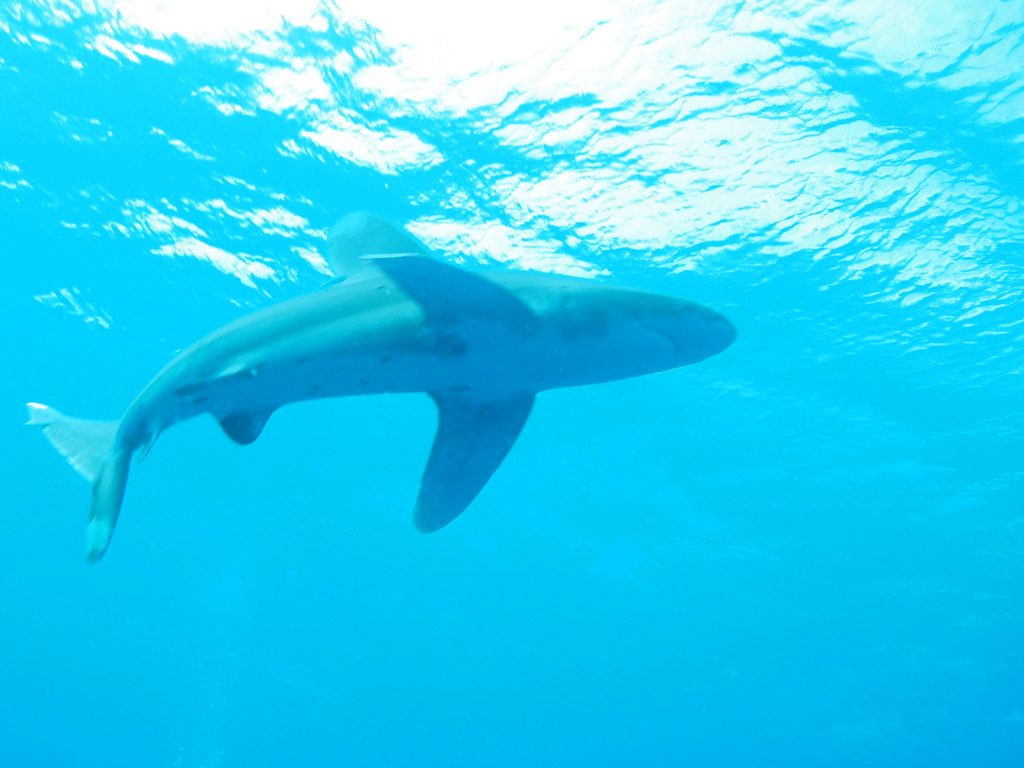
The oceanic whitetip shark is often called one of the most dangerous sharks in the open ocean. Unlike many shark species that stay closer to shore, this shark spends most of its life far from land, where food can be hard to find. That harsh environment helped shape it into a bold, powerful, and highly opportunistic hunter. The oceanic whitetip shark became one of the ocean’s deadliest predators because it learned to take advantage of nearly every feeding chance it encountered.
In this article, you will learn how the oceanic whitetip shark evolved its hunting style, why it developed such fearless behavior, what it eats, how it survives in the vast open ocean, and why it earned its reputation as one of the sea’s most effective predators.
Life in the open ocean shaped its behavior

The oceanic whitetip shark lives in tropical and subtropical waters around the world. Unlike reef sharks or coastal sharks, it spends most of its time in the open ocean, often near the surface. The open sea can be compared to a giant underwater desert. Food sources are spread far apart, and animals may travel long distances before finding a meal. Because of this, the shark cannot afford to ignore potential food opportunities.
Over millions of years, natural selection favored sharks that were curious, persistent, and willing to investigate anything unusual in the water. Sharks that quickly checked floating objects, injured animals, or schools of fish were more likely to survive and reproduce. This helped create a species that is known for its bold nature and willingness to approach almost anything that might be edible.
Built for efficient long-distance hunting
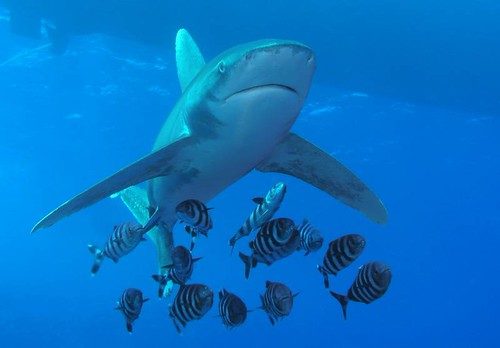
The oceanic whitetip shark has a body that is perfectly suited for cruising huge distances. Its large, rounded pectoral fins act almost like wings underwater. These fins help the shark glide through the water while using less energy. This is important because the shark may travel many miles between feeding opportunities.
Its streamlined body and powerful tail allow it to patrol large sections of the ocean. Instead of chasing prey at top speed for long periods, it conserves energy and waits for opportunities. This strategy works well in an environment where food is unpredictable. By using less energy while searching for food, the shark increases its chances of surviving during long periods between meals.
A predator that rarely wastes a feeding chance
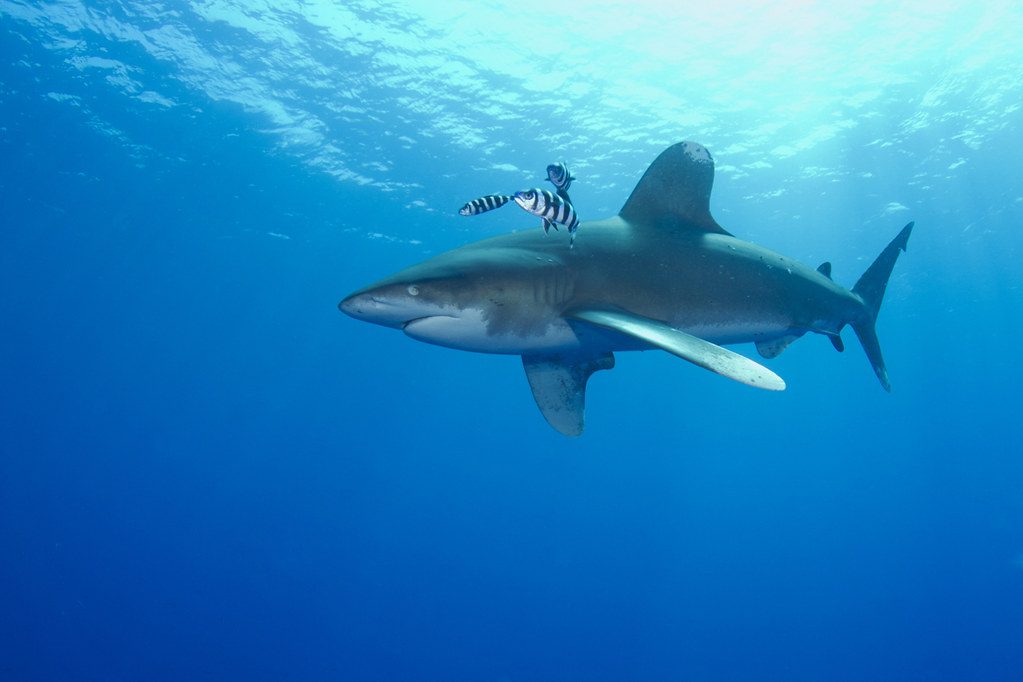
One reason the oceanic whitetip shark became such a successful predator is its willingness to eat a wide variety of foods. It commonly feeds on tuna, marlin, dolphinfish, squid, and other open-ocean species. However, it is not a picky eater. It may also consume seabirds, rays, smaller sharks, sea turtles, marine mammal remains, and almost any other available food source.
This feeding flexibility gives the shark a major advantage. Many predators depend on a small number of prey species, but the oceanic whitetip can switch targets whenever necessary. If one food source becomes scarce, it can focus on another. This ability allows it to survive in changing conditions and continue thriving even when prey populations shift from one area to another.
Curiosity became a powerful survival tool
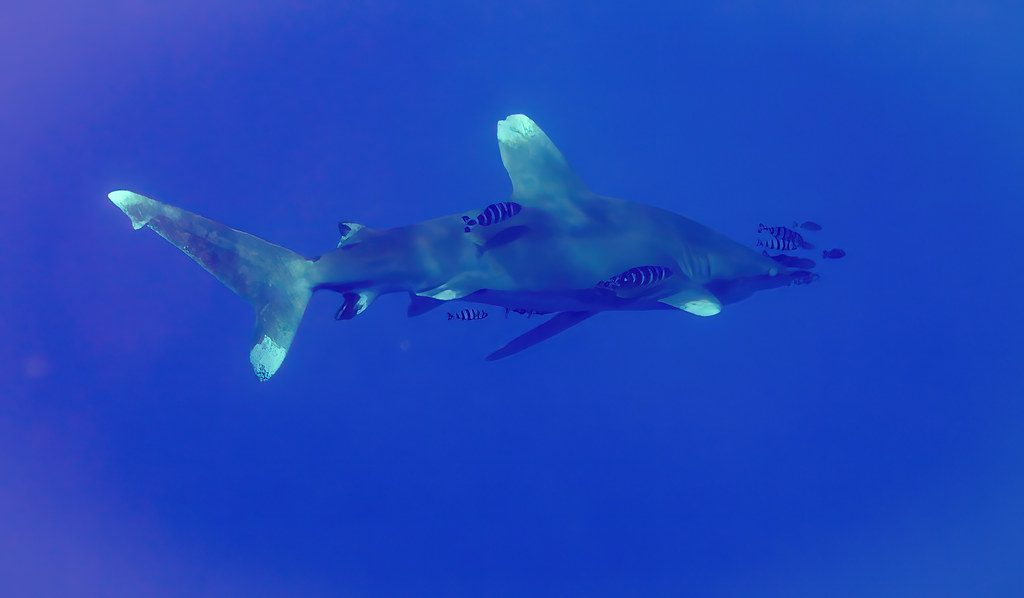
Many predators rely mainly on speed or strength, but the oceanic whitetip shark relies heavily on curiosity. In the open ocean, anything unusual might represent a meal. A floating object, an injured fish, a dead whale, or a struggling animal can all provide feeding opportunities. As a result, the shark often investigates anything that catches its attention.
This behavior has sometimes been mistaken for aggression. In reality, the shark is following a survival strategy that has worked for millions of years. By checking potential food sources instead of ignoring them, it increases its chances of finding meals in an environment where food may be difficult to locate. While this curiosity can make encounters with humans dangerous, it is primarily an adaptation that helps the shark survive in the vast open ocean.
Feeding frenzies increased its hunting success
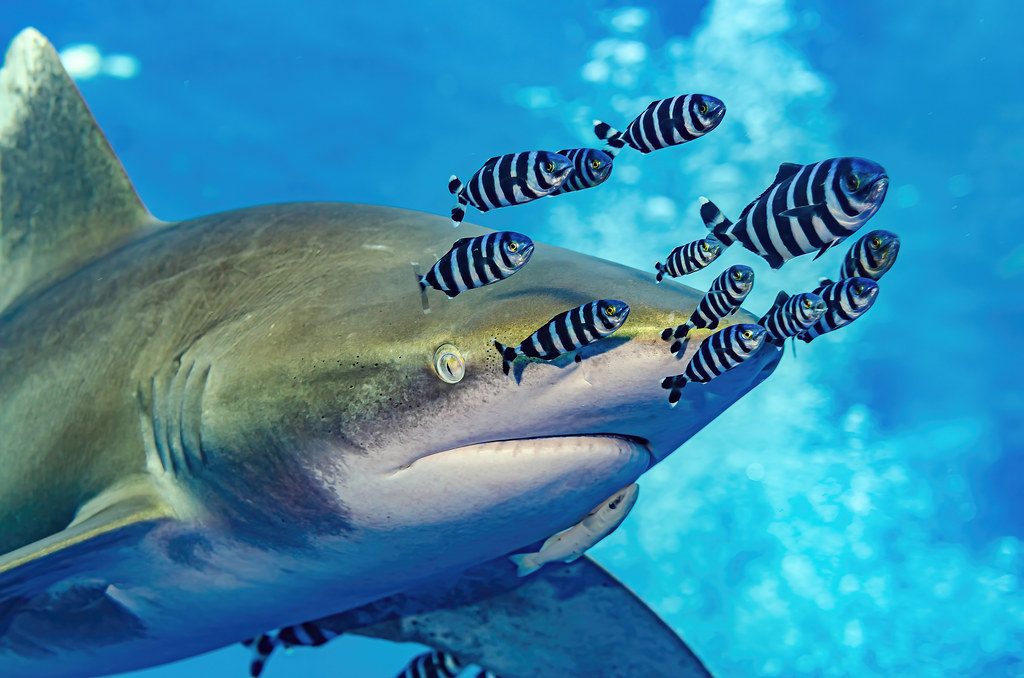
Although oceanic whitetip sharks are often solitary animals, they may gather when large food sources appear. Schools of tuna, floating whale carcasses, and other rich feeding opportunities can attract multiple sharks to the same area. When this happens, competition for food becomes intense.
In these situations, the sharks may enter feeding frenzies. Each shark attempts to secure food before competitors can take it. The ability to remain bold and persistent during these events helps the species obtain valuable calories. Sharks that hesitated often lost feeding opportunities. Over time, natural selection favored individuals that aggressively investigated and competed for food whenever large feeding events occurred.
Why it gained a reputation as a deadly shark
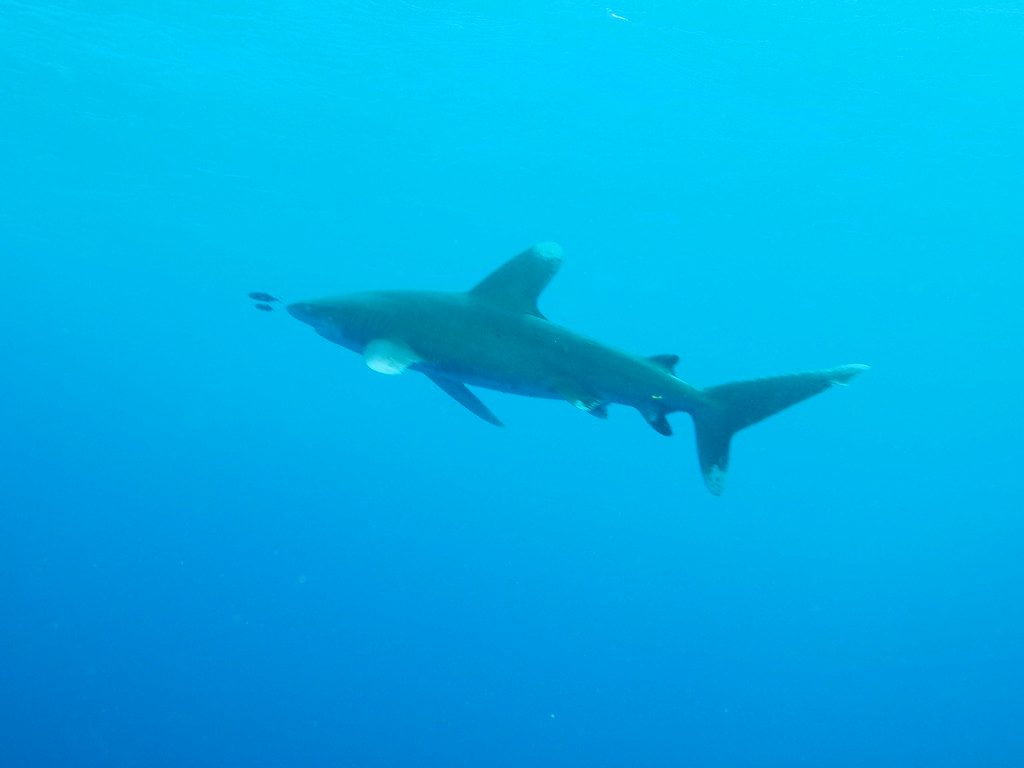
The oceanic whitetip shark’s reputation comes largely from its behavior around shipwrecks and people stranded at sea. Unlike coastal sharks, which may have many feeding options nearby, oceanic whitetips patrol remote waters where food is less common. When survivors ended up floating in the open ocean after maritime disasters, these sharks sometimes approached and investigated them as potential food sources.
It is important to understand that shark attacks by this species remain relatively rare because humans rarely encounter oceanic whitetips in their natural habitat. However, marine experts have long considered the species potentially dangerous due to its bold behavior, persistence, and willingness to investigate unfamiliar objects. Its reputation is based less on the number of attacks and more on the shark’s tendency to approach possible food sources in remote ocean environments where escape options are limited.
Leave a Reply