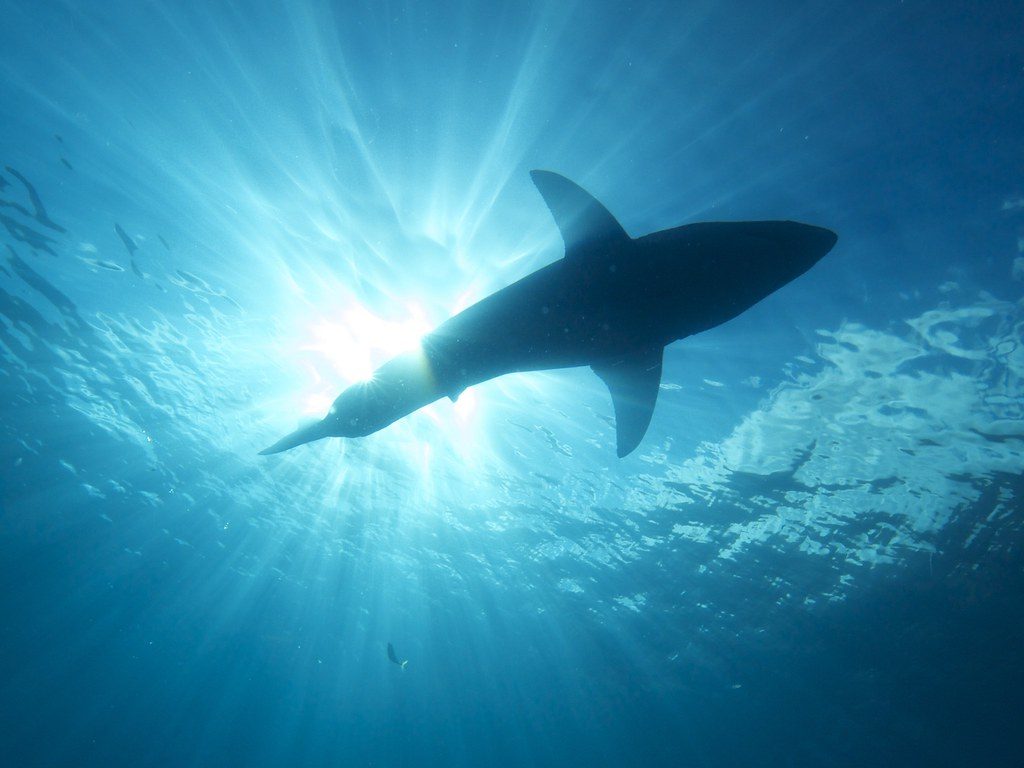
A rare great white shark sighting off Rhode Island has given scientists an exciting chance to learn more about one of the ocean’s most famous predators. Researchers were searching for a dead humpback whale when they found and filmed the shark feeding in waters near Block Island.
Events like this are uncommon, making the video valuable for both science and conservation. This article explains where the shark was found, why the sighting matters, what researchers learned, and what it means for people visiting Rhode Island’s beaches.
Researchers capture a rare moment
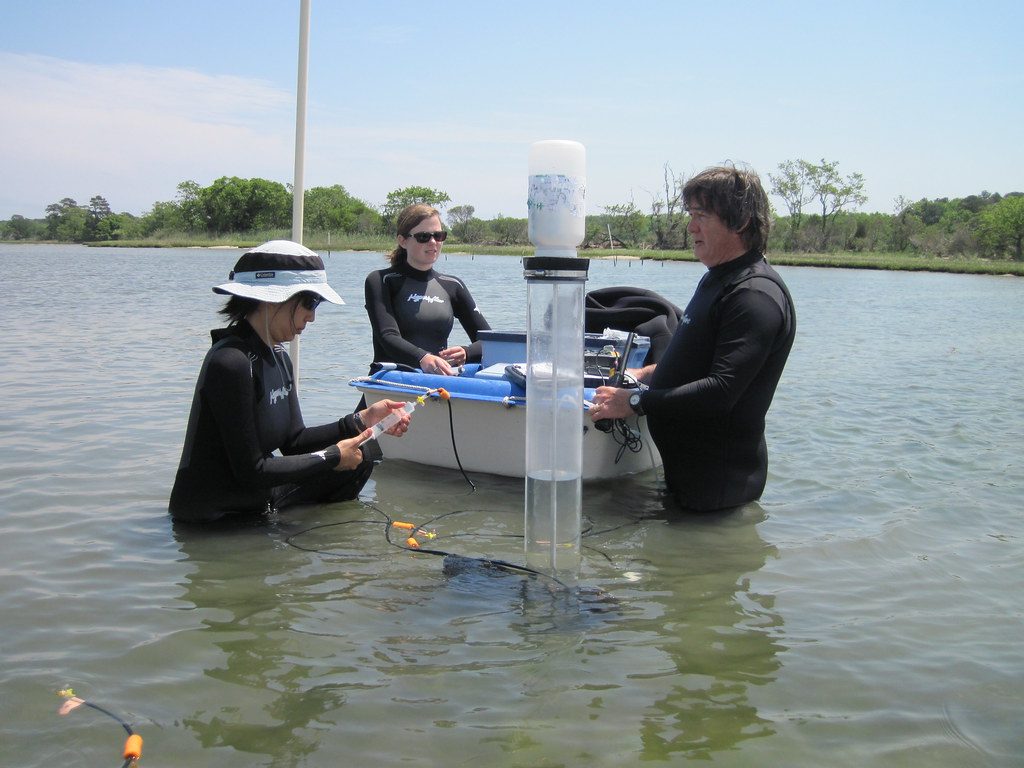
Marine researchers from the Atlantic Shark Institute and Mystic Aquarium found the shark several miles south-southeast of Block Island. They had been following reports of a drifting humpback whale carcass when they spotted an estimated 8-foot great white shark feeding on it. The team recorded the encounter on video, creating what they believe is the first footage of a great white feeding in Rhode Island waters.
Researchers said great white sharks are seen in the area from time to time, but filming one feeding is much harder. The footage gives scientists a better look at the shark’s behavior in its natural environment without disturbing it.
Why the whale attracted the shark
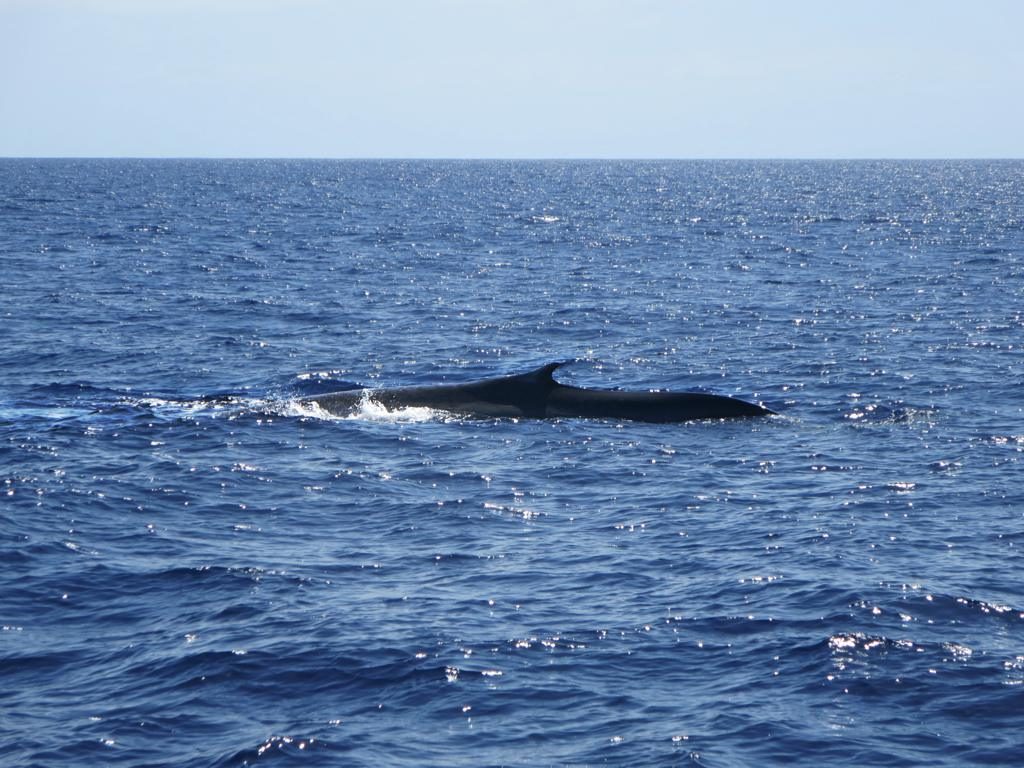
Large whale carcasses provide a huge food source for many ocean animals. Sharks can detect food from long distances using their strong sense of smell, making a dead whale an important feeding opportunity.
Scientists say whale carcasses can attract several scavengers, including sharks, over many days. After the research team finished recording the event, the whale later washed ashore on Block Island with clear bite marks, showing how much feeding had taken place.
Why this sighting matters
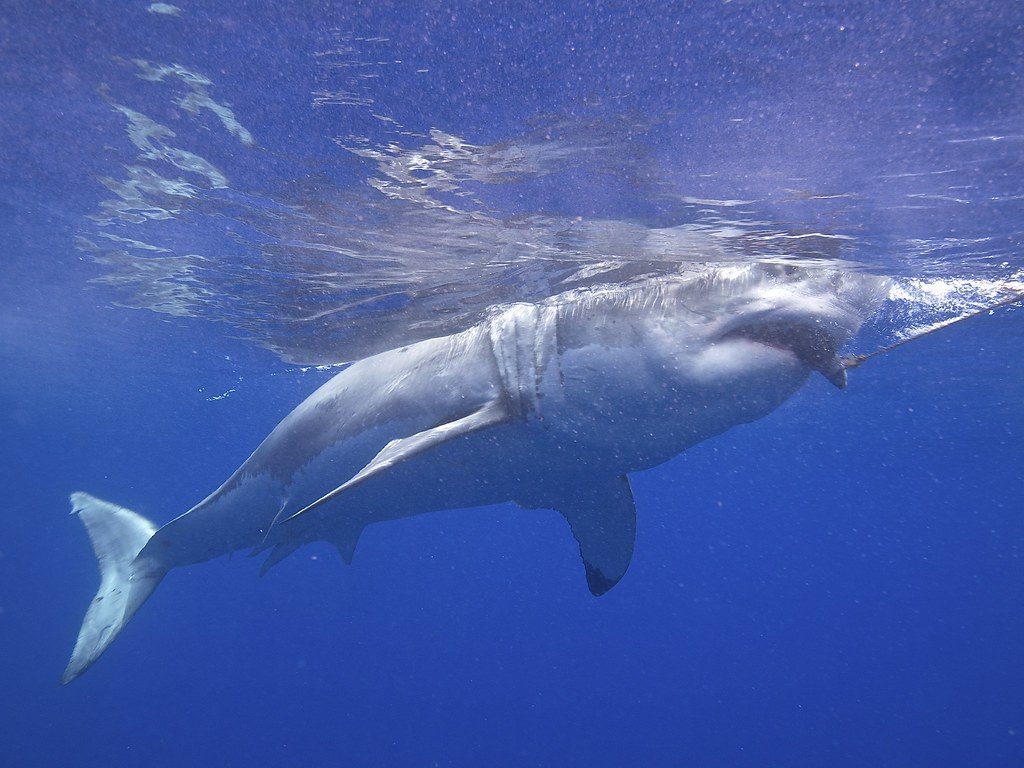
Great white sharks live in the Northwest Atlantic, but confirmed footage from Rhode Island waters has been limited. Because of that, every verified observation helps researchers understand where these sharks travel, feed, and spend their time.
Scientists use information from sightings, tagging projects, and underwater cameras to study migration patterns and seasonal movements. Better knowledge helps wildlife managers protect sharks while also improving public awareness about marine life.
Great white sharks and Rhode Island
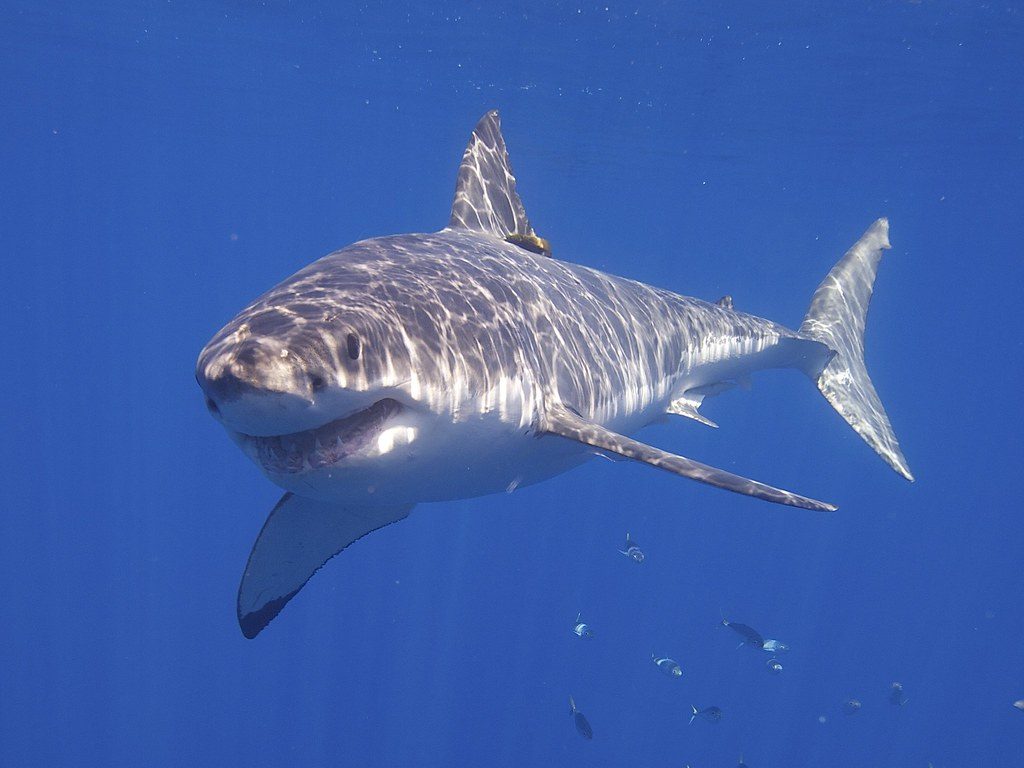
Great white sharks are protected in U.S. Atlantic waters, and experts say their numbers have slowly improved after years of conservation work. More sightings today do not necessarily mean there are suddenly many more sharks close to beaches.
Researchers explain that improved technology, including satellite tags, underwater cameras, and public reporting, allows more sharks to be recorded than in the past. This helps scientists build a clearer picture of shark activity around southern New England.
What beach visitors should know

Although seeing a great white shark can sound alarming, attacks on people remain extremely rare. Most sharks are focused on natural prey such as fish and seals rather than humans.
Experts recommend basic safety steps when swimming in the ocean. People should avoid swimming near seals, stay out of the water at dawn or dusk when possible, and leave the area if marine wildlife is feeding nearby. These simple actions help lower the chance of an unexpected encounter.
What scientists hope to learn next

Researchers plan to continue studying sharks along the New England coast using underwater cameras and tracking equipment. Every new observation helps answer questions about feeding habits, migration routes, and how changing ocean conditions affect marine wildlife.
Scientists say this rare Rhode Island footage is another piece of a much larger puzzle. By collecting more information over time, they hope to improve shark conservation while helping people better understand these important ocean predators.
Leave a Reply