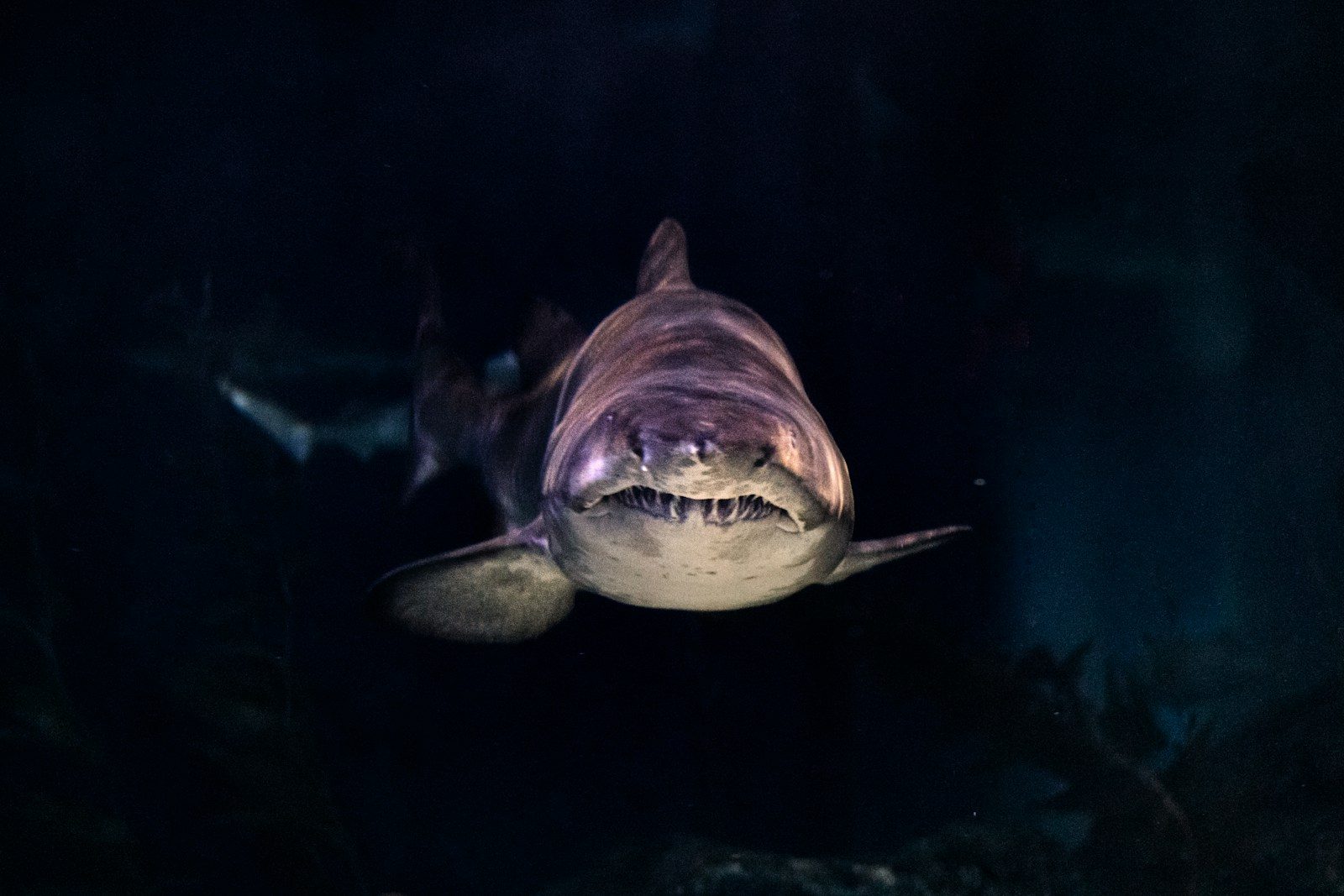
A strange shark on camera can quickly turn into a much bigger story online. Claims about a possible megalodon relative appearing in modern waters are especially likely to grab attention, but the science needs a closer look. Megalodon was a real giant shark, yet it disappeared from the fossil record about 3.6 million years ago. Modern footage of a very large shark cannot prove that the ancient predator, or a direct living relative, is still around.
Here is what the footage can tell us, what scientists know about megalodon’s family, and why large sharks are sometimes mistaken for something far more mysterious.
The shark was hard to identify

Large sharks can look very different depending on the angle, water quality, distance, and camera lens. A video that gives little information about the animal’s full body can make it difficult to judge its true size or species.
This is why a claim that a shark is a megalodon relative should not be accepted from appearance alone. Scientists normally use clear physical features, location, behavior, and other evidence before identifying an animal.
Megalodon was a real giant shark

Megalodon, scientifically known as Otodus megalodon, was one of the largest sharks ever to live. Recent research has suggested that some individuals may have reached more than 20 meters, or about 65 feet, although scientists are still studying its exact size and body shape.
The shark lived in warm oceans from about 23 million years ago until around 3.6 million years ago. Its fossils include huge teeth, and fossil whale bones also show marks made by its powerful bite.
It was not a giant great white

For many years, artists often showed megalodon as a huge great white shark. Scientists now believe that picture is not accurate because the two sharks belong to different evolutionary lines.
Megalodon was part of the extinct Otodontidae family. Great whites belong to a different group, although their ancestors lived during some of the same periods and may have competed with megalodon for food.
A living megalodon is not supported

There is no scientific evidence that megalodon survives today. Its teeth are found in marine rocks dating back to about 3.6 million years ago, but there are no younger megalodon teeth showing that the species continued into modern times.
Scientists would also expect to find other signs if such a huge predator were alive, including fresh teeth or clear bite marks on large marine animals. None of that evidence has been found.
Some relatives were also impressive

Megalodon did have relatives that were large and powerful. Fossil sharks from the Otodus group lived before and around the time of megalodon, showing that this shark belonged to a long evolutionary line of large predators.
However, calling a modern shark a “megalodon relative” can be misleading. Living sharks may share distant ancestors with megalodon, but that does not mean a large shark seen today is a surviving version of the ancient giant.
What the footage really shows

The most careful conclusion is that unusual shark footage should be treated as a species-identification question, not proof of a prehistoric animal. Without strong evidence, it is not possible to confirm that a mysterious shark is a megalodon or a surviving close relative.
The real story is still fascinating. Modern oceans contain several large shark species, and scientists continue to learn more about their behavior, size, and family history. A strange video can raise questions, but only solid evidence can answer them.
Leave a Reply