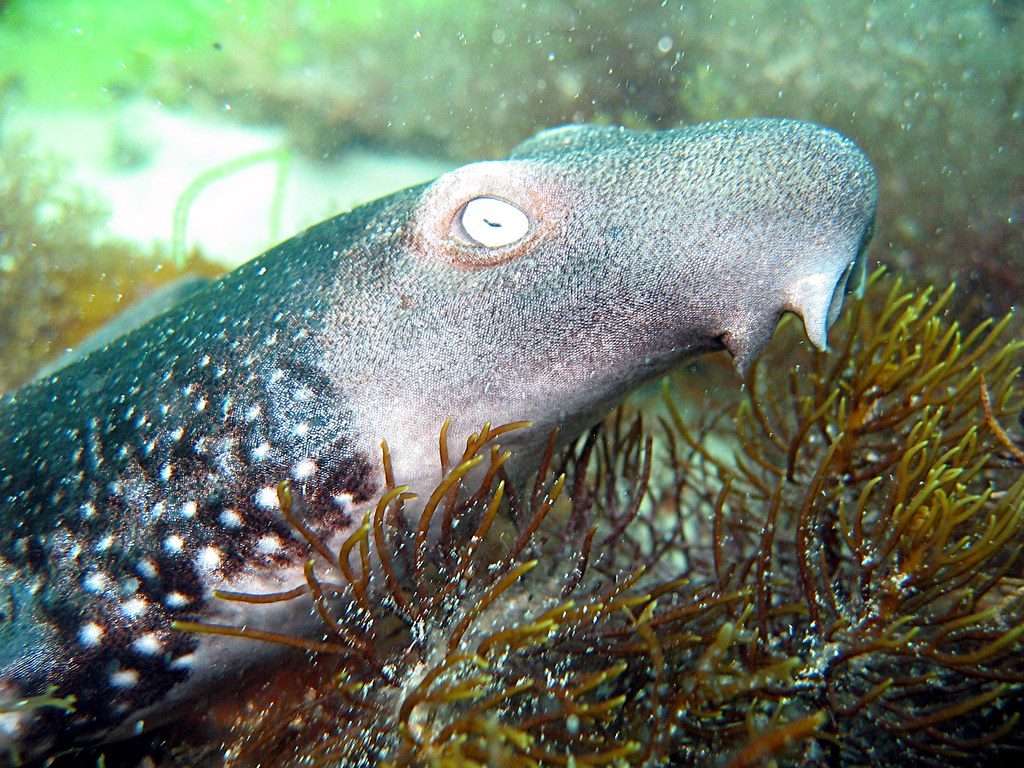
The coral catshark, Atelomycterus marmoratus, is a small reef-associated shark found across the Indo-West Pacific. It reaches about 70 cm, or 28 inches, and commonly shelters inside holes and crevices within shallow coral reefs.
Its slender body is particularly well-suited to this environment. Instead of depending on the open water speed associated with larger sharks, it can move through narrow reef spaces that give it access to small animals living close to the seafloor.
It spends daylight hours hiding
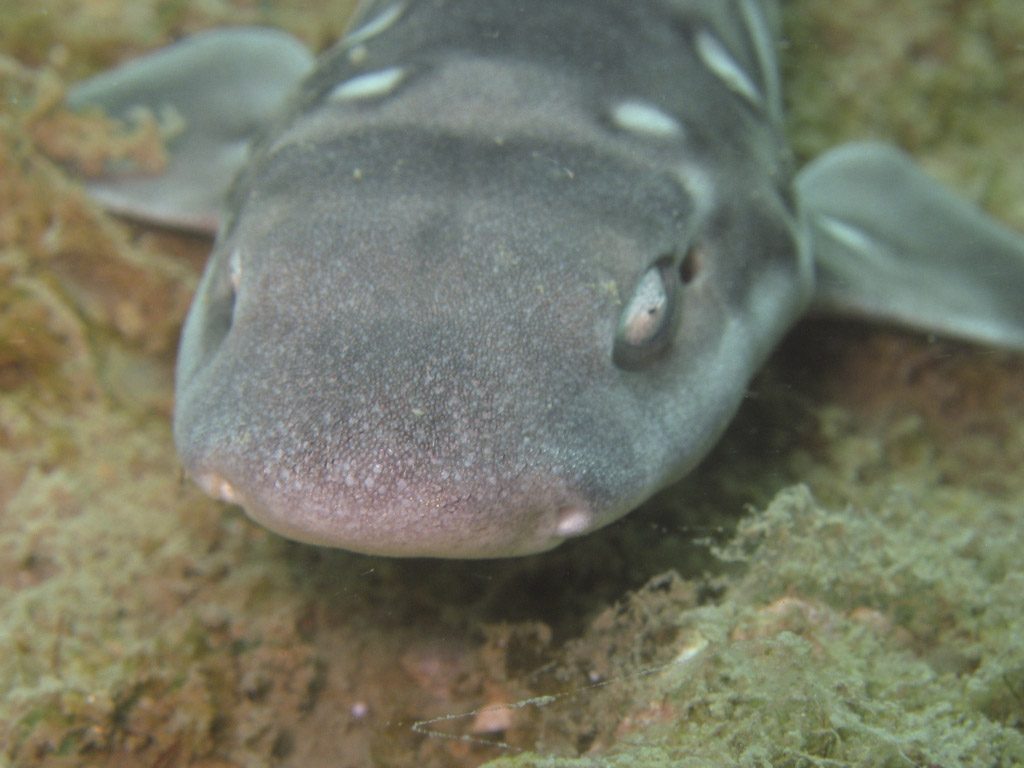
Coral catsharks are generally reclusive and relatively inactive during daylight hours. They shelter beneath reef structures and inside deep crevices, and observations indicate that individual sharks can repeatedly return to the same hiding places.
Their activity increases around dusk and during the night. This means the reef provides more than camouflage because its network of openings creates both daytime shelter and a complicated hunting environment that the shark can explore after dark.
Its prey lives close to the bottom
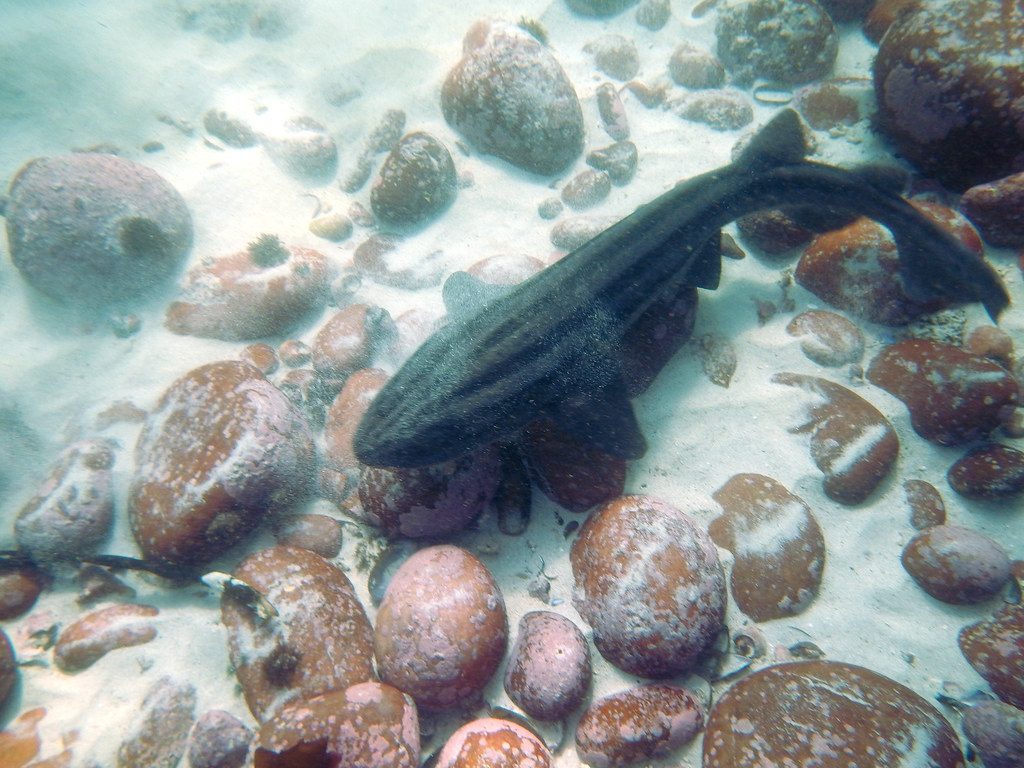
The coral catshark feeds primarily on relatively small animals associated with the reef floor. Documented prey includes small bony fishes and bottom-dwelling invertebrates, while other accounts specifically include crustaceans and mollusks.
Its narrow, elongated body allows it to investigate openings that larger predators cannot easily enter. Researchers still describe the species as comparatively little known; however, detailed claims about exactly how it chooses individual prey should be treated cautiously.
Waiting can become part of the hunt
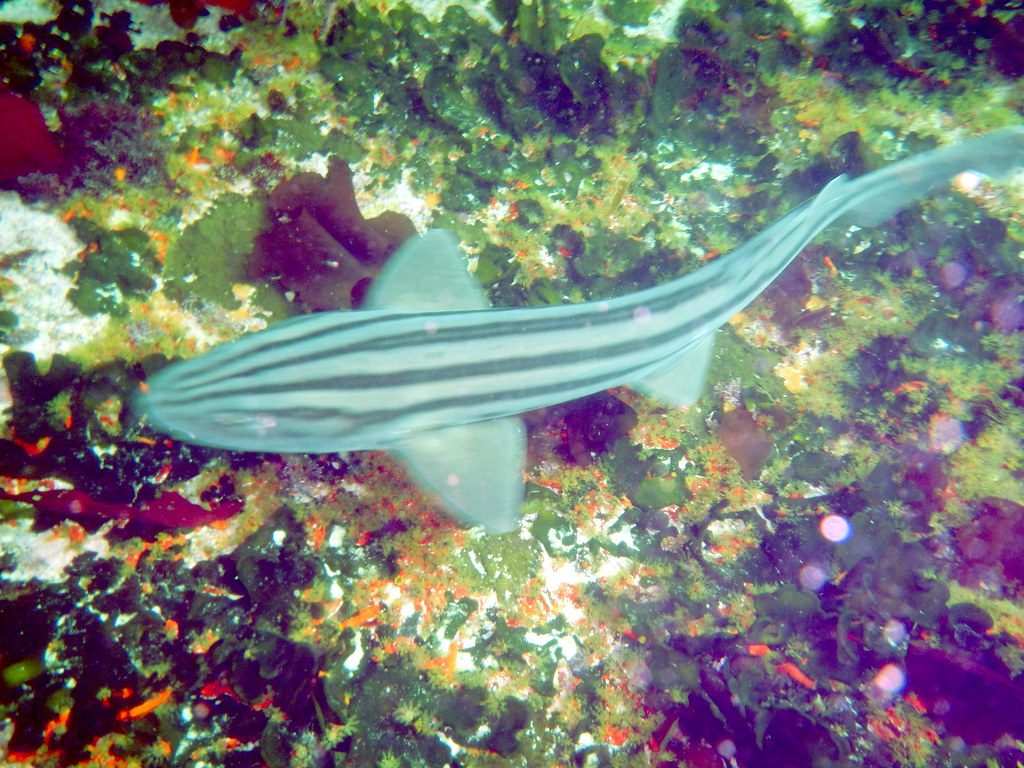
The claim that this shark “doesn’t chase” is too absolute. Coral catsharks actively forage at night, meaning they do move through their habitat searching for food rather than relying exclusively on stationary ambushes.
However, ambush behavior has been observed. Captive coral catsharks have been documented remaining still before suddenly lunging when prey moves within range, while their patterned bodies can help them remain difficult to distinguish against complicated reef surroundings.
Sharks have powerful sensory systems
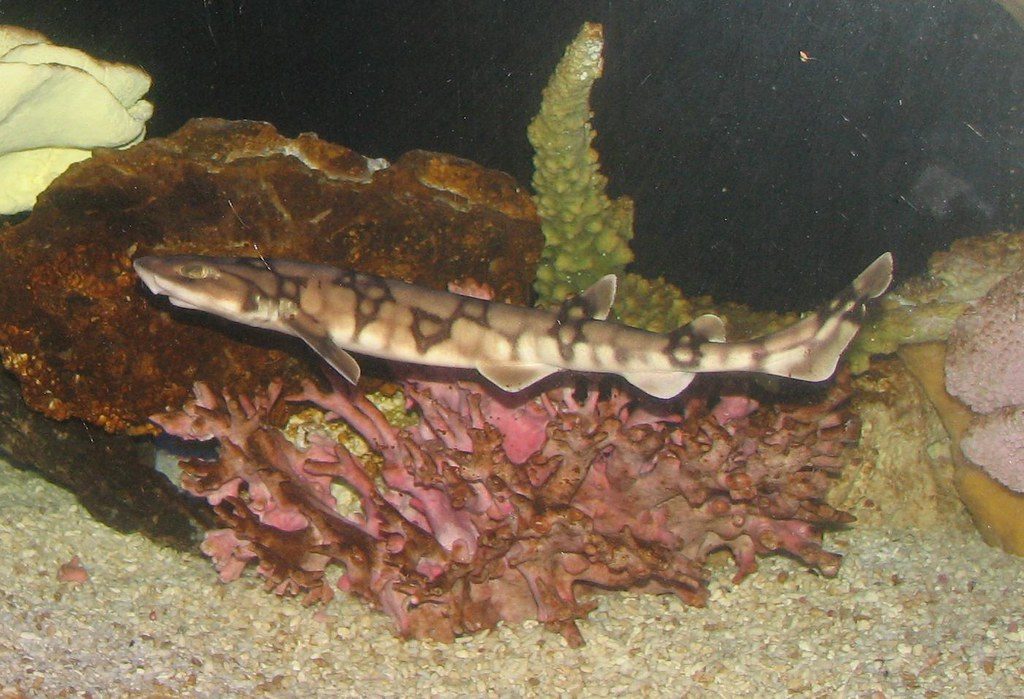
Like other sharks, coral catsharks possess sensory systems suited to detecting activity around them. Available species accounts describe vision, smell, the lateral line, and electroreception as contributing to their ability to detect potential prey.
That makes sensory awareness particularly useful around reefs, where prey can disappear behind coral or into narrow openings. Instead of depending solely on sight, a shark can respond to several kinds of information produced by animals moving nearby.
The reef gives this shark an advantage
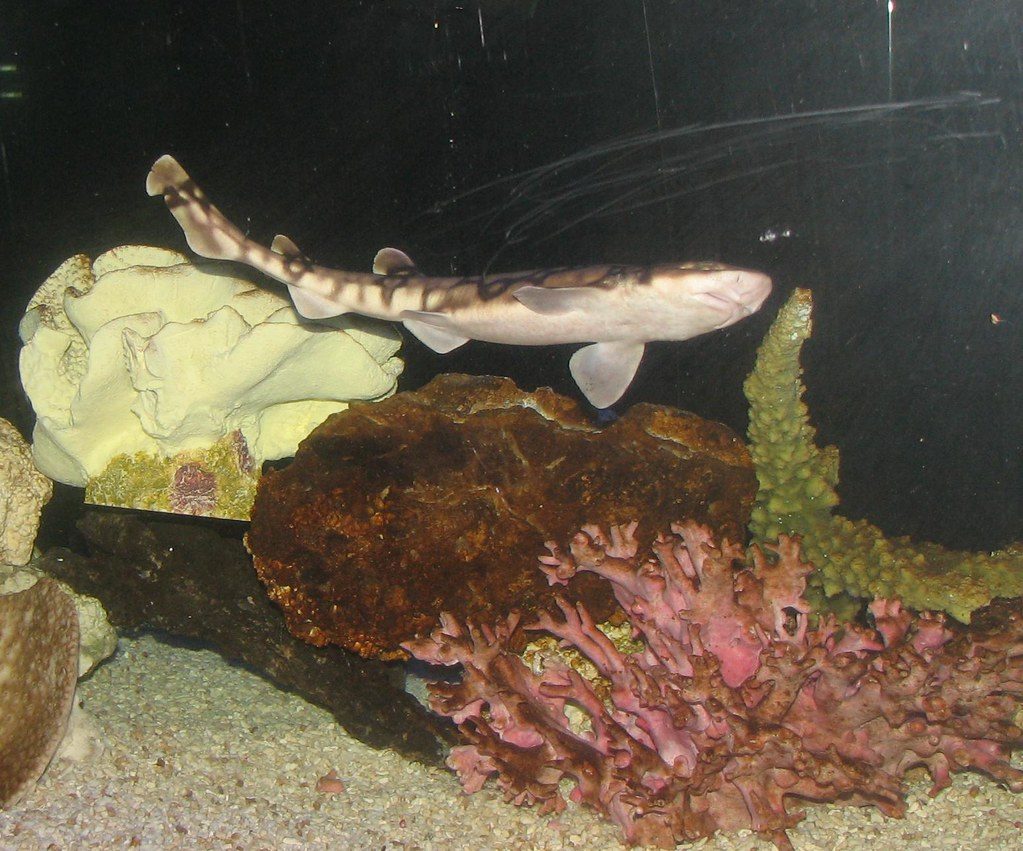
Coral reefs create a maze of cracks, overhangs, and small cavities. The coral catshark’s elongated body allows it to exploit those structures, even wriggling into small openings while searching for prey that might be inaccessible to bulkier predators.
This combination of habitat and body shape helps explain its distinctive hunting style. It can remain concealed, forage through confined spaces, and use short movements toward nearby prey rather than depending entirely on sustained high-speed pursuit.
Featured Image: “Varied Catshark” by burna10 is licensed under CC BY-NC-SA 2.0
Leave a Reply