
Have you ever wondered why so many sperm whales have deep marks across their heads and bodies? These battle scars reveal the secret life of sperm whales and tell scientists stories that are impossible to see underwater. Every scar is like a clue, showing how these giant animals hunt, compete, and survive in one of Earth’s hardest places to live.
By studying these marks, researchers have learned more about sperm whale behavior, social life, and deep-sea hunting than ever before. This article explains what these scars mean and why they matter.
Battle scars are like nature’s record book

Sperm whales spend much of their lives far below the ocean surface, where people cannot easily watch them. Because of this, scientists use scars as natural records of what happens during their lives. A whale’s skin can hold marks for many years, making each scar an important piece of evidence.
Researchers carefully compare scar shapes, sizes, and locations. Some scars appear in straight, parallel lines, while others are round or curved. These patterns help scientists understand whether a whale fought another whale, escaped a giant squid, or survived another dangerous event.
Tooth marks tell the story of whale fights
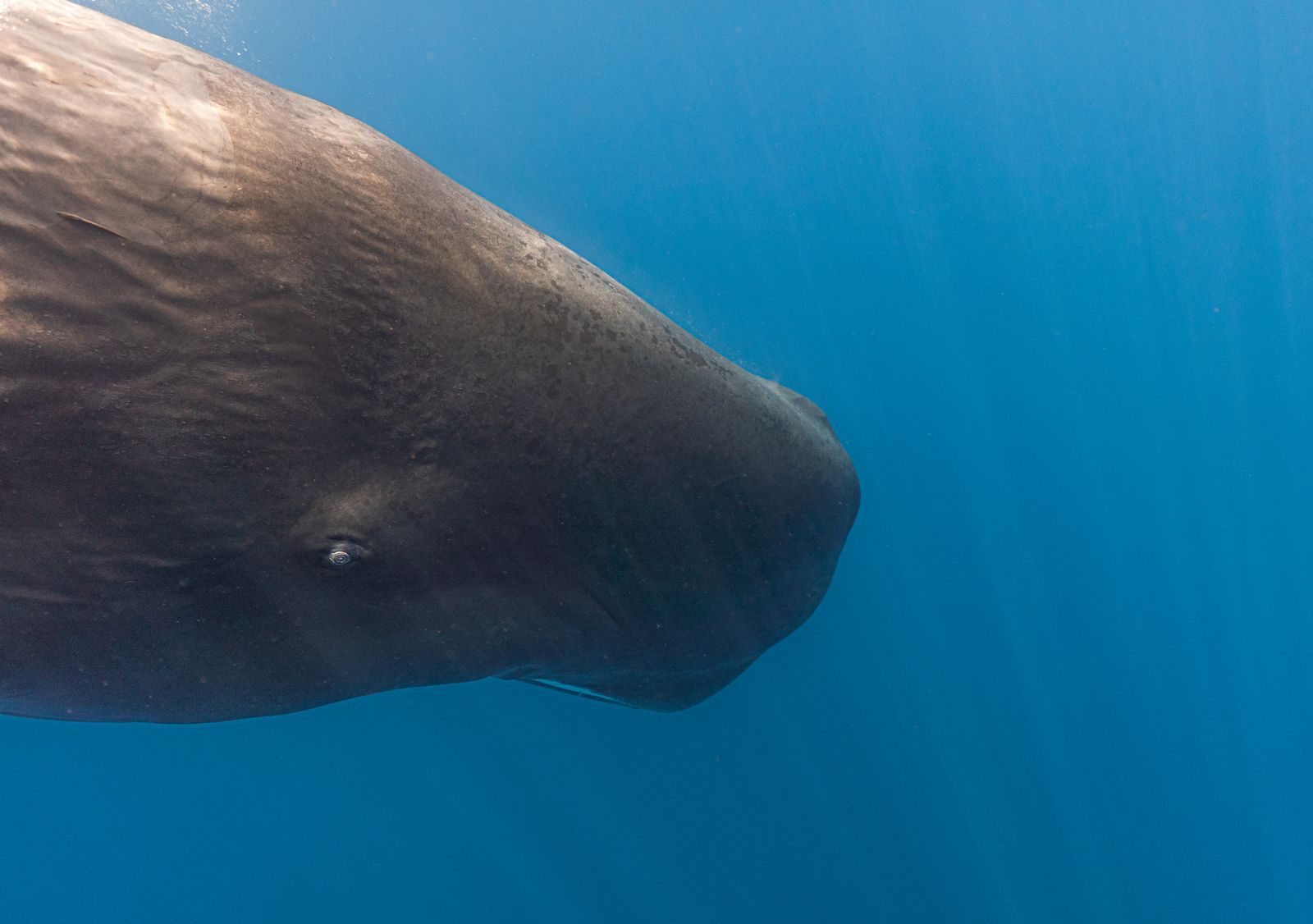
Many adult male sperm whales have long, parallel scars across their heads and bodies. Scientists have found that these marks match the spacing of sperm whale teeth. The scars become more common as males grow older, showing they likely come from fights with other males.
These battles usually happen as males compete for the chance to breed. While the fights can leave lasting marks, they rarely end in death. Instead, the scars become lifelong reminders of the whale’s strength and experience.
Squid leave their own battle marks

Not every scar comes from another whale. Sperm whales are famous for hunting giant squid and colossal squid thousands of feet below the ocean’s surface. During these hunts, the squid fight back with powerful arms covered in sharp suction cups lined with tiny teeth.
The circular scars left by these suckers can stay on a whale’s skin for years. Scientists often find these marks along with squid remains inside whale stomachs, confirming that the whales survived fierce underwater struggles before catching their prey.
Scars reveal how whales grow and change

Young sperm whales usually have smooth skin with few marks. As they grow older, especially males, their bodies collect more scars. This pattern helps scientists estimate how a whale’s life changes over time.
Older males often live alone outside the breeding season, while females and young whales stay together in close family groups called pods. The growing number of scars suggests that adult males face more risks as they hunt alone and compete with other males.
Scientists learn without disturbing whales

In the past, learning about sperm whales was much harder. Today, researchers use underwater photography, drones, and photo identification to study living whales. By matching scar patterns, they can recognize the same whale year after year without touching or harming it.
This method allows scientists to track health, movement, and survival over many years. New scars can also reveal recent encounters with predators, prey, fishing gear, or other whales, giving researchers valuable information while leaving the animals undisturbed.
Why these scars matter for conservation

Every scar helps scientists understand how sperm whales live in the deep ocean. Learning where whales hunt, travel, and interact with one another helps experts identify important habitats that need protection.
Scars can also reveal human-caused dangers. Some whales carry marks from fishing gear or ship strikes, showing where conservation efforts are needed. The more researchers learn from these natural records, the better they can protect these remarkable animals for future generations.
Leave a Reply