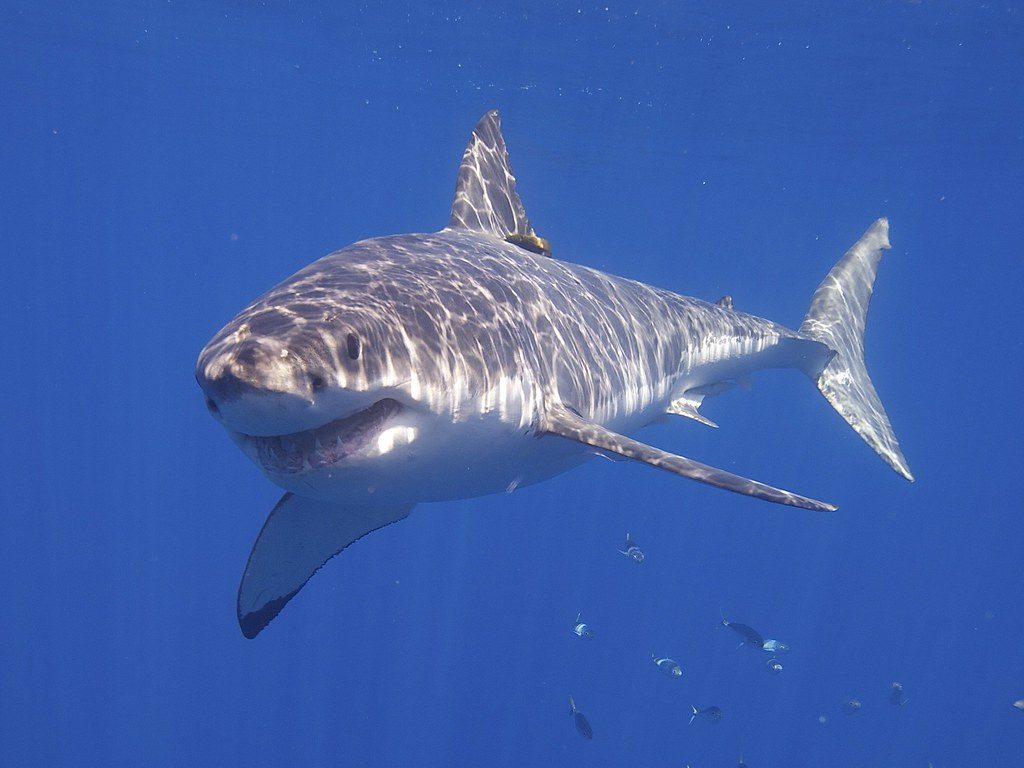
The Mediterranean is famous for crowded beaches and clear blue water, but it is also home to one of the ocean’s most famous predators. Great white sharks still inhabit the Mediterranean Sea, although their population has declined dramatically and encounters are now rare.
Scientists consider the Mediterranean population critically endangered, making a sighting more significant for conservation than an indication that swimmers are suddenly in danger. In May 2026, divers even filmed an approximately 13-foot great white roughly 50 miles offshore in the Strait of Sicily, providing striking evidence that these elusive sharks remain in the region.
Great white sharks never disappeared from the Mediterranean
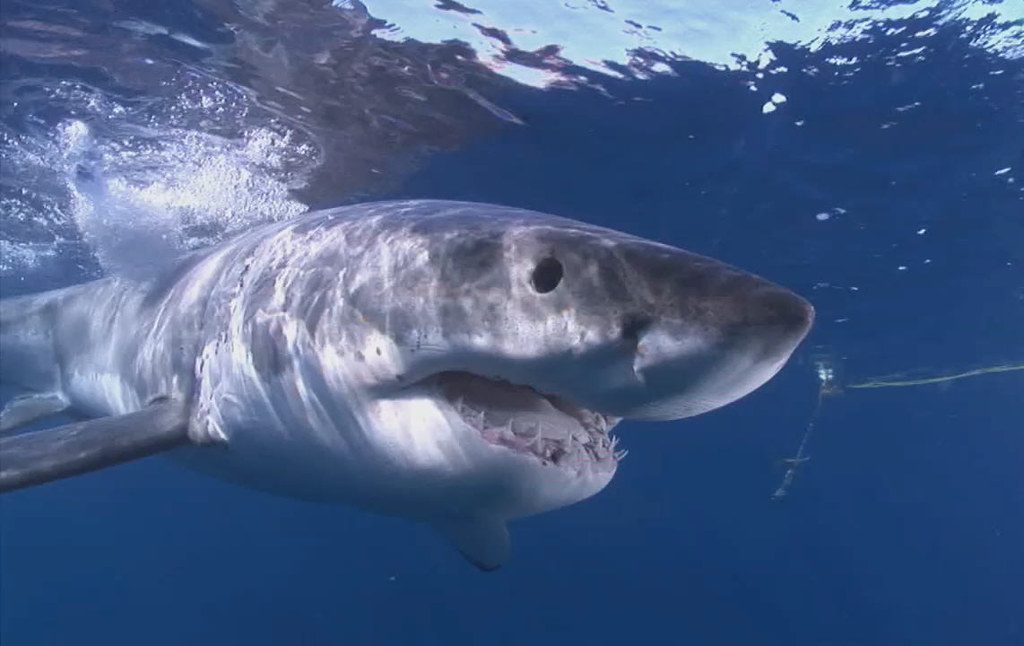
Great whites are not occasional visitors that have recently entered the Mediterranean from somewhere else. Historical records show that Carcharodon carcharias has long occurred throughout the region, with records extending across waters near Spain, France, Italy, Tunisia, Malta, Croatia, Greece, and Turkey.
Their presence today is much harder to detect. Researchers describe Mediterranean great whites as one of the world’s least understood and most endangered white shark populations. Centuries of fishing pressure, followed by modern industrial fishing, contributed to a severe decline in their abundance.
Scientists have identified several shark hotspots

Historical records reveal several areas where great whites appeared more frequently. These included the Balearic Islands, the northern Tyrrhenian Sea, the Strait of Sicily, the Strait of Messina, the eastern Adriatic, the Maltese Islands, and parts of the waters around Turkey. Their modern distribution appears considerably different.
A 2025 analysis identified the southern Strait of Sicily extending toward Tunisia’s Gulf of Gabes and areas along Turkey’s Aegean coast as important modern occurrence hotspots. Researchers have also recorded contemporary evidence from the northern Tyrrhenian Sea, while sightings in the Adriatic have increasingly been reported farther offshore.
A huge great white appeared near Sicily in 2026

One of the clearest recent encounters happened in May 2026. Diver Derk Remmers was helping remove abandoned fishing nets from a submerged shipwreck in the Strait of Sicily when a great white suddenly appeared. The encounter occurred approximately 50 miles offshore, with Remmers diving nearly 200 feet beneath the surface.
The shark was estimated at roughly 13 feet long. Footage of the encounter was particularly important because scientists have struggled to locate living great whites in Mediterranean waters despite extensive surveys. The stretch between Italy and Tunisia is considered one of the population’s remaining strongholds.
The Strait of Sicily could be especially important

Researchers searching specifically for Mediterranean great whites have concentrated considerable effort around Sicily, Lampedusa, and Tunisia. During expeditions between 2021 and 2023, scientists collected 159 environmental DNA samples and conducted hundreds of hours of baited underwater video surveys and other fieldwork.
Their models identified the Sicilian Channel as a seasonal occurrence hotspot, particularly during early summer. Scientists subsequently focused on Lampedusa and areas off Tunisia after combining historical information, reported sightings, catches, and environmental evidence.
Baby great whites may reveal another secret
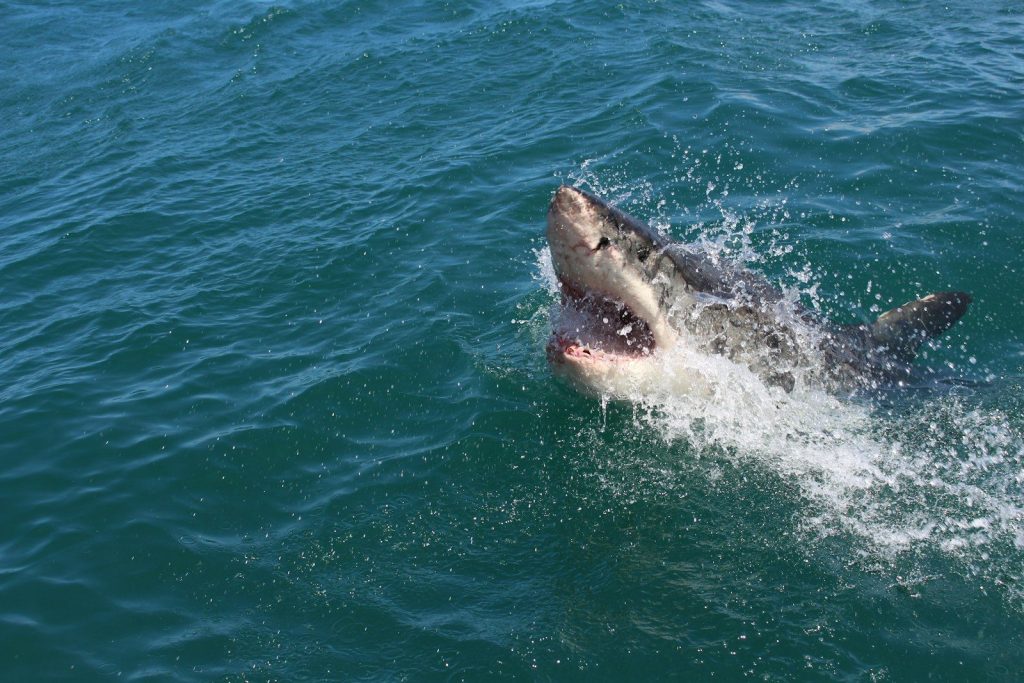
Some of the most intriguing evidence involves young sharks. Researchers have proposed the Adriatic Sea, Aegean Sea, and Strait of Sicily as possible nursery or early developmental habitats because juvenile great whites have been documented in these regions. The Strait of Sicily has produced particularly important records of very young animals.
Scientists caution that the evidence may point to a network of developmental habitats rather than one single Mediterranean nursery. Recent research has also provided evidence for the continued presence of juvenile white sharks in the Adriatic, despite the dramatic decline that the population experienced during the 20th century.
Humans are a much bigger threat to these sharks

Calling the Mediterranean one of Earth’s “deadliest” shark regions gives the wrong impression. The striking reality is almost the opposite. Great whites exist there, but they have become so scarce that scientists are actively trying to find and protect the remaining population.
The conservation problem extends beyond great whites. An IUCN regional assessment found that more than half of Mediterranean sharks, rays, and chimeras were at risk of extinction, with fishing pressure playing a major role in their decline. Great whites are among the species facing severe regional conservation pressure.
Featured Image: “Great White Shark” by Elias Levy is licensed under CC BY 2.0
Leave a Reply