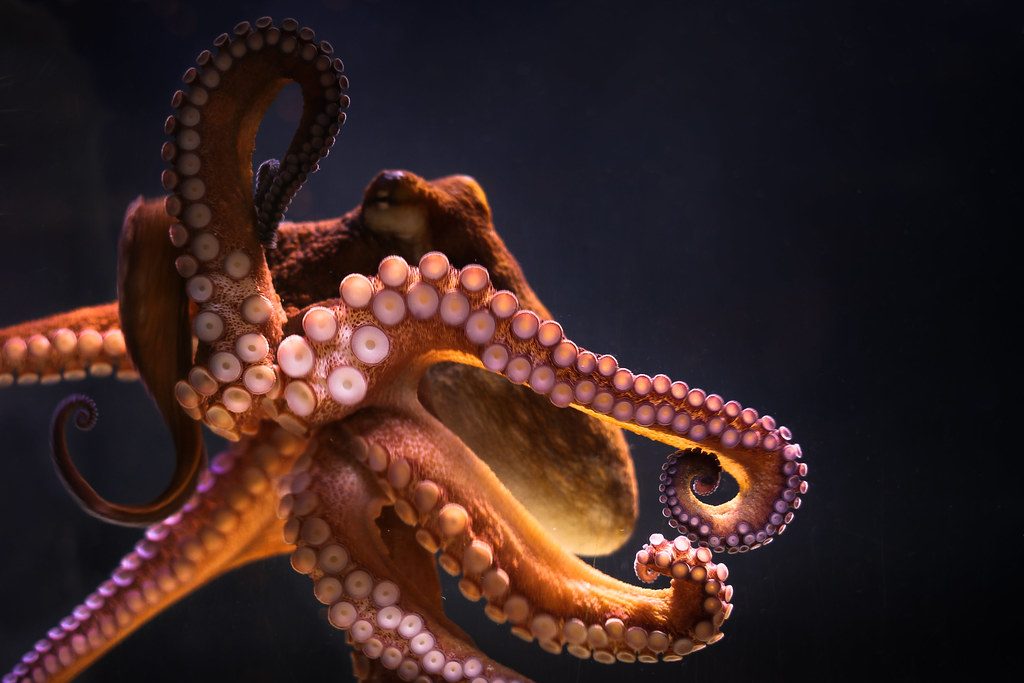
Imagine looking at an octopus on a rocky seabed and then losing sight of it only seconds later. Octopus camouflage can change color, pattern, brightness, and even skin texture very quickly. Researchers studying these animals have found just how active this system can be. Marine biologist Roger Hanlon has said that octopuses he watched made an average of 177 camouflage decisions during a single hour.
Their skin contains special structures controlled by nerves and muscles, allowing an octopus to change its appearance as the world around it changes. Scientists are still learning how this system works and how the animal combines its eyes, brain, skin, and body to create such effective disguises.
Octopus camouflage can change again and again
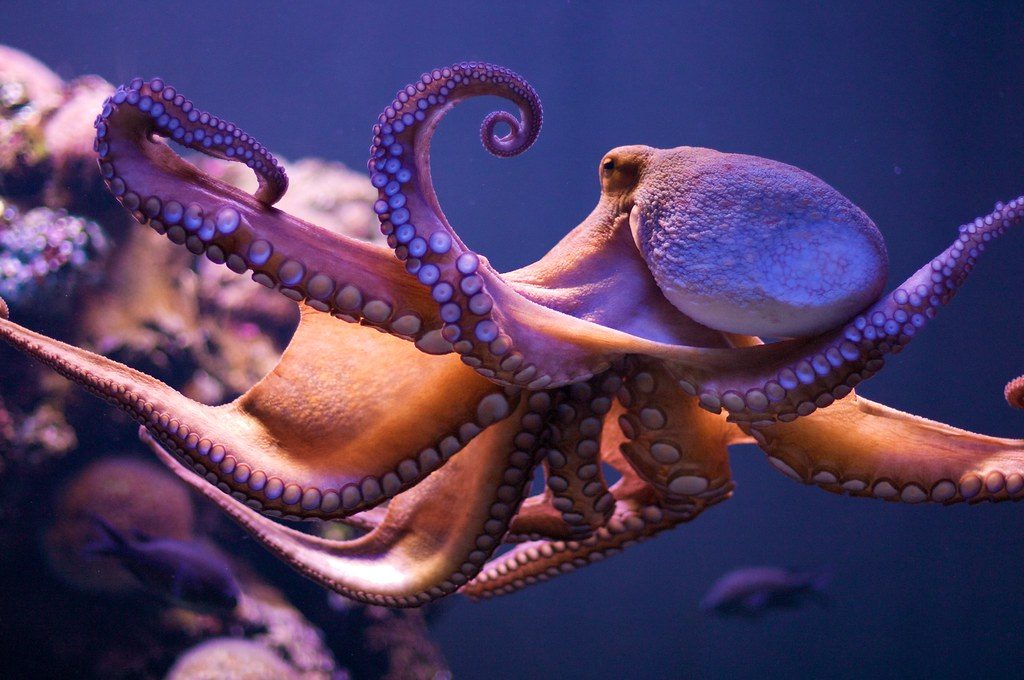
An octopus does not always choose one disguise and keep it for a long time. As the animal crawls across sand, rocks, plants, and other surfaces, its surroundings keep changing. Its appearance can change too. Hanlon has described observations in which octopuses made an average of 177 camouflage decisions in one hour. That works out to almost three decisions every minute on average. These decisions can involve changes in the way the animal’s skin looks as it moves through different parts of its environment.
The number is important because it shows how active octopus camouflage can be. It is not simply like putting on one coat and wearing it all day. The animal can keep adjusting its appearance as it travels. Researchers studying cephalopods have found that these animals use changing colors, patterns, and textures for camouflage as well as other types of behavior. Their changing skin can give scientists clues about how the animal sees and responds to the world around it.
Tiny skin organs help an octopus change color
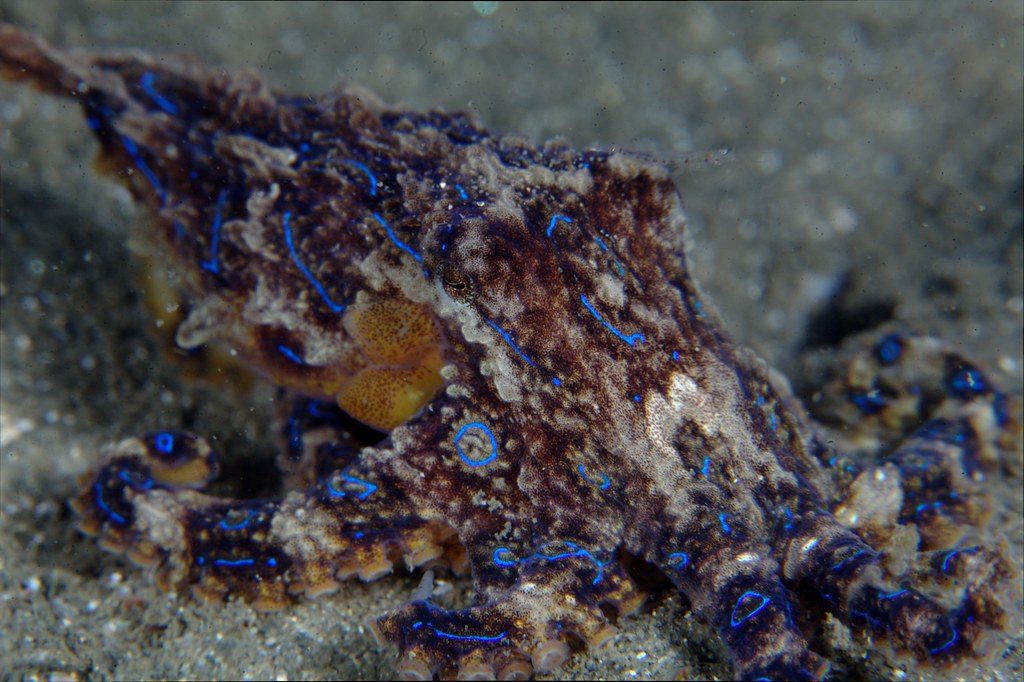
Much of an octopus’s fast color control begins with special structures called chromatophores. These are pigment organs in the skin. Muscles and nerves control them, allowing areas of color to become more or less visible. Large numbers of chromatophores can work together across the body. By controlling these structures in different combinations, an octopus can create spots, darker areas, lighter areas, and other patterns that change the way its body looks against the background.
Chromatophores are only part of the system. Cephalopod skin can also contain structures called iridophores and leucophores, which interact with light in different ways. Together, these parts of the skin help create a wide range of visible effects. Research has shown that octopuses can change both the lightness and color qualities of their bodies. This allows them to match many types of backgrounds better than they could with just one fixed body color.
An octopus can also change its skin texture
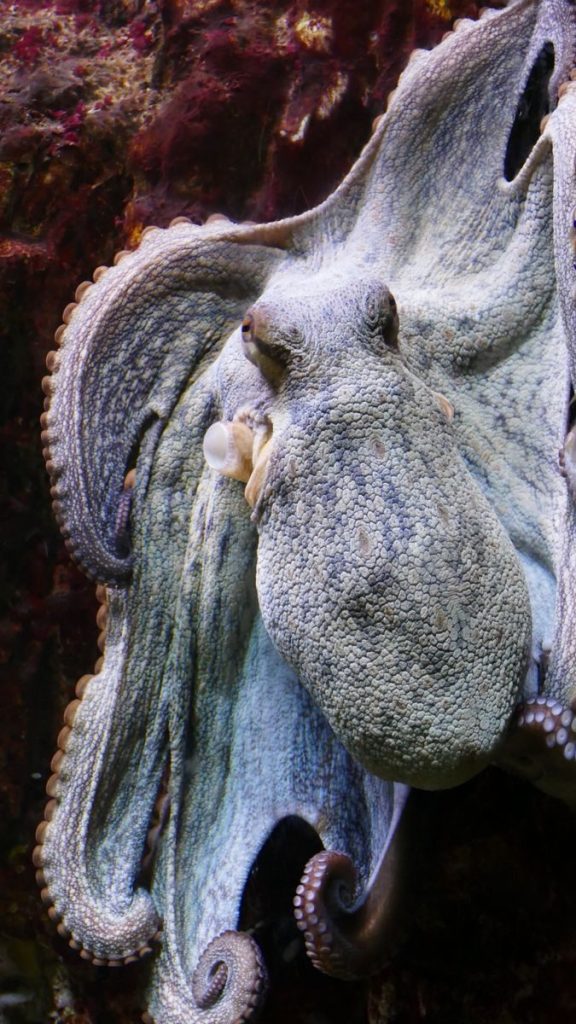
Color alone cannot always hide an animal. A smooth octopus sitting beside a rough piece of coral could still be easy to notice because its outline and surface look different. Some octopuses solve this problem by changing the texture of their skin. They use small structures called papillae that can rise from the body or flatten again. These changes can make the skin look rough, uneven, or covered with bumps instead of staying smooth.
Scientists have found that muscles in the skin control these three-dimensional structures. When the papillae rise, they can break up the smooth outline of the octopus and help its body resemble nearby objects. An octopus beside a rough surface can therefore change more than its color. It can also change the shape of its skin. When it needs to move differently, the skin can become smooth again. This ability gives the octopus another tool for hiding in complex underwater environments.
Octopus skin can sense changes in light
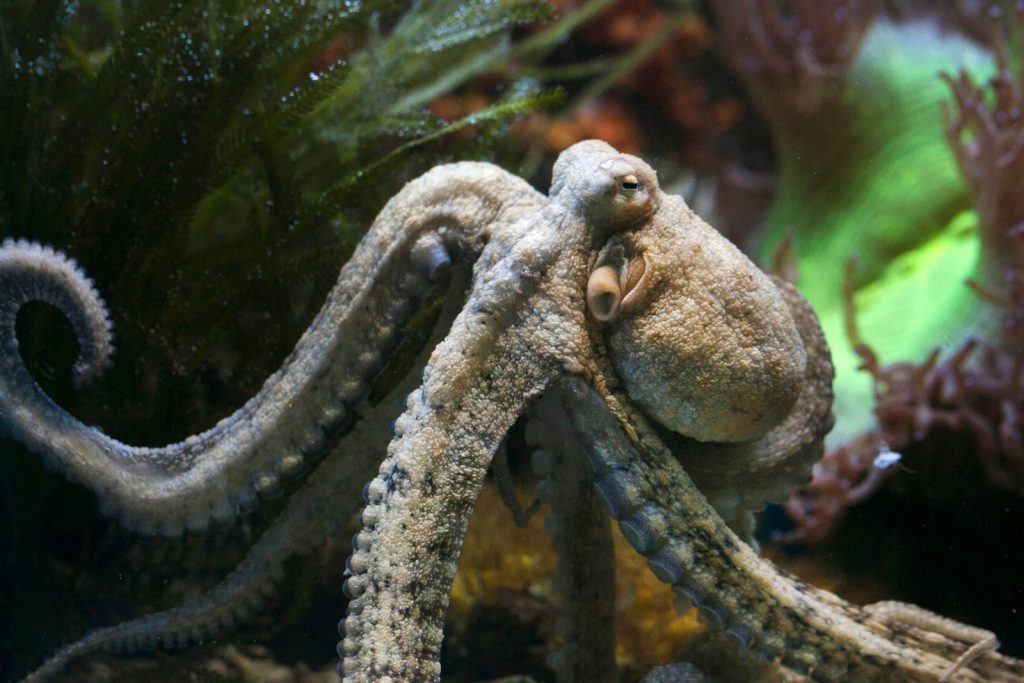
One of the strangest discoveries about octopus skin is that it can respond to light even without information coming directly from the eyes. Researchers studying the California two-spot octopus found that isolated skin could react when exposed to light. The skin contains light-sensitive proteins known as opsins, which are related to proteins involved in vision. Researchers saw chromatophores expand when the skin was exposed to light, showing that the skin itself has a basic way to detect changes in brightness.
Calling this ability seeing with the skin can be useful, but it needs an important explanation. Octopus skin does not appear to form detailed pictures of the world in the way the eyes and brain do. Researchers at the University of California, Santa Barbara, explained that the skin can detect changes in light or brightness but does not detect detailed edges and contrast in the same way as normal vision. Scientists are still studying exactly how this skin-based light sensing helps a living octopus control its appearance.
The brain controls a complex, moving display
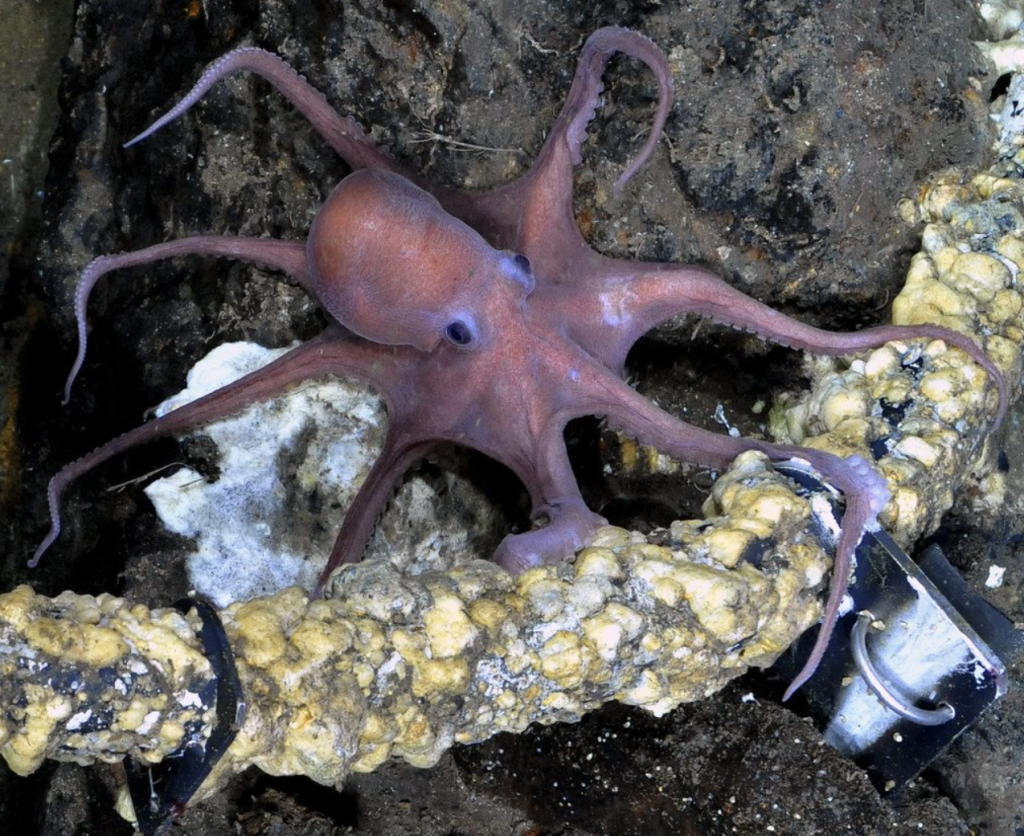
An octopus has to control many parts of its skin at the same time to produce useful camouflage. The brain and nervous system send signals that help control color, pattern, and texture across the body. This can create a broad matching pattern instead of random patches appearing in different places. Researchers describe cephalopod skin as a fast-changing display system that can react to information the animal receives from its surroundings.
This control can be very fast because the skin structures respond directly to nerve and muscle activity. Thousands of pigment organs can take part in a single display. They can form spots, bands, light areas, dark areas, or mixed patterns. Papillae can also alter the physical surface of the skin. Together, these systems allow an octopus to change several parts of its appearance rather than simply switching from one color to another. Scientists study these changes to understand how the animal turns visual information into a body pattern.
Octopus camouflage is powerful but takes energy
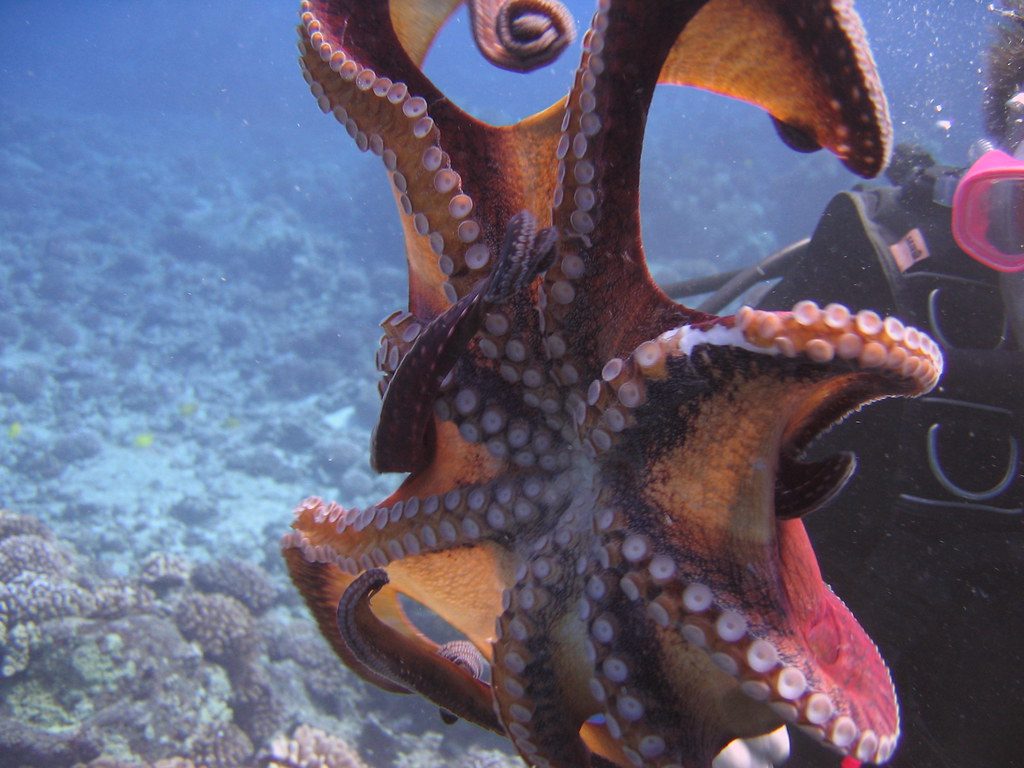
Changing appearance may look effortless, but research shows that the process has a real energy cost. A 2024 study examined the energy needed for rapid color change in octopuses. The researchers found that fully activating the chromatophore system can require a large amount of energy. The cost was close to the amount of energy an octopus uses while resting. This shows that the moving colors across its skin are produced by an active biological system rather than a simple change that happens for free.
Scientists continue to study octopus skin because it combines several unusual abilities in one animal. The skin can change visible color and pattern, alter its physical texture, and even respond to light. Researchers have also used these animals as inspiration when developing materials that can change their appearance or surface. A Stanford research team reported in 2026 that it had developed a flexible material inspired by animals such as octopuses and cuttlefish that could change both color and texture. The natural system remains far more complex, but it continues to give researchers new ideas about adaptive materials and camouflage.
Featured Image: “Key West Octopus” by Joe Parks is licensed under CC BY-NC 2.0
Leave a Reply