
When Indigenous whalers harvested a bowhead whale in Alaska in 2007, they uncovered a remarkable piece of history hidden beneath its blubber. Embedded in the whale’s body was a fragment of a 19th-century bomb lance, a type of harpoon used during the commercial whaling era.
The discovery revealed that the whale had survived an encounter with whalers more than a century earlier, offering rare evidence of the extraordinary lifespan of bowhead whales.
An astonishing discovery

While processing the whale, biologists noticed several metal fragments buried deep within its tissue. Experts at the New Bedford Whaling Museum later identified them as parts of an exploding bomb lance commonly used by commercial whalers in the late 1800s.
The weapon had remained lodged inside the whale for more than a century without preventing it from surviving.
A whale from another century
The harpoon design was patented in 1879 and was widely used during the 1880s. Based on when that weapon was manufactured and used, researchers estimated the whale was roughly 115 years old when harvested in 2007.
Because the exact date of the original strike cannot be known, the whale may have been even older.
How scientists estimate a whale’s age

Most bowhead whales are not aged using embedded harpoons. Instead, researchers examine changes in amino acids within the eye lens, a method that provides age estimates without relying on historical artifacts.
Using this technique, scientists have concluded that some bowhead whales can live for more than 200 years.
Why do bowhead whales live so long?

Bowhead whales inhabit Arctic waters, where cold temperatures, slow growth, and specialized DNA repair mechanisms may contribute to their exceptional longevity. Researchers are studying these biological traits to better understand aging and disease resistance.
Their unusually long lifespan is unique among mammals.
Survivors of the commercial whaling era

Commercial whaling dramatically reduced bowhead whale populations during the 19th and early 20th centuries. International protections and regulated Indigenous subsistence hunts have helped some populations recover, although conservation efforts continue.
The harpoon fragment served as a direct reminder that some living whales experienced the final decades of commercial whaling firsthand.
Why this discovery matters

Finding a century-old harpoon inside a whale provided one of the clearest pieces of evidence supporting the species’ remarkable lifespan. Combined with modern scientific techniques, the discovery has helped researchers better understand one of the longest-lived mammals on Earth.
It also demonstrates how historical artifacts can contribute to modern wildlife research.
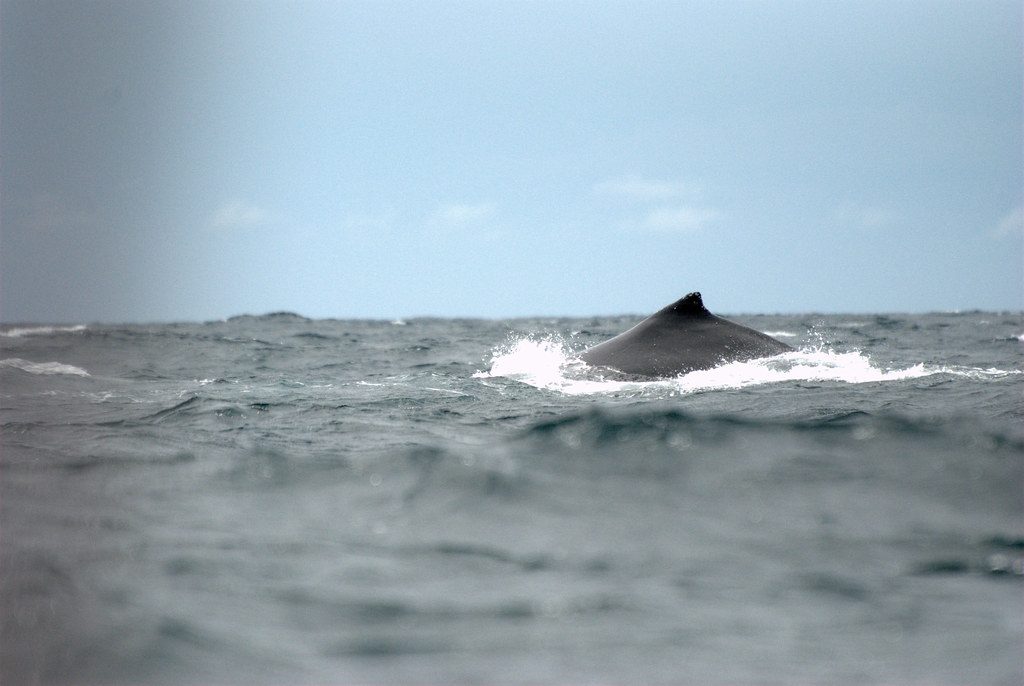
Featured Image: “Bowhead whale / Grønlandshval / Balaena mysticetus)” by Anne-Line Brink is licensed under CC BY-NC-ND 2.0
Leave a Reply