
A drive through a wildlife enclosure became much more memorable when a lion developed an unusual interest in a stopped vehicle. Video shared by Harry Price shows the animal approaching the rear of a car and appearing to mouth or bite part of its bumper.
Price was filming from another vehicle positioned behind the first car. After investigating the vehicle ahead, the lion turned and began approaching Price’s car, bringing the encounter even closer to the person recording it.
The car stopped inside the enclosure

According to Price’s account, he was traveling through a zoo when another vehicle stopped in front of him. That pause provided the lion with an opportunity to approach the stationary car.
The footage does not establish why the first driver stopped or identify the zoo where the encounter occurred. Those details should therefore not be assumed when describing the video.
The lion became interested in the bumper
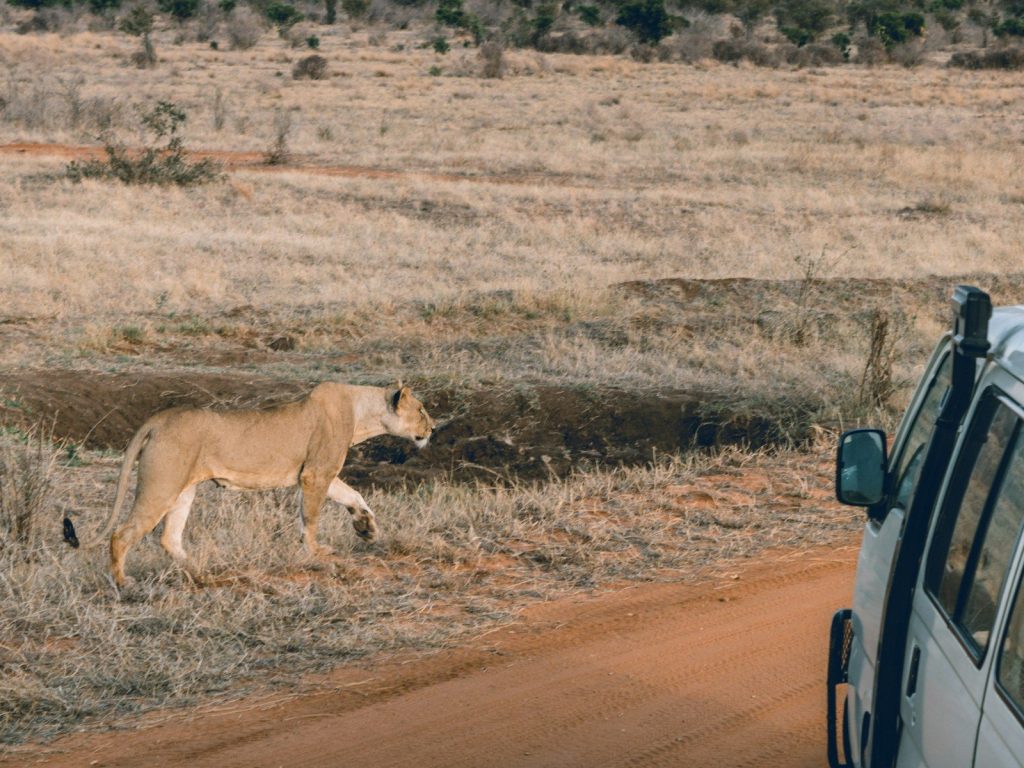
Instead of simply walking around the vehicle, the lion moved toward its rear. The animal then appeared to put its mouth around part of the bumper while the occupants remained inside.
The behavior looks dramatic because of the lion’s size, but the footage alone cannot establish its motivation. Curiosity is a more cautious description than assuming the animal was hungry or deliberately trying to damage the vehicle.
Then the lion changed direction
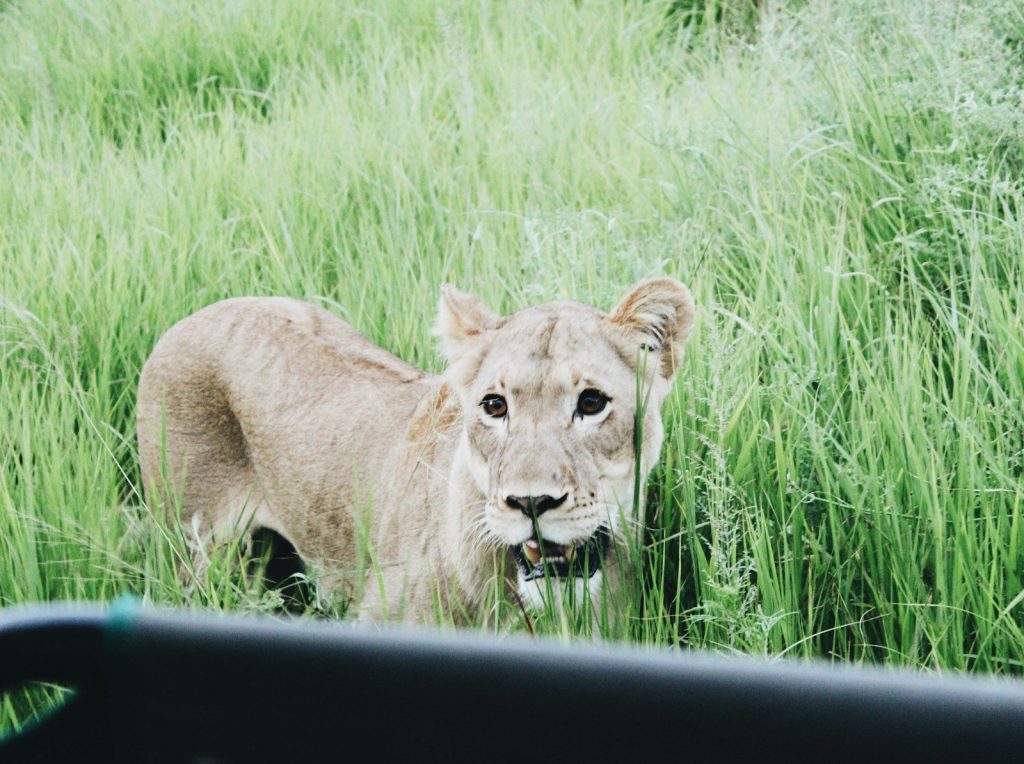
Price continued recording from the vehicle immediately behind the encounter. After spending time around the first car, the lion turned away from it.
That movement quickly changed the perspective of the video. The animal began heading toward Price’s vehicle, prompting the people inside to react as the distance between them and the lion decreased.
Lions often investigate their surroundings
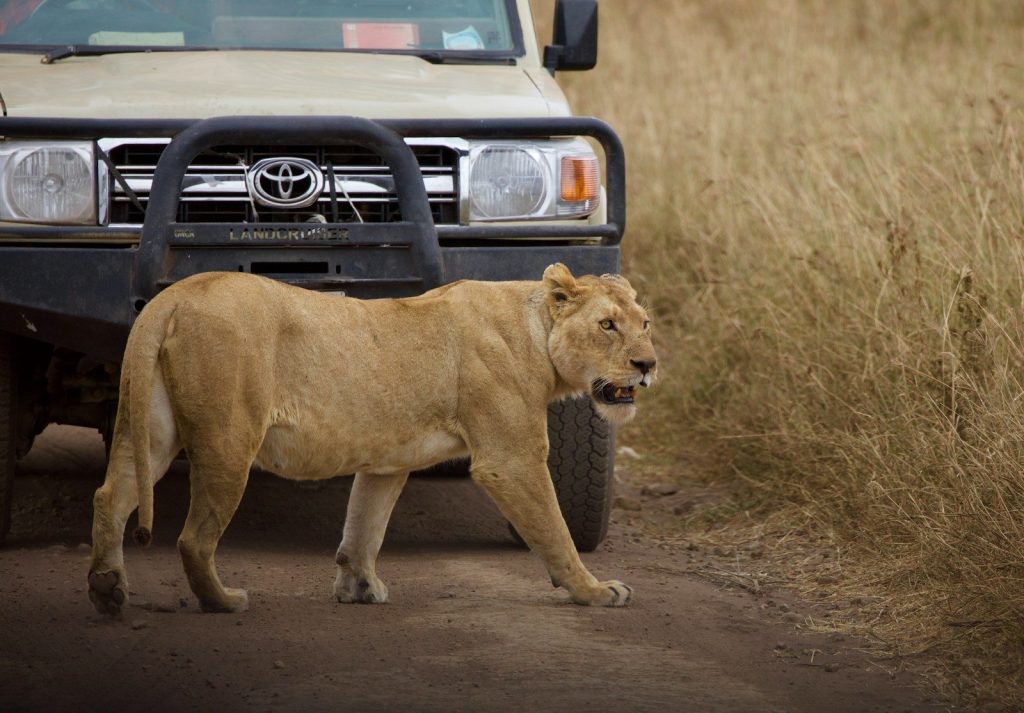
Lions rely heavily on their senses when exploring their environment. Smell, sight, and physical investigation can provide information about unfamiliar objects within their surroundings.
A vehicle inside an enclosure can therefore become something worth investigating. However, interpreting a particular lion’s intentions from a short video is difficult, and behavior that looks playful or curious should not be treated as proof that a large predator is harmless.
Drive-through enclosures require strict rules
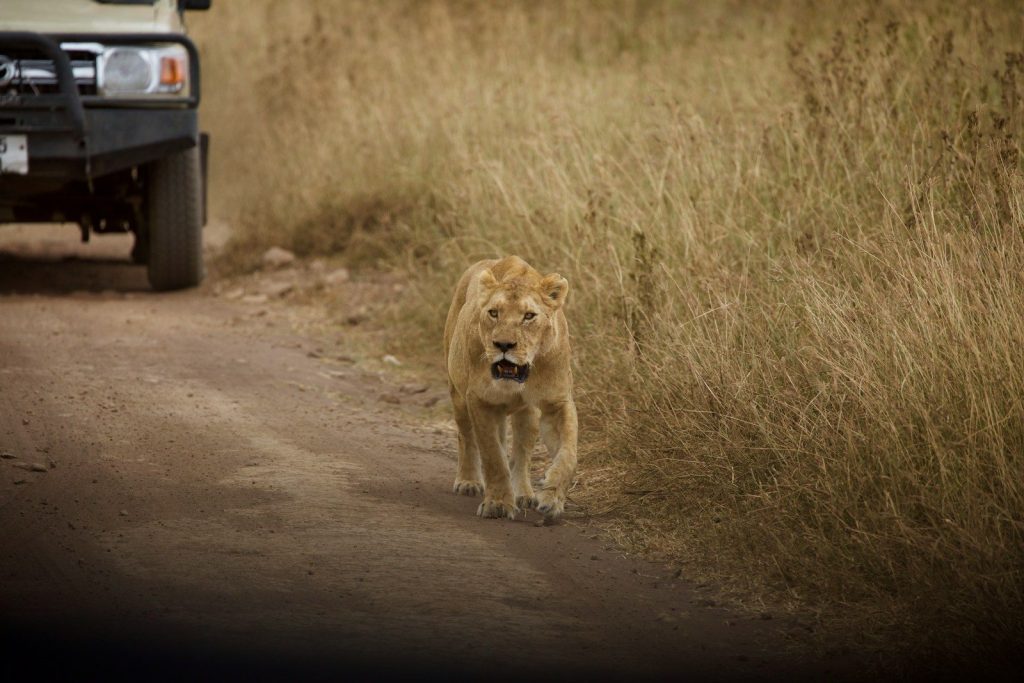
Wildlife parks that allow visitors to drive through animal habitats generally use vehicles as barriers between visitors and potentially dangerous animals. Rules can include remaining inside the vehicle and keeping doors and windows closed.
Those precautions matter because lions remain powerful wild animals regardless of how relaxed an individual appears. A past incident at a South African lion park, for example, involved a lioness reaching through an open vehicle window and biting a visitor who had stopped for a photograph.
The encounter ended with the lion approaching

The available clip ends after the lion turns its attention toward the vehicle carrying the person filming. That means viewers should be careful about claiming to know exactly what happened afterward.
What the footage clearly captures is unusual enough: a stopped vehicle attracts the attention of a lion, the animal investigates the rear of the car with its mouth, and then it begins approaching the people recording the encounter. It is a striking example of why visitors inside large-predator enclosures need to follow the facility’s safety rules carefully.
Featured Image: Photo by CASSIDY WOODS on Unsplash
Leave a Reply