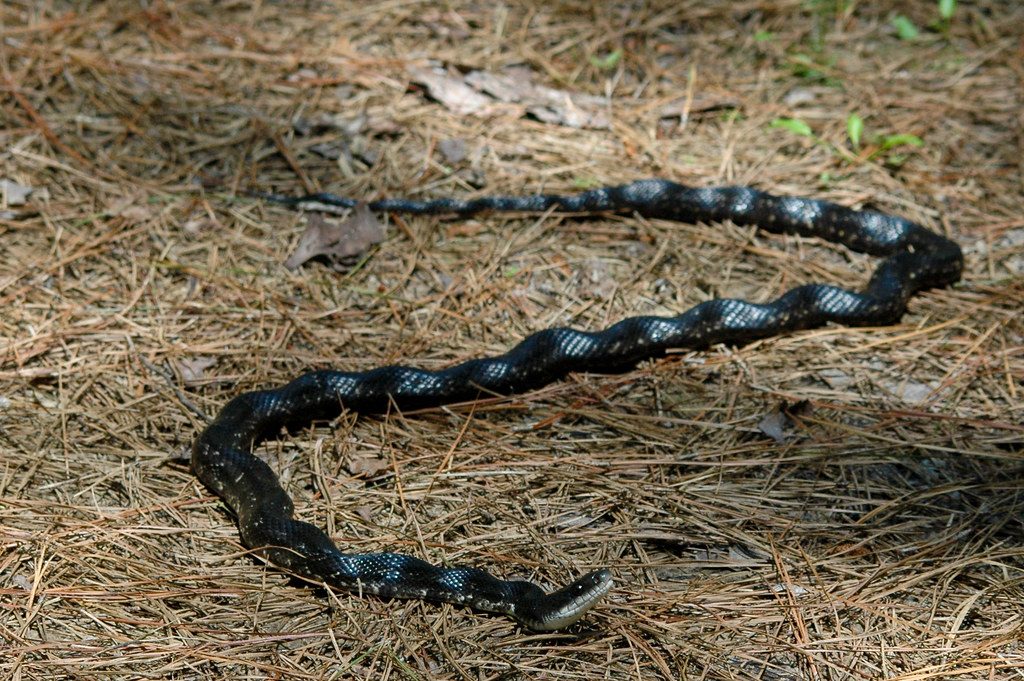
Seeing a snake in your yard can be scary, especially if you are not sure what kind it is. Many people confuse a copperhead with a chicken snake because the colors and markings can sometimes look alike from a distance. The problem is that a copperhead is venomous, while a chicken snake is not. Knowing the difference can help you stay safe and avoid harming a harmless snake.
The simplest way to identify a copperhead versus a chicken snake is by looking at the pattern on its body, the shape of its head, and the overall body build. This guide explains the most reliable differences in simple terms. By the end, you will know what to look for and what mistakes people often make when identifying these snakes.
Look at the body pattern first
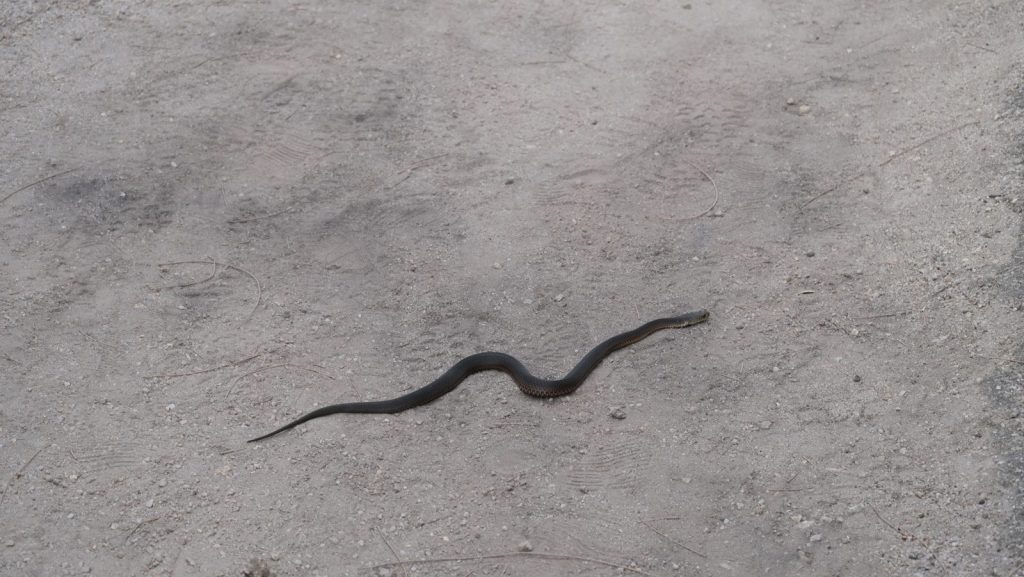
The body pattern is usually the easiest and most reliable way to tell these snakes apart. A copperhead has dark brown bands that form a clear hourglass shape across its body. The bands are narrow across the top of the back and wider on the sides. Many people compare these markings to upside-down Hershey’s Kisses lined up along the snake’s sides. The pattern stays fairly consistent from head to tail and helps the snake blend into fallen leaves on the forest floor.
A chicken snake, which is another name often used for certain rat snakes in parts of the southern United States, usually has blotches instead of hourglass bands. These blotches are larger, more uneven, and do not pinch inward at the top of the snake’s back. Young rat snakes may have brown or gray markings that confuse people, but the pattern lacks the clean hourglass shape seen on a copperhead. This single detail is often the quickest clue when identifying a snake.
Notice the body shape and build
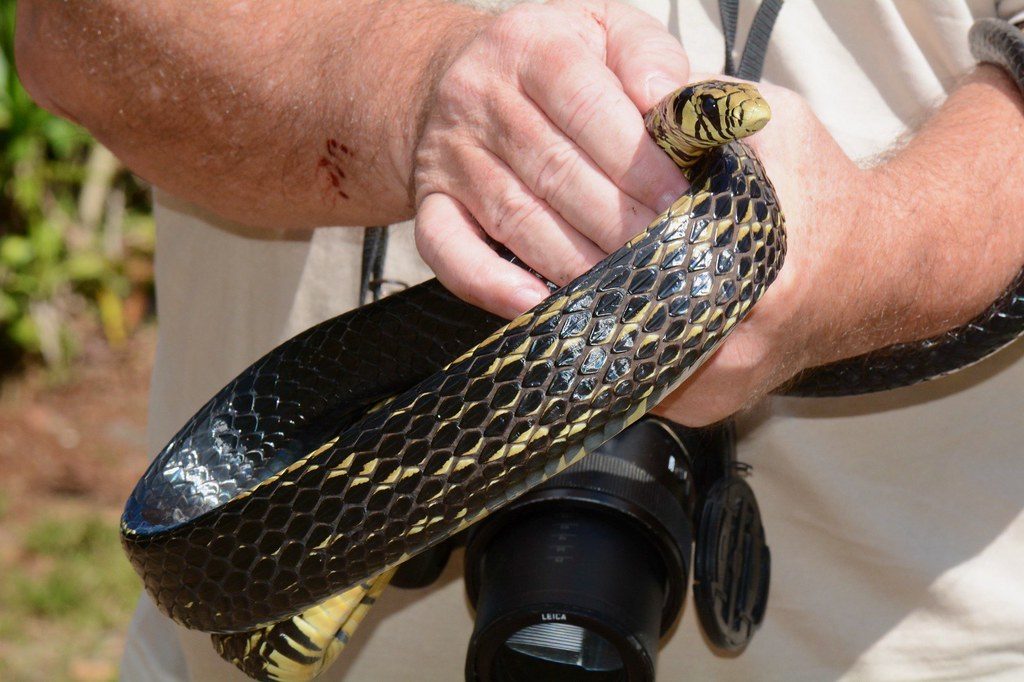
Copperheads have a thick and heavy body compared to most chicken snakes. Even when they are not very long, they often look muscular and sturdy. Their bodies appear broad through the middle, giving them a stocky look. This body shape is common among pit vipers and helps separate them from many harmless snakes.
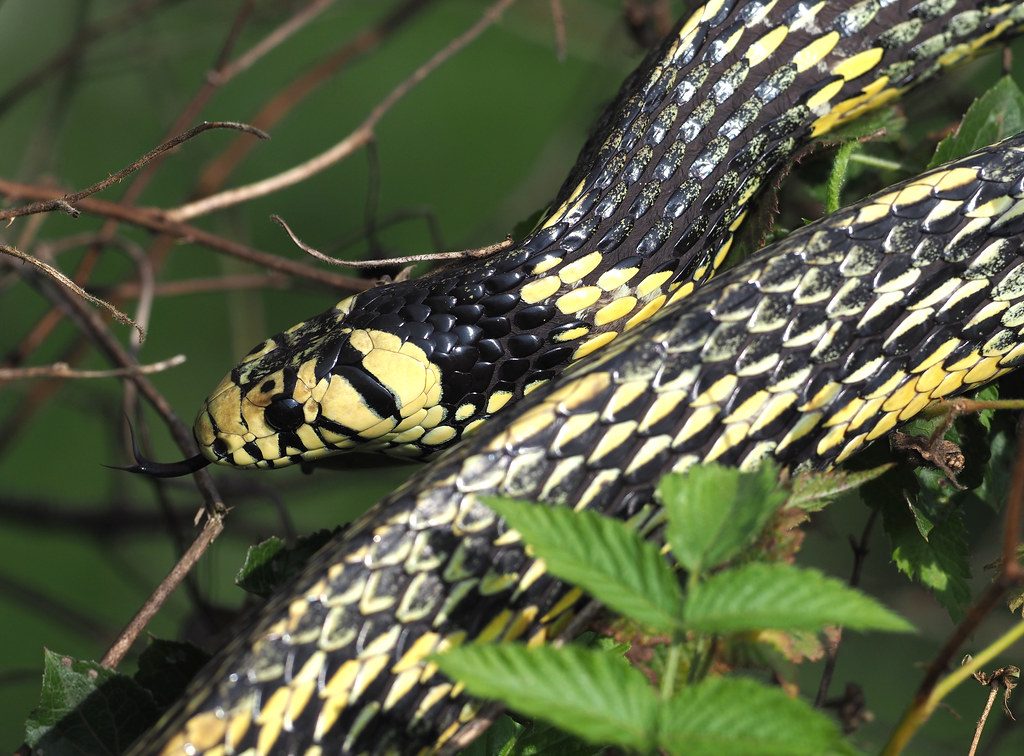
Chicken snakes are usually much slimmer. Their bodies appear longer and more stretched out, especially when climbing trees or moving across open ground. Rat snakes are excellent climbers and spend time in trees, barns, and other elevated places. Their thinner build makes them look more agile than copperheads. If a snake looks long and slender rather than short and heavy, there is a good chance it is a chicken snake instead of a copperhead.
Study the head carefully
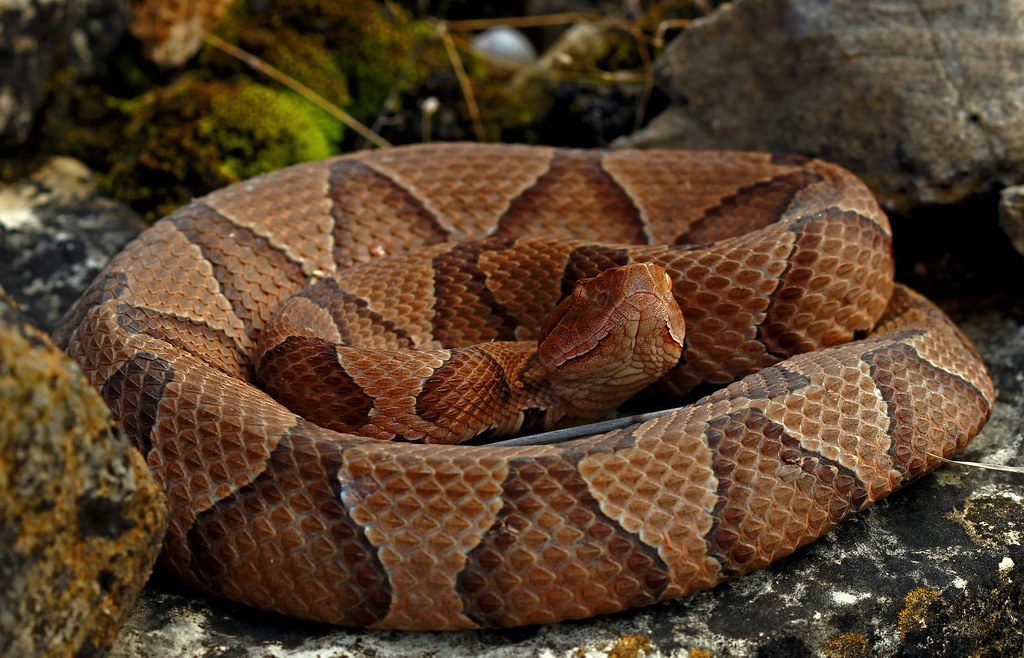
Many people focus only on head shape, but this can sometimes lead to mistakes. Copperheads usually have a broad, triangular head that is noticeably wider than the neck. The shape is created by the venom glands located behind the eyes. This gives the snake a distinct pit viper appearance. Copperheads also have heat-sensing pits between the eyes and nostrils, although these can be difficult to see from a safe distance.
Chicken snakes generally have a narrower head that blends more smoothly into the neck. However, people should not rely only on head shape because harmless snakes sometimes flatten their heads when frightened. This defensive behavior can make a rat snake appear more triangular than it really is. Experts often warn that pattern and body shape are more dependable clues than head shape alone.
Watch how the snake behaves
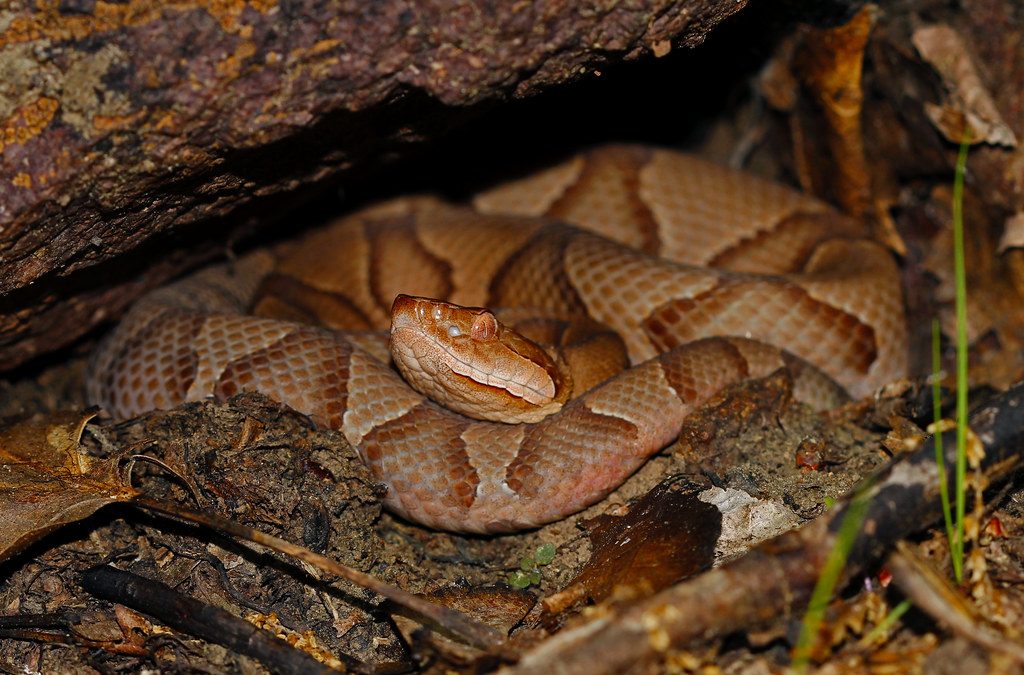
Behavior can also provide useful hints. Copperheads often depend on camouflage for protection. Instead of quickly fleeing, they commonly freeze in place when they feel threatened. This behavior helps them blend into leaves, dirt, and forest debris. Many bites happen because people accidentally step near a copperhead that remains perfectly still.
Chicken snakes usually react differently. They are more likely to move away quickly or climb when disturbed. Rat snakes are known for being active climbers and are often found in trees, fences, barns, and sheds. They hunt rodents, birds, and eggs, which is one reason they earned the nickname “chicken snake.” If a snake quickly climbs away or seems especially comfortable in elevated places, it is more likely to be a chicken snake than a copperhead.
Check the eyes and special features
When viewed safely from a distance, the eyes can sometimes help with identification. Copperheads have vertical slit-shaped pupils similar to a cat’s eyes. This is a common feature among pit vipers. They also have heat-sensing pits between the eyes and nostrils that help them detect warm-blooded prey. These features are important, but should never require getting close to the snake.
Chicken snakes have round pupils rather than vertical slits. They also lack the heat-sensing pits found on copperheads. Still, experts caution that pupil shape can be hard to see unless you are very close, which is not safe around an unknown snake. Because of this, body pattern remains a much better identification tool than eye shape.
Common mistakes people make
One of the biggest mistakes is assuming every brown snake is a copperhead. Many harmless species, including young rat snakes, corn snakes, and water snakes, are regularly mistaken for copperheads. This confusion often leads to harmless snakes being killed even though they pose no danger to people. Experts frequently point out that the distinctive hourglass pattern is the feature people should focus on first.
Another mistake is relying entirely on head shape. Online discussions and wildlife experts often note that nonvenomous snakes can flatten their heads when threatened, making them appear more dangerous. Some people also misjudge a snake because of a poor viewing angle or low light. When in doubt, it is safest to keep your distance and treat the snake with caution rather than trying to handle it.
Leave a Reply