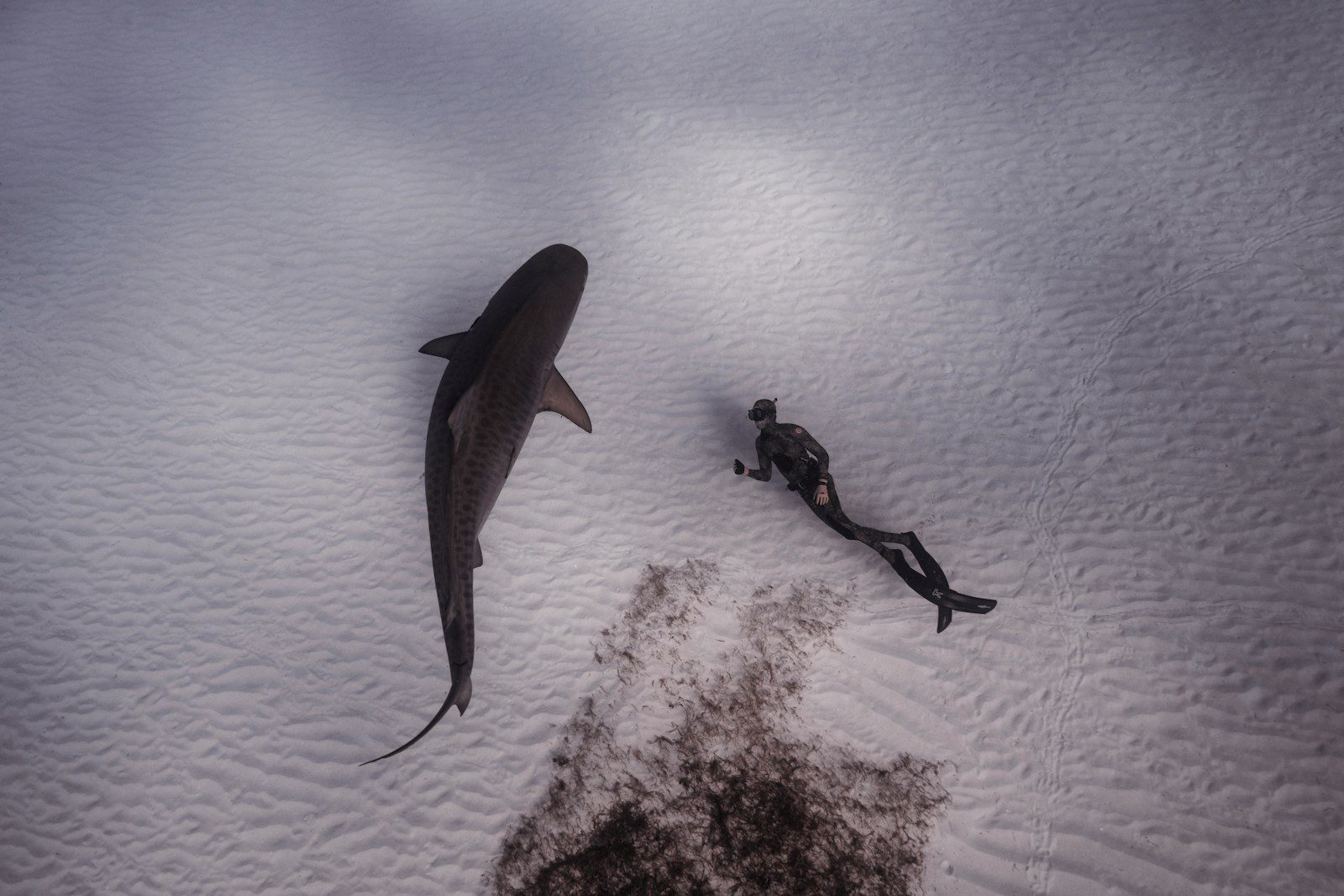
A floating whale carcass is one of the rarest and most dramatic events in the ocean. As the massive animal begins to decompose, its scent can travel for kilometers, attracting an extraordinary gathering of marine predators and scavengers.
During one such encounter, experienced freedivers entered the water to document dozens of tiger sharks feeding beneath the surface. Without cages, they captured an unforgettable view of one of nature’s most powerful feeding events while relying on years of training, constant awareness, and respect for the animals around them.
A whale carcass becomes an ocean buffet

When a whale dies, its body provides an enormous source of energy for marine ecosystems. Near the surface, sharks, fish, seabirds, and other scavengers feed on the carcass before the remaining remains eventually sink to the seafloor.
Even after reaching the deep ocean, the carcass continues supporting specialized organisms for years or even decades, making whale falls among the most important natural food sources in the marine environment.
Tiger sharks quickly arrive
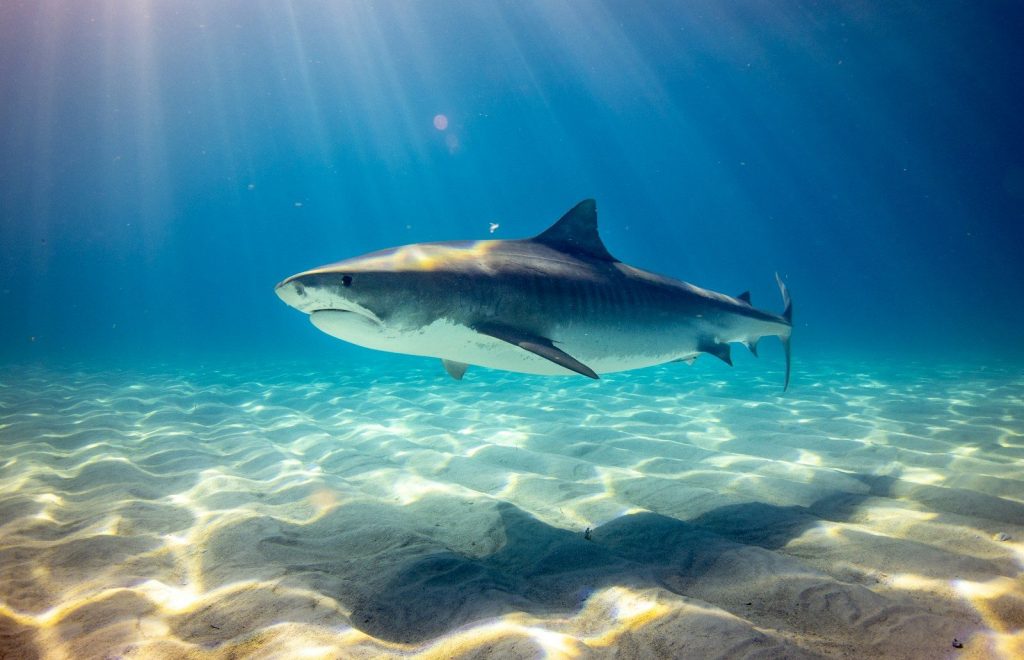
Tiger sharks are highly adaptable predators with an excellent sense of smell that allows them to locate food over long distances. Whale carcasses frequently attract multiple tiger sharks, along with other scavenging species, depending on the region.
Although these gatherings may appear chaotic, researchers have observed that sharks often establish loose feeding hierarchies, allowing multiple individuals to feed with surprisingly little aggression toward one another.
Why did experienced divers enter the water

Professional underwater photographers and documentary filmmakers sometimes enter the water during rare wildlife events to record natural animal behavior. These expeditions are carried out only by highly experienced teams that carefully evaluate shark behavior, visibility, currents, and other environmental conditions before entering the water.
Even with extensive preparation, such dives remain inherently risky and are not considered routine recreational activities.
Shark behavior changes around food
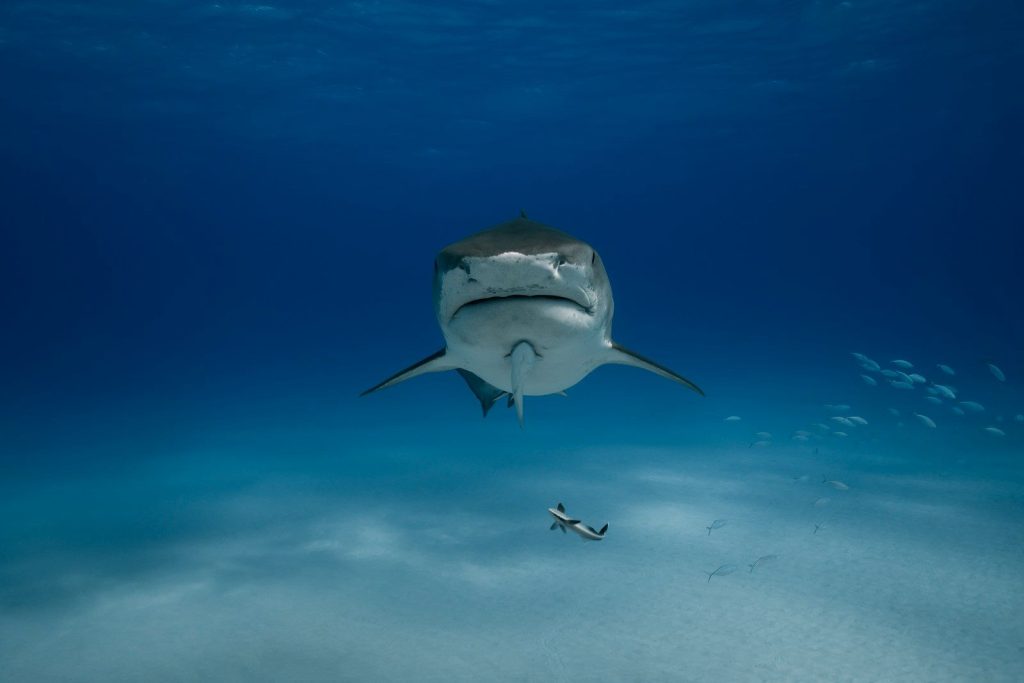
Feeding events naturally increase shark activity. Animals become more focused on locating and consuming food, making their movements faster and less predictable than during ordinary encounters.
Marine experts emphasize that understanding shark body language, maintaining awareness, and avoiding interference with feeding animals are essential during scientific observation and filming.
Whale carcasses support entire ecosystems

The importance of a whale carcass extends far beyond the sharks feeding near the surface. As the remains sink, they provide nutrients for countless deep-sea organisms, including worms, crustaceans, mollusks, bacteria, and other specialized species adapted to life in complete darkness.
Scientists consider whale falls one of the most significant natural nutrient transfers in the ocean.
A rare glimpse into the ocean’s food web
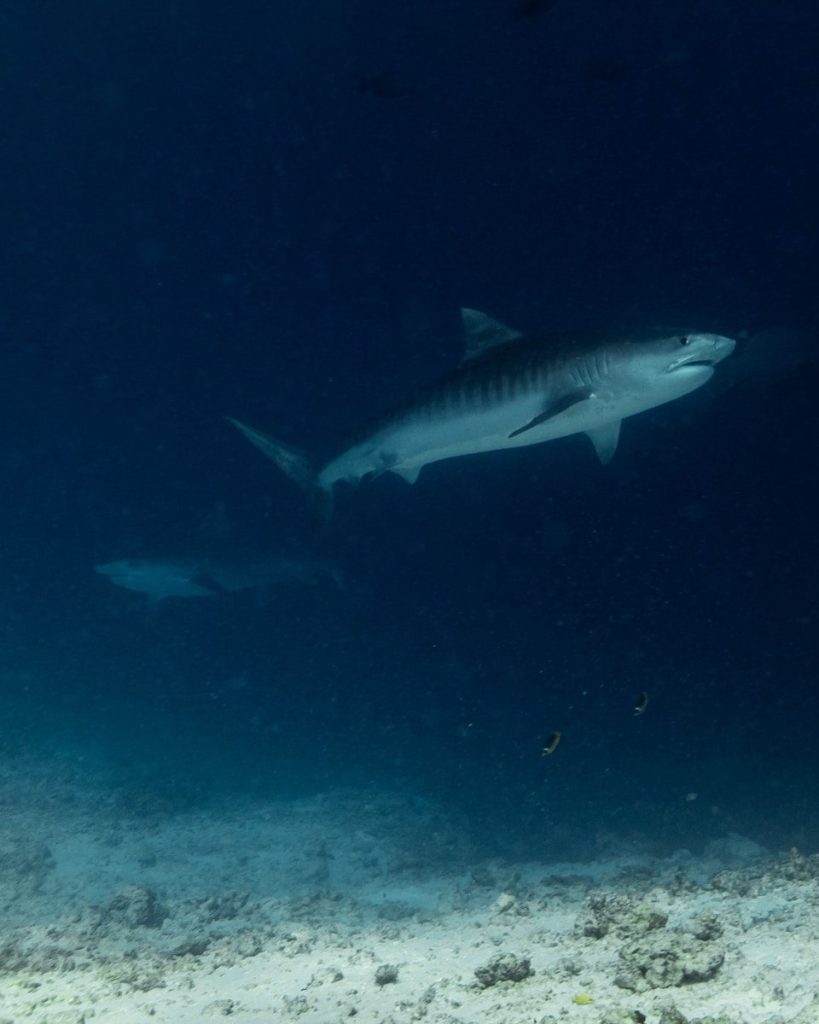
Encounters like this reveal how closely connected marine ecosystems truly are. A single whale can support hundreds of species throughout multiple stages of decomposition, from surface-feeding sharks to deep-sea organisms thousands of meters below.
For researchers and filmmakers, documenting these events provides valuable insight into predator behavior while highlighting the remarkable complexity of life beneath the waves.
Leave a Reply