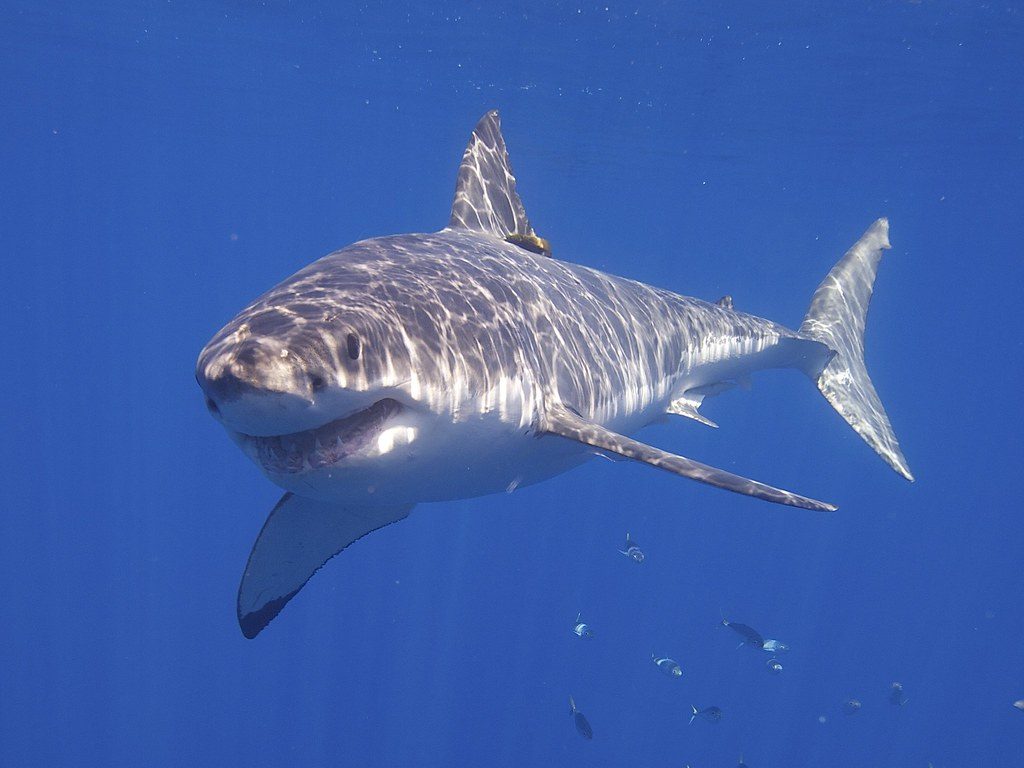
One of the Atlantic Ocean’s most impressive predators has resurfaced during its annual migration. A satellite tag attached to a giant great white shark named Contender briefly transmitted a signal near North Carolina’s Outer Banks, giving researchers another glimpse into the movements of the largest male white shark ever tagged in the western North Atlantic.
Every new location helps scientists better understand how these remarkable predators travel and where they spend different seasons.
Meet Contender

Contender is an adult male great white shark measuring about 14 feet long and weighing nearly 1,700 pounds. OCEARCH scientists tagged him near the Florida–Georgia coastline in January 2025 as part of a long-term research program.
Since then, he has traveled more than 7,000 miles across the western North Atlantic.
Why the satellite tag matters
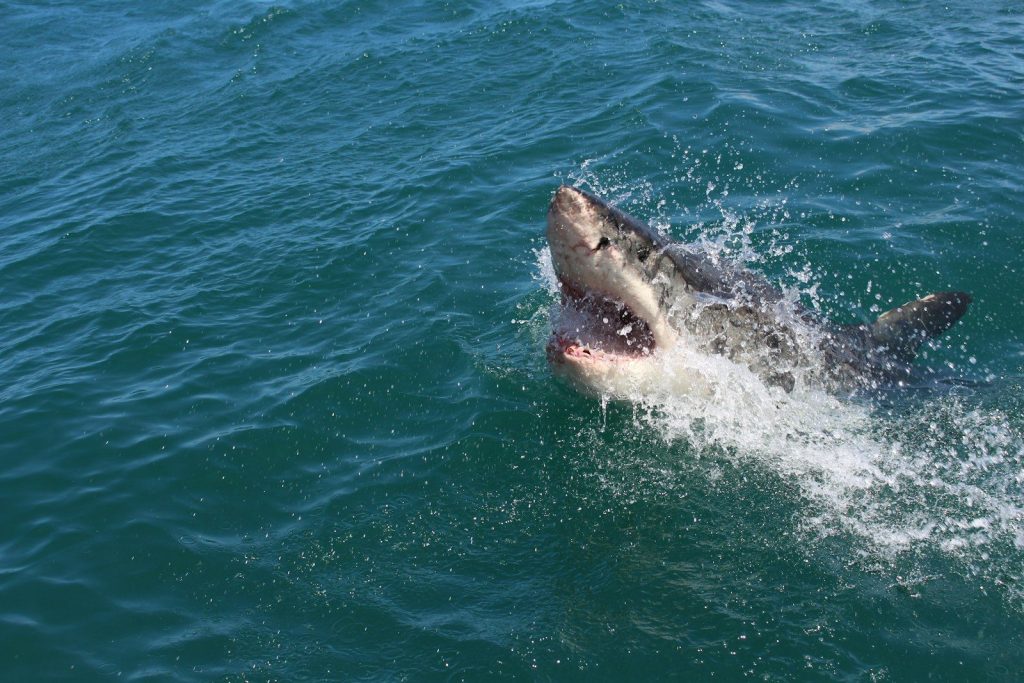
The satellite tag only sends a location when the shark’s dorsal fin briefly breaks the surface. Because the latest transmission was short, researchers could confirm the general area but not Contender’s exact position.
Even brief satellite “pings” provide valuable information about migration routes and seasonal movements.
Following an annual migration
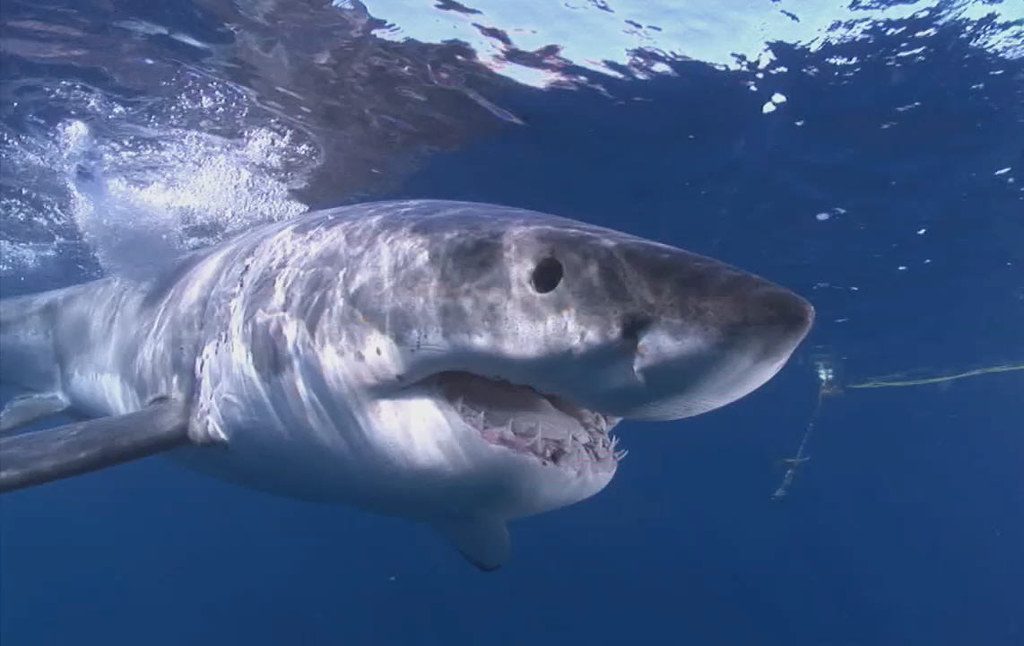
Every year, many great white sharks migrate north along the U.S. East Coast as ocean temperatures rise. During summer and early autumn, many spend time around Cape Cod and Atlantic Canada, where prey such as gray seals and large fish are abundant.
Scientists believe Contender is following this well-known seasonal pattern.
Why scientists track great whites

Satellite tracking helps researchers understand where sharks feed, reproduce, and travel throughout the year. This information supports conservation efforts, improves scientific knowledge, and helps wildlife managers better understand how sharks use coastal habitats.
Long-term tracking also reveals how individual sharks respond to changing ocean conditions.
Are great white sharks a danger to beachgoers?
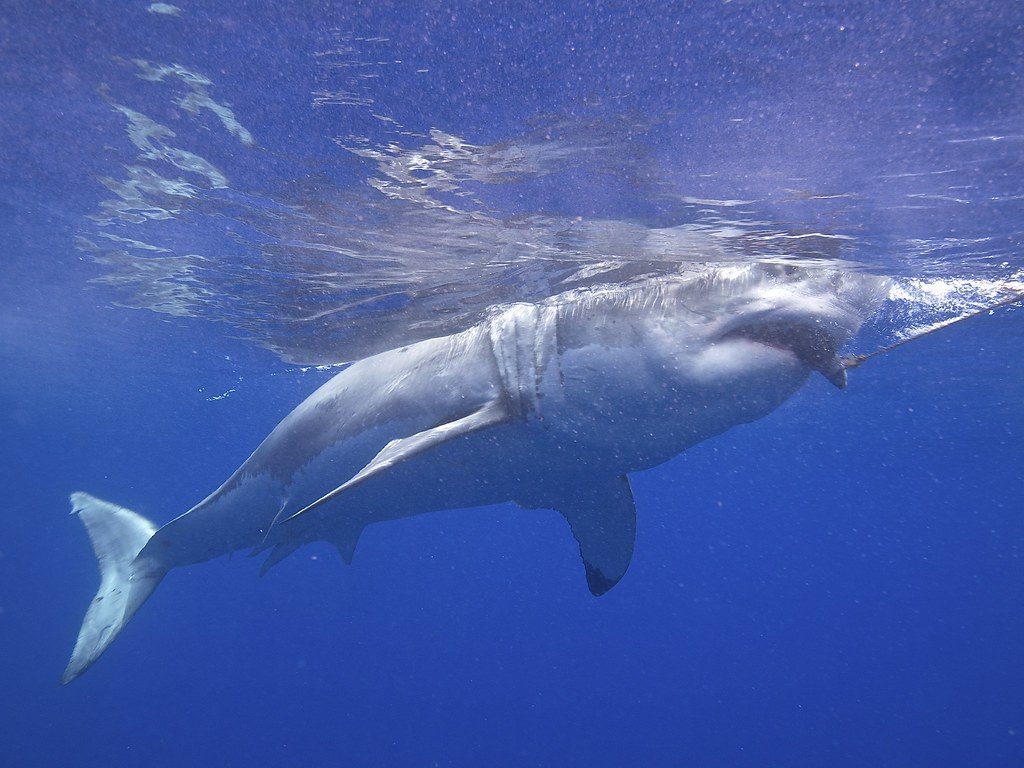
Although great white sharks receive significant media attention, encounters with humans remain rare. Most sharks are focused on natural prey such as seals, rays, and fish rather than people.
Marine experts encourage beachgoers to follow local safety advice while remembering that sharks are an important part of healthy marine ecosystems.
Why Contender’s journey is important

Each new detection helps scientists build a clearer picture of how mature male great white sharks use the Atlantic Ocean. Understanding these migration patterns can guide conservation planning and improve protection for one of the ocean’s most iconic predators.
For researchers, every satellite signal is another valuable piece of a much larger puzzle.
Featured Image: “Great White Shark” by Elias Levy is licensed under CC BY 2.0
Leave a Reply