Scientists with the CNRS led NODSSUM 2026, a month-long expedition into the Northeast Atlantic to investigate radioactive waste dumped there during the 20th century. The mission ran from May 27 to June 28, 2026, with about 30 scientists aboard the French research vessel Pourquoi Pas?
The expedition examined part of a deep ocean region associated with more than 200,000 radioactive waste containers dumped by European countries. The project is designed to determine where the containers are, how badly they have deteriorated, and whether radioactive material is affecting the surrounding environment.
Nautile reached more than 4,700 meters deep
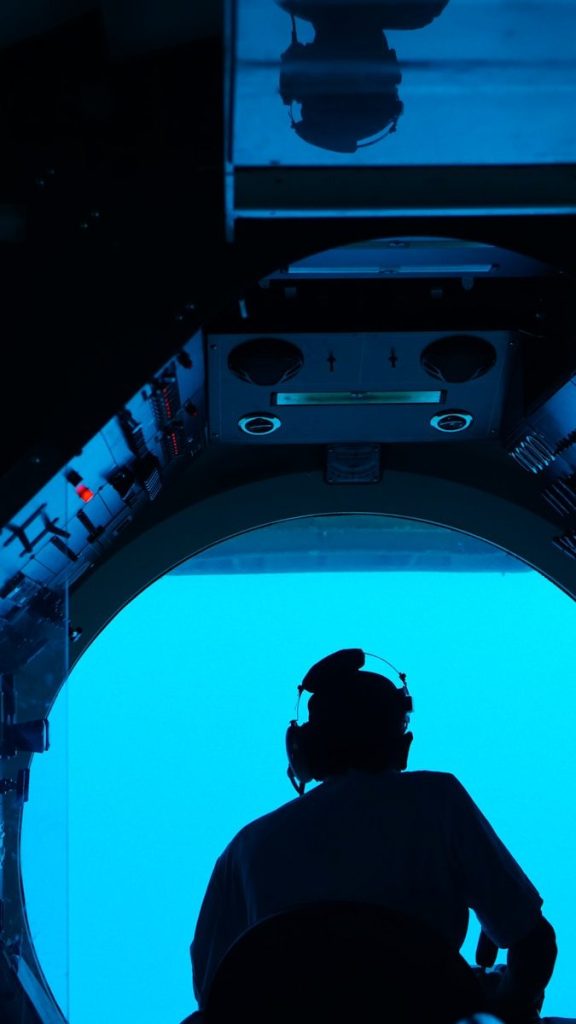
The crewed submersible Nautile completed 20 dives to depths exceeding 4,700 meters, or roughly 15,400 feet. These dives allowed researchers to inspect individual containers and their surroundings directly rather than relying only on mapping from above.
Researchers found containers in different states of preservation, including some showing advanced corrosion. Scientists reported that material from the contents of certain containers had spread onto the nearby seabed, providing important locations for targeted environmental sampling.
Marine life has colonized the containers

Despite the extreme depth and radioactive waste, the surrounding seafloor is not barren. Researchers observed organisms, including anemones, sponges, and crabs, living on or around some of the discarded containers.
This makes the biological investigation an important part of NODSSUM. Researchers collected water, sediment, marine organisms, and microbial communities near the containers to determine whether radioactive material is spreading through the environment or interacting with deep-sea ecosystems.
Radioactivity needs further analysis

Measurements during the expedition found radioactive activity somewhat above what researchers had expected at the site. However, this finding should not yet be interpreted as proof of widespread ecological contamination, because laboratory analysis of the collected samples is still required.
Determining the origin of individual radionuclides can also be complicated by other historical sources of ocean radioactivity. The samples gathered during NODSSUM should allow researchers to better determine what came from the discarded waste and how far any released material has moved.
The 2025 mission mapped 3,355 containers
NODSSUM’s first major expedition took place from June 15 to July 11, 2025, and focused heavily on mapping the dumping area. The autonomous underwater vehicle Ulyx helped researchers locate and map 3,355 waste containers on the deep seafloor.
That campaign also collected about 5,000 liters of water, 345 sediment cores, and 34 fish and crustacean specimens for scientific analysis. Those observations helped researchers select the areas examined more closely by Nautile during the 2026 expedition.
Europe dumped more than 200,000 barrels
European countries disposed of more than 200,000 containers of radioactive waste in the Northeast Atlantic during the second half of the 20th century. Britain accounted for more than 140,000, Belgium about 55,000, while France participated in 2 major dumping operations in 1967 and 1969.
Historical records indicate that France dumped 46,396 containers, totaling about 14,200 tonnes of mainly low-level radioactive waste. At the time, deep ocean disposal was considered acceptable partly because scientists expected the ocean to provide substantial isolation and dilution.
Scientists now need laboratory results

The most important unanswered question is not whether some containers have deteriorated. Direct observations have now established that significant degradation has occurred and that material has escaped from at least some containers onto the surrounding seabed.
What remains uncertain is the environmental consequence. Analysis of the collected water, sediment, and biological samples should help scientists determine how radioactive substances move through this deep-sea environment and whether they are accumulating in organisms living around the dumping sites.
Featured Image: Photo by Dan Meyers on Unsplash
Leave a Reply