Blog

  • Meet the shark that has hunted for four centuries

    Meet the shark that has hunted for four centuries

    Have you ever wondered what it would be like to meet an animal older than your country? The Greenland shark is one of the most amazing creatures on Earth. This giant shark swims slowly through icy waters and may live for more than 400 years. That means some of the sharks alive today may have been born before electricity, cars, or even the United States.

    The Greenland shark is not fast or flashy, yet it has become one of the most fascinating animals scientists have ever studied. Researchers are still learning how it survives for centuries, how it hunts in dark waters, and why it ages so slowly. In this article, you will discover where this ancient shark lives, what it eats, how scientists know its age, and why protecting this rare species is so important.

    The shark that outlives generations
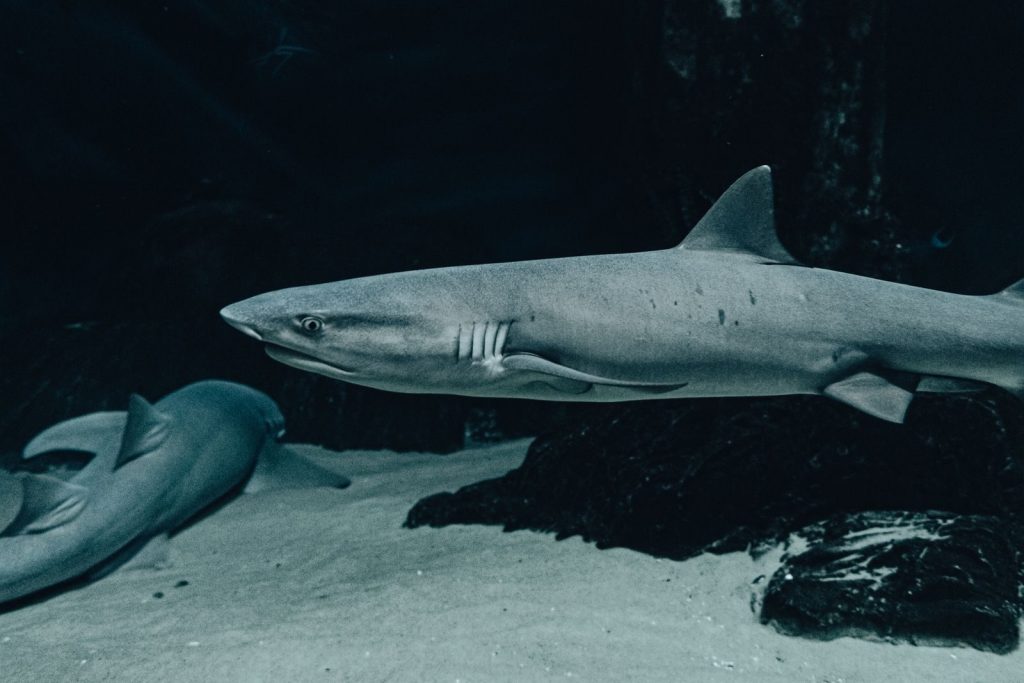
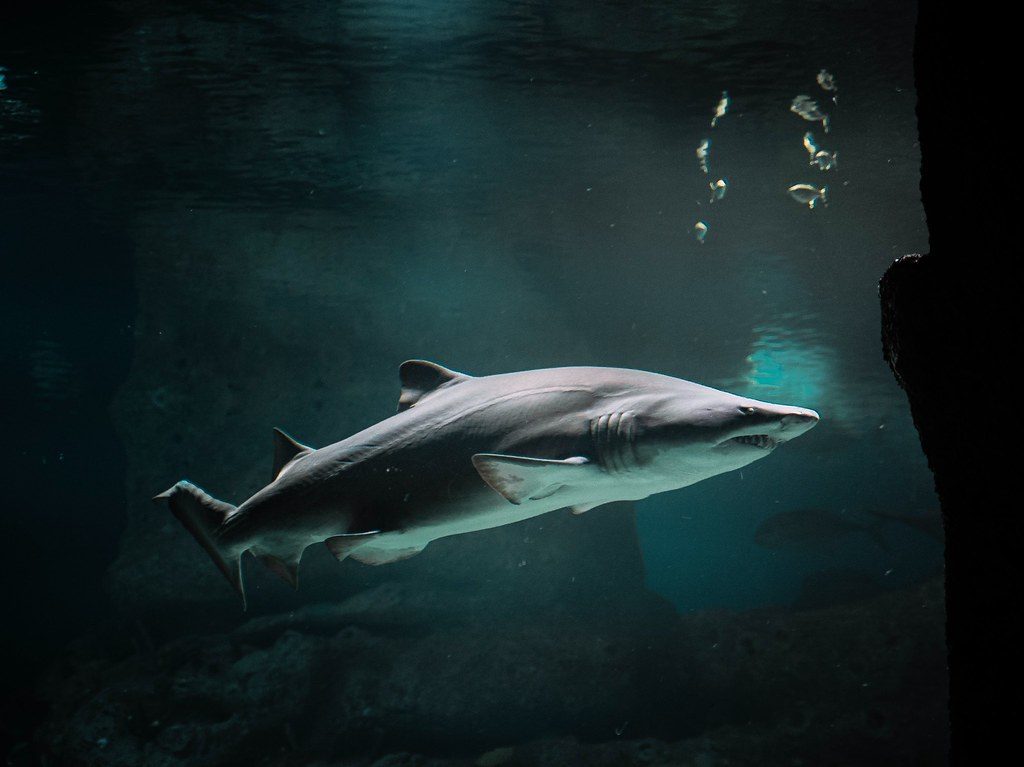
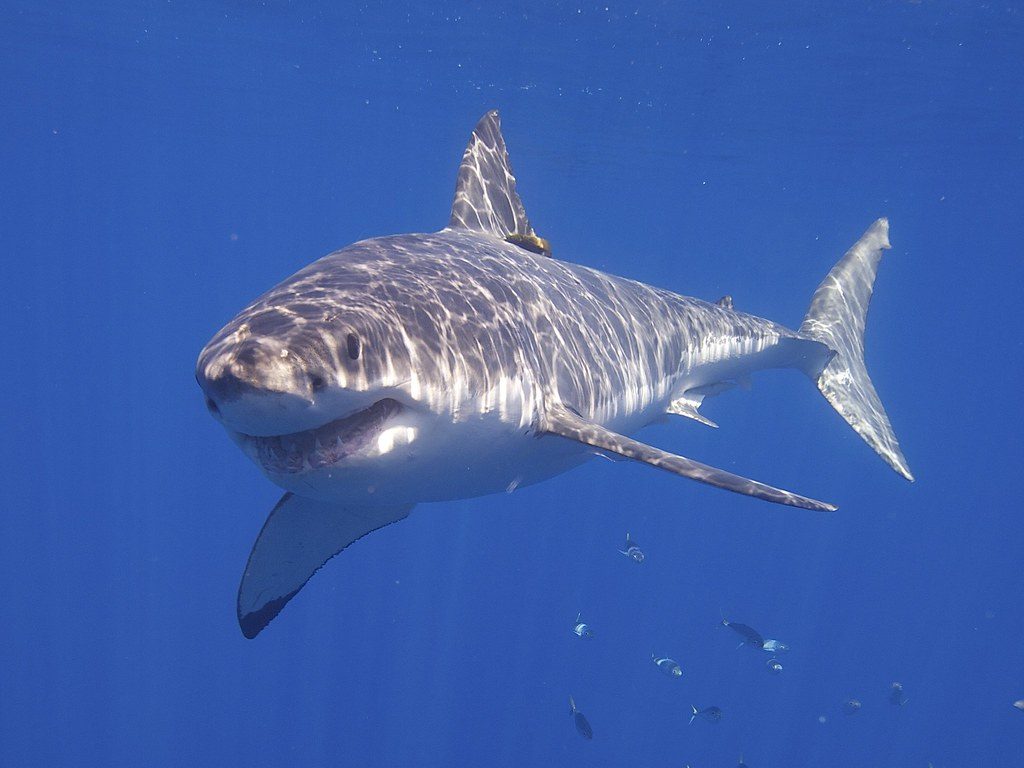
    Dramatic close-up of sharks swimming in an underwater aquarium, showcasing marine life.
    Photo by Guryan on Pexels

    The Greenland shark is the longest-living vertebrate ever discovered. A vertebrate is an animal with a backbone, which includes fish, birds, reptiles, and mammals. Scientists estimate that these sharks can live for at least 250 years, and some may survive for more than 400 years. One famous study suggested the oldest sharks could be between 272 and 512 years old. That means a shark swimming today could have been alive during the early 1600s, making it one of the oldest living animals on the planet.

    What makes this even more amazing is how slowly the shark grows. It gains only a tiny amount of length each year, often less than half an inch. Female Greenland sharks do not become adults until they are around 150 years old. Most animals spend only a small part of their lives growing up, but this shark spends more than a century reaching maturity. Its entire life moves at a much slower pace than almost any other creature on Earth.

    Life in the freezing Arctic

    Captivating abstract pattern of frozen ice floes over dark water surface in winter.
    Photo by Akshay Nayak on Pexels

    Greenland sharks live in some of the coldest waters on Earth. They are found mainly in the Arctic Ocean and the northern Atlantic Ocean around Greenland, Canada, Iceland, and Norway. These sharks prefer deep water, often swimming hundreds or even thousands of feet below the surface. In these dark and icy places, temperatures can stay just above freezing all year long.

    The cold environment may be one reason the shark lives so long. Because the water is frigid, the shark’s body works slowly. Its metabolism, which is the process of turning food into energy, moves at an extremely low speed. Scientists believe this slow metabolism reduces wear and tear on the body over time. The shark’s heart beats slowly, it swims slowly, and it grows slowly. Everything about the Greenland shark is built for patience and survival.

    How a slow shark catches prey
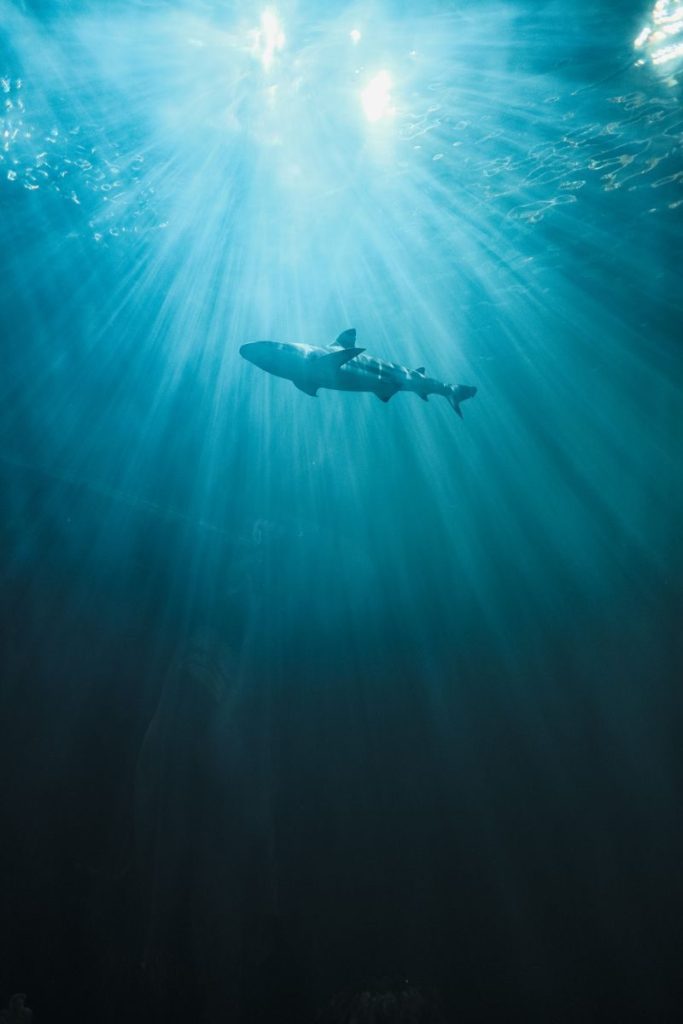
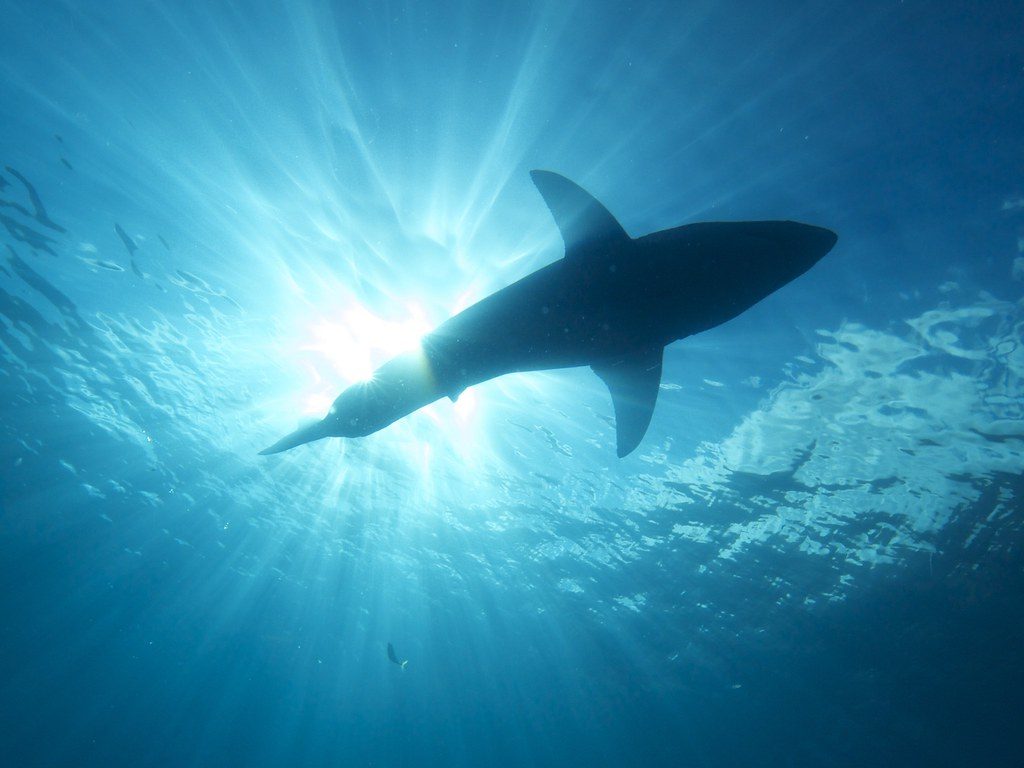
    A shark gracefully swims underwater, illuminated by rays of sunlight piercing the ocean surface.
    Photo by Airam Dato-on on Pexels

    At first glance, the Greenland shark does not seem like a skilled hunter. It swims at less than one mile per hour and is among the slowest sharks in the ocean. Some individuals are even partly blind because tiny parasites attach themselves to their eyes. Yet despite these disadvantages, the shark is an effective predator that has survived for millions of years.

    Scientists think the shark relies on stealth instead of speed. It may quietly approach sleeping seals or ambush animals that are injured, weak, or unaware of danger. The shark also has an excellent sense of smell and can detect food from far away. Researchers have found seals, fish, squid, and other marine animals in its stomach. Even remains of land animals like horses, moose, and reindeer have been discovered, likely because their bodies drifted into the sea. The Greenland shark is both a hunter and a scavenger, taking advantage of whatever food is available.

    The mystery of its incredible age

    Woman presenting to audience in a modern office setting.
    Photo by Vitaly Gariev on Unsplash

    For many years, scientists had no idea how old Greenland sharks could become. Unlike trees, sharks do not have growth rings that can easily reveal their age. Researchers needed a completely different method to solve this mystery, and the answer was hidden inside the shark’s eyes.

    The center of a Greenland shark’s eye lens forms before birth and remains unchanged throughout its life. Scientists used a technique called radiocarbon dating to examine the eye lenses of several sharks. By measuring tiny amounts of radioactive carbon, they estimated how old the animals were. The results shocked the scientific world. The oldest shark studied was estimated to be around 400 years old, with a possible age range extending beyond 500 years. Although scientists continue to refine these estimates, there is little doubt that Greenland sharks are among the oldest vertebrates ever known.

    Why scientists are obsessed with this shark

    three people in lab coats looking at a tablet
    Photo by National Cancer Institute on Unsplash

    The Greenland shark is more than an unusual fish. It could help scientists understand one of the biggest mysteries in biology: aging. Most animals experience damage to their cells as they get older. Over time, this damage can lead to disease, weakness, and death. Yet Greenland sharks appear to age very slowly and remain healthy for centuries.

    Researchers are now studying the shark’s genes to understand how this is possible. Early studies suggest the species may have special ways to repair DNA, fight harmful cell damage, and protect itself from diseases such as cancer. Scientists have also discovered genes linked to strong immune systems and better control of iron, which can damage cells if it builds up too much. While these discoveries are still being explored, many experts believe the Greenland shark could help humans better understand aging and age-related diseases in the future.

    Threats facing this ancient giant

    A man in a hoodie fishes by a calm lake surrounded by autumn foliage.
    Photo by Cedé Joey on Pexels

    Even though Greenland sharks have survived ice ages and huge changes in Earth’s climate, they still face serious dangers today. One major problem is accidental capture by fishing boats. Because the sharks grow so slowly and reproduce late in life, losing even a small number of adults can affect the population for many years.

    Climate change may create another challenge. The shark depends on cold Arctic waters, and rising ocean temperatures could alter its habitat and food supply. Scientists worry that warming seas might force the species into smaller areas or change the delicate balance of the Arctic ecosystem. Since Greenland sharks take more than a century to mature, they cannot quickly recover from population losses. Protecting them requires long-term planning and careful management of northern oceans.
  • The surprising way a sunfish moves through the ocean

    The surprising way a sunfish moves through the ocean

    Have you ever looked at a sunfish and wondered how such a strange-looking animal can swim? The surprising way a sunfish moves through the ocean has fascinated scientists for years. Unlike most fish, it does not rely on a powerful tail to push itself forward. Instead, it uses a swimming style that looks gentle, almost like flying underwater.

    In this article, you’ll discover how sunfish move, why their bodies are so unusual, and what scientists have learned from tracking these giant fish. You will also learn how their strange swimming style helps them travel huge distances, dive deep into the ocean, and survive in waters around the world. The more researchers study sunfish, the more impressive these gentle giants become.

    A giant fish with a very unusual body

    Ocean Sunfish 2” by MyFWC Florida Fish and Wildlife is licensed under CC BY-ND 2.0

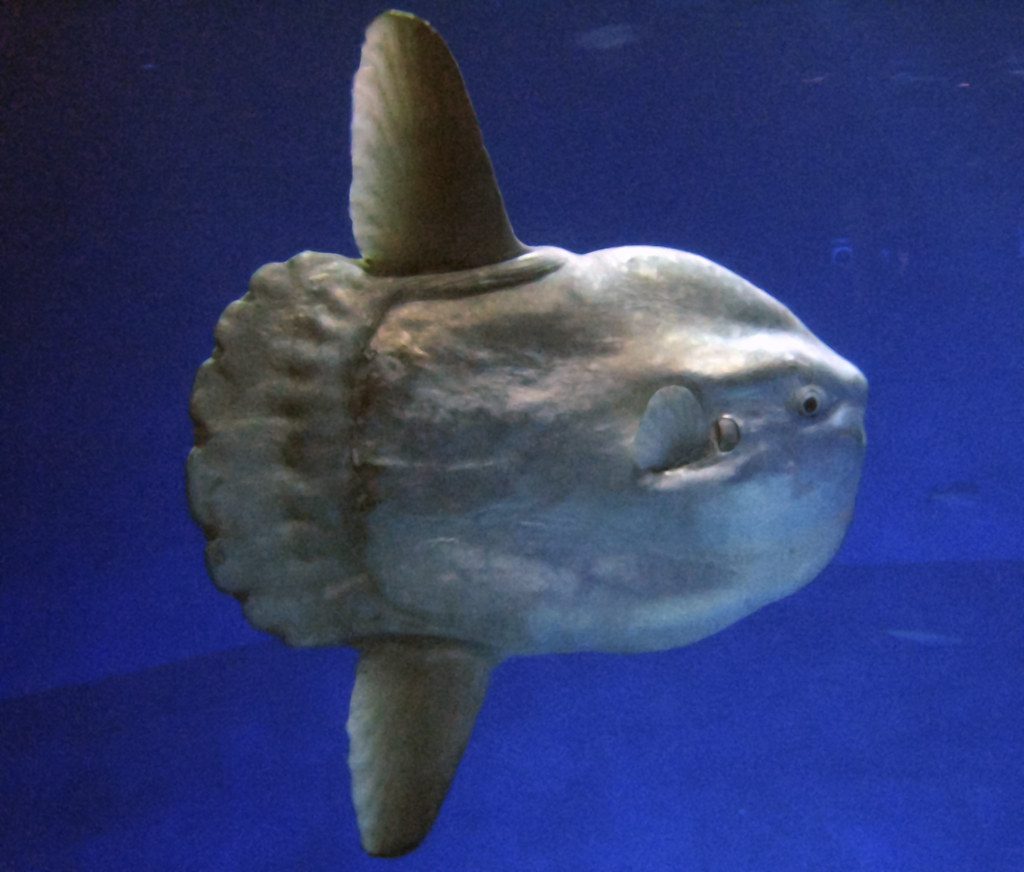
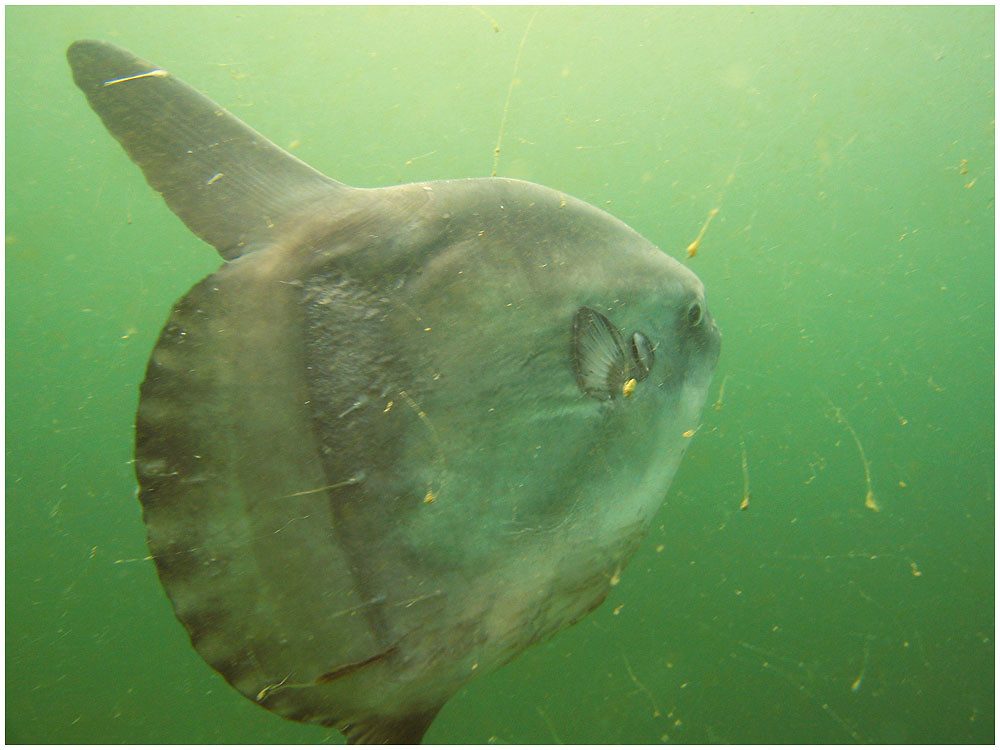
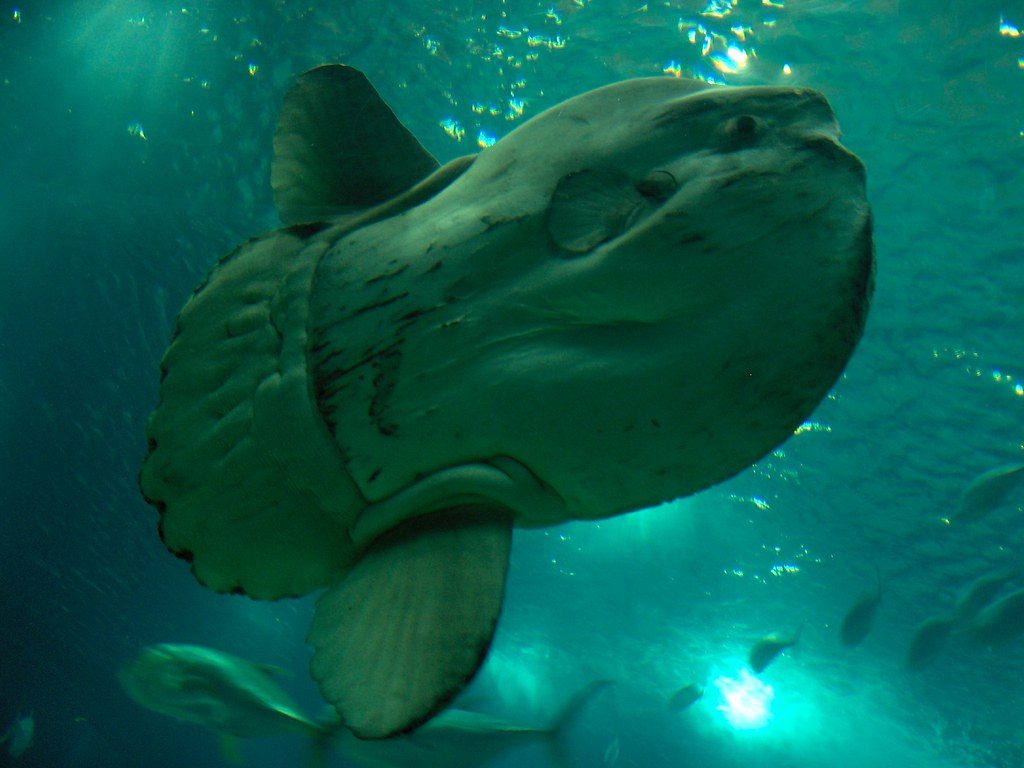
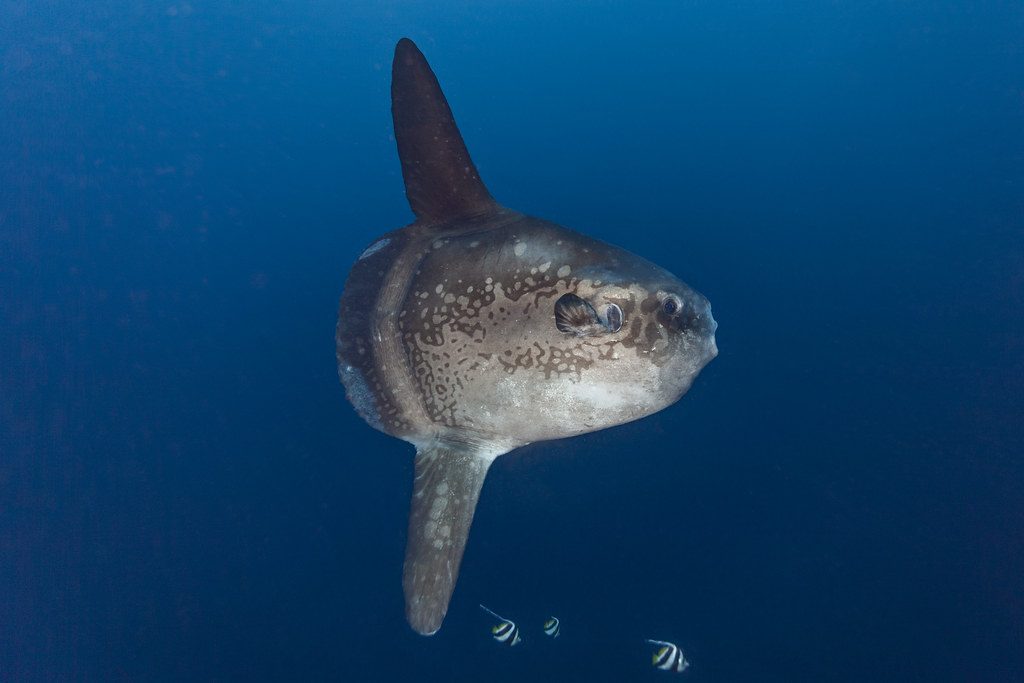
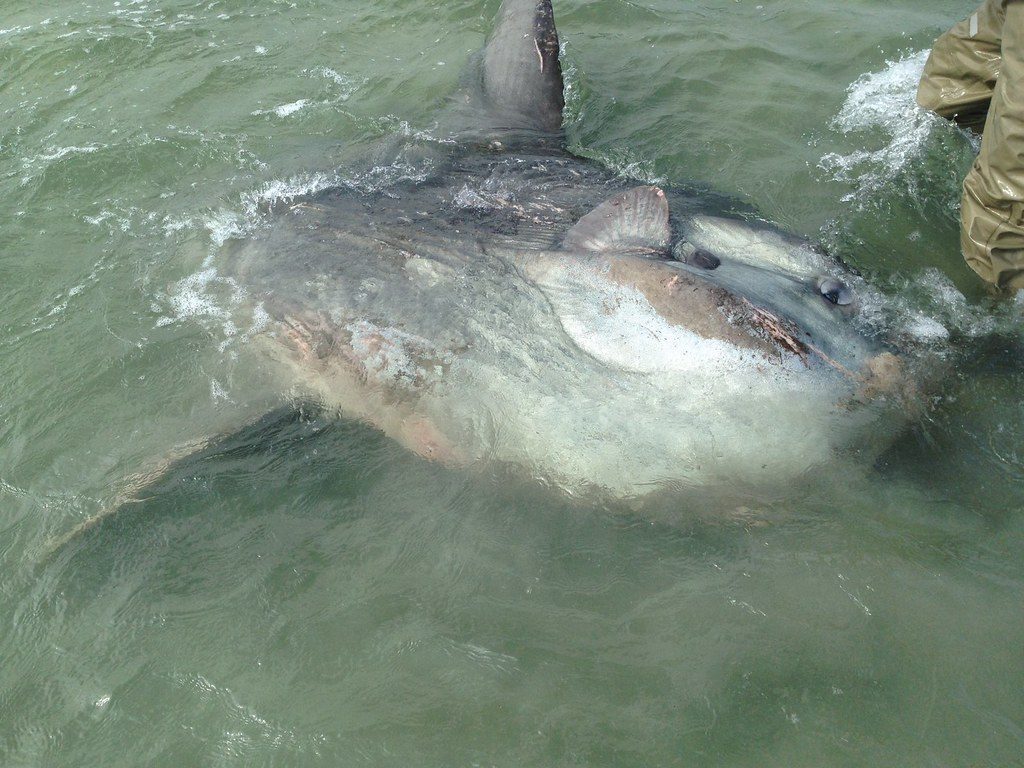
    The ocean sunfish, also called Mola mola, is the heaviest bony fish alive today. Some adults weigh more than 5,000 pounds and can stretch more than 14 feet from the tip of their top fin to the tip of their bottom fin. Yet despite their massive size, they do not look like other fish. Their bodies are flat and round, almost like a giant disk. They have tiny pectoral fins on their sides and lack the large tail that most fish use for swimming. Instead of a true tail fin, they have a rounded structure called a clavus, which acts mainly like a rudder to help steer.

    This unusual body shape confused scientists for a long time. Early researchers thought sunfish simply drifted with ocean currents because they seemed too awkward to swim efficiently. Modern studies proved that idea wrong. Sunfish are active animals that travel long distances across the ocean and dive hundreds of feet below the surface. Their strange bodies are not a weakness. In fact, they are part of a unique design that allows these fish to move in a way unlike almost any other large fish on Earth.

    Sunfish swim without using a tail

    Sunfish” by JoshBerglund19 is licensed under CC BY 2.0

    Most fish swim by moving their tails back and forth. Tuna, sharks, and salmon all use this method because it creates strong thrust and allows for high speeds. Sunfish are different. Their tails never fully develop as they grow. Instead, they propel themselves by moving their tall dorsal fin on top and their long anal fin on the bottom at the same time. These fins flap together in a synchronized motion, pushing water backward and moving the fish forward.

    Scientists call this style of movement median and paired fin propulsion. The fins tilt and flap in the same direction, creating lift that pushes the fish through the water. Because the fins are so large, the sunfish does not need to flap them very quickly. The movement looks smooth and graceful, almost as if the fish is flying underwater. Researchers once believed this swimming style was slow and inefficient, but studies now show that sunfish are surprisingly capable swimmers that use energy effectively despite their unusual shape.

    Their movement is more efficient than it looks

    Sunfish” by Refractious is licensed under CC BY-NC-ND 2.0

    At first glance, a sunfish appears clumsy. Its body is bulky, and its swimming looks gentle rather than powerful. However, scientists who tracked sunfish in the wild discovered that they move with surprising efficiency. They can cruise at speeds of around two miles per hour and travel many miles in a single day. Their bodies are designed to reduce unnecessary movement, allowing them to glide steadily through the ocean while using less energy.

    Another reason for their efficiency is their skeleton. Unlike many bony fish, much of a sunfish’s skeleton is made of lighter, cartilage-like tissue. They also lack a swim bladder, the gas-filled organ many fish use to control buoyancy. Instead, they rely on a thick, jelly-like layer beneath their skin that helps provide buoyancy and support. This lightweight structure makes it easier for the fish to stay balanced and move smoothly despite its huge size.

    Sunfish travel up and down the ocean

    Ocean Sunfish in Puget Sound” by Dan Hershman is licensed under CC BY 2.0

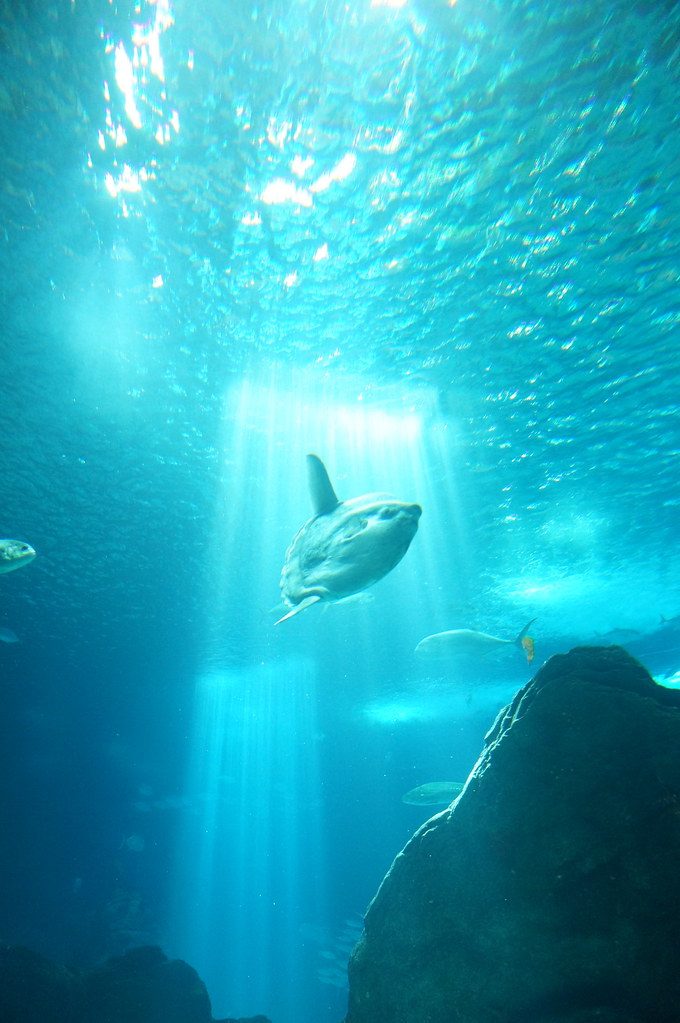
    The surprising way a sunfish moves is not limited to swimming across the surface. These fish are also impressive divers. Researchers using satellite tags discovered that sunfish regularly dive hundreds of feet below the ocean surface in search of food. Some individuals have been recorded diving deeper than 2,000 feet. During these dives, they search for jellyfish, squid, crustaceans, and other soft-bodied prey that live in darker, colder waters.

    After spending time in cold, deep water, sunfish often return to the surface and lie on their sides near the sun. Scientists believe this behavior helps warm their bodies after deep dives. The sight of a giant fish floating sideways once led people to think sunfish were sick or dying. In reality, this behavior may be an important part of their daily routine. By warming themselves near the surface, they prepare for another trip into the chilly depths of the ocean.

    Scientists changed their minds about sunfish

    three people in lab coats looking at a tablet
    Photo by National Cancer Institute on Unsplash

    For many years, sunfish had a poor reputation among scientists and the public. Their strange shape and slow appearance caused people to believe they were passive drifters with little control over their movement. As technology improved, researchers began attaching satellite tags to sunfish and tracking their journeys. The results were surprising. These giant fish were not drifting aimlessly at all. They were swimming with purpose, choosing where to go and diving regularly to find food.

    Modern research has shown that sunfish are much more athletic than people once believed. They migrate across large parts of the ocean, adjust their depth depending on water temperature, and use their unusual fins with impressive coordination. Engineers have even studied sunfish movement to design underwater robots. The way their fins create thrust while keeping the body stable has inspired new ideas for energy-efficient swimming machines. What once seemed like an awkward fish is now seen as a remarkable example of nature’s creativity.

    Their strange swimming helps them survive

    sunfish” by astio is licensed under CC BY-NC-SA 2.0

    The sunfish’s unusual movement gives it several advantages in the wild. Its steady swimming style allows it to travel long distances without using huge amounts of energy. This is important because food sources such as jellyfish can be spread out across vast areas of the ocean. By swimming efficiently and diving when needed, sunfish can search for prey in different habitats while conserving energy.

    Their movement also helps them deal with parasites. Sunfish are known to carry many parasites on their skin. To get rid of them, they sometimes leap out of the water and crash back down, shaking loose unwanted hitchhikers. They also spend time near the surface, where seabirds and smaller fish pick parasites from their skin. These behaviors may look unusual, but they are an important part of staying healthy. The sunfish’s strange body and surprising swimming style have helped it thrive in oceans around the world for millions of years.

  • Lost sea lion pup shares sweet reunion with his mother

    Lost sea lion pup shares sweet reunion with his mother

    Have you ever wondered what happens when a baby sea lion loses sight of its mother? For a young pup, even a few moments alone can feel frightening. That is why the story of a lost sea lion pup sharing a sweet reunion with his mother touched so many hearts online. The tiny pup looked scared and confused as he searched the shoreline, wondering where his mom had gone.

    Thankfully, the separation did not last long. This heartwarming moment also gives us a chance to learn how sea lion mothers care for their young, why they sometimes leave them behind, and how these amazing animals always seem to find each other again. Their bond is one of the strongest in the animal kingdom.

    A tiny pup suddenly finds himself alone

    Sea Lion Pup” by dagpeak is licensed under CC BY 2.0

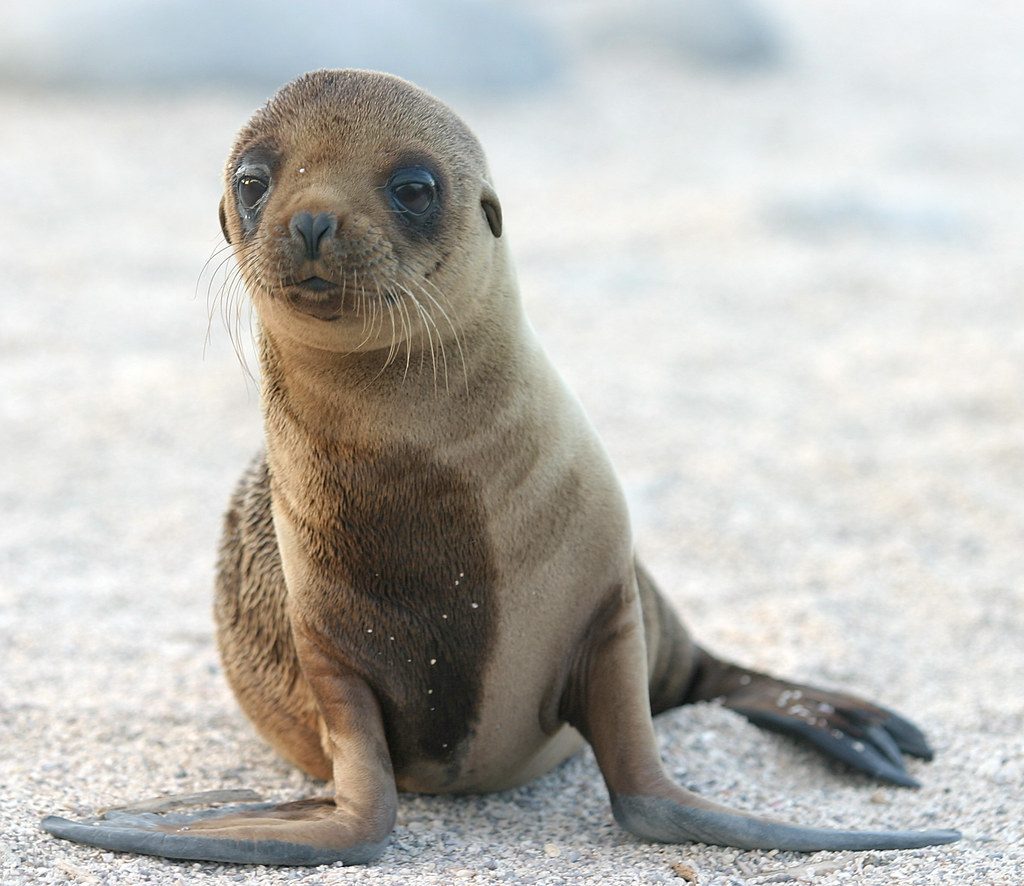
    The video begins with a young sea lion pup standing near the shore and looking nervous. He scans the coastline, appearing unsure of where his mother has gone. The little animal looks tiny against the rocky beach, and his body language makes it clear that he is worried. He shifts around, stares at the ocean, and seems to wait anxiously for the familiar face he cannot find. It is a scene that instantly makes people feel for him because every young animal depends on its mother during the first months of life.

    Many viewers assumed something terrible had happened, but experts say this situation is actually common among sea lions. Mother sea lions regularly leave their pups alone while they swim out to sea to feed themselves. They need large amounts of energy to produce milk and care for their young, so these feeding trips are an important part of raising a healthy pup. While the separation may look sad, it is usually a normal part of life for sea lion families.

    Why sea lion mothers leave their pups

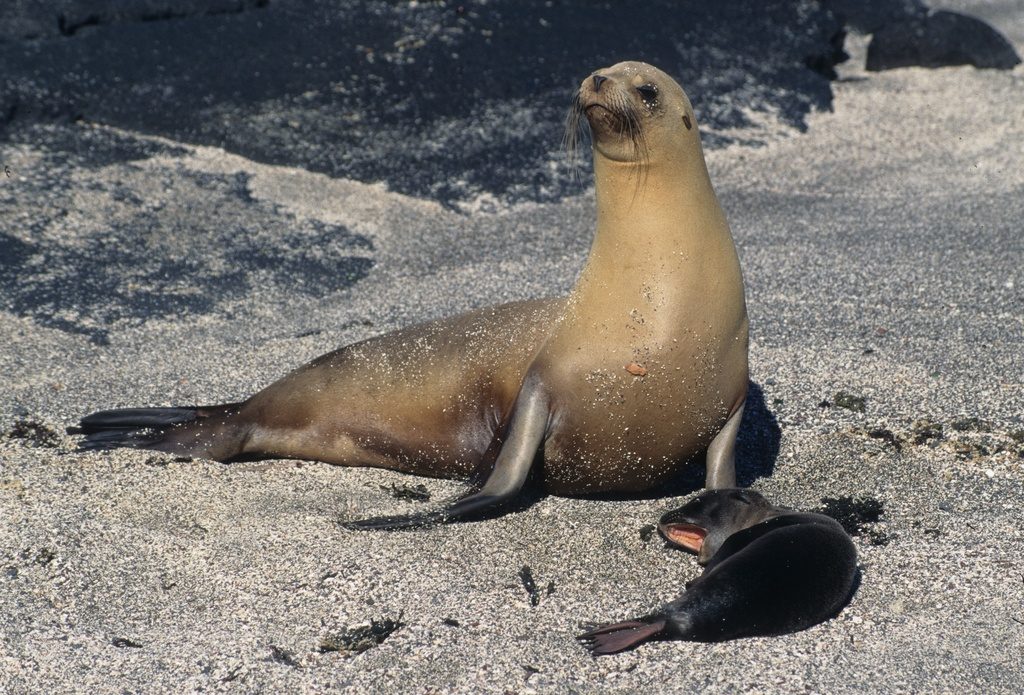
    Galápagos sea lion: mother with pup – scene shot” by Derek Keats is licensed under CC BY 2.0

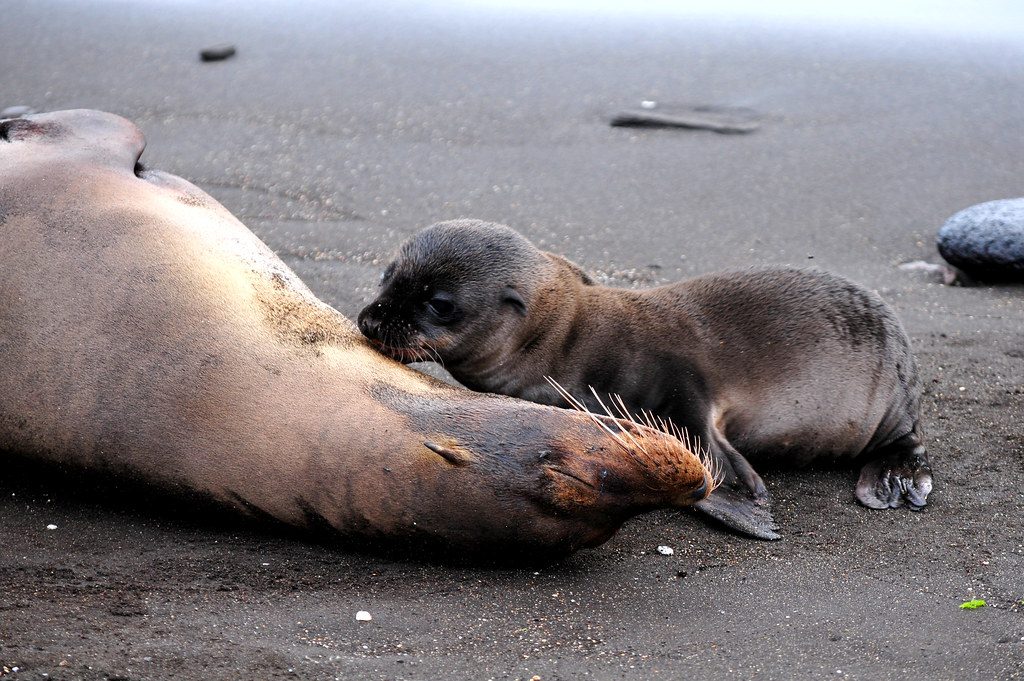
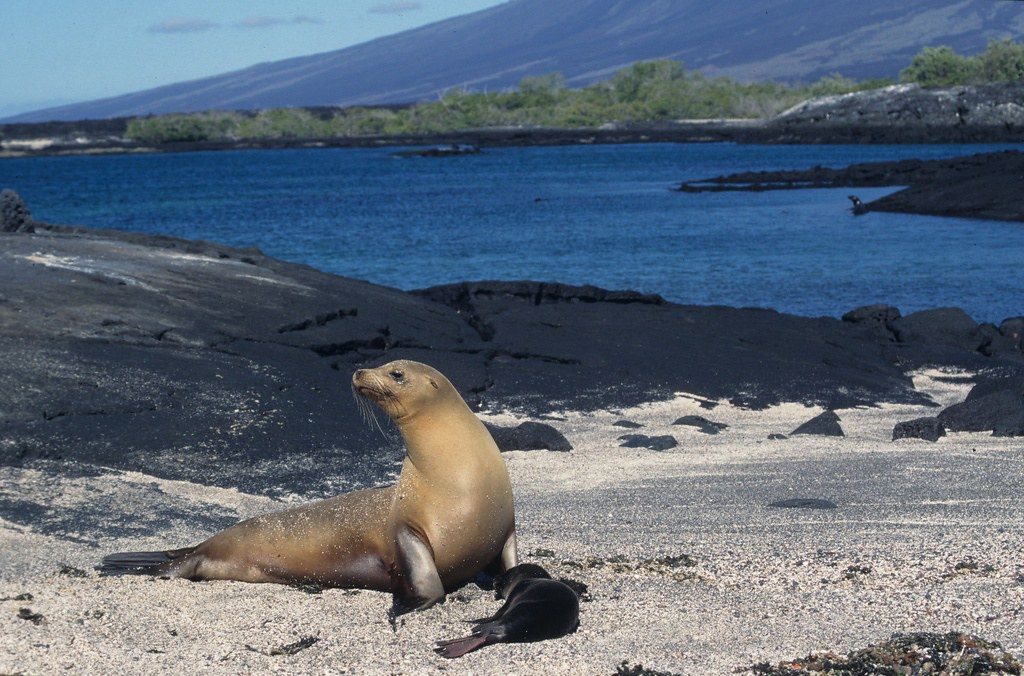
    Sea lion mothers are incredibly devoted, but they cannot stay with their babies every minute of the day. After giving birth, a mother spends her first days closely caring for her pup. Later, she begins taking short trips into the ocean to hunt fish, squid, and other prey. These journeys help her maintain enough strength to continue nursing and protecting her baby once she returns.

    During these trips, the pup remains on land, often resting near the area where it was born. Scientists have found that this pattern is common among many sea lion species. Mothers may spend hours or even a few days at sea before coming back. Although the pups are left alone temporarily, they are not abandoned. The mothers always return and immediately begin searching for their young. It is a natural routine that has helped sea lions survive for thousands of years.

    Mom was searching too

    Sea Lion mother” by davidagalvan is licensed under CC BY-NC-ND 2.0

    While the little pup in the video looked scared, his mother was likely feeling anxious as well. When female sea lions return from feeding trips, they do not simply expect their pups to appear. They actively search for them in busy colonies that may contain dozens or even hundreds of animals. Finding the right pup is important because mothers invest huge amounts of energy in raising their own offspring.

    Research has shown that sea lion mothers use several senses to identify their pups. Sound is especially important. Each pup has a unique call, almost like a personal voice signature. Mothers listen carefully for these calls as they move through the colony. Scientists have also discovered that sea lions use smell and even visual cues to help recognize one another. This combination of senses makes reunions remarkably successful, even in crowded environments.

    The moment everyone was waiting for

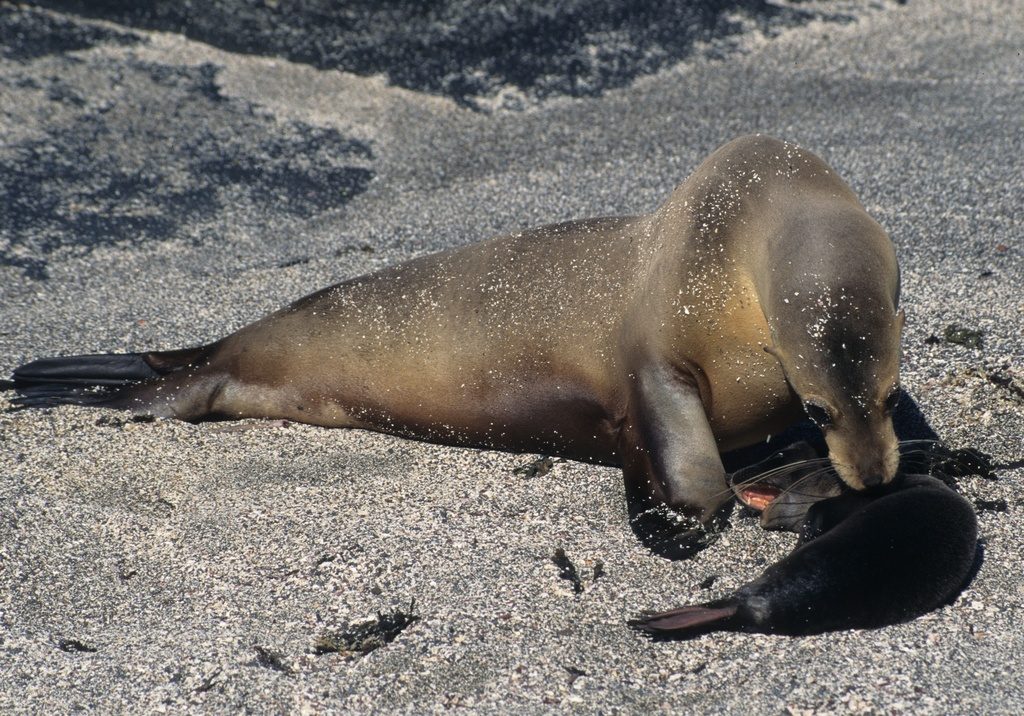
    Galápagos sea lion: mother biting pup – 2” by Derek Keats is licensed under CC BY 2.0

    Then came the moment that melted hearts everywhere. The mother and pup finally spotted each other. Almost instantly, both animals began moving quickly toward one another. The pup, who had looked so worried moments earlier, suddenly seemed full of excitement. His tiny steps became faster as he hurried across the shore to meet his mom.

    The mother appeared just as eager. The two reached each other and shared a gentle nuzzle, staying close as if making sure the other was really there. It was a simple moment, but it showed the strength of their bond. Viewers online could hardly contain their emotions. Many said they cried watching the reunion, while others laughed at the pup’s excited little walk. The scene reminded people that love and connection are not unique to humans. Animals experience these feelings too.

    How sea lions recognize each other

    Galápagos sea lion: mother with pup – yawn” by Derek Keats is licensed under CC BY 2.0

    One reason this reunion amazed so many people is because sea lions are incredibly good at recognizing family members. A mother returning from the ocean may hear dozens of pups calling at once, yet she can still pick out her own baby. Likewise, the pup can identify its mother’s voice among the noise of an entire colony. Scientists often compare these calls to names because they are so unique.

    Recognition does not stop with sound. Studies have shown that sea lion mothers also rely on scent to confirm they have found the right pup. Some species even use visual clues such as size, fur color, and age. This ability is important because feeding another pup would use precious energy and reduce the chances of survival for her own baby. By combining hearing, smell, and sight, sea lion mothers become experts at finding their young again and again.

    Why this reunion means so much

    A person holding a smart phone with social media on the screen
    Photo by Berke Citak on Unsplash

    The story of this sea lion pup is more than a cute internet moment. It is a reminder of how important mothers are in the animal world and how carefully nature has shaped these relationships. Young sea lions depend on their mothers for food, protection, and guidance. Without that care, many pups would struggle to survive their first year of life.

    This reunion also reminds people to respect wildlife and give animals space. Experts warn that humans should never approach or touch sea lion pups, even if they appear to be alone. In most cases, the mother is nearby or will return soon. Disturbing the animals can interfere with their natural behavior and may even prevent reunions. The best thing people can do is admire these incredible animals from a safe distance and let nature take its course.

  • Orcas surprise sailors by snapping off a boat’s rudder

    Orcas surprise sailors by snapping off a boat’s rudder

    Imagine sailing peacefully when a group of giant predators suddenly surrounds your boat and begins smashing into one of its most important parts. That frightening scene has become a real concern for some sailors in recent years. Reports of orcas snapping off boat rudders have shocked people around the world and raised many questions about why these intelligent animals are behaving this way.

    While the encounters can be scary and expensive, scientists stress that the whales are not targeting humans. In this article, you’ll learn where these incidents are happening, how the orcas damage boats, what experts believe is causing the behavior, and what sailors can do to stay safe.

    Where the strange encounters are happening

    Sailing to the Balearic Islands, Majorca, Minorca. an archipelago of Spain in the western Mediterranean Sea, near the eastern coast of the Iberian Peninsula.” by Nouhailler is licensed under CC BY-SA 2.0

    Most of the reported incidents have happened near the Iberian Peninsula, especially in waters off Spain, Portugal, and the Strait of Gibraltar. This behavior first gained attention in 2020 when sailors began reporting that orcas were approaching their boats and repeatedly striking the rudder. Over time, the number of encounters grew. Researchers have recorded hundreds of interactions, with sailboats being the most common targets. The animals usually focus on slow-moving boats that are around 40 feet long, although smaller and larger vessels have also been affected.

    The whales involved belong to a small and critically endangered group known as Iberian orcas. Scientists estimate there are only a few dozen individuals in this population. They spend much of the year following Atlantic bluefin tuna, their main food source, through waters near Spain and Portugal. Because this group is so small, researchers have been able to identify many of the whales involved in the encounters. Studies show that only a limited number of orcas are responsible for most of the interactions, and the behavior appears to have spread socially among them.

    How orcas manage to snap off a rudder

    Blind Island” by BLM Oregon & Washington is licensed under CC BY 2.0

    The rudder is one of the most important parts of a boat because it controls the direction of travel. When sailors lose their rudder, steering becomes extremely difficult or even impossible. In many encounters, the orcas head straight for this part of the vessel. They often approach from behind, ram the rudder with their heads, bite it, or shake it with their powerful jaws until it breaks or comes loose.

    Orcas are among the smartest animals on Earth, and their size makes them incredibly strong. Adult males can grow longer than 25 feet and weigh several tons. Their muscular bodies allow them to generate tremendous force in the water. Some sailors have reported hearing loud cracks as the rudder snapped under repeated impacts. Others have watched the whales grab broken pieces in their mouths and swim away. Researchers studying damaged vessels have found deep tooth marks and severe structural damage concentrated around the rudder, showing just how precisely the whales target this part of the boat.

    Scientists are still debating the reason

    people having meeting on rectangular brown table
    Photo by Christina @ wocintechchat.com M on Unsplash

    One of the biggest mysteries is why these orcas are doing this at all. Scientists have proposed several ideas, but there is no single answer that everyone agrees on. One theory suggests the behavior began after a negative experience involving a boat. According to this idea, one whale may have been injured or frightened by a vessel and started reacting aggressively toward rudders. Younger orcas, which learn behaviors from one another, may then have copied the actions.

    Another possibility is that the encounters are a form of play. Orcas are highly curious animals and are known for creating unusual trends within their social groups. In the past, some pods developed temporary habits such as carrying dead fish on their heads or playing with floating objects. Researchers say interacting with a moving rudder may provide stimulation similar to chasing prey. The rudder moves through the water, changes direction, and creates vibrations, all of which could make it especially interesting to an intelligent and playful animal. Even if the behavior is playful, however, the damage it causes can be very serious.

    Sailors describe terrifying moments at sea

    man looking at the sea
    Photo by Maël BALLAND on Unsplash

    For the people on board, these encounters are often frightening and unforgettable. Sailors frequently describe hearing loud bangs beneath the hull before realizing that several large orcas are circling their boat. In some cases, the whales continue striking the rudder for several minutes. In others, the interaction lasts nearly an hour. The boat may suddenly lose steering, begin drifting, or start taking on water if the damage becomes severe.

    One of the most widely discussed incidents involved a catamaran near Gibraltar whose rudder was ripped off by an orca. Video footage later showed one of the whales carrying the detached rudder in its mouth. In other cases, boats have sunk after suffering extensive damage. Even so, experts point out an important fact: no person has been killed or seriously injured by wild orcas during these incidents. The whales appear interested in the boat itself, especially the rudder, rather than the people aboard. Rescue teams have successfully evacuated crews when necessary, and most sailors escape unharmed.

    Why humans are not the target

    Captivating view of orcas swimming in the clear waters of Juneau, Alaska.
    Photo by Simon Hurry on Pexels

    The dramatic nature of these encounters has led some people to believe the orcas are attacking humans or seeking revenge. Scientists strongly disagree with these claims. Wild orcas have an extremely rare history of aggression toward people, and there are no confirmed records of a wild orca intentionally killing a human. Their behavior in these boat encounters is very different from predatory attacks seen in other marine animals.

    Researchers who examine the damaged vessels notice a clear pattern. The whales usually ignore other parts of the boat and focus almost entirely on the rudder. They do not try to climb onto the vessel or chase people who enter rescue rafts. This suggests the goal is not to harm humans. Some experts compare the behavior to a child repeatedly pressing buttons on a machine just to see what happens. The orcas may simply be fascinated by the movement and feel of the rudder, even though the consequences for sailors can be costly and dangerous.

    The media has sometimes exaggerated these stories by portraying the whales as angry or rebellious. While such headlines attract attention, scientists warn that they can create fear and misunderstanding. The Iberian orca population is already endangered, facing threats such as reduced prey, pollution, and accidental entanglement in fishing gear. Researchers want the public to understand that these whales remain an important part of the ocean ecosystem and deserve protection despite the unusual behavior.

    What sailors are doing to stay safe

    person sailing surrounded by body of water
    Photo by Sebastian Herrmann on Unsplash

    As encounters increased, sailors and marine authorities began looking for ways to reduce the risk of damage. Experts now advise boaters traveling through known orca areas to stay informed about recent sightings and follow local safety recommendations. Some sailors avoid certain routes during peak seasons, while others travel during daylight hours when whale locations are easier to monitor.

    If an interaction begins, many authorities recommend reducing speed and avoiding sudden maneuvers. Trying to outrun the whales or aggressively steer away may increase the amount of contact. Sailors are often told to remain calm, keep their hands inside the vessel, and notify rescue services if steering is lost. Researchers continue studying the encounters in hopes of finding better ways to prevent damage while keeping both humans and whales safe. The challenge is complicated because the whales are intelligent and their behavior can change over time. For now, caution and awareness remain the best tools for anyone sailing in these waters.

    Why the mystery is far from solved

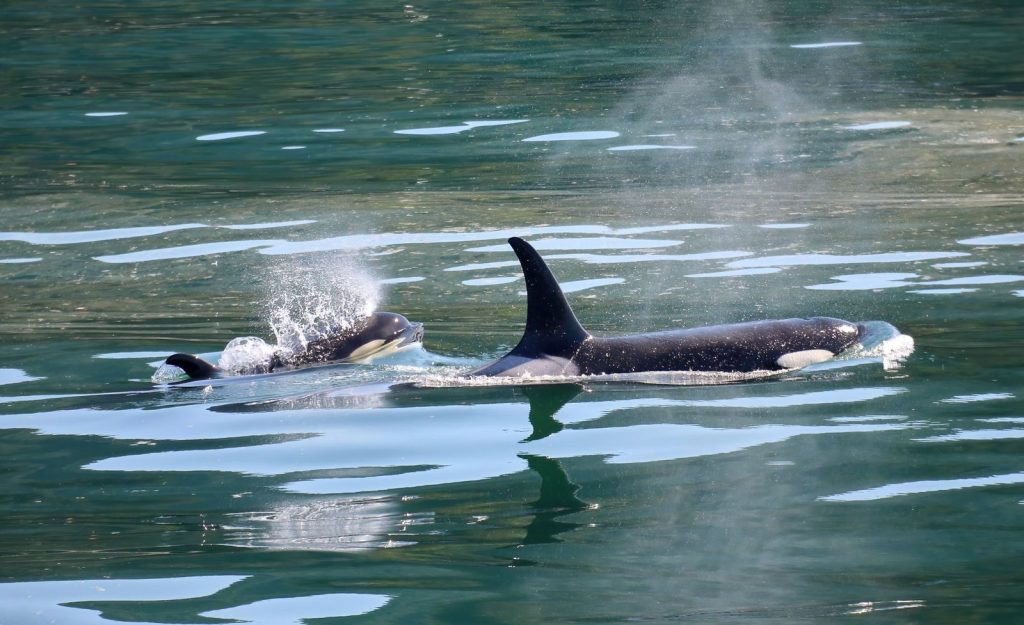
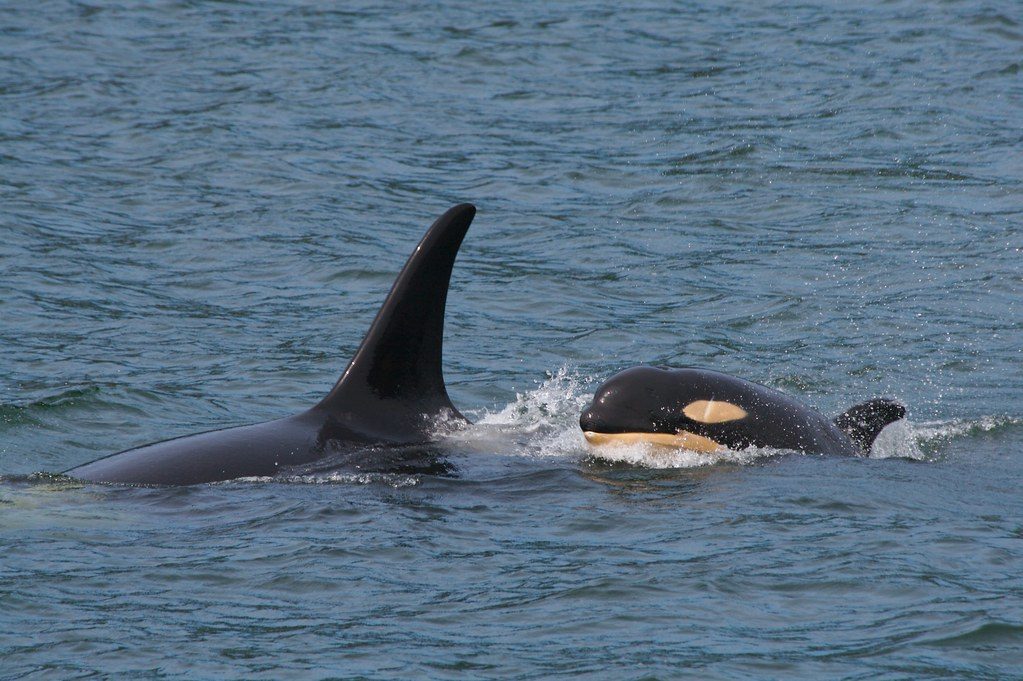
    Orca calf and Mother” by alumroot is licensed under CC BY-NC 2.0

    The story of orcas snapping off boat rudders remains one of the strangest wildlife mysteries of recent years. Scientists know that a small group of Iberian orcas is responsible for most of the encounters, and they know the whales are unusually focused on rudders. What remains uncertain is why the behavior began and why it continues years later.

    Researchers are hopeful that ongoing studies will provide answers. Every new encounter gives scientists more information about how the whales behave, how they learn from one another, and how humans can safely share the ocean with them. Until then, these remarkable animals continue to surprise sailors and remind us that even in the modern world, the sea still holds mysteries that no one fully understands.

  • Researchers uncover a massive shark that lived before megalodon

    Researchers uncover a massive shark that lived before megalodon

    Imagine discovering a giant shark that ruled the oceans long before the mighty megalodon even existed. That is exactly what researchers uncovered in northern Australia after taking a fresh look at a group of forgotten fossils. The ancient predator lived about 115 million years ago during the age of dinosaurs and may have grown to around 26 feet long.

    Scientists now believe it is the earliest known mega-predator from the same broad shark lineage that later gave rise to species like the great white. The discovery is changing what experts know about shark evolution and proving that giant ocean hunters appeared much earlier than anyone expected. Here is how the fossils were found and why this ancient shark matters so much.

    A forgotten fossil sparked a new mystery

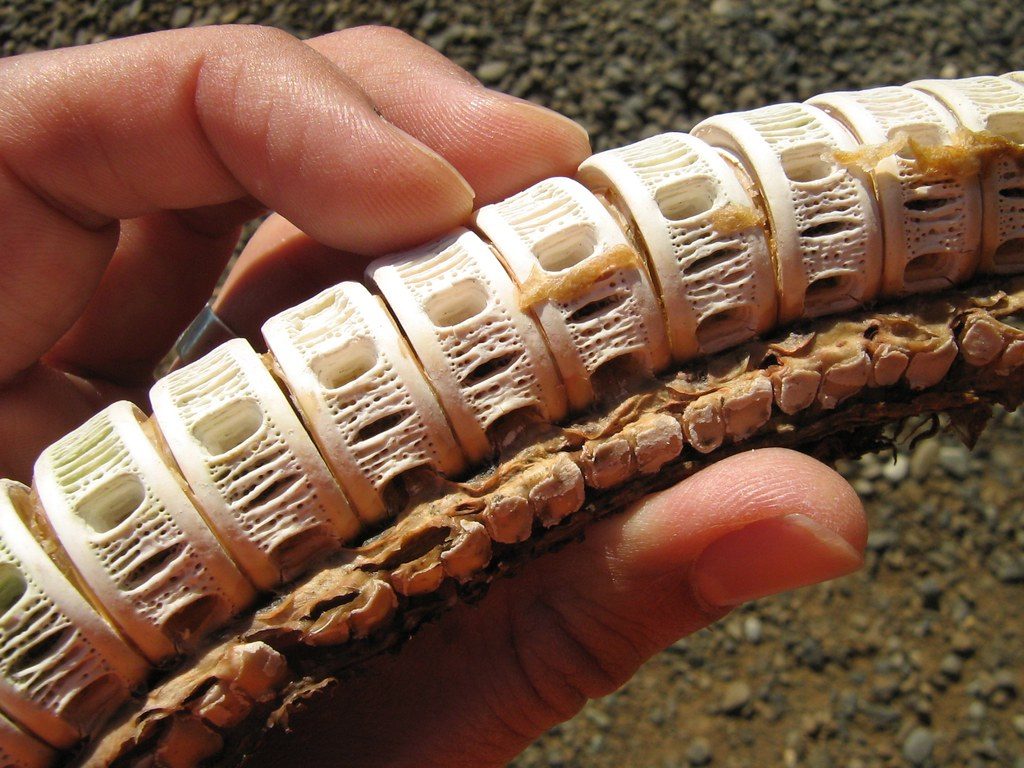
    common thresher shark vertebrae” by Mollivan Jon is licensed under CC BY-NC 2.0

    The story began with five large vertebrae discovered near Darwin in northern Australia. The fossils were unearthed during the late 1980s and 1990s from rocks that once formed the floor of an ancient ocean. After they were collected, the specimens spent years in a museum collection and attracted little attention from scientists.

    That changed when researchers took another look at the fossils. The vertebrae measured about 4.7 inches across, which is unusually large for sharks from that time period. Scientists quickly realized they might belong to an animal far bigger than expected. The rediscovery launched years of research aimed at figuring out the size and identity of the mysterious predator.

    The shark lived during the age of dinosaurs

    Shark Of The Deep” by qoqeygeo32 is licensed under CC CC0 1.0

    This giant shark swam through Earth’s oceans around 115 million years ago during the Early Cretaceous period. At that time, dinosaurs ruled the land, while enormous marine reptiles dominated the seas. Long-necked plesiosaurs, swift ichthyosaurs, and other fearsome predators shared the waters with this ancient shark.

    The region around present-day Darwin looked very different back then. It was covered by a vast inland sea connected to ancient continents that would later become Australia and Europe. The warm waters supported a rich ecosystem filled with fish, reptiles, and other marine animals. It was the perfect place for a giant predator to thrive.

    Scientists identified an early mega-predator

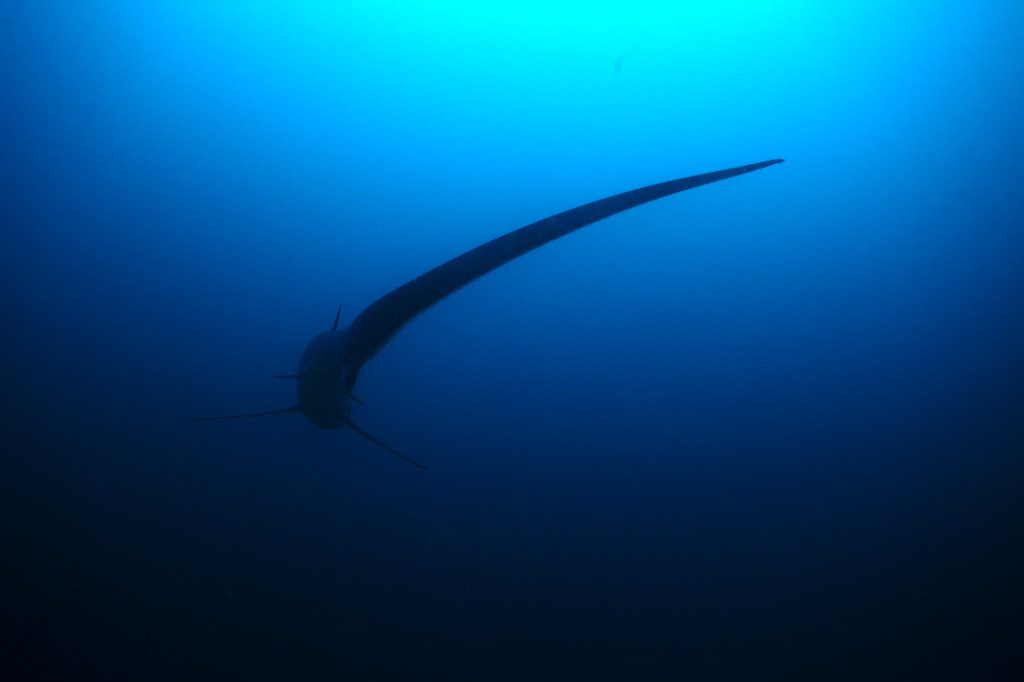
    Thresher Shark Tail” by PacificKlaus is licensed under CC BY-NC 2.0

    Researchers believe the shark belonged to an extinct group called the cardabiodontids. These sharks are relatives of modern lamniform sharks, a group that includes great whites, makos, and thresher sharks. Until now, scientists thought giant members of this family did not appear until much later in history.

    The new discovery pushed that timeline back by about 15 million years. That makes the Darwin shark the earliest known mega-predator from the modern shark lineage. It also suggests that sharks evolved into large hunters much faster than researchers once believed. The findings show that giant predators were already patrolling the oceans while dinosaurs still dominated the planet.

    Estimating the shark’s true size was difficult

    people having meeting on rectangular brown table
    Photo by Christina @ wocintechchat.com M on Unsplash

    Determining the size of extinct sharks is not easy. Unlike most animals, sharks have skeletons made mostly of cartilage rather than bone. Cartilage does not fossilize very well, so scientists often have to rely on teeth to estimate body size. The problem is that teeth can vary greatly between species, making those estimates uncertain.

    The Darwin fossils offered a rare advantage because they included vertebrae. Researchers used CT scans, fisheries data, and mathematical models to compare the fossils with living sharks and extinct species. After years of testing different methods, they concluded the animal was likely about 8 meters, or 26 feet, long. That would make it larger than today’s great white sharks and one of the biggest predators of its era.

    The ancient shark may have looked familiar

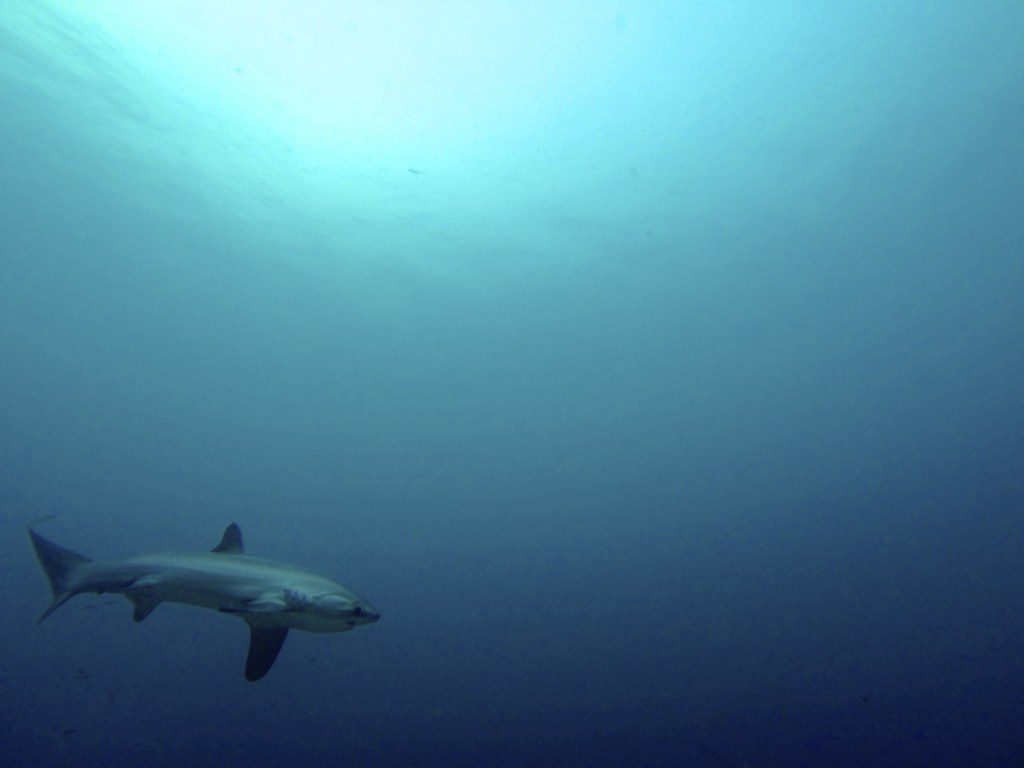
    Thresher Shark at Monad Shoal” by Maxime Guilbot is licensed under CC BY 2.0

    Even though this shark lived millions of years before megalodon, scientists believe it probably looked surprisingly modern. Its body shape was likely streamlined, with a powerful tail and a pointed snout designed for speed and hunting. In many ways, it may have resembled an oversized version of today’s great white shark.

    Researchers say this body plan has been remarkably successful throughout shark history. The basic design allows sharks to swim efficiently, chase prey, and survive in changing environments. The Darwin predator proves that this winning formula was already in place more than 100 million years ago. It is one reason sharks have survived multiple mass extinctions and continue to thrive today.

    The discovery could reveal even older giants

    a group of people working in a lab
    Photo by National Institute of Allergy and Infectious Diseases on Unsplash

    Scientists think this giant shark was probably not the first of its kind. If a mega-predator existed 115 million years ago, then older ancestors must have lived even earlier. Researchers now hope to search similar fossil sites around the world to uncover more clues about when giant sharks first appeared.

    The discovery also offers important lessons for the future. By studying ancient ecosystems, scientists can learn how marine life responded to changes in climate and biodiversity over millions of years. Understanding those past changes may help researchers predict how today’s sharks and ocean species will cope with environmental challenges in the years ahead.

  • Strange sea creature missing for a decade found again off California

    Strange sea creature missing for a decade found again off California

    For years, scientists feared they had lost one of the Pacific Ocean’s most important creatures forever. The strange and colorful sunflower sea star almost vanished after a devastating disease swept through the West Coast, killing billions of sea stars and changing entire marine ecosystems. But now, a surprising discovery off Northern California is giving researchers new hope.

    Eighteen sunflower sea stars have been found in the waters of the Greater Farallones National Marine Sanctuary, marking one of the biggest sightings in California since the species collapsed more than a decade ago. This article explains what happened to these giant sea stars, why their return matters, and how scientists are working to protect them before it is too late.

    A giant sea star vanished almost overnight

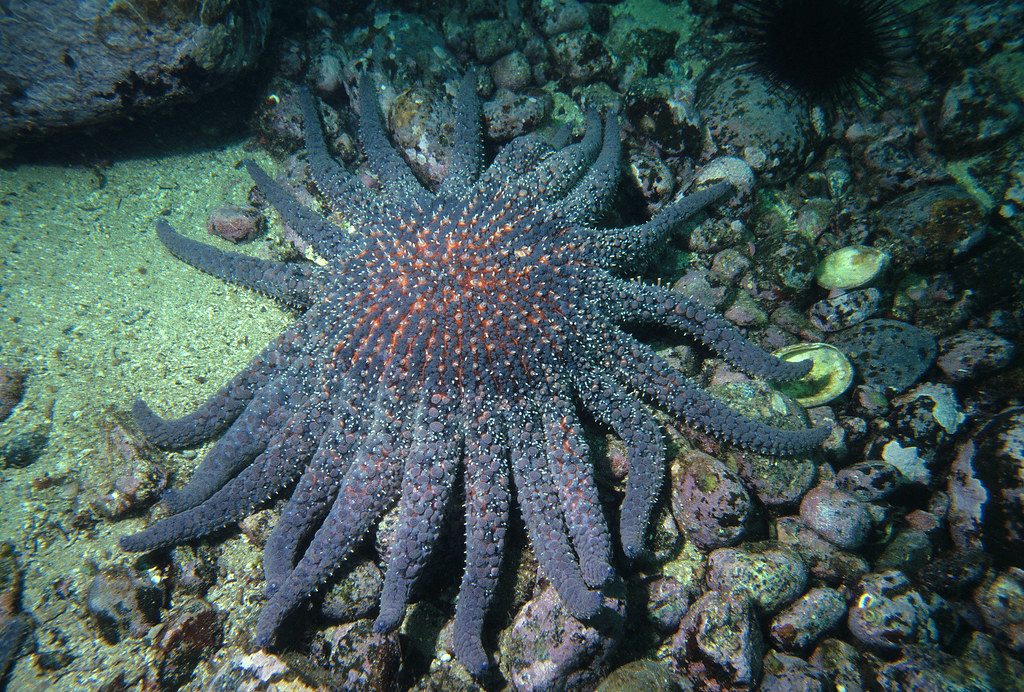
    Sunflower Sea Star, Lots O’ Legs” by FallenPegasus is licensed under CC BY-NC 2.0

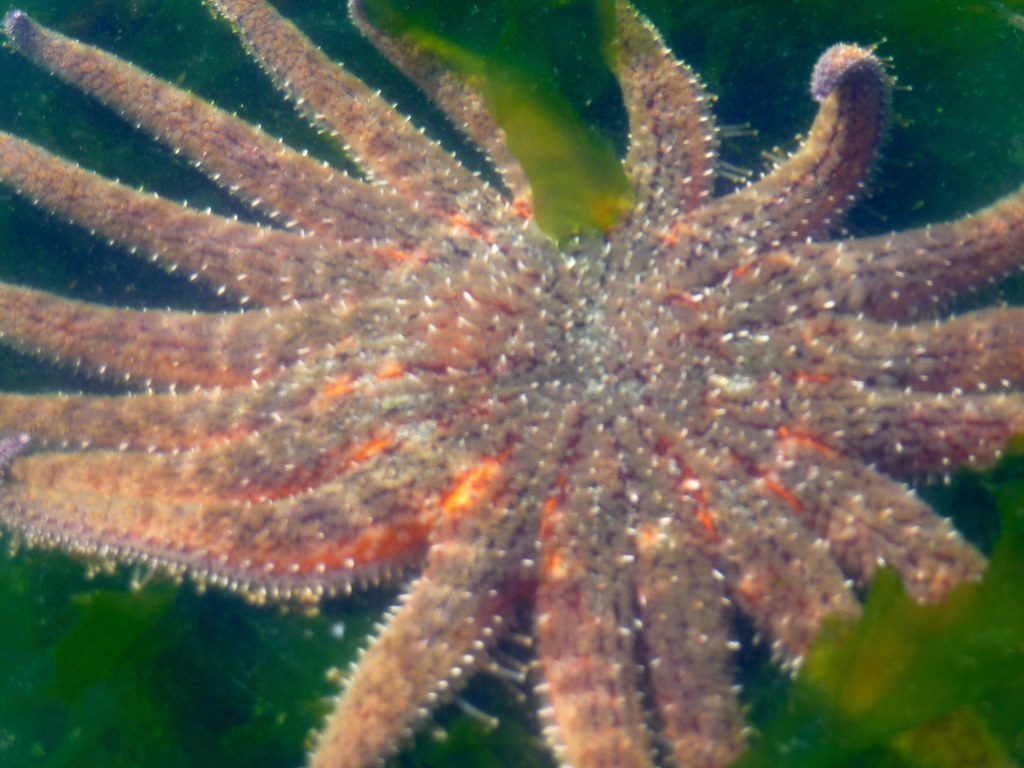
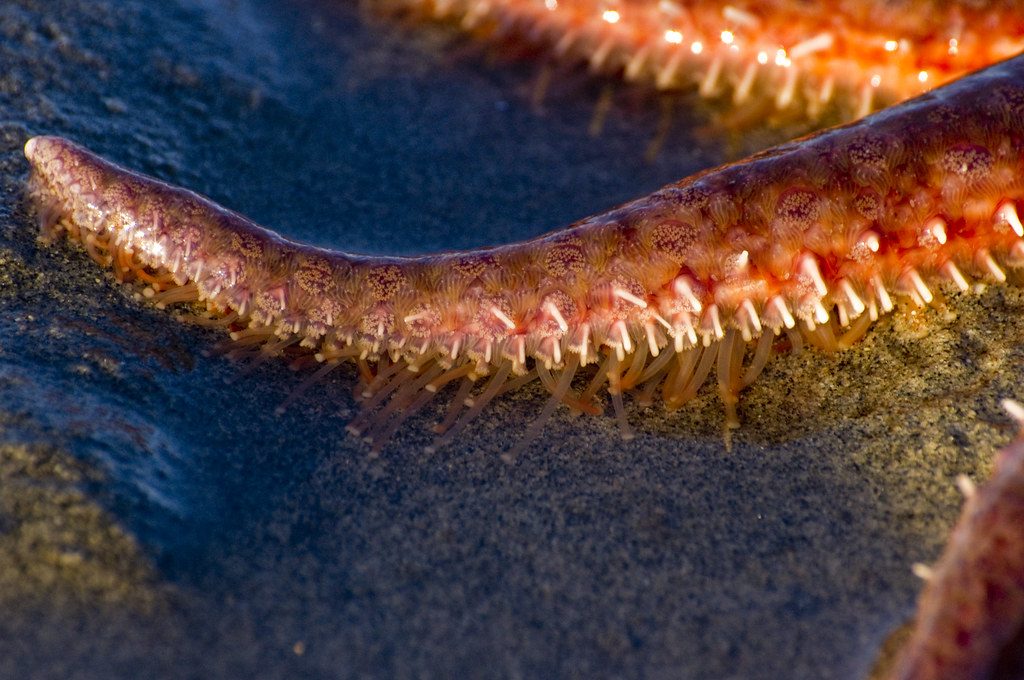
    The sunflower sea star is one of the largest sea star species on Earth. Its scientific name is Pycnopodia helianthoides, and adults can grow more than three feet across. Most have between 16 and 24 arms, although the exact number varies. Their bodies come in many colors, including orange, purple, red, brown, and yellow. Unlike slower sea stars, sunflower sea stars are fast-moving predators that can travel about three feet every minute across the seafloor in search of food.

    For decades, these sea stars were common along the Pacific coast from Alaska to Southern California. Then disaster struck in 2013. A mysterious illness called sea star wasting disease began spreading rapidly. Infected animals developed lesions, their arms twisted or fell off, and many eventually died. Between 2013 and 2017, the disease killed billions of sea stars across North America in what scientists describe as the largest marine epidemic ever recorded. By the end of the outbreak, sunflower sea stars had nearly disappeared from California waters, and researchers worried the species might never recover.

    Scientists finally found survivors off California

    Majestic cliffs by a foamy ocean under a cloudy sky.
    Photo by Kindel Media on Pexels

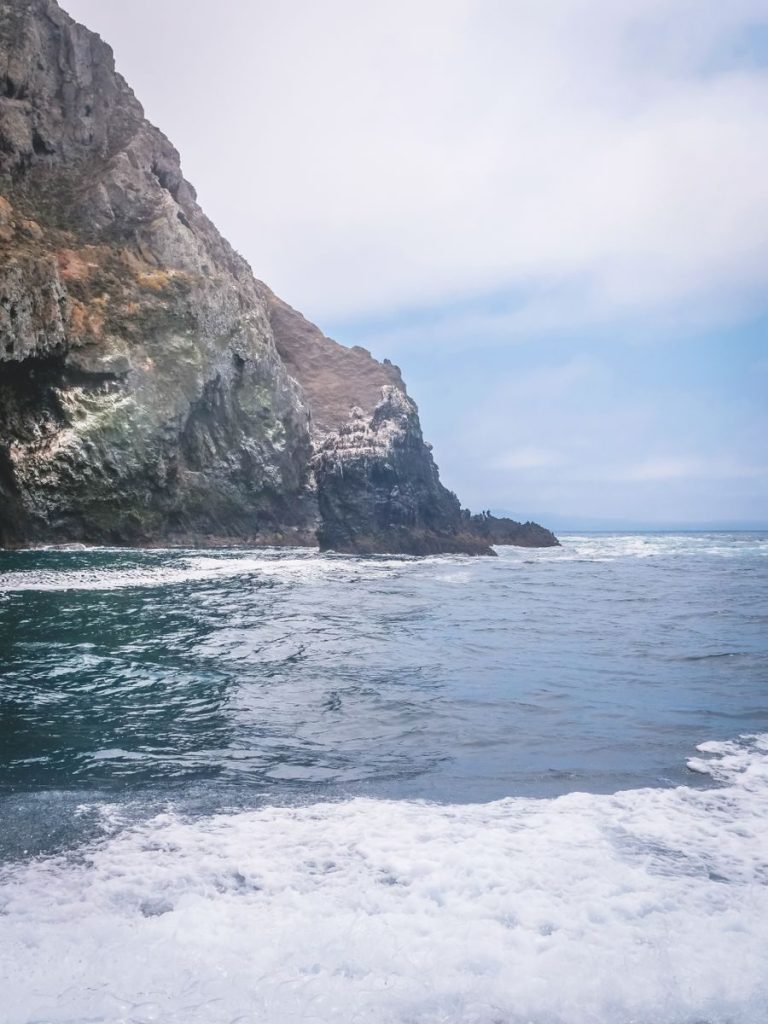
    Hope returned last summer when researchers discovered 18 sunflower sea stars in the Greater Farallones National Marine Sanctuary off the coast of Northern California. The stars were found during Sonoma State University’s first diving event, known as “Pycnopalooza.” The discovery was especially exciting because previous sightings in California had been extremely rare and usually involved only one or two animals.

    The newly discovered sea stars were not tiny juveniles. Many were large, mature adults that may be capable of reproducing. Scientists collected small tissue samples, water samples, and ecological data from the site to learn more about the animals and their environment. Researchers believe these survivors could hold important clues about why some sea stars lived while billions of others died. Their genes may reveal whether they have natural resistance to disease or other traits that helped them survive such a catastrophic event.

    The disease changed the ocean forever

    Indian Ocean Sunset. (in explore)” by Rod Waddington is licensed under CC BY-SA 2.0

    The loss of sunflower sea stars affected much more than a single species. These animals are considered keystone predators, meaning they play an outsized role in keeping ecosystems balanced. One of their favorite foods is the purple sea urchin, a spiny creature that feeds on kelp. When sunflower sea stars disappeared, sea urchin populations exploded because fewer predators were hunting them.

    The increase in sea urchins had devastating consequences for kelp forests. Vast underwater forests that once covered parts of the California coast were stripped bare as hungry urchins consumed kelp faster than it could grow. In the Farallones region alone, about 90 percent of kelp habitat was lost. Scientists say the disappearance of these forests affected many other species, including fish, sea otters, sharks, and seabirds. The ripple effects spread throughout the food web, showing how the loss of one important predator can reshape an entire ecosystem.

    Kelp forests are underwater jungles

    fish swarm through the kelp forest” by oliver.dodd is licensed under CC BY 2.0

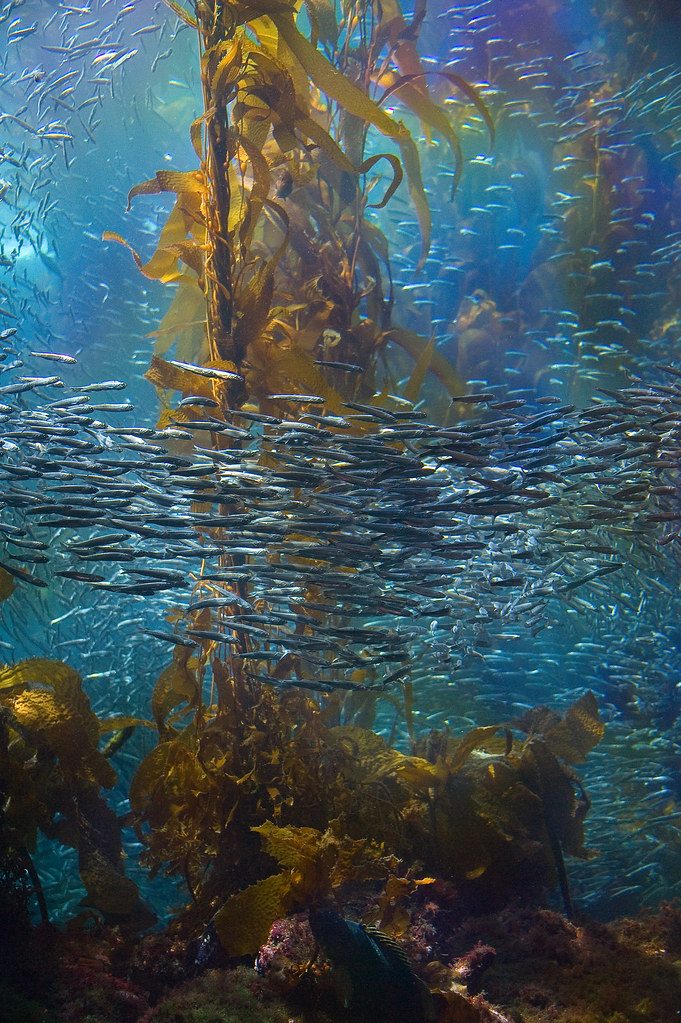
    Kelp forests are among the most productive ecosystems on Earth. Giant kelp grows rapidly and forms towering underwater structures that provide food, shelter, and breeding grounds for hundreds of species. Fish hide among the fronds, sea otters hunt for prey, and sharks patrol the edges of these marine forests. Nearly 800 species depend on kelp ecosystems somewhere along the Pacific coast.

    These forests also help people. Kelp absorbs carbon dioxide from the atmosphere and stores it in ocean ecosystems, helping slow climate change. Scientists estimate that a hectare of healthy kelp forest can absorb dozens of tons of carbon dioxide each year. But kelp is sensitive to warming oceans. Marine heat waves, changing ocean conditions, and strong climate events such as El Niño can slow kelp growth or kill large areas of forest. That is why the return of sunflower sea stars is so important. By controlling sea urchins, they may help kelp forests recover naturally over time.
    Researchers are racing to save the species

    people having meeting on rectangular brown table
    Photo by Christina @ wocintechchat.com M on Unsplash

    Scientists are not waiting to see what happens next. Across the West Coast, researchers are working on ways to restore sunflower sea star populations before another disease outbreak or marine heat wave strikes. At laboratories such as the Birch Aquarium in San Diego, scientists have successfully bred sunflower sea stars and raised their larvae in controlled conditions. The goal is to create healthy populations that could one day be returned to the ocean.

    Other researchers are exploring whether selective breeding could make sea stars more resistant to disease and warmer water. Some scientists are even studying whether helpful bacteria and algae could protect sea stars in the same way beneficial microbes help corals survive stress. New discoveries are happening quickly. Researchers say they are learning more every month about how these animals grow, reproduce, and fight disease. This growing knowledge gives scientists confidence that recovery is possible, even though many challenges remain.

    The rediscovery offers hope for the future

    Sunflower sea star at sunrise” by Dan Arndt is licensed under CC BY-NC-SA 2.0

    The rediscovery of sunflower sea stars is more than a scientific milestone. It is a reminder that nature can sometimes recover even after severe losses. The sight of 18 healthy sea stars in Northern California shocked many researchers who had spent years searching without success. Some described the moment as feeling like seeing a dinosaur alive in the modern world.

    Still, the future of the species remains uncertain. Sunflower sea stars are considered threatened, and experts continue to debate what protections they need. Conservation groups want stronger safeguards for coastal habitats and cleaner ocean waters, while scientists continue studying the long-term effects of disease and climate change. Yet for the first time in many years, there is real optimism. The survival of these sea stars suggests that recovery is possible, and with continued research and conservation, one of the Pacific Ocean’s strangest and most important creatures may once again thrive along the California coast.

  • Why great white sharks suddenly disappeared from this hotspot

    Why great white sharks suddenly disappeared from this hotspot

    For years, South Africa was one of the best places on Earth to see great white sharks. Tourists traveled from around the world to watch these giant predators leap from the water near Seal Island in False Bay or swim near Gansbaai, a town once called the “great white shark capital of the world.” Then something strange happened. The sharks began to disappear, and soon many of the places that once teemed with great whites became eerily quiet.

    Scientists are still working to understand exactly why great white sharks abandoned this famous hotspot. Some believe a pair of killer whales scared them away. Others argue that human activity had already weakened shark populations long before the whales arrived. The truth may be more complicated than a single cause. Here’s what researchers know so far and what the disappearance means for the future of these iconic ocean predators.

    A world-famous shark hotspot suddenly went quiet

    White Shark Cage Diving, Gansbaai” by Sara&Joachim is licensed under CC BY-SA 2.0

    For decades, False Bay and Gansbaai were among the most reliable places on Earth to spot great white sharks. The waters were rich in food, especially Cape fur seals, which gather in huge colonies around Seal Island. Scientists spent years tracking sharks in these areas, learning how they hunted, migrated, and interacted with other marine animals. Shark cage diving also became a major tourist attraction, supporting local businesses and bringing attention to marine conservation.

    But after around 2015, sightings started to fall sharply. By mid-2018, researchers conducting regular surveys at Seal Island in False Bay were no longer seeing great white sharks at all. What had once been a thriving shark habitat became nearly empty. The sudden change shocked scientists because great whites had been present there year-round for decades. The disappearance was so dramatic that researchers immediately began searching for answers.

    The arrival of two unusual killer whales

    Shark starboard” by empty007 is licensed under CC BY-NC 2.0

    One of the strongest theories focuses on two male killer whales known as Port and Starboard. The pair became famous after several dead great white sharks washed ashore beginning in 2017. These sharks had something unusual in common. Their bodies showed almost no damage except for a precise opening near the chest, and their large, oily livers were missing.

    Scientists believe Port and Starboard developed a specialized hunting method that allowed them to kill sharks quickly and remove their nutrient-rich livers. Since then, the pair has been linked to multiple shark deaths along South Africa’s coast. Researchers have also observed great white sharks leaving areas shortly after the orcas appear. In some cases, sharks that once stayed in a region for months vanished within days of an orca sighting, suggesting they see killer whales as a serious threat and actively avoid them.

    Sharks may have moved instead of disappearing

    st Croix island near Algoa Bay, P.E – South Africa” by Andre W is licensed under CC BY-SA 2.0

    The disappearance of sharks from False Bay does not necessarily mean they died. Evidence suggests many of them simply moved elsewhere. Scientists tracking tagged sharks found that some traveled hundreds of miles east along South Africa’s coastline. Places such as Mossel Bay, Algoa Bay, and Plettenberg Bay began reporting more shark sightings at around the same time numbers fell in False Bay.

    This shift is important because great white sharks reproduce slowly. Females do not produce large numbers of young, and it can take years for a population to grow. The rapid changes seen across different regions happened too quickly to be explained by births alone. Instead, researchers believe redistribution played a major role, with sharks abandoning areas where they felt threatened and moving to locations they considered safer. Even so, the long-term fate of many sharks remains uncertain.

    Some scientists blame people more than whales

    a group of people sitting around a white table
    Photo by UK Black Tech on Unsplash

    Not all experts agree that killer whales are the main reason for the sharks’ disappearance. Some researchers argue the decline began before Port and Starboard became regular visitors. They point to decades of human activity that may have weakened shark populations long before the orcas appeared.

    Overfishing is one major concern. Great white sharks rely on healthy fish populations and marine ecosystems. When commercial fisheries remove large numbers of fish, sharks may struggle to find enough food. Protective shark nets and baited drumlines are another issue. These systems are designed to reduce shark encounters near beaches, but they can accidentally kill great whites and other marine animals. Scientists who support this theory believe the sharks were already under pressure from humans, and the arrival of shark-hunting orcas may have pushed an already stressed population over the edge.

    The disappearance changed the entire ecosystem

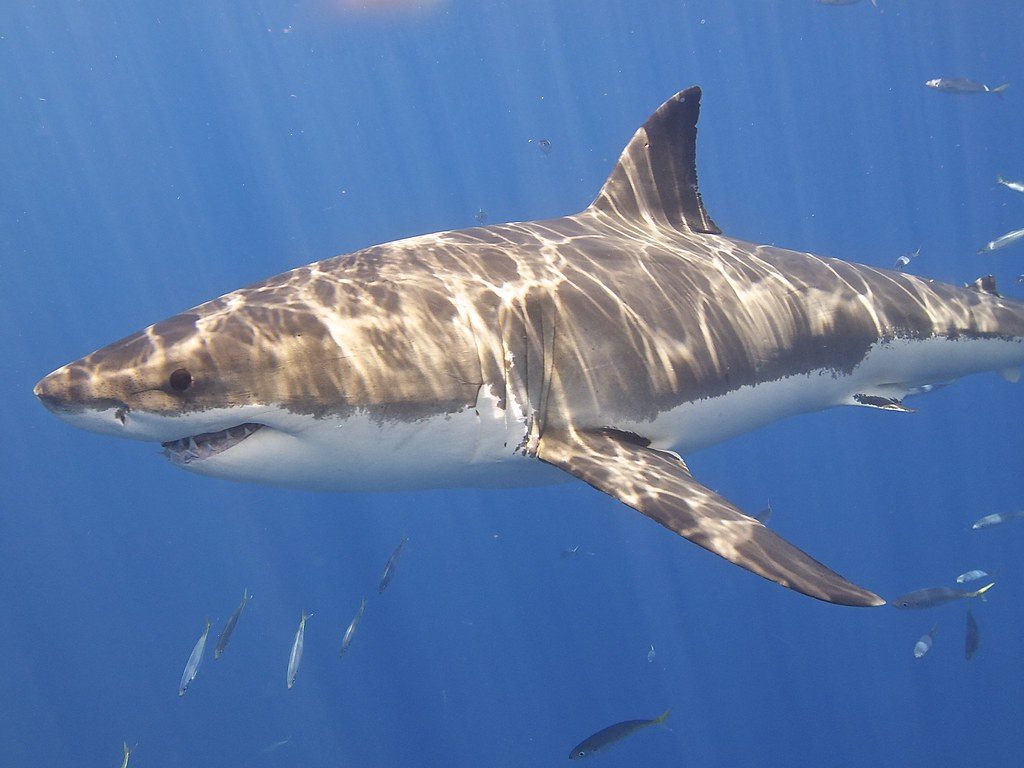
    Great White Shark” by Elias Levy is licensed under CC BY 2.0

    When an apex predator disappears, the effects ripple through the food chain. Great white sharks sit near the top of the ocean ecosystem, helping keep populations of other animals in balance. Their sudden absence from False Bay created major changes that scientists are still studying today.

    Cape fur seals, one of the sharks’ favorite prey animals, became bolder after the sharks vanished. Researchers noticed that seals spent more time in open water and showed less fear near Seal Island. At the same time, sevengill sharks, which are normally prey for great whites, began appearing in places they were rarely seen before. These shifts then affected smaller fish and other marine species. Scientists call this process a trophic cascade, where the loss of a top predator causes changes throughout the entire ecosystem. The situation in False Bay has become one of the clearest examples of this phenomenon in the ocean.

    The mystery is not fully solved yet

    Great White Shark” by Elias Levy is licensed under CC BY 2.0

    Although scientists have learned a great deal, there is still no complete agreement on why great white sharks abandoned South Africa’s famous hotspot. The evidence linking killer whales to shark movements is strong. The timing matches, shark carcasses have been found with signs of orca attacks, and researchers have watched sharks leave areas after killer whale sightings. Yet this does not rule out other causes.

    Many experts now believe the answer is a combination of factors. Human activities such as overfishing and shark control measures may have slowly reduced shark numbers over many years. Then specialized orcas arrived and changed shark behavior even more dramatically. Climate change may also play a role by altering ocean temperatures and food availability. Rather than a single event, the disappearance of great white sharks may be the result of several pressures acting together over time.

  • Why experts warn against eating these 6 kinds of fish

    Why experts warn against eating these 6 kinds of fish

    3 fats. But not every fish is a smart choice for your dinner plate. Some species contain high amounts of mercury, while others face serious overfishing problems or may carry other environmental concerns. That is why health experts and environmental groups warn people to be careful about which fish they eat and how often they eat them.

    If you have ever wondered why certain fish show up on “avoid” lists, you are not alone. The good news is that you do not have to stop eating seafood altogether. By learning about these six kinds of fish, you can make safer choices for yourself and your family. This guide explains the biggest concerns, including mercury levels, sustainability issues, and why experts continue to warn consumers about these popular seafood options.

    Shark contains very high levels of mercury

    I am glad you are not a giant shark” by mriggen is licensed under CC BY 2.0

    Shark is one of the most commonly listed fish that experts recommend avoiding. The main reason is mercury. Sharks are large predators that sit at the top of the ocean food chain. They eat many smaller fish during their long lives, and mercury builds up in their bodies over time. This process is called bioaccumulation. As a result, shark meat can contain some of the highest mercury levels found in seafood. Mercury is a toxic metal that can affect the brain and nervous system, especially in unborn babies and young children. Pregnant women, nursing mothers, and children are often advised to avoid shark completely.

    Even healthy adults are encouraged to limit shark consumption. Mercury does not disappear when the fish is cooked, frozen, or cleaned. Frequent exposure can slowly increase the amount of mercury in the body. Shark populations also face major conservation challenges around the world. Many shark species grow slowly and produce fewer young than other fish, making it difficult for their populations to recover from heavy fishing pressure. These health and environmental concerns are why shark remains one of the top fish experts advise people to avoid.

    Swordfish can expose people to too much mercury

    Swordfish Carpaccio, Poached Ocean Trout with Aioli – Tea Rooms of Yarck” by avlxyz is licensed under CC BY-SA 2.0

    Swordfish is famous for its meaty texture and mild flavor, but experts warn that it can contain dangerous amounts of mercury. Like sharks, swordfish are large predators that live for many years. Because they feed on smaller fish throughout their lives, mercury builds up in their muscles and tissues. This means that a single serving of swordfish can expose a person to much more mercury than lower-mercury fish such as salmon or sardines. Health officials have repeatedly placed swordfish on lists of fish that pregnant women and young children should avoid.

    Mercury is especially concerning because it can affect brain development and the nervous system. Children are more sensitive to its effects because their bodies and brains are still growing. Adults who eat swordfish regularly may also increase their mercury exposure over time. The fish still contains healthy nutrients and omega-3 fats, but experts believe the mercury risk outweighs these benefits for many people. Choosing lower-mercury fish allows consumers to get the nutritional advantages of seafood without the same level of concern.

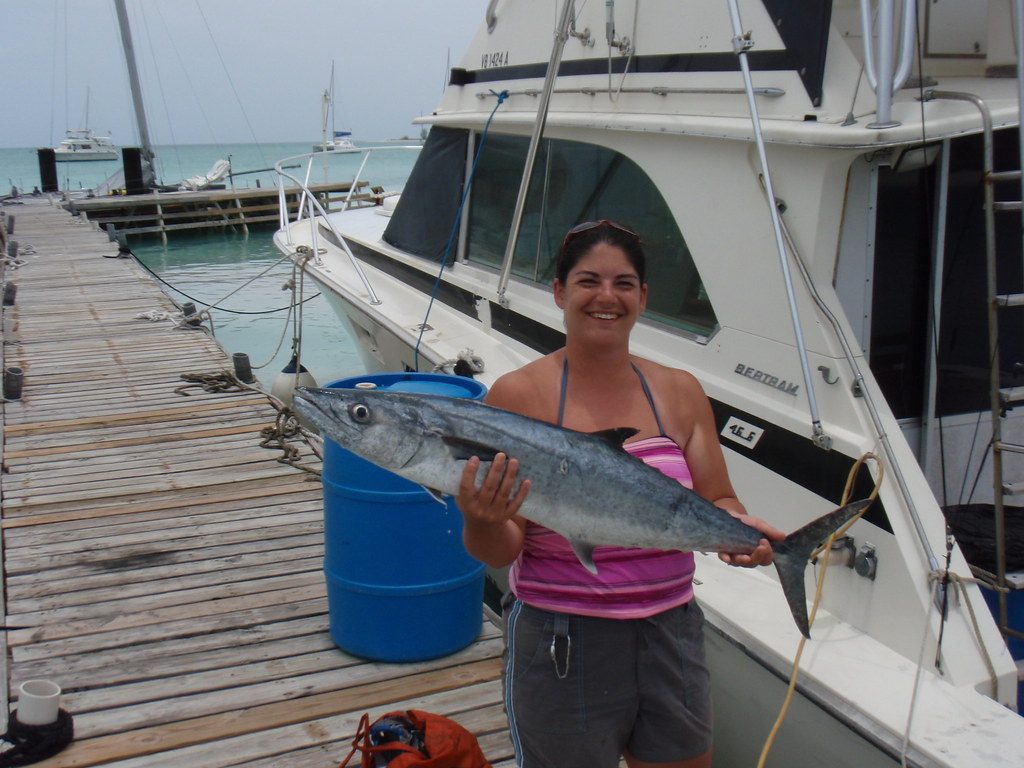
    King mackerel is one of the highest-mercury fish

    Kris and King Mackerel” by ScubaBear68 is licensed under CC BY 2.0

    Many people confuse king mackerel with Atlantic mackerel, but they are very different when it comes to mercury levels. Atlantic mackerel is considered a healthy, lower-mercury option. King mackerel, however, is among the fish that experts most strongly advise people to avoid. It is a large predator that accumulates mercury as it grows. Studies and government testing have repeatedly found that king mackerel contains much higher mercury levels than many other popular seafood choices.

    The concern is not just for pregnant women and children. Adults who eat king mackerel often may also increase their mercury intake beyond recommended levels. Mercury exposure is linked to problems involving the nervous system, memory, and brain function when consumed in large amounts over time. Fortunately, seafood lovers do not have to give up mackerel entirely. Atlantic mackerel offers similar nutrients and omega-3 fats with far less mercury, making it a safer option for regular meals.

    Tilefish from the Gulf of Mexico is a risky choice

    When Tilefish Attack” by laszlo-photo is licensed under CC BY 2.0

    Tilefish is not as well known as tuna or salmon, but it has gained attention because of its unusually high mercury content. The concern mainly involves tilefish caught in the Gulf of Mexico. This variety consistently ranks among the fish with the highest mercury levels. Because tilefish live for many years and occupy a higher place in the food chain, mercury builds up in their bodies over time. This makes them a poor choice for pregnant women, nursing mothers, and young children.

    The tricky part is that not all tilefish are the same. Tilefish from the Atlantic Ocean generally contain lower mercury levels than Gulf tilefish. However, it can be difficult for shoppers to know exactly where a fish was caught unless the label clearly states its origin. For this reason, many experts encourage consumers to avoid tilefish unless they are certain about the source. Safer seafood choices are widely available and provide the same nutritional benefits without the uncertainty surrounding mercury exposure.

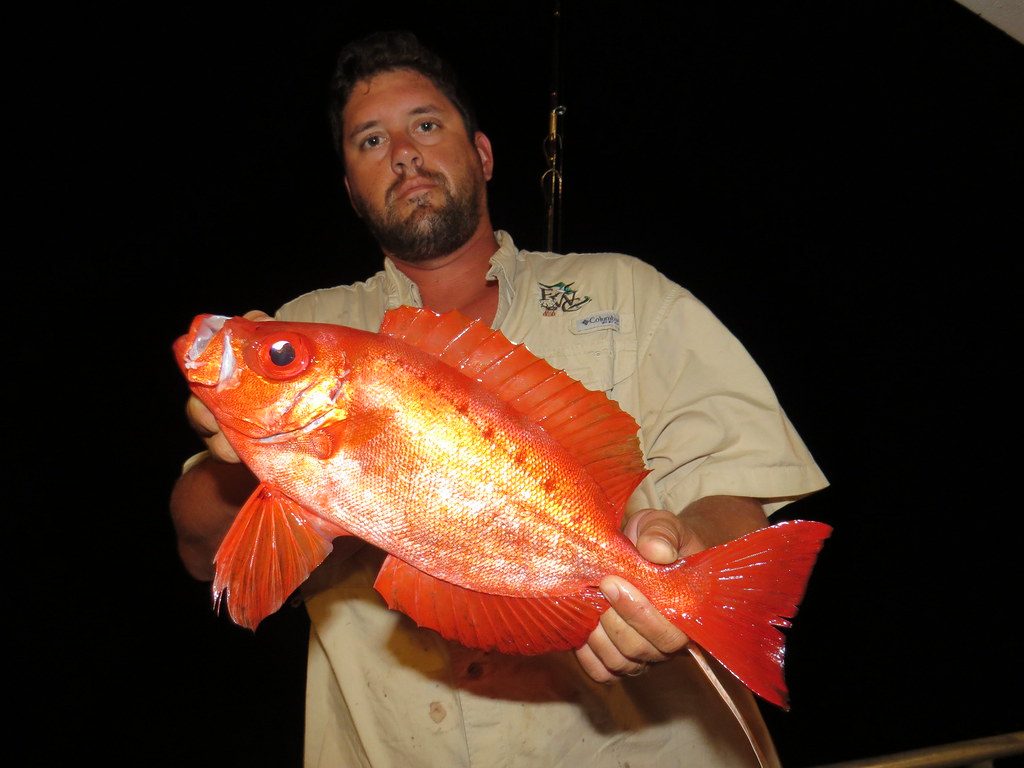
    Orange roughy raises both health and environmental concerns

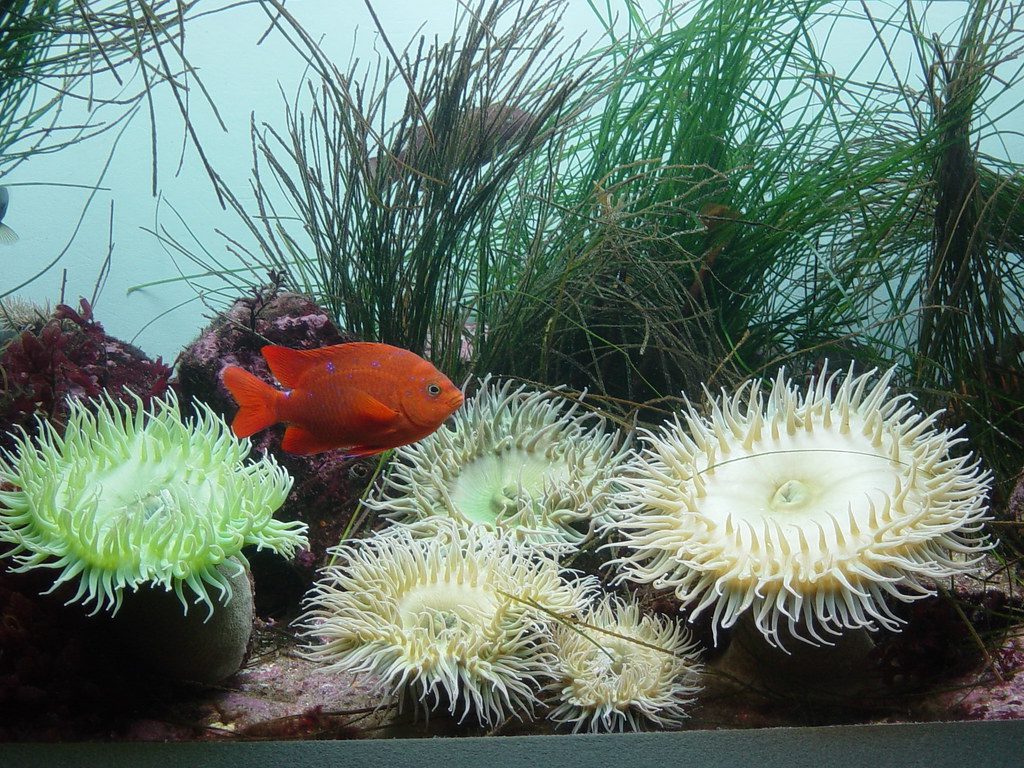
    Sea anemones and orange fish” by Martin LaBar is licensed under CC BY-NC 2.0

    Orange roughy may look like an ordinary fish at the seafood counter, but experts often warn consumers about it for two major reasons. The first is mercury. Orange roughy can contain relatively high levels of mercury compared with many other fish. While it may not always reach the same levels as shark or swordfish, health officials still recommend limiting or avoiding it, especially for children and pregnant women.

    The second concern is sustainability. Orange roughy is one of the longest-living fish in the ocean. Some individuals are believed to live for more than 100 years. They grow slowly and do not reproduce quickly, which means their populations recover very slowly after heavy fishing. In many areas, orange roughy has been heavily overfished, leading environmental groups to warn consumers about buying it. Choosing faster-growing fish such as sardines, salmon, or pollock can help reduce pressure on vulnerable species while still providing excellent nutrition.

    Bigeye tuna contains more mercury than many people realize

    Atlantic bigeye” by FWC Research is licensed under CC BY-NC-ND 2.0

    Tuna is one of the most popular seafood choices in America, but not all tuna species are equal. Bigeye tuna is one of the varieties experts warn about because of its mercury content. It is larger and longer-lived than some other tuna species, which allows mercury to build up in its body over time. Bigeye tuna is commonly used in sushi and sashimi, so people may eat it without realizing they are choosing a high-mercury fish.

    This does not mean all tuna is unsafe. Canned light tuna and skipjack tuna generally contain much lower mercury levels and are considered better choices for regular consumption. Bigeye tuna, however, is often placed in the highest mercury category by health authorities. Experts recommend that pregnant women and young children avoid it altogether, while other adults should eat it sparingly. Understanding the difference between tuna species can help consumers enjoy seafood safely while reducing unnecessary exposure to mercury.

  • A camera on a giant whale revealed a secret hidden deep beneath the waves

    A camera on a giant whale revealed a secret hidden deep beneath the waves

    The ocean hides places so dark and deep that humans have barely explored them. That is why scientists were amazed when a camera on a giant whale captured never-before-seen scenes from far beneath the waves. By attaching a small homemade camera tag to a sperm whale, researchers gained a rare look into a world that is usually out of reach.

    This incredible experiment showed much more than scientists expected. The footage revealed how sperm whales dive, hunt for food, communicate, and survive in complete darkness more than a mile below the ocean’s surface. In this article, you will discover how the expedition happened, what the camera recorded, and why these findings are helping scientists understand one of the largest predators on Earth like never before.

    The mission to explore the unknown

    Eric Stackpole” by TEDxPhoenix is licensed under CC BY-NC-ND 2.0

    The journey began when engineer and ocean explorer Eric Stackpole joined a scientific expedition to study sperm whales in their natural habitat. The team worked aboard an advanced research ship equipped with modern technology, but their most important tool was surprisingly simple. They created a homemade camera tag that could safely attach to a whale using suction cups. The goal was to see the ocean from the whale’s point of view and learn what happens during its deep dives.

    Scientists have studied sperm whales for many years, but observing them underwater has always been difficult. These whales spend most of their lives beneath the surface, often diving to depths where sunlight cannot reach. Traditional cameras and underwater robots can only do so much because they cannot easily follow whales as they move through the vast ocean. By letting the whale carry the camera itself, researchers hoped to unlock secrets that had remained hidden for centuries.

    How the camera tag worked

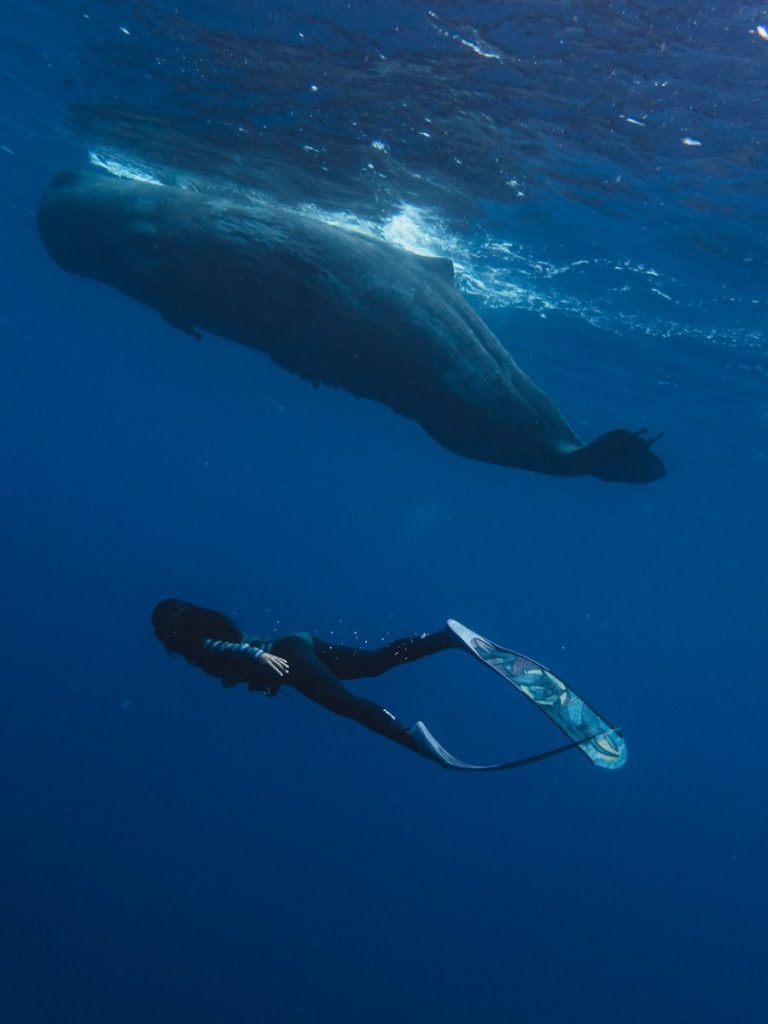
    a woman in a wetsuit swimming next to a whale
    Photo by Chinh Le Duc on Unsplash

    The camera tag was designed to be lightweight and harmless. It used suction cups to stick gently to the whale’s skin without causing pain or injury. The device contained a camera, sensors, and batteries capable of recording for hours at a time. It also measured important details such as depth, movement, and speed, giving scientists a complete picture of the whale’s behavior during its dives.

    Attaching the tag required patience and skill. Researchers approached the whale carefully in a small boat and placed the tag when the animal surfaced to breathe. Once attached, the whale continued its normal activities while the camera recorded everything around it. After several hours, the suction cups naturally released, allowing the tag to float to the surface where the team could retrieve it and examine the footage. This method has become an important tool in marine science because it allows researchers to study large animals without disturbing their natural behavior.

    The astonishing world beneath a mile of water

    gray turtle
    Photo by Francesco Ungaro on Unsplash

    The footage revealed a world unlike anything most people imagine. As the whale descended deeper and deeper, sunlight slowly disappeared until the surroundings became completely dark. More than a mile below the surface, the ocean was cold, quiet, and mysterious. Yet despite these harsh conditions, life was everywhere. Strange creatures drifted through the darkness, glowing faintly or moving quickly to avoid predators.

    The sperm whale moved through this hidden environment with incredible ease. Scientists observed how it adjusted its speed, changed direction, and searched for prey even when visibility was almost zero. The whale’s body is perfectly adapted for these extreme depths. It has a large supply of oxygen stored in its muscles and blood, allowing it to remain underwater for long periods. Researchers have recorded sperm whales diving deeper than 7,000 feet and staying underwater for more than an hour, making them some of the deepest-diving mammals on Earth.

    How sperm whales hunt in total darkness

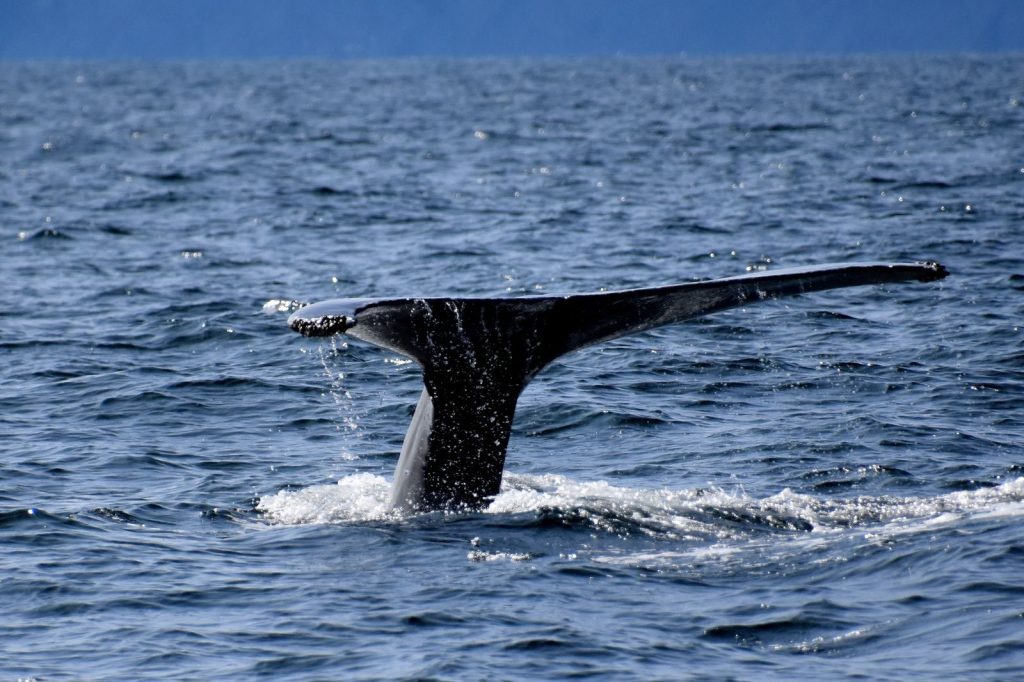
    Whale’s caudal fin” by bardamu1612 is licensed under CC BY-NC 2.0

    One of the most exciting discoveries involved the whale’s hunting behavior. Since there is no sunlight at such depths, sperm whales cannot rely on vision alone to find food. Instead, they use a remarkable ability called echolocation. The whale produces powerful clicking sounds that travel through the water and bounce off nearby objects. By listening to the returning echoes, it creates a mental map of its surroundings.

    The camera footage showed how effective this system really is. As the whale searched for prey, its clicking patterns changed rapidly, becoming faster as it approached a target. Scientists believe these rapid clicks help the whale track fast-moving animals such as squid. Giant squid and large deep-sea squid are among the sperm whale’s favorite foods, and evidence of their battles can sometimes be seen in scars on the whales’ skin. The recordings offered a rare chance to observe this hunting process in action and confirmed just how skilled these animals are in one of the most difficult environments on the planet.

    The hidden language of giant whales

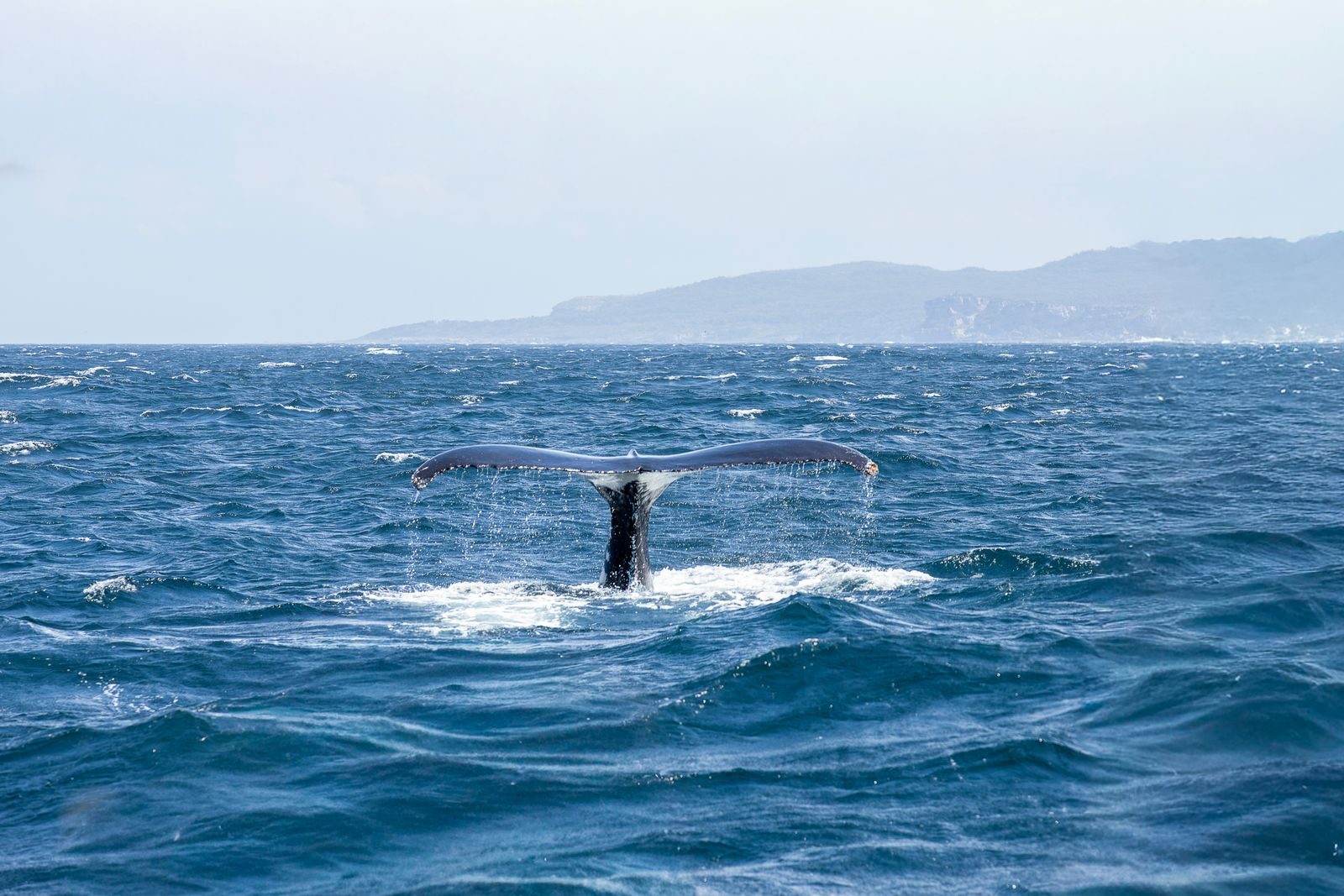
    Humpback whale tail emerges from the ocean in Gaspé, Canada.
    Photo by Jeffrey Eisen on Pexels

    The expedition also shed light on how sperm whales communicate with one another. These whales are highly social animals that live in family groups called pods. They use patterns of clicks known as codas to exchange information. Scientists have long known that sperm whales produce different click sequences, but seeing their behavior alongside these sounds gave researchers new clues about what the calls might mean.

    The recordings suggested that communication is an important part of daily life for sperm whales. Family members appear to coordinate movements, maintain social bonds, and possibly share information through sound. Researchers have discovered that different whale groups use unique patterns of clicks, almost like regional accents or dialects. This finding has led some scientists to believe that sperm whales possess a form of culture, where behaviors and communication styles are passed from one generation to the next. The camera footage helped support this idea by showing how closely linked sound and social behavior are in these giant mammals.

    Why this discovery matters for the future

    people having meeting on rectangular brown table
    Photo by Christina @ wocintechchat.com M on Unsplash

    The success of this expedition is important for more than just scientific curiosity. Oceans cover more than 70 percent of Earth’s surface, yet much of the deep sea remains unexplored. By placing cameras on animals that naturally travel to these extreme environments, scientists can gather information that would otherwise be impossible to obtain. Every new discovery helps researchers understand how marine ecosystems function and how they may be changing over time.

    This knowledge is becoming increasingly valuable as oceans face threats from climate change, pollution, and human activity. Sperm whales play an important role in ocean ecosystems, and learning more about their behavior can help guide conservation efforts. The footage captured by a simple homemade camera proved that innovation does not always require expensive equipment. Sometimes, a creative idea and a willingness to explore can reveal an entirely new world. The images from the whale’s journey reminded scientists and the public alike that our planet still holds countless mysteries waiting to be discovered beneath the waves.

  • Global warming is turning the ocean against great white sharks

    Global warming is turning the ocean against great white sharks

    The ocean is warming faster than many scientists expected, and great white sharks are feeling the change. Global warming is changing where these famous predators live, what they eat, and how they interact with other animals. While great white sharks are known for being powerful hunters, they are not immune to changes in their environment.

    Rising ocean temperatures are shrinking some of their favorite habitats and pushing them into new waters. Scientists are now tracking these changes closely to understand what they mean for sharks, marine ecosystems, and even people. This article explains how global warming is affecting great white sharks, why these changes are happening, and what the future may hold for one of the ocean’s most important predators.

    Great white sharks depend on the right temperatures

    Great White Shark” by Elias Levy is licensed under CC BY 2.0

    Great white sharks live in many oceans around the world, but they do not swim just anywhere. They prefer waters within certain temperature ranges that help them hunt efficiently and conserve energy. Young sharks are especially sensitive to temperature because they spend much of their early lives in shallow coastal waters. As global warming raises ocean temperatures, these preferred habitats are changing. Areas that were once ideal are becoming too warm, while cooler areas farther north or south are becoming more suitable.

    Scientists have already observed major shifts in where young great white sharks live. Along the California coast, juvenile sharks moved their northern range by about 373 miles, or 600 kilometers, between 2014 and 2020. Researchers believe this happened because warming waters reduced the amount of suitable habitat available to the sharks. Even a small change in ocean temperature can have a large impact because predators and prey often rely on very specific environmental conditions.

    Ocean warming is pushing sharks into new regions

    sea under white clouds at golden hour
    Photo by Sebastien Gabriel on Unsplash

    One of the clearest effects of climate change is that great white sharks are appearing in places where they were once rare. Scientists call this a range shift, which means animals move into new areas as environmental conditions change. Young great white sharks have increasingly been spotted farther north along the Pacific coast of North America. Similar patterns are expected in other parts of the world as ocean temperatures continue to rise.

    This movement does not mean sharks are invading new places on purpose. Instead, they are following temperatures that suit their bodies and searching for food. Researchers studying sharks in Australia have predicted that suitable habitats may continue shifting toward cooler regions over the coming decades. Models suggest some coastal areas could lose much of their favorable habitat by the end of the century, while regions farther from the equator may become more attractive to sharks. These changes could reshape marine ecosystems in ways scientists are only beginning to understand.

    Changes in prey are making survival harder

    Great White Shark” by Elias Levy is licensed under CC BY 2.0

    Great white sharks are apex predators, but even top predators depend on healthy food webs. Global warming is changing where fish, seals, and other prey species live. As ocean temperatures rise, many smaller fish move toward cooler waters or deeper areas. This forces great white sharks to travel farther and spend more energy searching for food.

    Scientists say warming oceans are already affecting prey availability for sharks and rays around the world. In some areas, prey and predators are being squeezed into smaller habitats because the amount of suitable cool water is shrinking. This crowding can increase competition and disrupt natural predator-prey relationships. When sharks must spend more energy hunting while finding less food, it becomes harder for them to grow, reproduce, and survive. Young sharks may be especially vulnerable because they need reliable food sources during their early years.

    Great white sharks are reaching their physical limits

    Great White Shark” by Elias Levy is licensed under CC BY 2.0

    Great white sharks are unusual among fish because they can keep parts of their bodies warmer than the surrounding water. This ability helps them swim faster and hunt effectively in cooler oceans. However, it also means they use much more energy than cold-blooded fish. As ocean temperatures rise, their bodies face new challenges that may push them close to their natural limits.
    Recent research found that warm-bodied marine predators, including great white sharks, use nearly four times more energy than cold-blooded species. In warmer oceans, sharks may have to slow down, change how blood flows through their bodies, or dive deeper into cooler waters. These adjustments can make hunting more difficult, especially when food is already becoming scarcer. Scientists warn that warming oceans may force these animals into cooler regions with fewer resources, creating an increasingly difficult balance between staying cool and finding enough food to survive.

    Ecosystems are changing as sharks move

    shark hunting” by jeff~ is licensed under CC BY 2.0

    Great white sharks play a major role in keeping marine ecosystems balanced. As apex predators, they influence the behavior and population sizes of many other animals. When sharks move into new areas, the effects can spread throughout the food web and change ecosystems in unexpected ways.

    Researchers studying California waters found that warming oceans have compressed sharks and their prey into smaller regions. This may contribute to declines in some fish populations because prey species have fewer places to hide. In areas where juvenile sharks are appearing more often, scientists are also studying how their presence affects animals such as sea otters and other marine mammals. These ecosystem changes are complex, and many questions remain unanswered. Still, experts agree that climate-driven shifts in shark populations could have important consequences for coastal ecosystems around the world.

    The future of great white sharks depends on climate action

    a group of people sitting around a white table
    Photo by UK Black Tech on Unsplash

    Climate change is not the only threat facing great white sharks. Overfishing, accidental capture in fishing gear, habitat loss, and pollution have already placed pressure on shark populations worldwide. Climate change adds another challenge by altering the oceans faster than many species can adapt. Scientists are now using satellite tags, ocean temperature maps, and computer models to predict where sharks may move in the future and how their habitats will change.

    There is still hope for great white sharks if warming can be slowed and marine ecosystems are protected. Creating healthy marine protected areas, reducing harmful fishing practices, and cutting greenhouse gas emissions can all help sharks adapt to changing conditions. Scientists stress that protecting sharks is not just about saving one species. Healthy shark populations help maintain balanced oceans, and balanced oceans are important for countless other species, including humans. The choices made today will shape whether future generations see thriving great white sharks or a species struggling to keep up with a rapidly changing world.