Blog

  • What looked like a harmless turtle turned into a terrifying catfish encounter caught on camera

    What looked like a harmless turtle turned into a terrifying catfish encounter caught on camera

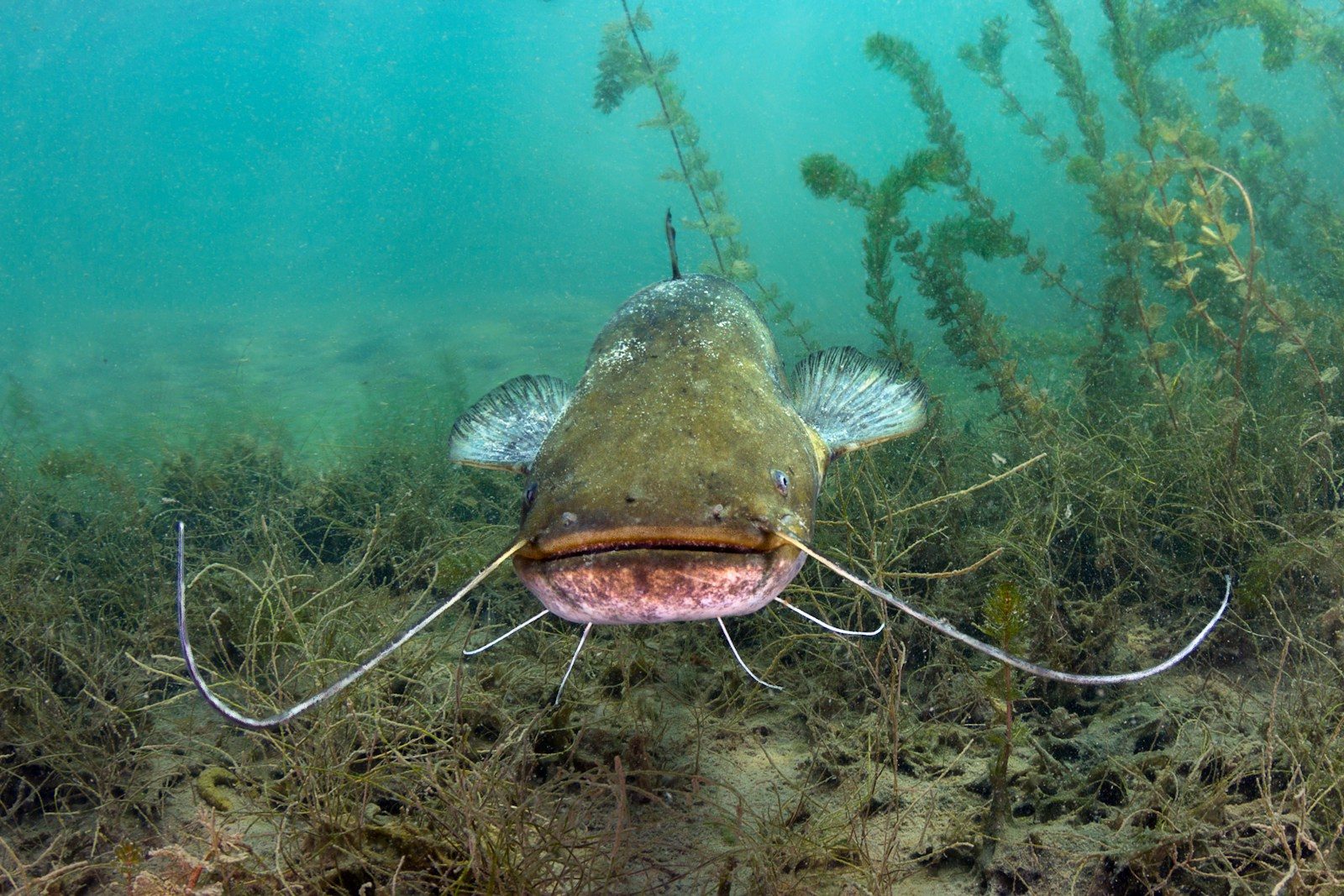
    Have you ever looked into the water and thought you saw a harmless turtle, only to realize something much bigger was hiding below? That is exactly what happened in this shocking catfish encounter caught on camera. At first, the creature appeared slow and harmless, but the truth quickly stunned everyone watching.

    Giant catfish are some of the largest freshwater fish on Earth, and their size, strength, and feeding habits often surprise people who are unfamiliar with them. In this article, you will discover how the confusion happened, why catfish are sometimes mistaken for turtles, what makes these fish such impressive predators, and what this encounter teaches us about the hidden world beneath the water.

    Why the creature looked like a turtle
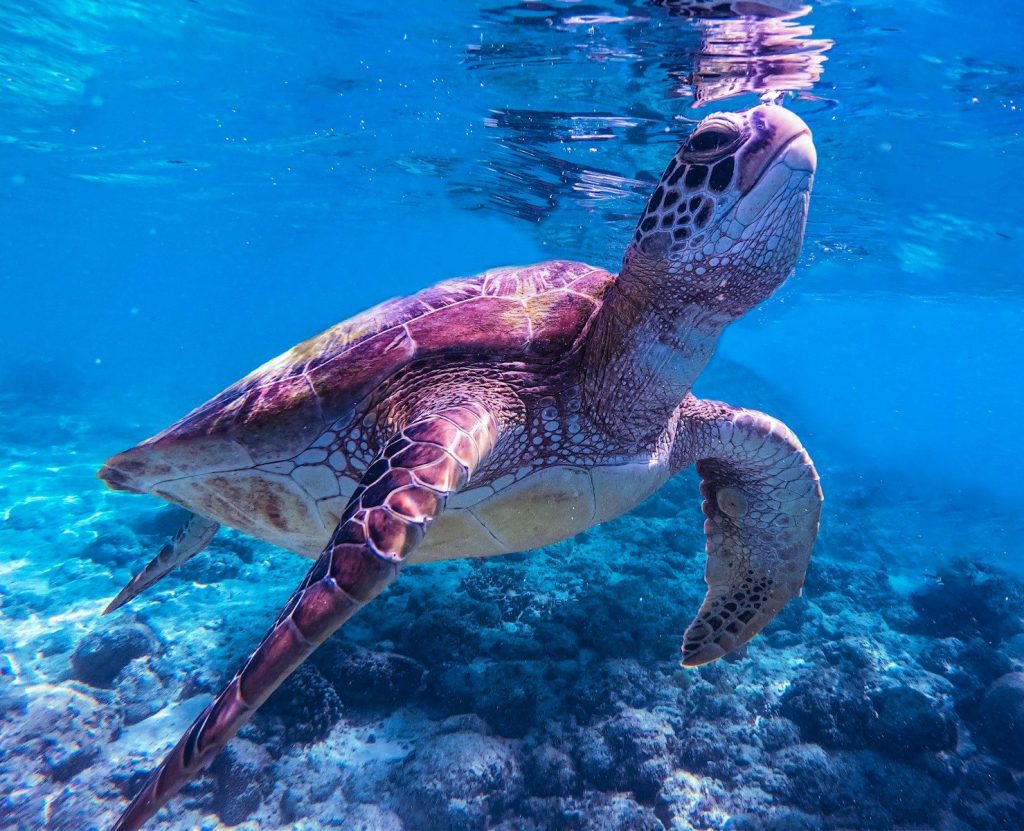
    brown and black turtle in water
    Photo by Jeremiah Del Mar on Unsplash

    The first few moments of the video seemed harmless because only part of the animal was visible above the surface. Large catfish sometimes expose their broad heads or backs while swimming near shallow water. From a distance, this shape can resemble a turtle shell, especially when the water is murky or covered with floating plants. The slow movements also add to the confusion because many large catfish spend time resting near the bottom and move carefully until they are disturbed.

    Turtles and catfish can share the same habitats, including ponds, rivers, lakes, and flooded forests. In places where visibility is poor, it is easy to mistake one animal for another. The surprise becomes even greater when the animal suddenly moves or surfaces completely. What seemed like a small reptile can quickly reveal itself to be a massive fish weighing dozens or even hundreds of pounds. This moment of realization is often what makes these encounters so dramatic and memorable.

    The amazing size of giant catfish
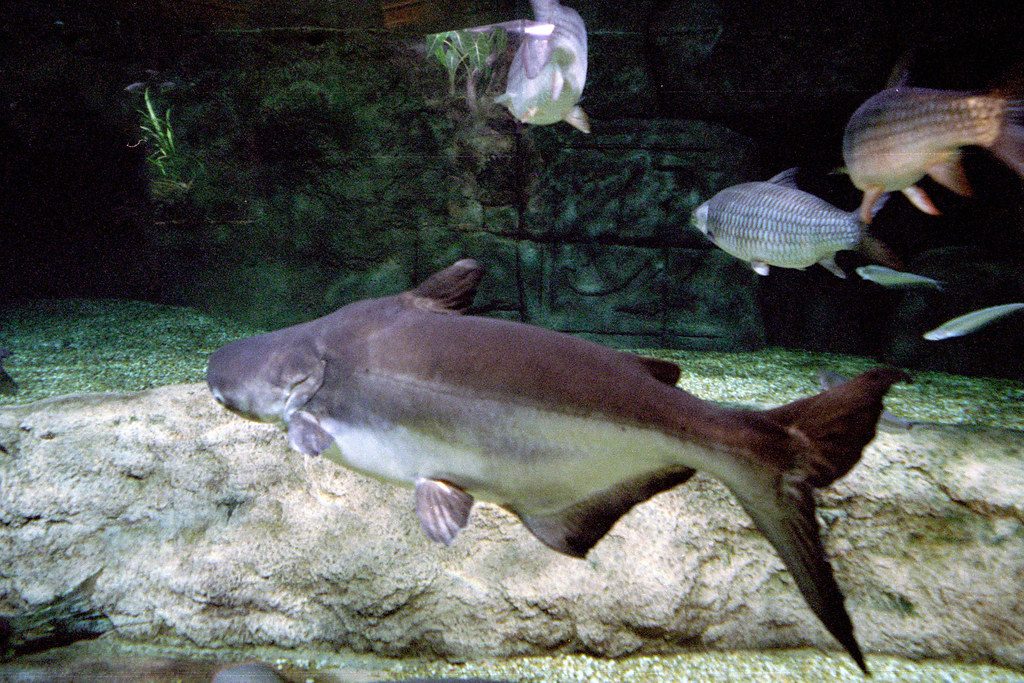
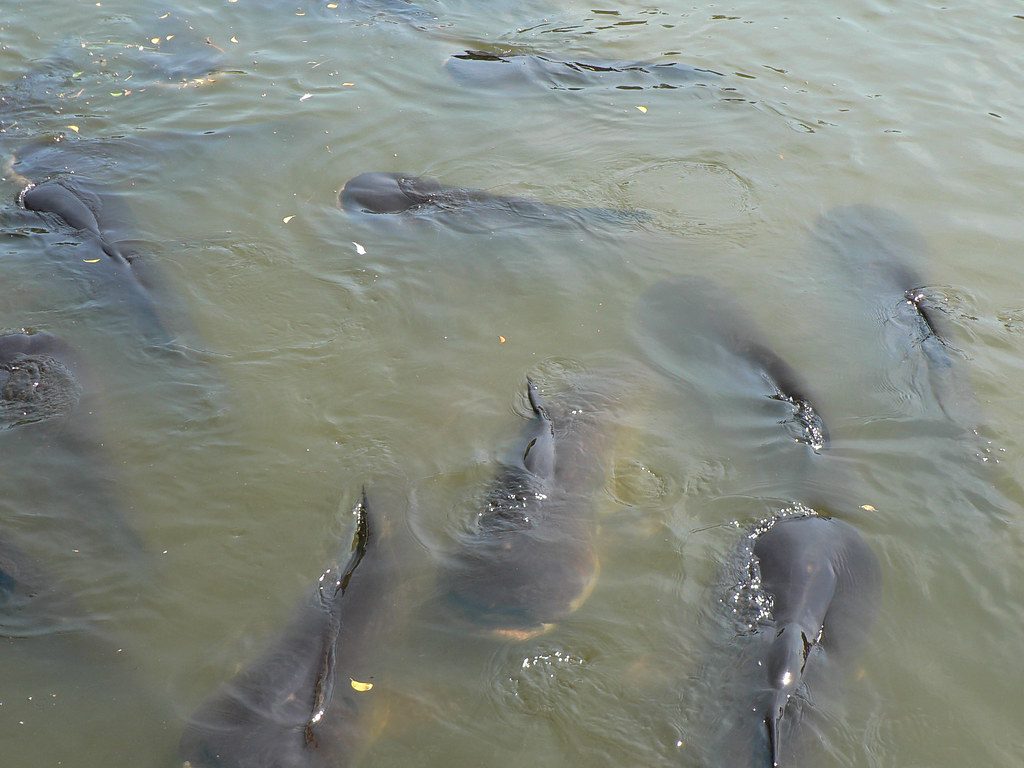
    Mekong giant catfish” by osanpo is licensed under CC BY-NC-ND 2.0

    Catfish are among the most diverse groups of fish in the world, with thousands of species living on nearly every continent except Antarctica. While many species remain small, others grow to astonishing sizes. The largest catfish can weigh several hundred pounds and stretch longer than an adult person. Species such as the Mekong giant catfish, wels catfish, and piraiba catfish have become famous because of their enormous bodies and powerful swimming abilities.

    Their size often surprises people because catfish spend much of their lives hidden in deep water. Unlike sharks that are frequently seen swimming near the surface, giant catfish are usually secretive. They prefer staying near river bottoms, submerged logs, or deep channels where they can rest and hunt. Because they are rarely seen in full view, videos showing their true size often go viral. People are amazed to discover that such huge animals can live quietly beneath the water for years without drawing much attention.

    How catfish hunt and survive
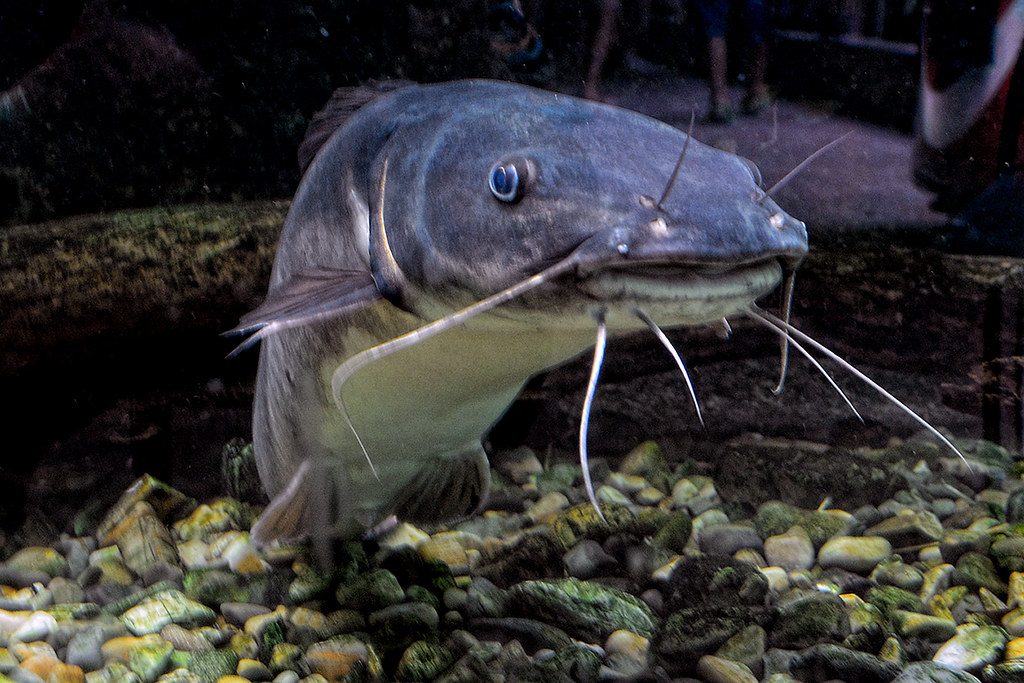
    Mekon Giant Catfish” by chooyutshing is licensed under CC BY-NC-SA 2.0

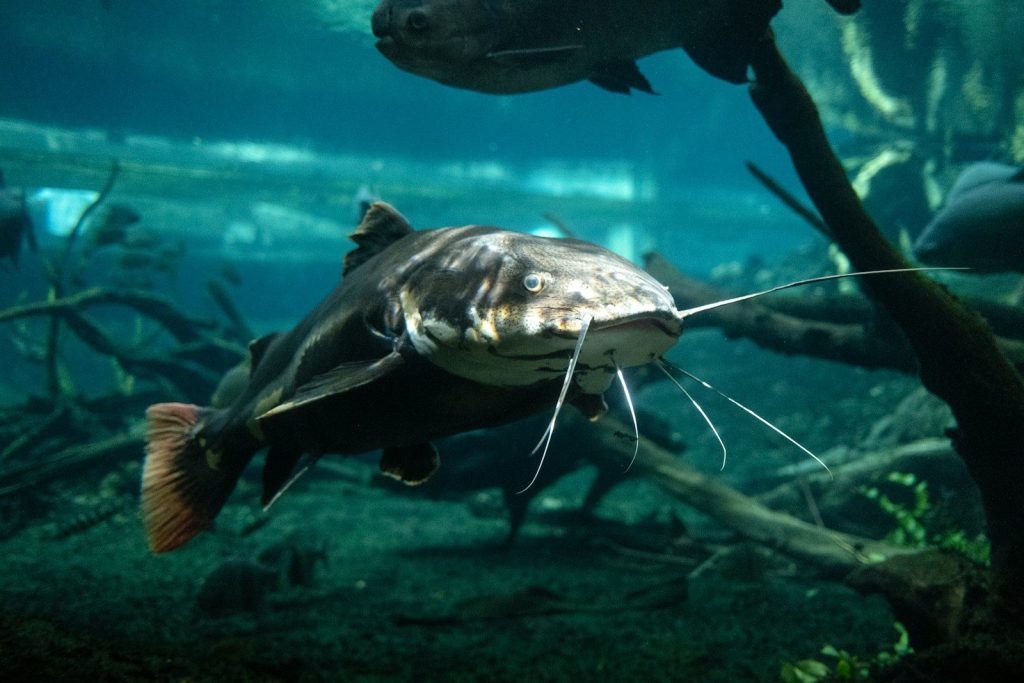
    One reason giant catfish are so successful is their ability to find food in almost any environment. Most species have long whisker-like structures called barbels around their mouths. These barbels are packed with sensory cells that help the fish detect food even in muddy or dark water. Instead of relying mainly on sight, catfish use touch, smell, and taste to locate prey hidden beneath the surface.

    Their diets vary depending on the species and habitat. Some catfish eat insects, worms, and plants, while larger species hunt fish, crustaceans, and other aquatic animals. A few giant species are known to swallow surprisingly large prey. Their mouths can open wide, allowing them to grab animals that seem far too large to fit inside. This ability is one reason people are often shocked when videos show a catfish consuming prey that appears almost as large as its own head.

    Why do these encounters seem so frightening
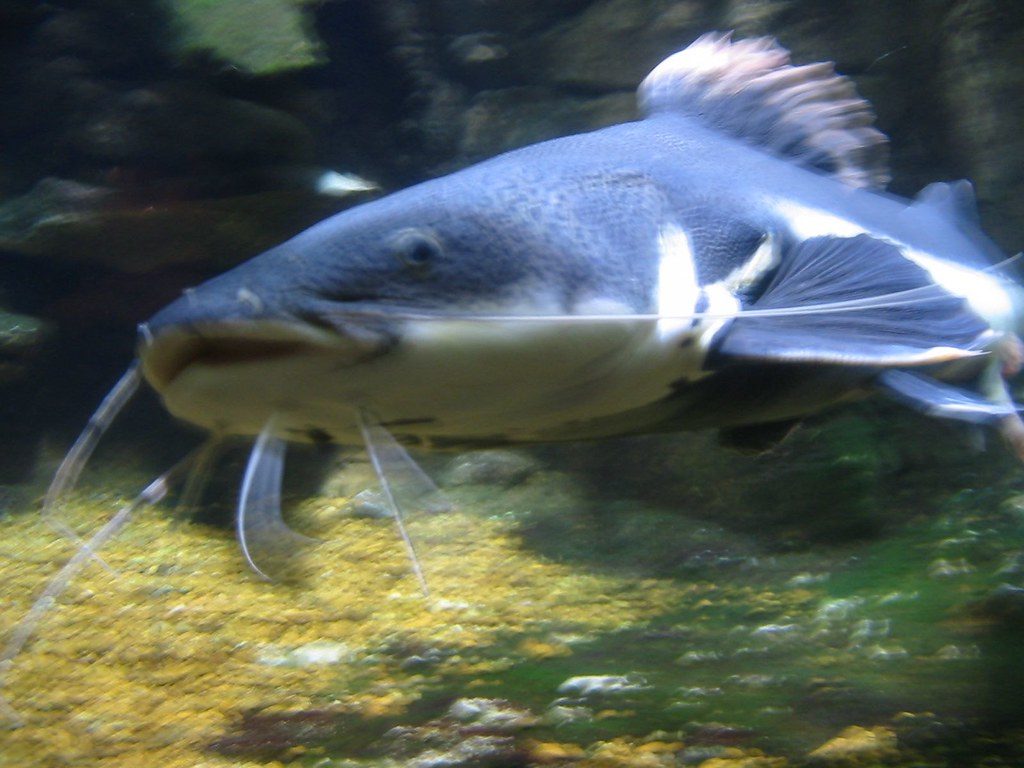
    GIANT CATFISH OMG” by interrobang is licensed under CC BY-NC 2.0

    A giant catfish emerging from the water can look intimidating because of its size alone. Their broad heads, smooth skin, and huge mouths give them an unusual appearance that many people are not used to seeing. When they suddenly thrash or splash near the surface, the reaction is often fear because humans naturally become cautious around animals they do not understand.

    However, most catfish are not dangerous to people. They generally avoid human contact and prefer escaping rather than attacking. Large catfish may defend themselves if cornered or accidentally hooked by anglers, but unprovoked attacks are extremely rare. Their frightening appearance often creates the false impression that they are aggressive monsters. In reality, these fish spend most of their time feeding, resting, and avoiding threats in their underwater world.

    The role of videos in changing opinions

    Man is looking at a screen with his head down.
    Photo by Alicia Christin Gerald on Unsplash

    Videos of giant catfish encounters have changed how many people think about freshwater ecosystems. In the past, most people only saw drawings or photographs of these fish. Modern cameras, underwater equipment, and social media now allow viewers to witness dramatic moments that were once hidden from the public. A fish mistaken for a turtle can suddenly become an internet sensation as millions of people watch the surprising reveal.

    These videos also remind viewers that freshwater habitats are full of remarkable animals. Rivers and lakes are often overlooked compared to oceans, yet they contain some of the largest and most unusual fish species on Earth. Seeing a giant catfish emerge from the water encourages curiosity and respect for these ecosystems. Instead of fearing the animals, many viewers become interested in learning more about their behavior, habitats, and importance in nature.

    What this encounter teaches us
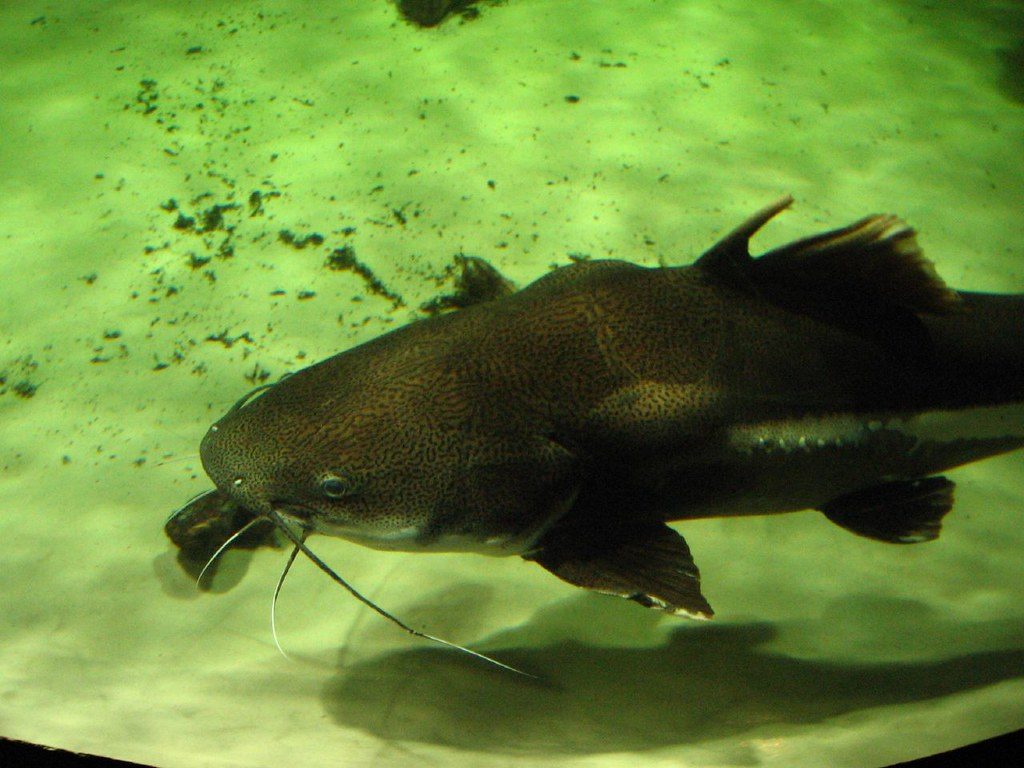
    Giant catfish I” by jennofarc is licensed under CC BY-NC-ND 2.0

    The biggest lesson from this turtle and catfish mix-up is that appearances can be deceiving. Nature is filled with animals that behave in unexpected ways or look very different depending on the angle, lighting, or environment. A small shape moving near the water’s surface may seem familiar at first, but a closer look can reveal something entirely different. These surprises remind us that there is still much to learn about the creatures living around us.

    This encounter also highlights the importance of respecting wildlife from a safe distance. Large fish are powerful animals that deserve space and protection. Observing them carefully allows people to appreciate their beauty without causing stress or harm. The next time something unusual appears in the water, it may not be what it first seems. That mystery is part of what makes nature so exciting and keeps people fascinated by the hidden life beneath the surface.

  • The internet thinks a megalodon bit this shark, but scientists have questions

    The internet thinks a megalodon bit this shark, but scientists have questions

    A shocking shark photo has spread across the internet, with many people claiming that only a giant prehistoric predator could have caused such damage. The theory is simple but exciting: a megalodon bite left the shark nearly cut in half. But is that really possible? Scientists have looked closely at these claims and found that the answer is far more complicated.

    The debate over a possible megalodon bite mixes fossils, modern shark behavior, and internet rumors in a way that can easily confuse people. In this article, you will learn what megalodon really was, why the damaged shark sparked so much attention, and what scientists actually think happened.

    Why do people think megalodon was involved

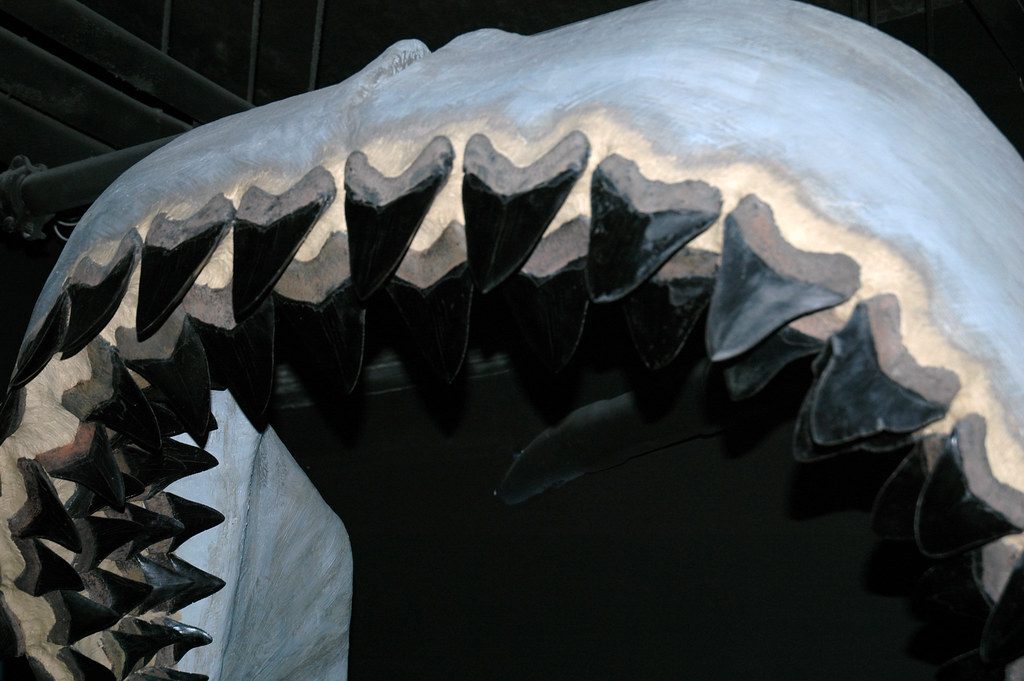
    Carcharocles megalodon” by Gunnar Ries zwo is licensed under CC BY-NC-ND 2.0

    The idea of a megalodon bite instantly grabs attention because the animal itself was enormous. Megalodon lived between about 23 million and 3.6 million years ago and was one of the largest predators ever to swim in Earth’s oceans. Most scientists estimate that adults commonly reached around 50 feet long, while some studies suggest the biggest individuals may have grown even larger. Its teeth could reach more than 7 inches in length, and its bite force was among the strongest ever estimated for any animal.

    When photos or videos show a shark with a massive chunk missing, many people quickly jump to megalodon as an explanation. Social media has made these stories spread even faster. Dramatic headlines often suggest that the ancient shark may still be alive or that it recently attacked another shark. However, scientists point out a major problem with this idea. Megalodon has been extinct for millions of years, and there is no physical evidence that it survives today. Extraordinary claims require extraordinary evidence, and so far none has appeared.

    What scientists know about megalodon bites

    three people in lab coats looking at a tablet
    Photo by National Cancer Institute on Unsplash

    Scientists have found many fossils showing bite marks that are believed to have been made by megalodon. These marks are usually found on whale bones, seal bones, and other marine mammal remains. In some rare cases, researchers have even discovered megalodon teeth embedded in fossils, giving strong proof that the giant shark attacked or scavenged these animals.

    Even with fossil evidence, identifying a megalodon bite is not always easy. Sharks constantly lose and replace teeth, and many species can leave similar wounds. Researchers prefer to find matching tooth marks, embedded teeth, or clear patterns of damage before making a firm conclusion. If a bite mark is found without these clues, scientists usually avoid making bold claims. This careful approach is why experts are often skeptical when viral images claim to show a modern megalodon attack.

    The shark photo that started the debate

    Man is looking at a screen with his head down.
    Photo by Alicia Christin Gerald on Unsplash

    The viral shark image that sparked renewed interest shows a shark with an enormous bite taken from its body. The wound is dramatic and appears almost too large to have been caused by an ordinary predator. Online users quickly suggested that only megalodon could have created such a bite. Videos discussing the theory gained millions of views, and many viewers became convinced that the ancient giant might still roam the ocean.

    Scientists, however, see things differently. Marine biologists point out that large sharks regularly attack other sharks. Great white sharks are known to prey on smaller shark species, and shortfin makos have been involved in aggressive encounters as well. A large shark biting another shark can create surprisingly severe injuries, especially if the victim is smaller or weakened. Without a tooth, DNA, or another direct clue, experts say it is impossible to claim that a prehistoric species was responsible. In fact, the simplest explanation is usually a living predator that scientists already know exists.

    Could megalodon still be alive today?

    time lapse photography of body of water
    Photo by Thierry Meier on Unsplash

    This question has fascinated people for decades. Movies, television specials, and internet videos have all helped keep the myth alive. The oceans are vast and mysterious, so some people wonder whether a giant shark could still hide in the deepest waters. It sounds exciting, but scientists say the evidence does not support this idea.

    A predator as large as megalodon would need enormous amounts of food. It would leave bite marks on whales and other large animals across the globe. It would also continue shedding thousands of teeth, just like modern sharks do. Yet no fresh megalodon teeth have ever been found, and no modern carcasses show clear signs of attacks from such a giant predator. Scientists also believe megalodon preferred warmer waters, making the cold deep ocean an unlikely hiding place. For these reasons, experts overwhelmingly agree that megalodon is extinct.

    How modern sharks create giant wounds

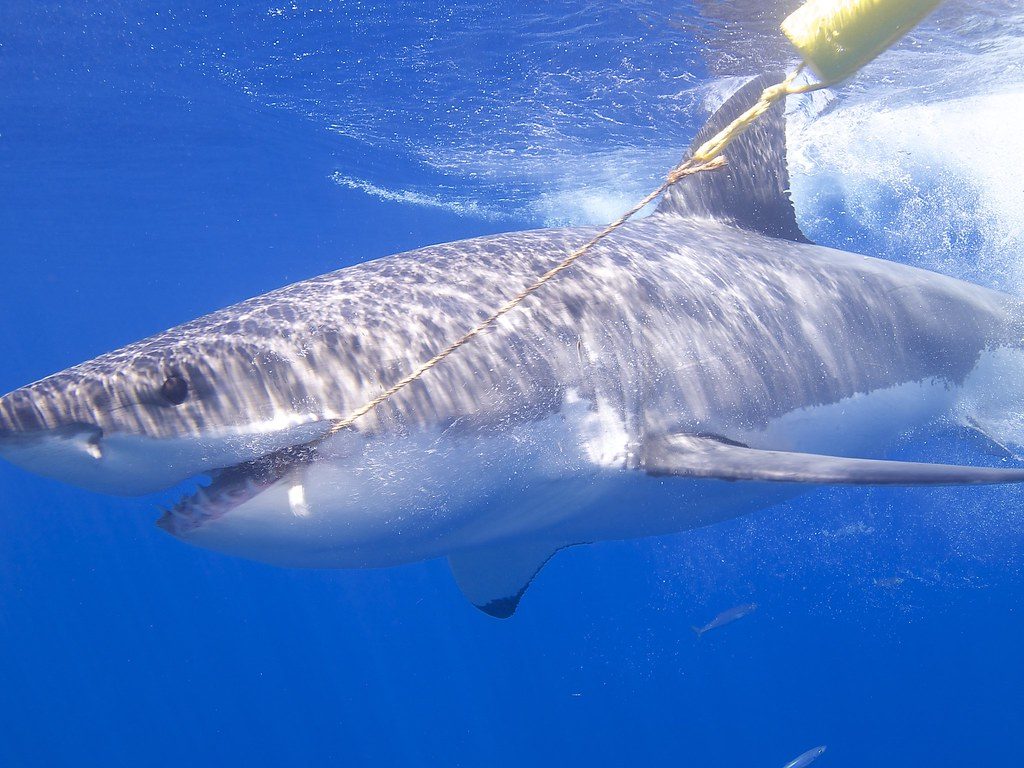
    Great White Shark” by Elias Levy is licensed under CC BY 2.0

    People often underestimate how powerful living sharks can be. Great white sharks can grow over 20 feet long and weigh thousands of pounds. Their teeth are designed to slice through flesh and bone with incredible efficiency. When they attack seals, sea lions, or other sharks, they can remove huge pieces of tissue in a single bite.

    Tiger sharks are also capable of inflicting severe damage. They have broad, serrated teeth that can cut through tough prey, including sea turtles and large fish. In some parts of the world, tiger sharks and great whites compete for food and occasionally attack one another. Researchers have documented numerous cases where sharks were found with massive bite wounds that looked shocking but were still caused by modern species. These examples remind scientists that nature already has plenty of fearsome predators without needing to bring back a prehistoric monster.

    Why the mystery continues to fascinate people

    two men talking
    Photo by LinkedIn Sales Solutions on Unsplash

    Stories about giant creatures hiding in the ocean tap into one of humanity’s oldest fears: the fear of the unknown. The ocean covers more than 70 percent of Earth’s surface, and large areas remain poorly explored. Because so much remains unseen, people naturally wonder what else might be out there. A story about megalodon attacking a shark combines mystery, danger, and ancient history into one irresistible idea.

    Scientists understand this fascination and often share the excitement themselves. Studying megalodon remains an active field of research, and new discoveries continue to change what experts know about the animal. Recent studies suggest that megalodon may have looked slimmer and more streamlined than older reconstructions showed. Researchers are still debating aspects of its size, body shape, and hunting style. Even though the shark disappeared millions of years ago, it continues to capture imaginations and inspire new questions about Earth’s ancient oceans.

    What scientists say about the viral claim

    people having meeting on rectangular brown table
    Photo by Christina @ wocintechchat.com M on Unsplash

    After examining the evidence, most scientists agree that there is no proof linking the damaged shark to megalodon. The injury may look extraordinary, but extraordinary injuries are not uncommon in the natural world. Large modern sharks are fully capable of causing devastating wounds, and they are far more likely suspects than an extinct predator.

    Researchers also stress the importance of evidence over excitement. A giant bite alone does not prove the identity of the attacker. Scientists need fossils, teeth, DNA, or other physical clues before reaching such an important conclusion. Until that evidence appears, the megalodon theory remains an entertaining idea rather than a scientific fact.

  • Mystery pond reveals giant tiger catfish

    Mystery pond reveals giant tiger catfish

    Mutant catfish or giant exotic fish? That was the question on everyone’s mind after a strange pond mystery turned into an unforgettable catch. For days, something huge kept stealing bait and snapping fishing lines near a cluster of trees.

    The creature stayed hidden, leaving only broken hooks and plenty of questions behind. Then came the moment that changed everything. The angler finally hooked the fish again and pulled out a massive tiger catfish with a strange face that many viewers compared to a beluga whale. In this article, you’ll discover what really happened, why the fish looked so unusual, and why giant catfish continue to amaze people around the world.

    The mystery begins near the trees

    green trees beside river under blue sky during daytime
    Photo by Jonny Gios on Unsplash

    The story started in what looked like an ordinary pond. An angler noticed that something large was feeding near a group of submerged trees. Every time he cast his bait into the area, the fish would strike hard, bend the rod, and then disappear. The line often snapped before he could even see what was on the other end. After several failed attempts, it became clear that this was not an average fish.

    The repeated breakoffs only made the mystery more exciting. Many anglers know that submerged trees create perfect hiding places for big fish because they provide shade and protection. Large catfish often stay close to these structures and use them to escape predators or shake off hooks. The hidden fish seemed to know exactly where to go, leaving the fisherman frustrated and eager for another chance.

    The giant fish finally appears

    A man in a hoodie fishes by a calm lake surrounded by autumn foliage.
    Photo by Cedé Joey on Pexels

    After multiple attempts, the angler hooked the fish once again. This time, he kept steady pressure on the line and carefully guided the fish away from the trees. The battle was intense because the fish was powerful and determined to escape. As it came closer to shore, people watching realized they were looking at something truly unusual.

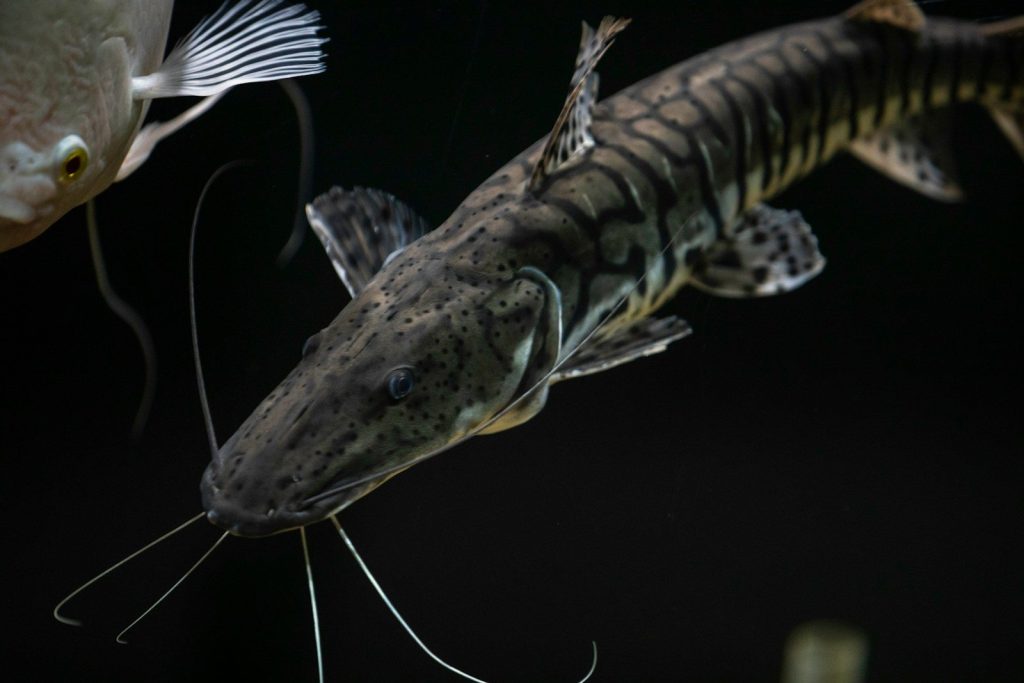
    The fish turned out to be a giant tiger catfish, an exotic species known for its striking appearance and incredible strength. Its body was long and muscular, while its markings gave it a fierce look. What caught everyone’s attention, though, was its face. Instead of the sharp features many expected, the fish had a rounded head and smooth appearance that reminded many viewers of a beluga whale. The unusual look quickly sparked conversations online, with some people even wondering if the fish was a mutant.

    Why the tiger catfish looked so strange

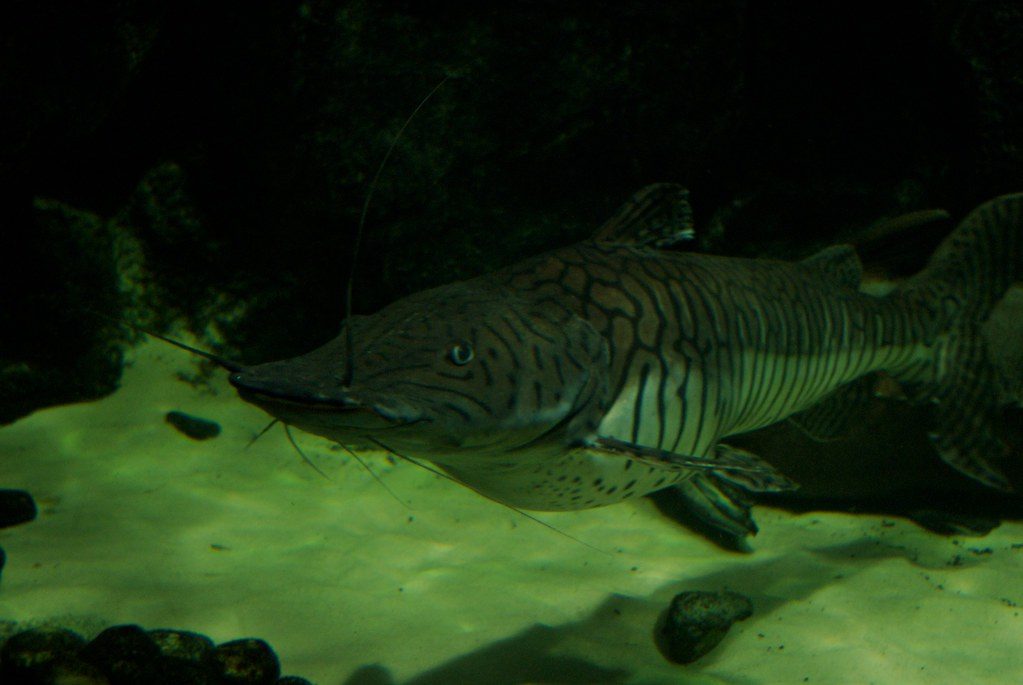
    Tiger catfish” by m.jacobs is licensed under CC BY-NC-SA 2.0

    Although the fish looked unusual, there is no evidence that it was a mutant. Tiger catfish are a group of freshwater fish found mainly in South America. Several species exist, and their appearance can vary depending on age, genetics, diet, and environment. Large individuals sometimes develop broader heads and thicker bodies, making them look very different from smaller fish.

    The comparison to a beluga whale came mostly from the fish’s rounded forehead and smooth facial features. People are naturally drawn to animals that look different from what they expect. When a fish has an unusual shape or grows much larger than normal, it often gets labeled as a mutant online. In reality, many strange-looking fish are perfectly healthy animals that simply developed unique features over time.

    Why giant catfish are so hard to catch

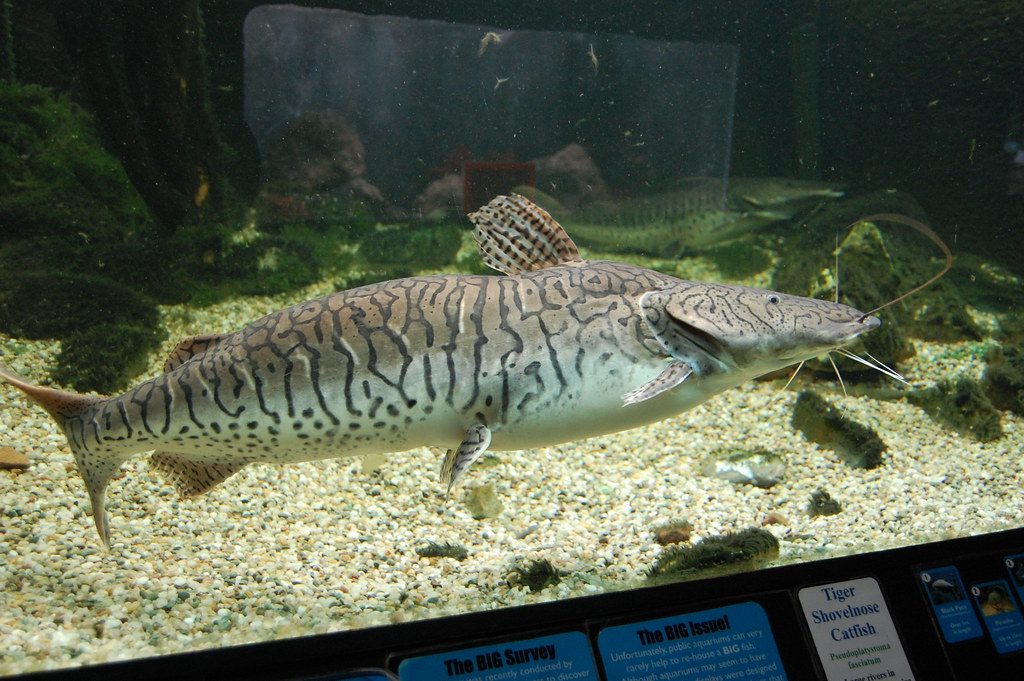
    Tiger Shovelnose Catfish” by scary_mary is licensed under CC BY-NC-ND 2.0

    The repeated line breakoffs were not surprising to experienced anglers. Large catfish are among the strongest freshwater fish in the world. They have powerful muscles and know how to use their surroundings to their advantage. When hooked, they often dive into underwater structures such as logs, rocks, or tree roots where fishing lines can easily snap.

    Tiger catfish are especially famous for their strength and aggressive fighting style. They can make sudden runs and use their weight to wear out both the angler and the equipment. This is why fishermen targeting large catfish often use heavy rods, strong braided lines, and sturdy hooks. Even with the right gear, landing a giant fish is never guaranteed. The challenge is one reason why catching these fish is considered such an achievement.

    The truth behind mutant fish stories

    A person holding a smart phone with social media on the screen
    Photo by Berke Citak on Unsplash

    Stories about mutant fish have existed for decades. Whenever an animal looks strange or grows unusually large, rumors quickly spread online. Social media has made these stories even more popular because dramatic photos and videos attract millions of views. However, scientists say that most so-called mutant fish are simply animals with natural variations in size, shape, or color.

    Environmental factors can also affect how fish look. The amount of food available, water quality, and age all play important roles in growth and appearance. Some fish develop scars from injuries, while others naturally have features that make them stand out. These differences may seem strange to people seeing them for the first time, but they do not mean the fish is a mutant. In most cases, nature alone is enough to create amazing and unexpected appearances.

    Why this catch fascinated so many people

    black fishing rod and body of water during golden hour
    Photo by James Wheeler on Unsplash

    The giant tiger catfish captured people’s imagination because it combined mystery, suspense, and an incredible reveal. Viewers watched as an unseen creature repeatedly escaped capture, only to discover that the culprit was an exotic fish with a face unlike anything they had seen before. The story reminded people that even familiar ponds can hide surprises beneath the surface.
    Moments like this also show why fishing remains one of the most exciting outdoor activities. Every cast carries the possibility of encountering something extraordinary. Whether it is a giant catfish, a rare species, or simply a fish with an unusual look, these encounters inspire curiosity and wonder. The massive tiger catfish may not have been a mutant, but it proved that real life can be just as fascinating as any legend.

  • The fascinating reason humans are rarely targets for killer whales

    The fascinating reason humans are rarely targets for killer whales

    Have you ever wondered why one of the ocean’s most powerful predators almost never attacks people? It sounds strange at first. After all, killer whales are strong enough to hunt sharks, seals, and even large whales. Yet humans are rarely targets for killer whales, and there has never been a confirmed case of a wild orca killing a person.

    Scientists have studied this mystery for years and believe the answer comes down to a mix of biology, intelligence, culture, and behavior. Understanding why these animals leave us alone reveals just how unusual and fascinating killer whales really are.

    Killer whales are powerful but picky hunters

    Captivating view of orcas swimming in the clear waters of Juneau, Alaska.
    Photo by Simon Hurry on Pexels

    Killer whales, also called orcas, are apex predators. That means they sit at the very top of the food chain. They can grow over 30 feet long, weigh several tons, and work together in groups to hunt prey much larger than themselves. Orcas eat many different animals, including fish, squid, seals, sea lions, sharks, dolphins, and even whales. Some populations specialize in just one type of food and rarely eat anything else.

    This specialized diet is one of the biggest reasons humans are rarely targets for killer whales. Orcas do not hunt randomly. They have favorite foods and highly developed hunting methods designed for those foods. Fish-eating orcas chase salmon with incredible speed and precision, while mammal-eating orcas use teamwork to catch seals and dolphins. Humans simply do not fit into any of these hunting patterns. To an orca, a swimmer is not recognized as normal prey, and there is little evidence that wild orcas have ever tried to make humans part of their diet.

    Orcas learn what to eat from their families

    A whale jumping out of the water in front of some rocks
    Photo by Vadym Shashkov on Unsplash

    One of the most remarkable things about killer whales is that they pass knowledge from one generation to the next. Young orcas do not automatically know how to hunt. Instead, they learn from their mothers and other family members. Scientists often describe this as culture because different groups of orcas have different traditions, hunting styles, and even ways of communicating.

    This cultural learning may explain why humans are rarely targets for killer whales. If a pod has never hunted people, the younger whales will not see humans as food either. In fact, studies show that some orca groups are so strict about their diets that they ignore perfectly edible animals simply because they are not part of the pod’s tradition. Fish-eating orcas have been observed swimming alongside seals without attacking them because seals are not on the menu for their family group. This strong cultural behavior has likely helped keep humans off the list of prey for millions of years.

    Humans are not worth the risk

    Photographer, San Juan Islands, Washington” by woodleywonderworks is licensed under CC BY 2.0

    Wild animals constantly make choices about energy and danger. Even powerful predators prefer prey they know how to catch and eat safely. Hunting an unfamiliar animal carries risks. The prey could fight back, carry disease, or simply not provide enough food to make the effort worthwhile.

    Humans are not an ideal meal for a killer whale. Compared to seals and whales, we are small and skinny. We also spend very little time in the ocean, which means orcas have had limited opportunities to view humans as a food source. Over thousands of years, humans have also become associated with boats, noise, fishing gear, and weapons. Orcas are extremely intelligent and observant animals. They may recognize that humans are unusual creatures and choose to avoid unnecessary risks. Even if an orca could easily overpower a person, there is little reason for it to try.

    Their intelligence may make them more careful

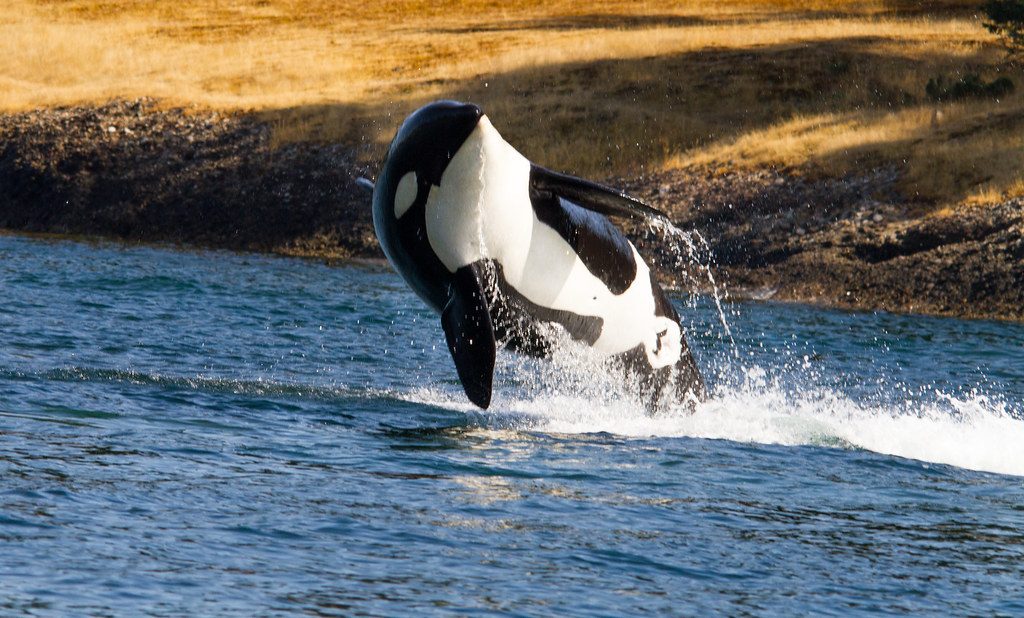
    Killer Whale (Resident Orca)” by Shawn McCready is licensed under CC BY-ND 2.0

    Killer whales are among the smartest animals on Earth. Their brains are enormous, and they show signs of advanced thinking, problem-solving, and emotional intelligence. They cooperate during hunts, care for sick family members, and teach their young important life skills. Scientists have even observed orcas creating traditions that spread through populations, much like cultural trends in humans.

    This intelligence may help explain why humans are rarely targets for killer whales. Orcas appear to be curious rather than aggressive toward people. Many encounters between humans and wild orcas involve whales approaching boats, swimming nearby, or inspecting divers without causing harm. Some researchers believe orcas can tell that humans are different from their usual prey and intentionally avoid attacking us. While scientists cannot know exactly what an orca is thinking, their behavior suggests they are capable of making careful choices instead of acting only on instinct.

    Wild attacks are extremely rare

    Orca calf and Mother” by alumroot is licensed under CC BY-NC 2.0

    The reputation of the killer whale can be misleading. The name itself makes the animal sound dangerous to people, but the facts tell a different story. Despite millions of human interactions with the ocean, there has never been a confirmed fatal attack by a wild killer whale. There is only one well-known case from 1972 in which an orca bit a surfer off the coast of California. The whale quickly let go, and experts believe it may have mistaken the surfer for a seal before realizing its error.

    Captive orcas tell a different story. Several serious injuries and deaths have occurred in marine parks and aquariums. However, scientists caution against comparing captive and wild behavior. Captive orcas live in small tanks, often far from their natural families and social groups. They experience stress and frustration that wild whales do not face in the same way. In the open ocean, orcas have shown remarkable restraint around humans. Even recent incidents in which some Iberian orcas damaged boat rudders did not involve attacks on people. Researchers emphasize that the whales targeted the boats rather than the humans onboard.

    Curiosity may be stronger than aggression

    orca” by Christopher.Michel is licensed under CC BY 2.0

    Many stories from divers, sailors, and researchers describe wild orcas acting more curious than threatening. Orcas have been seen swimming close to kayaks, circling boats, and watching people underwater. In some cases, they appear playful. Scientists have also recorded instances of wild orcas bringing prey items to humans, almost as if they were sharing food or investigating our reactions.

    This curiosity does not mean people should treat killer whales like pets. They are still massive predators capable of causing harm. However, their behavior suggests they do not view humans as enemies or prey. Instead, they often seem interested in us while maintaining a peaceful distance. This combination of intelligence, curiosity, and social learning may be the fascinating reason humans are rarely targets for killer whales. The ocean’s top predator has the power to hunt us, yet time and again, it chooses not to.

  • Meet the ocean’s most famous predator

    Meet the ocean’s most famous predator

    Few animals inspire as much fear and fascination as the great white shark. Known for its massive size, powerful bite, and role in movies like Jaws, this predator has earned a reputation as one of the ocean’s most dangerous hunters. Yet the real story of the great white shark is far more interesting than many people realize.

    The great white shark is the largest predatory fish in the world and plays a vital role in maintaining healthy marine ecosystems. From its incredible speed and hunting skills to its surprising lifespan and conservation challenges, this remarkable animal continues to capture the attention of scientists and ocean lovers alike. Here’s a closer look at one of the sea’s most iconic predators.

    Great white sharks are built for hunting

    Great White Shark” by kqedquest is licensed under CC BY-NC 2.0

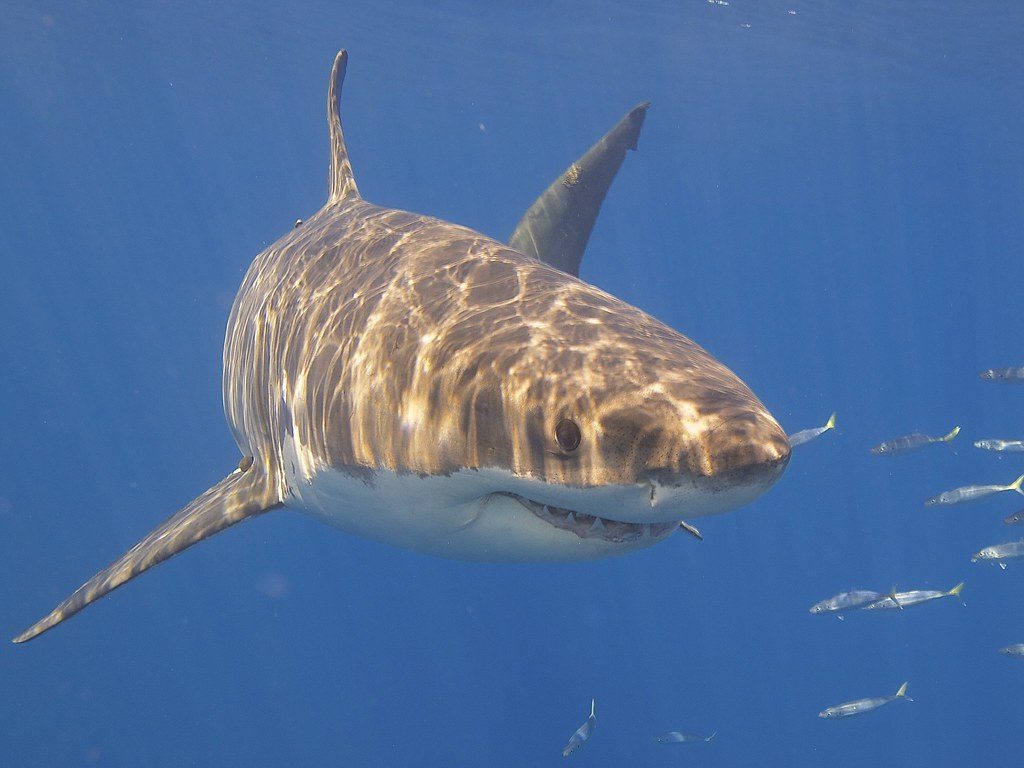
    The great white shark has a streamlined body designed for speed and power. Its upper body is usually gray or brown, while its underside is white. This color pattern helps it blend into its surroundings. From above, the darker color matches the ocean depths, while the white belly blends with sunlight shining through the water.

    Scientists have also discovered pigment-producing cells in the shark’s skin that may help it adjust its coloration. Combined with its torpedo-shaped body, sharp triangular teeth, and powerful tail, these features make the great white an effective ambush predator that can approach prey without being easily detected.

    These sharks can grow to enormous sizes

    Great White Shark” by Elias Levy is licensed under CC BY 2.0

    Great white sharks are among the largest predatory fish ever recorded. Adults can reach lengths of up to 6.4 meters and weigh up to 2,041 kilograms. Their size alone makes them one of the most impressive animals in the ocean.

    Despite their massive bodies, they are surprisingly agile swimmers. Great whites can cruise long distances and then suddenly burst into high-speed pursuit when hunting prey. They can reach speeds of about 50 kilometers per hour and are famous for breaching, launching themselves completely out of the water to attack prey near the surface.
    They have powerful senses and deadly teeth

    An angry Great White Shark” by TheGrantPeters is licensed under CC BY 2.0

    A great white shark’s mouth contains around 300 teeth arranged in multiple rows. These razor-sharp teeth are constantly replaced throughout the shark’s life. Instead of chewing food, the shark tears prey into smaller pieces and swallows them whole.

    Their senses are equally impressive. Great whites can detect prey from long distances and have an exceptional sense of smell. Researchers report that they can detect a seal colony from several kilometers away and even identify tiny traces of blood in seawater. These abilities help them locate food across vast stretches of ocean.

    Their diet changes as they grow

    Great white shark” by Gussy (Luke) is licensed under CC BY-NC-ND 2.0

    Young great white sharks mainly feed on fish and rays. As they mature and grow larger, their diet expands to include marine mammals such as seals, sea lions, and dolphins, as well as some whale species. They also consume turtles, seabirds, squid, crustaceans, and carrion.

    Great whites often patrol coastlines where prey is abundant. They are known for ambush attacks from below, using speed and surprise to catch seals near the surface. Their powerful bite can quickly disable prey, making them one of the ocean’s top predators.
    The truth about sharks and humans

    Great White Shark” by Elias Levy is licensed under CC BY 2.0

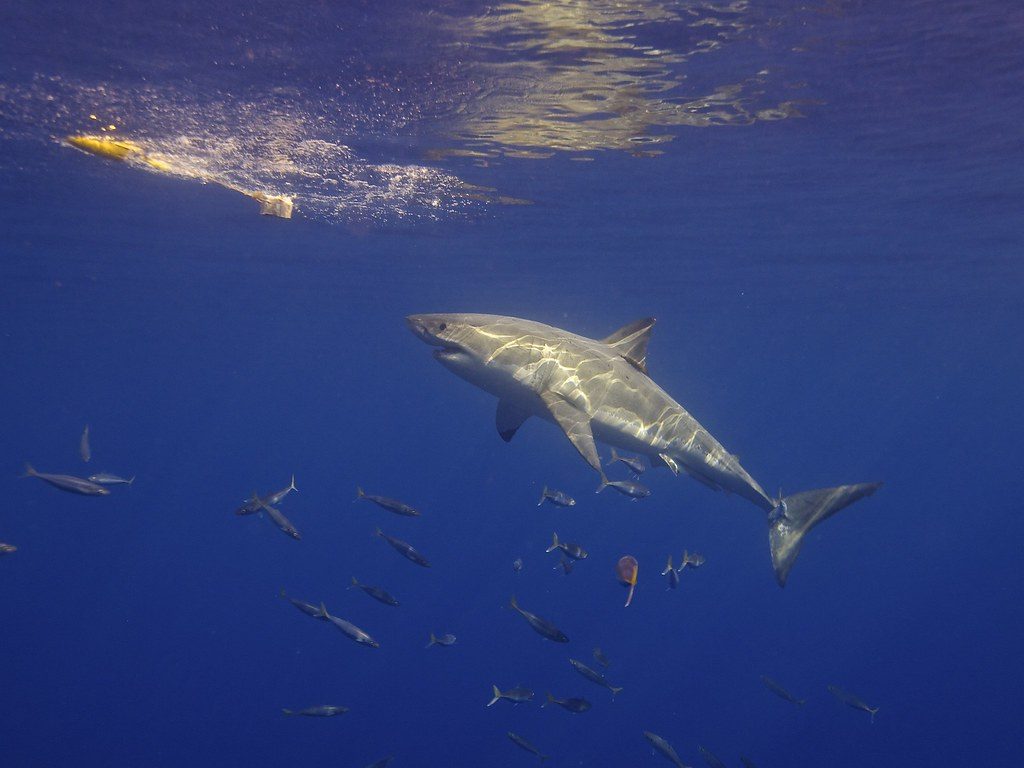
    Movies and popular culture have often portrayed great white sharks as ruthless man-eaters. However, scientists say this image does not match reality. Most interactions between sharks and humans are rare, and many unprovoked bites are believed to be “test bites” in which a shark mistakes a person for its normal prey.

    Millions of people enter the ocean every year, yet fatal shark attacks remain extremely uncommon. Researchers emphasize that humans are not a preferred food source for great white sharks. In most cases, sharks break off contact after an initial bite once they realize the target is not typical prey.

    Great whites face challenges despite being apex predators

    Great White Shark” by Elias Levy is licensed under CC BY 2.0

    Great white sharks sit near the top of the marine food chain, but they are not invincible. Pods of killer whales have been observed hunting great whites, and researchers documented an individual killer whale killing a juvenile great white shark in 2024.

    Humans pose a much larger threat. The species is listed as Vulnerable, and populations are believed to be declining. Many sharks are accidentally caught as bycatch in fishing operations, while others are affected by trade in shark products. International agreements now provide protections, but scientists continue to call for stronger conservation efforts to help populations recover.

    Scientists are still learning about their lives

    Great White Shark” by Elias Levy is licensed under CC BY 2.0

    Great white sharks can live for up to 73 years, making them one of the longest-lived fish species. Females mature slowly, often not reaching reproductive age until their early thirties. They give birth to live pups, usually producing between two and seventeen young at a time.

    Many mysteries remain. Researchers only recently reported what may be the first-ever sighting of a live newborn great white shark in the wild. Discoveries like this show that even one of the world’s most famous predators still has secrets waiting to be uncovered.

  • When a 27-ton whale revealed hidden legs

    When a 27-ton whale revealed hidden legs

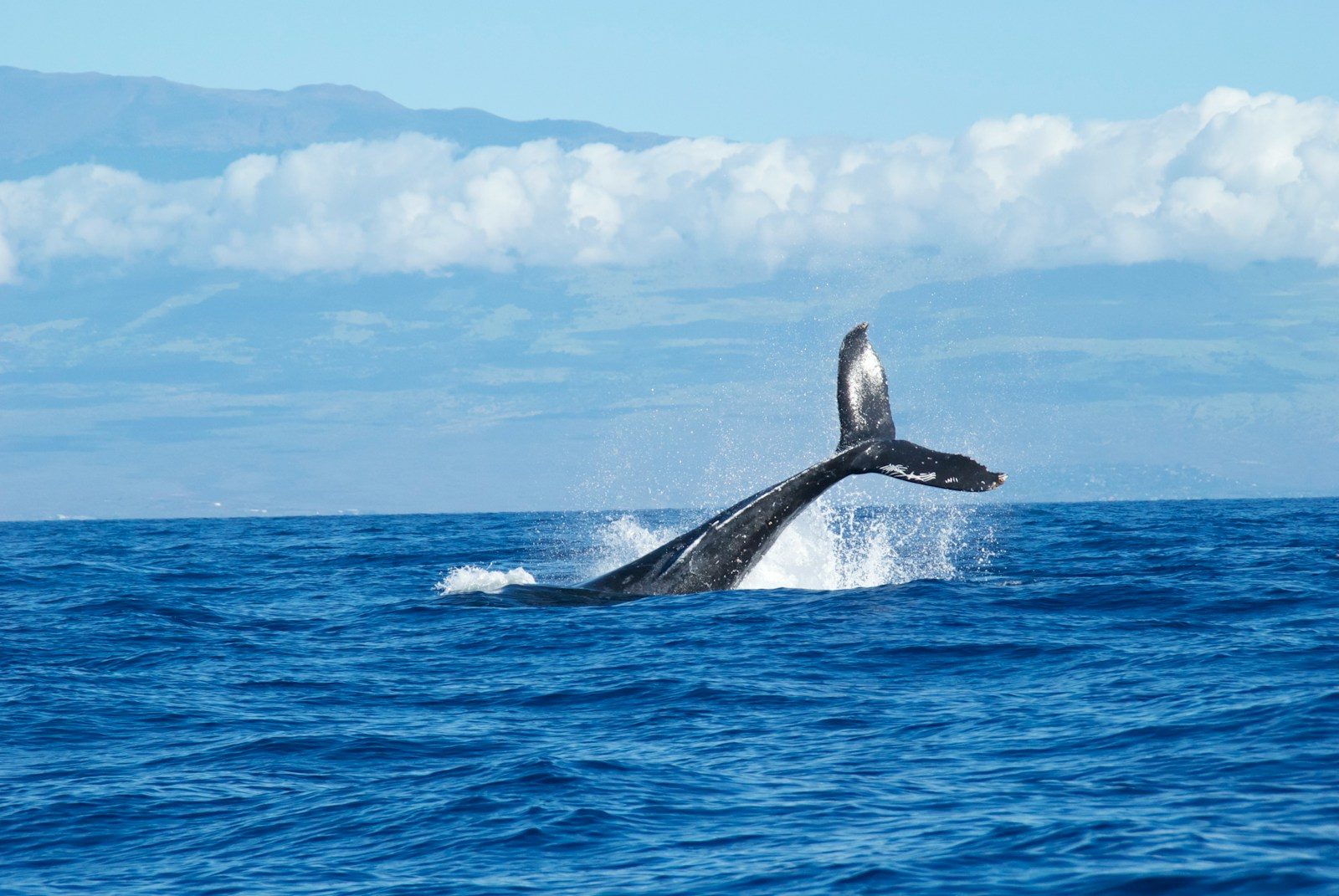
    Imagine hauling a massive whale out of the ocean and discovering it has legs. That is exactly what happened in 1919 when whalers caught a 27-ton humpback whale near Vancouver Island. What looked like a sea monster story soon became one of the most fascinating discoveries in whale evolution.

    The whale with legs revealed evidence of a distant past when the ancestors of modern whales walked on land. Scientists later studied the unusual animal and found that its strange limbs offered a rare glimpse into millions of years of evolution. This remarkable discovery continues to help researchers understand how land mammals transformed into the giant whales that swim through Earth’s oceans today.

    A shocking discovery aboard a whaling vessel

    a humpback whale swims under the surface of the water
    Photo by Chinh Le Duc on Unsplash

    In July 1919, a female humpback whale was captured by a whaling ship operating near Vancouver Island in British Columbia. The whale appeared normal at first, but the crew soon noticed something extraordinary. Two leg-like structures were protruding from the body near the genital opening.

    According to reports, the limbs extended about 4 feet 2 inches from the whale’s body and were covered with blubber. One of the limbs was accidentally removed and lost, but the other remained available for scientific study. The unusual find attracted immediate attention because modern whales are not supposed to have external hind legs.

    Scientists examined the mysterious limbs

    white and black shark in water
    Photo by Gabriel Dizzi on Unsplash

    The remains and photographs were sent to zoologist Roy Chapman Andrews at the American Museum of Natural History. Andrews carefully studied the bones and cartilage that made up the strange appendage. His findings were published in 1921 in a paper titled A Remarkable Case of External Hind Limbs in a Humpback Whale.

    The structures contained parts that Andrews identified as a femur, a tibia, a tarsus, and a metatarsal. These are bones associated with the hind legs in land animals. Based on the evidence, he concluded that the protrusions were genuine vestigial hind limbs rather than injuries or unusual growths.

    Modern whales still carry traces of legs

    grey dolphin on body of water during daytime
    Photo by Todd Cravens on Unsplash

    Although whales no longer walk on land, they still retain hidden remnants of their ancestors’ hind limbs. Scientists have long known that modern whales possess small pelvic bones buried inside their bodies. These structures no longer function as legs, but they remain part of the whale’s skeleton.

    The 1919 humpback whale was unusual because some of these ancient features developed beyond their normal state. Researchers call this phenomenon an atavism. An atavism occurs when a trait from distant ancestors unexpectedly reappears after remaining hidden for many generations. Similar cases have occasionally been reported in dolphins and other whales.

    The discovery supported whale evolution

    two black whales swimming in body of water
    Photo by guille pozzi on Unsplash

    The whale with legs provided powerful evidence that whales evolved from land-dwelling mammals. Modern research shows that whales descended from four-legged mammals that gradually adapted to life in the water. Over millions of years, their bodies changed dramatically as they became fully aquatic animals.

    Fossils discovered around the world reveal different stages of this transition. Early whale relatives had functioning legs and could move on land. Later forms became increasingly adapted to swimming, while their hind limbs shrank and eventually disappeared from the outside of the body. The 1919 whale appeared to briefly reconnect modern whales with that ancient past.

    Whale embryos reveal the same hidden history

    Two humpback whales swimming in the ocean
    Photo by Jonathan Hsu on Unsplash

    Evidence of whale ancestry does not come only from fossils. Scientists have found that whale embryos briefly develop hind limb buds during early growth. These structures appear briefly before disappearing as development continues.

    Researchers believe the 1919 humpback whale may have experienced an unusual developmental event that allowed those structures to continue growing. This would explain why external hind limbs appeared on an otherwise normal adult whale. The discovery matched what scientists already knew about whale embryos and their evolutionary heritage.

    Why the whale with legs still matters today

    two humpback whales swimming in the ocean
    Photo by Chinh Le Duc on Unsplash

    More than a century after its discovery, the whale with legs remains one of the most famous examples of evolutionary atavism. It offers a rare and dramatic illustration of how ancient genetic information can persist long after a physical feature disappears.

    Today, scientists continue studying whale genetics, fossils, and anatomy to better understand how one group of land mammals returned to the sea and eventually produced the largest animals ever known. The strange humpback whale caught in 1919 serves as an unforgettable reminder that evolution leaves clues hidden deep within living creatures.

  • Meet the giant fish that thrives in the open ocean

    Meet the giant fish that thrives in the open ocean

    Imagine being a fish that carries dozens of parasites, gets bitten by predators, and still keeps swimming through the world’s oceans. That is the reality of the ocean sunfish. Known for its unusual shape and massive size, the ocean sunfish is one of the largest bony fish on Earth.

    This remarkable species has puzzled scientists for years. From its strange body design to its incredible growth rate, the ocean sunfish continues to reveal new surprises. In this article, you’ll learn about its appearance, habitat, feeding habits, life cycle, survival strategies, and the challenges it faces in the modern ocean.

    The ocean sunfish has a body unlike any other fish

    Ocean Sunfish 2” by MyFWC Florida Fish and Wildlife is licensed under CC BY-ND 2.0

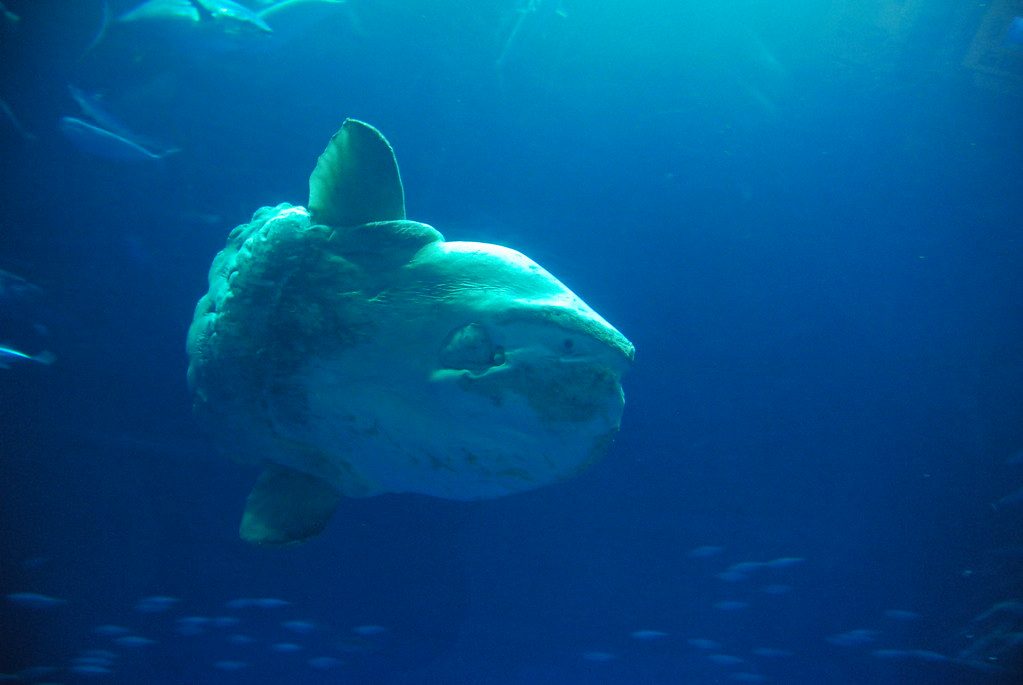
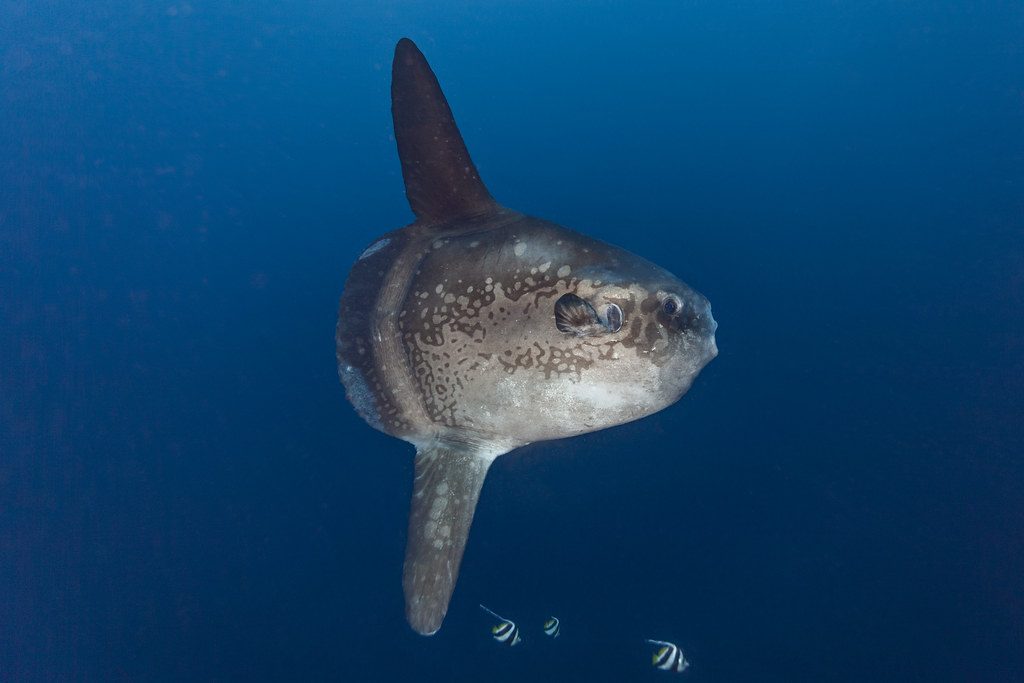
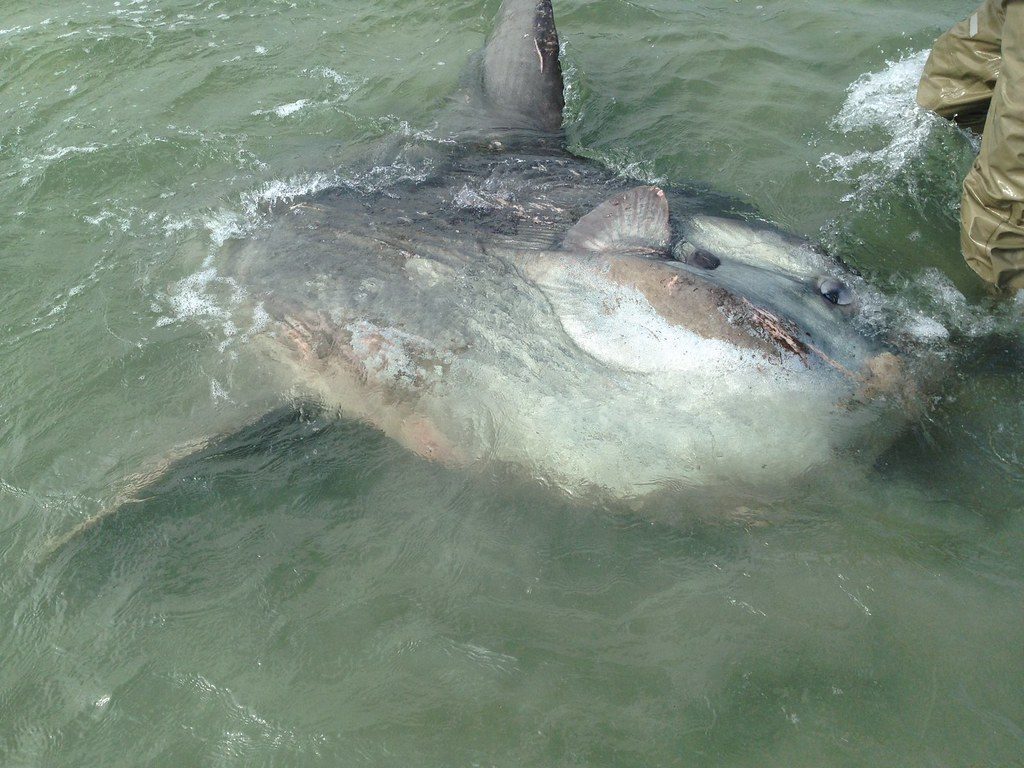
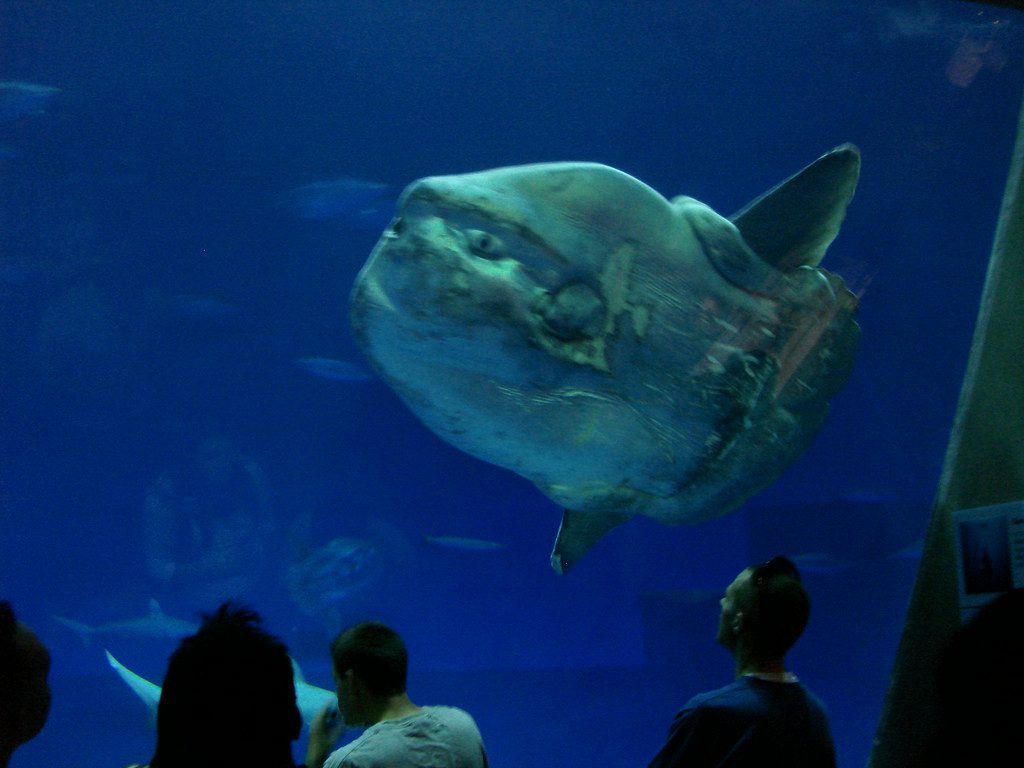
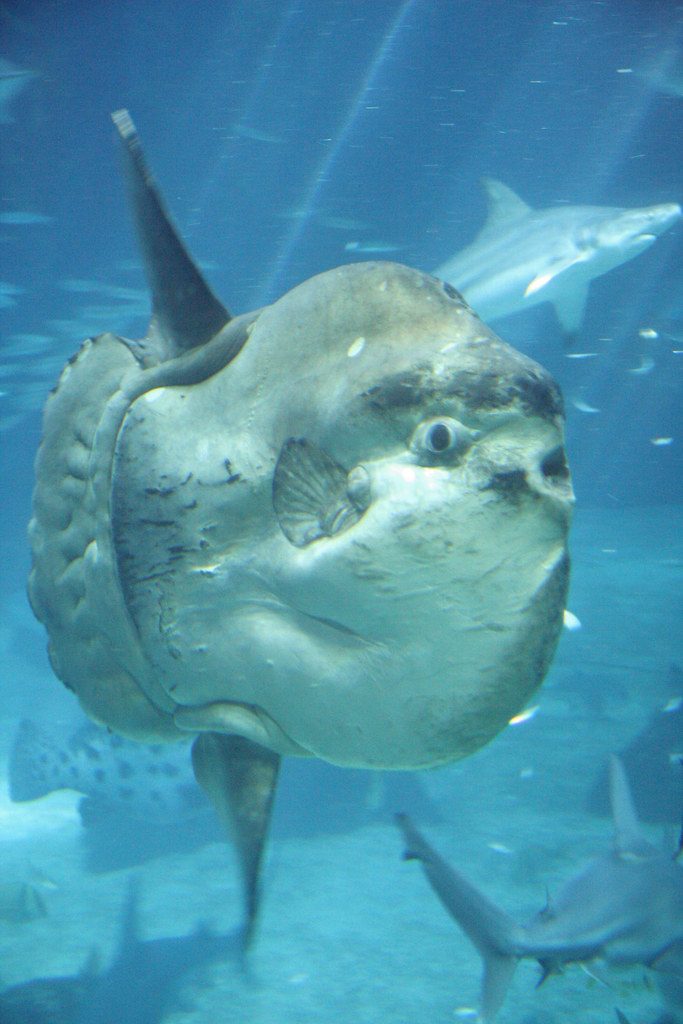
    The ocean sunfish, also called the common mola, is one of the largest bony fish in the world. Adults typically weigh between 247 and 1,000 kilograms, while some exceptional individuals can grow much larger. Its body resembles a giant fish head because it lacks a true tail. Instead, it has a rounded structure called a clavus.

    Its body is flattened from side to side, and its dorsal and anal fins can make it nearly as tall as it is long. Some individuals have reached heights of more than 3 meters. Unlike most fish, much of its skeleton is made of lighter cartilaginous tissue, helping it achieve its enormous size.

    Its unusual features help it survive in the ocean

    An ocean sunfish” by MarkDoliner is licensed under CC BY-SA 2.0

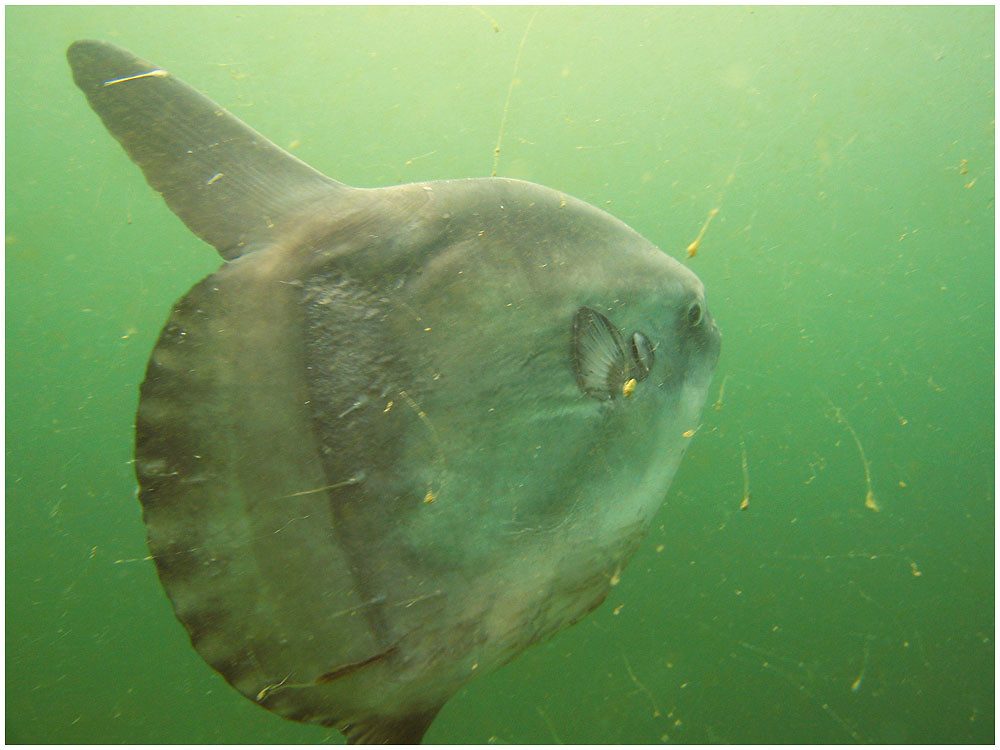
    The ocean sunfish swims differently from most fish. Rather than using a tail for propulsion, it moves by waving its dorsal and anal fins in a steady sculling motion. The clavus acts mainly as a rudder, helping the fish steer through the water.

    Its thick skin provides another important defense. The skin can be several centimeters thick and is covered with mucus rather than scales. The fish can also change its skin color from lighter shades to darker ones, especially when threatened. These features help protect it from injuries and may improve its chances of avoiding danger.

    Parasites are a constant challenge

    Ocean sunfish” by exfordy is licensed under CC BY 2.0

    One of the most surprising facts about the ocean sunfish is the number of parasites it carries. More than 40 species of parasites can live on or inside a single fish. This constant burden has led the species to develop several ways to remove unwanted passengers.

    In temperate waters, cleaner fish help remove parasites from the sunfish’s skin. In tropical regions, reef fish perform the same service. Sunfish also float on their sides near the surface, allowing seabirds to pick off parasites. Some individuals even leap out of the water, possibly to shake loose stubborn parasites attached to their bodies.

    Ocean sunfish travel across vast areas

    Ocean Sunfish in Puget Sound” by Dan Hershman is licensed under CC BY 2.0

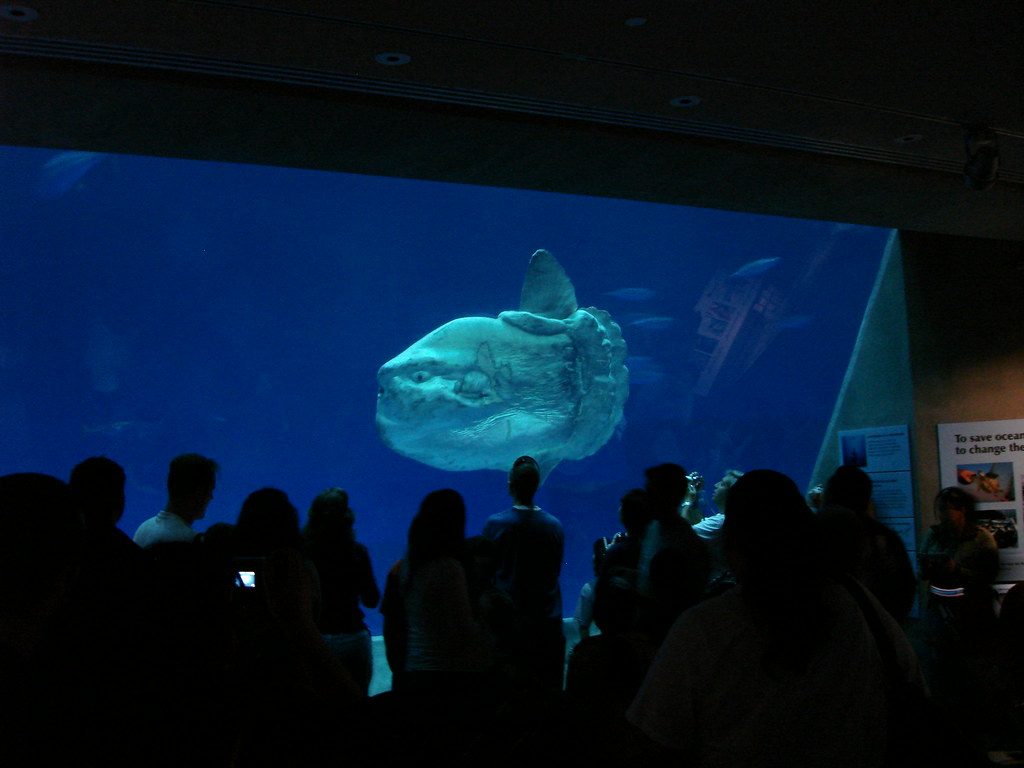
    Ocean sunfish live in tropical and temperate waters around the world. Although they are often seen resting at the surface, scientists have discovered that they spend much of their lives actively moving through the water column in search of food.

    Research has shown that these fish can travel long distances and dive to depths greater than 200 meters. They are usually found in water warmer than 10 degrees Celsius. Scientists believe that their famous basking behavior at the surface may help them warm up after spending time in colder, deeper water while feeding.

    Their diet is more varied than scientists expected

    An ocean sunfish” by MarkDoliner is licensed under CC BY-SA 2.0

    For many years, researchers believed that ocean sunfish mainly ate jellyfish. More recent studies have revealed a very different picture. The species is actually a generalist predator that consumes a wide range of prey.

    Its diet includes small fish, fish larvae, squid, mollusks, crustaceans, and other soft-bodied animals. Jellyfish and salps make up only a portion of what it eats. This varied diet allows the ocean sunfish to feed at different depths, from surface waters down toward the seafloor in some regions.

    Rapid growth and human threats shape its future

    Mola Mola (Ocean sunfish)” by NOAA Fisheries West Coast is licensed under CC BY-NC-ND 2.0

    Ocean sunfish begin life as tiny larvae measuring only a few millimeters long. Young sunfish look very different from adults and resemble small pufferfish covered with spines. As they grow, these spines disappear, and their bodies take on their familiar shape. The species undergoes one of the most dramatic growth transformations among vertebrates.

    Despite their impressive size, ocean sunfish face growing challenges. The species is listed as vulnerable, with populations declining. One of the biggest threats comes from accidental capture in fishing gear. Plastic pollution also creates problems because floating bags can resemble prey items. In addition, some fisheries remove the fish’s fins, leaving it unable to swim properly and ultimately leading to death.

  • 6 prehistoric fish still swimming today

    6 prehistoric fish still swimming today

    What if some of the world’s oldest animals were still swimming in rivers and oceans today? Long before dinosaurs walked the Earth, ancient fish were already living in the water. While many prehistoric creatures disappeared during mass extinctions, a few remarkable fish lineages survived and continue to exist today.

    These ancient fish, older than dinosaurs, provide scientists with valuable clues about evolution, genetics, and the origins of important features such as limbs and lungs. Although they are often called “living fossils,” they have continued to evolve. Their long history and unique traits make them some of the most fascinating animals on the planet. Here are six ancient fish lineages that have survived for hundreds of millions of years.

    Coelacanth survived one of the biggest surprises in science

    gray fish in sea
    Photo by Dylan McLeod on Unsplash

    The coelacanth is one of the most famous ancient fish in the world. Scientists believed it had disappeared about 65 million years ago. That changed in 1938 when a living coelacanth was discovered off the coast of South Africa. The finding became one of the greatest zoological surprises of the 20th century.

    This deep-sea fish belongs to a group of lobe-finned fishes that dates back roughly 400 million years. Its fleshy fins once led scientists to think it was closely linked to the move from water to land. Later genetic studies showed that lungfish are actually closer relatives to land animals. Researchers also found that coelacanth genes evolve very slowly. Studies suggest these fish may live for around 100 years and carry their young for about five years, making them especially vulnerable to fishing pressure.

    Sturgeon has changed very little over time

    a black and white fish and a white and black fish
    Photo by Anil Sharma on Unsplash

    Sturgeons are large bottom-feeding fish covered with bony plates. Their lineage stretches back more than 200 million years. Because their appearance has changed very little, modern sturgeons still look much like their ancient ancestors found in the fossil record.

    Scientists sequenced the sterlet sturgeon genome in 2020 and discovered that its entire genome duplicated around 180 million years ago. This left the fish with four sets of chromosomes. Despite this major genetic event, its proteins evolved slowly compared with those of many other animals. Today, many sturgeon species face serious threats from habitat loss, dams, pollution, and the caviar trade.

    Lungfish offer clues about life on land

    A fish that is swimming in some water
    Photo by Laura España on Unsplash

    Lungfish are unusual because they can breathe air. They are also among the closest living fish relatives of land vertebrates. As members of the lobe-finned fish group, they share an ancient connection with animals that eventually evolved to live on land.

    Modern lungfish use lungs to gulp air and survive in waters with very little oxygen. Some species can even endure drought conditions by slowing their metabolism inside mud cocoons. Recent genome research has revealed that lungfish possess some of the largest animal genomes ever studied. The South American lungfish has about 91 billion DNA bases, roughly 30 times as many as humans. Scientists use this information to better understand the genetic changes that helped ancient vertebrates move onto land.

    Lamprey preserves a very ancient body plan

    Pacific Lamprey” by USFWS Pacific is licensed under CC BY-NC 2.0

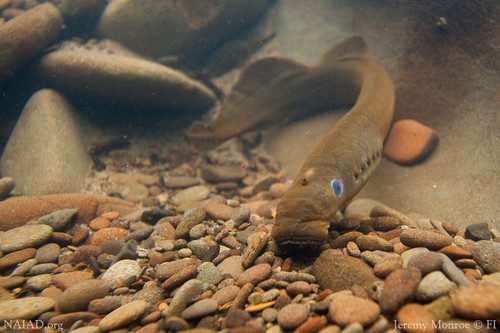
    Lampreys look very different from most fish alive today. These eel-like animals have no jaws and instead use circular mouths lined with teeth. Some species attach themselves to other fish and feed on blood and body fluids.

    Their lineage has survived for more than 340 million years. Lampreys separated from the evolutionary line leading to jawed vertebrates before features such as jaws, paired fins, and bony skeletons became common. Even with their primitive appearance, lampreys are important to science. Researchers have found that the sea lamprey’s hindbrain develops using genetic tools that are remarkably similar to those found in humans. Scientists continue to discover previously unknown lamprey populations, showing that these ancient fish still hold many secrets.

    Hagfish reveal secrets of early vertebrates

    Pacific Hagfish” by Travis S. is licensed under CC BY-NC 2.0

    Hagfish are famous for producing large amounts of slime when threatened. This mucus can clog a predator’s gills and help the hagfish escape. They have no jaws and lack a true vertebral column like most familiar vertebrates.

    Their lineage dates back around 500 million years, making them among the oldest vertebrate groups still alive. For years, scientists struggled to study hagfish genetics because their genomes are unusually complex. Major genome studies published in 2024 helped researchers better understand early vertebrate evolution. Scientists discovered that hagfish experienced major genomic changes over time, including chromosome fusions and the loss of genes linked to organs such as eyes and cartilage. At the same time, genes related to slime production expanded, helping create one of the animal kingdom’s most unusual defense systems.

    Paddlefish carries an ancient genetic legacy

    Paddlefish” by Benson Kua is licensed under CC BY-SA 2.0

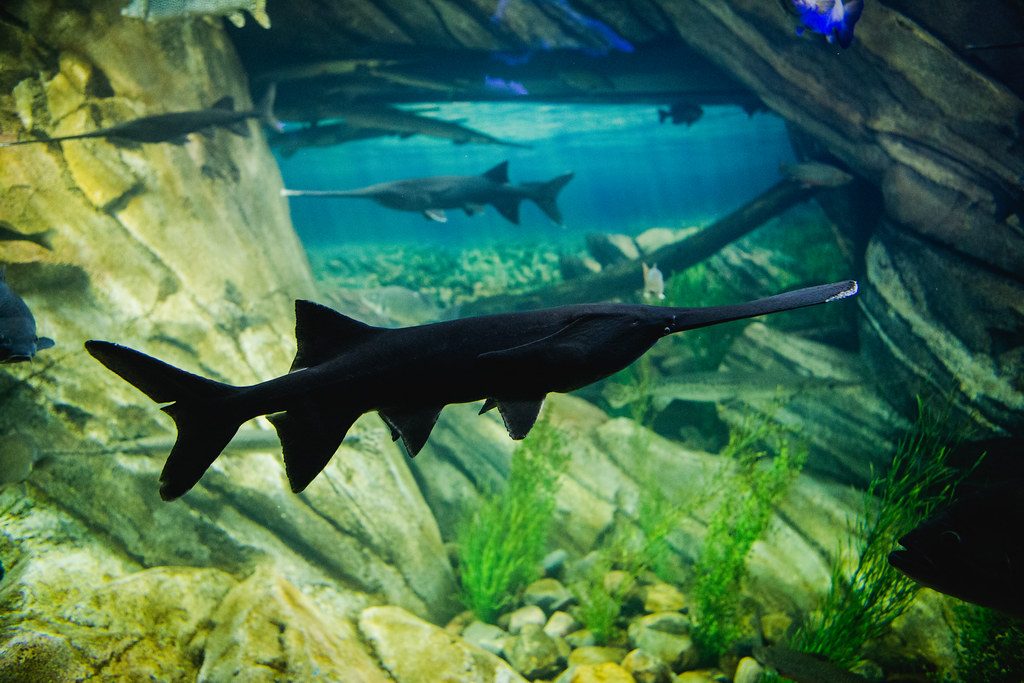
    The American paddlefish has a distinctive appearance, with a shark-like body, a wide mouth, and a long, blade-shaped snout called a rostrum. This snout contains sensors that help the fish detect tiny prey in cloudy river waters.

    Paddlefish belong to the same ancient order as sturgeons, a group believed to have originated between 300 and 350 million years ago or even earlier. Recent genome studies showed that paddlefish experienced a whole-genome duplication, meaning their entire genetic code was copied. Researchers also found evidence that paddlefish and sturgeons share an ancient genome duplication event that likely occurred more than 200 million years ago, around the time of the Permian-Triassic mass extinction. These discoveries continue to help scientists understand how ancient fish survived major changes in Earth’s history.

  • Scientists are disturbed by strange noises coming from the depths of the ocean

    Scientists are disturbed by strange noises coming from the depths of the ocean

    The ocean is full of mysteries, and some of the strangest are the eerie sounds rising from its darkest depths. For decades, scientists have recorded strange ocean noises that seemed impossible to explain. Some sounded like giant creatures calling to each other, while others resembled whistles, groans, or even quacking ducks.

    These sounds sparked wild theories about sea monsters and hidden civilizations, but researchers have spent years trying to uncover the truth. Today, many of these mysteries have been solved, while a few still puzzle experts. By exploring these strange noises, scientists are learning more about our planet and the hidden world that lies beneath the waves.

    Why is the ocean filled with mysterious sounds?

    Indian Ocean Sunset. (in explore)” by Rod Waddington is licensed under CC BY-SA 2.0

    The ocean may seem quiet from above, but underwater it is filled with noise. Waves crash, whales sing, ice cracks, and underwater volcanoes rumble. Scientists use special microphones called hydrophones to listen to these sounds. Hydrophones can detect noises from thousands of miles away because sound travels much farther underwater than it does through air. This allows researchers to monitor earthquakes, volcanic eruptions, marine mammals, and even changing weather patterns deep beneath the sea.

    Still, not every sound is easy to explain. Some noises are so unusual that scientists spend years studying them. The ocean covers more than 70 percent of Earth’s surface, and most of it remains unexplored. Because so little of the deep ocean has been seen directly, mysterious sounds often spark excitement and fear. Scientists know that strange noises do not automatically mean something dangerous is lurking below, but they also know that every unexplained sound is a chance to discover something new about the planet.

    The bloop that shocked scientists

    Marine Scientist Jennifer Stanhope, VASG Graduate Research Fellow Annie Murphy, and Mark Luckenbach take water samples from the cores over the course of the day to measure the nutrient concentrations in the water. ©Margaret Pizer/VASG” by Virginia Sea Grant is licensed under CC BY-ND 2.0

    One of the most famous strange ocean noises is a sound known as “The Bloop.” It was recorded in 1997 by underwater listening stations operated by the U.S. National Oceanic and Atmospheric Administration. The sound was so powerful that it was detected by sensors thousands of miles apart across the Pacific Ocean. It slowly rose in frequency over about one minute and did not match any known animal call. Because it was louder than sounds made by the largest whales, many people wondered if it came from an enormous sea creature hidden in the deep ocean.

    For years, theories spread about giant squids, ancient monsters, and even surviving prehistoric animals. Scientists, however, remained cautious. After studying similar sounds near Antarctica, researchers eventually discovered that The Bloop was most likely caused by an icequake. Icequakes happen when massive glaciers crack or when huge icebergs scrape against the ocean floor. The discovery ended one mystery but revealed another important truth. Antarctica’s ice is constantly moving and breaking, producing sounds so powerful they can travel across entire oceans. In a way, the real story behind The Bloop is just as amazing as the myths that surrounded it.

    The upsweep that still puzzles researchers

    blue sky and white clouds over sea
    Photo by René Molenkamp on Unsplash

    Another strange sound that has disturbed scientists is called “Upsweep.” Unlike The Bloop, this sound has never been fully explained. It was first detected in 1991 when scientists began using underwater listening systems to monitor the Pacific Ocean. Upsweep consists of long, repeating tones that slowly rise in pitch. The sound is loud enough to be heard throughout the Pacific and seems to become stronger during certain seasons of the year.

    Researchers believe Upsweep comes from an area of underwater volcanic activity located roughly halfway between South America and Australia. The timing and location support this theory, but scientists have never directly confirmed the source. Even more interesting, the sound has gradually become weaker over the years, though it can still be heard today. This mysterious pattern has kept researchers interested for decades. Upsweep is a reminder that even with modern technology, some secrets of the deep remain just out of reach.

    The strange quacking sound from Antarctica

    glacier during daytime
    Photo by Derek Oyen on Unsplash

    For many years, sailors and scientists heard an unusual sound deep in the Southern Ocean that resembled a duck’s quack. Because nobody knew what made it, researchers nicknamed it the “Bio-duck.” The sound was first reported in the 1960s and remained one of the greatest mysteries of Antarctic waters for decades. Some experts believed it came from submarines, while others thought it was produced by a previously unknown species living in the icy ocean.

    The answer finally arrived in 2014 when scientists discovered that the Bio-duck was made by Antarctic minke whales. Researchers attached recording devices to the whales and found that their sounds matched the mysterious recordings perfectly. The discovery surprised scientists because these whales had been studied for years, yet their unique calls had remained hidden in plain sight. The solution to the mystery also showed how much researchers still have to learn about even well-known marine animals. Strange sounds do not always come from unknown creatures. Sometimes they come from animals we thought we already understood.

    Icebergs can sound like monsters

    iceberg
    Photo by Annie Spratt on Unsplash

    One reason mysterious ocean noises are so unsettling is that ice can create sounds unlike anything people expect. When giant glaciers crack, when icebergs collide, or when massive chunks of ice break away from Antarctica, they release huge amounts of energy into the water. These events create deep groans, rumbles, and booming noises that can travel thousands of miles. Some recordings sound eerily similar to animal calls, which is why scientists once considered biological explanations for many mysterious sounds.

    Several famous underwater noises, including The Bloop and another sound called “Julia,” are now believed to have been caused by ice activity near Antarctica. Julia, recorded in 1999, lasted almost three minutes and had a strangely human-like tone. Scientists eventually traced it to a region near Antarctica where large icebergs often become stuck on the seafloor. These discoveries have changed the way researchers think about underwater acoustics. Instead of viewing ice as silent, scientists now understand that glaciers and icebergs are among the loudest natural features on Earth.

    What these mysterious sounds tell us today

    three people in lab coats looking at a tablet
    Photo by National Cancer Institute on Unsplash

    Although many strange ocean noises have been explained, scientists are still listening carefully for new mysteries. Underwater microphones are now used across the globe to study whales, monitor earthquakes, track volcanic eruptions, and observe climate change. Every sound adds another piece to the puzzle of how the ocean works. Some mysterious noises that once frightened people have become valuable clues about melting ice, changing ecosystems, and the movements of marine animals.

    At the same time, researchers know there is still much they do not know. Vast areas of the deep ocean remain unexplored, and new species are discovered regularly. The possibility of hearing an entirely new sound keeps scientists excited and curious. Most unexplained noises eventually turn out to have natural causes, but that does not make them any less fascinating. The ocean is Earth’s largest habitat, and every strange echo from its depths reminds us how much of our own planet is still waiting to be understood.

  • The moment calm water erupted with peacock bass

    The moment calm water erupted with peacock bass

    Most fishing trips begin with hope, patience, and a little luck. But every now and then, anglers stumble upon something so exciting that it feels unreal. That is exactly what happened in a viral fishing video where a calm patch of water suddenly erupted with peacock bass. What looked like an ordinary fishing spot quickly turned into nonstop action as dozens of fish rushed to the surface and attacked the bait.

    The incredible scene left viewers amazed and wondering how so many fish could hide in one place. While the moment seemed unbelievable, there are real reasons why peacock bass gather in large numbers and become extremely aggressive. Understanding these fish and their behavior makes the story even more fascinating.

    The search for a hidden fishing gem

    A man in a hoodie fishes by a calm lake surrounded by autumn foliage.
    Photo by Cedé Joey on Pexels

    The anglers in the video were not expecting anything extraordinary when they arrived. They had searched online and picked a new location that seemed promising for peacock bass. At first, the area looked like many other lakes and canals. The water was calm, the shoreline was quiet, and there were no signs that something special was waiting below the surface.
    Everything changed the moment they looked closer. Suddenly, large peacock bass appeared near the bank, swimming in groups and reacting aggressively to the anglers’ lures. The fishermen could hardly believe what they were seeing. Every cast brought excitement as fish chased, struck, or followed the bait. The peaceful setting transformed into a dream fishing spot within minutes, proving that even ordinary-looking waters can hide incredible surprises.

    Peacock bass are unlike most freshwater fish

    A live fish caught on a line breaks the water's surface in a calm lake setting.
    Photo by cottonbro studio on Pexels

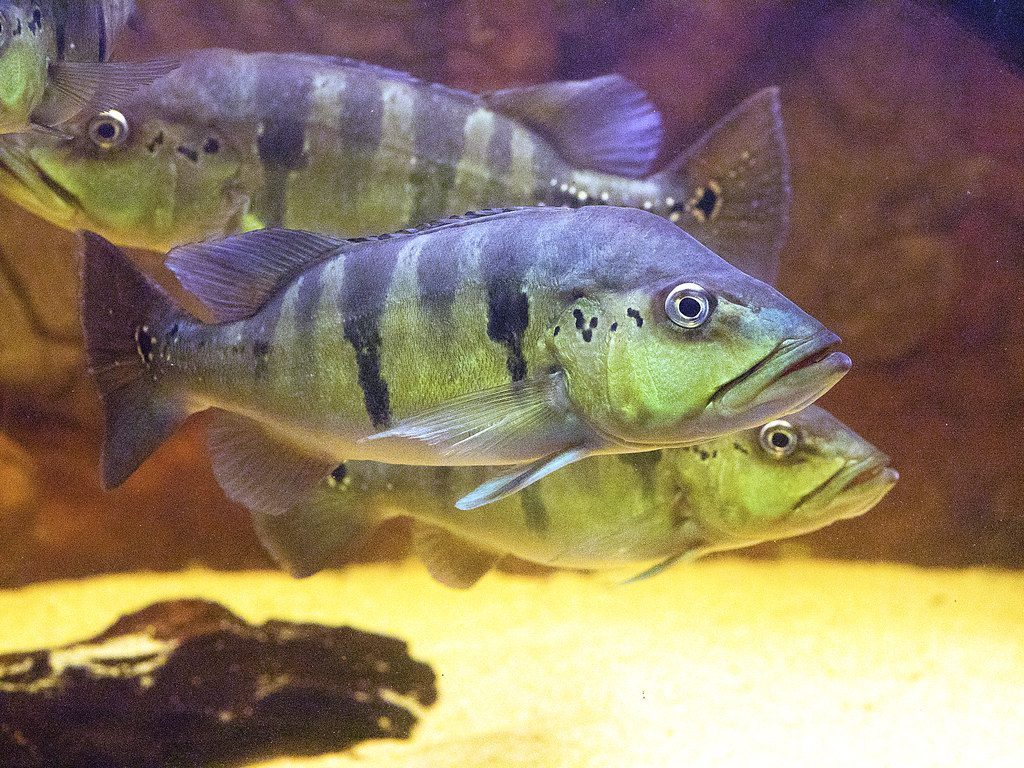
    Peacock bass are famous for their bright colors, strength, and aggressive behavior. Even though their name includes the word bass, they are actually members of the cichlid family. Native to South America, these fish were introduced to parts of Florida during the 1980s. Since then, they have become one of the most popular freshwater game fish in the state because of their fighting spirit and beautiful appearance.
    Unlike many freshwater species that feed mostly at dawn or dusk, peacock bass are active hunters during the day. They rely heavily on their eyesight and are quick to chase moving prey. This makes them perfect targets for artificial lures and fast-moving baits. Their aggressive nature is one reason why the viral video looks so exciting. The fish are not simply feeding. They are reacting instantly to anything they believe could be prey or a threat.

    Nesting season changes their behavior

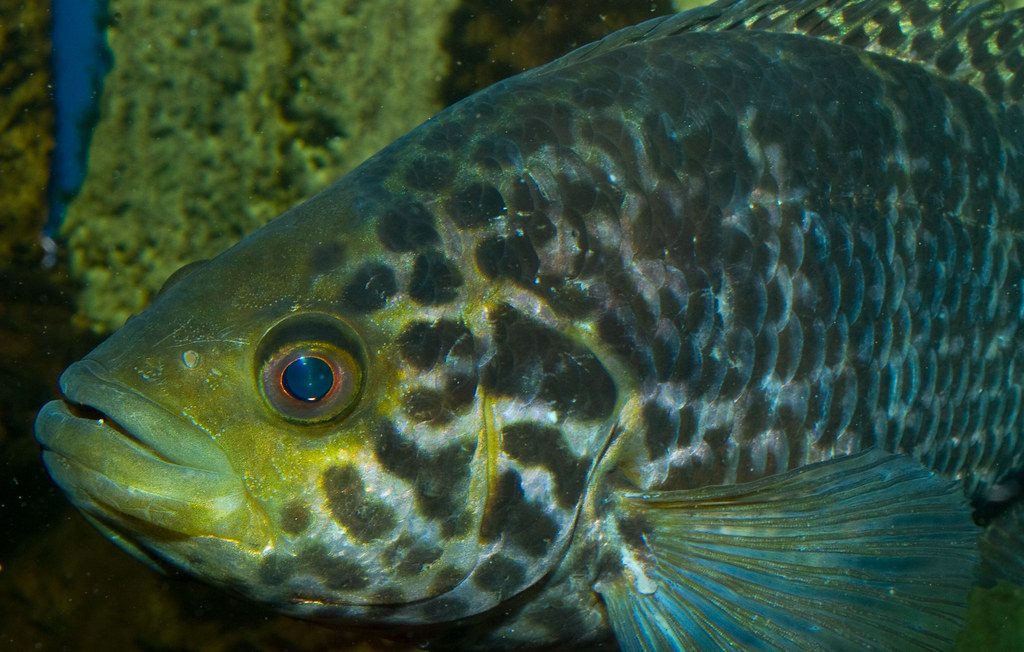
    Peacock Bass” by C Simmons is licensed under CC BY-NC 2.0

    One reason the fish in the video seemed unusually aggressive is that many peacock bass were likely protecting their nests. During spawning season, male and female peacock bass work together to guard eggs and young fish. They choose shallow areas near the shore and defend them fiercely against anything that comes too close.
    This protective behavior explains why several fish appeared to chase the lure at once. The anglers noticed fish following their bait, striking repeatedly, and even reacting to the fishing rod itself. These actions are common when peacock bass are guarding their young. They are not attacking out of anger. Instead, they are trying to remove what they see as a danger from their nesting area. This natural instinct creates some of the most exciting fishing moments anglers can experience.
    Why so many fish gathered together

    Cichla pleiozona, Non native Peacock Bass from Canal” by brian.gratwicke is licensed under CC BY 2.0

    The most surprising part of the video was the sheer number of peacock bass in one small area. At one point, the anglers estimated that more than 20 fish were visible, and they believed even more were hiding nearby. While this seems unusual, there are several reasons why peacock bass gather in certain locations.

    Warm water is one important factor. Peacock bass prefer temperatures that stay relatively high throughout the year. Shallow canals, lakes, and ponds often warm up quickly and provide ideal conditions for feeding and breeding. These areas may also contain small baitfish, underwater structures, and protected nesting sites. When all of these factors come together, many peacock bass may live surprisingly close to one another, creating action-packed fishing opportunities like the one seen in the viral clip.

    Aggressive strikes make every cast exciting

    Peacock Bass Stocked” by MyFWC Florida Fish and Wildlife is licensed under CC BY-ND 2.0

    Throughout the video, the anglers repeatedly shouted in surprise as fish exploded on their lures. Some fish struck immediately, while others followed closely before attacking at the last second. This behavior is one of the reasons peacock bass have earned such a loyal following among fishermen.

    Peacock bass are built for speed and quick reactions. Their streamlined bodies allow them to chase prey rapidly, and their sharp eyesight helps them track movement with great accuracy. Fast-moving lures often trigger instinctive strikes because the fish see them as escaping prey. In many cases, peacock bass attack not because they are hungry but because their natural instincts tell them to chase. This combination of speed, power, and aggression creates thrilling moments that keep anglers coming back again and again.

    Hidden hotspots are part of fishing’s magic

    Memphis Zoo 08-31-2016 – Azul Peacock Bass 1” by David441491 is licensed under CC BY-NC-ND 2.0

    Perhaps the most amazing part of the story is that this incredible fishing spot was hidden in plain sight. The anglers admitted that the lake was not even their main destination. They considered it a warm-up spot before moving elsewhere. Yet it ended up producing one of their most memorable fishing sessions in a long time.

    Stories like this remind people why fishing remains so popular around the world. Every trip carries the possibility of discovering something unexpected. A quiet shoreline may hide a school of aggressive fish. A small pond may produce the catch of a lifetime. The mystery of what lies beneath the surface is part of the adventure. Even experienced anglers cannot predict exactly what will happen, and that uncertainty is what makes moments like this so unforgettable.