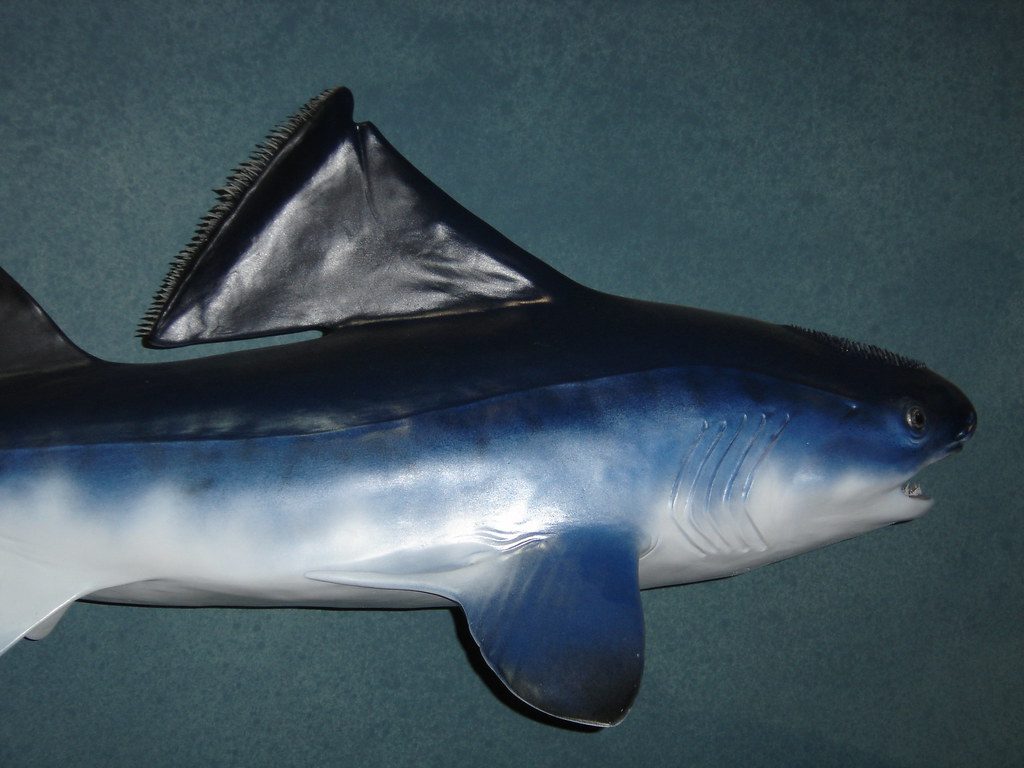
Ancient sharks came in many shapes and sizes, but few were as unusual as Stethacanthus. This ancient shark stood out because of its remarkable fin, which looked nothing like the fins seen on modern sharks today. Instead of having a normal triangular dorsal fin, Stethacanthus had a flat, brush-like structure on its back that reminded scientists of an ironing board or an anvil. That strange feature has fascinated researchers for more than a century and helped make this prehistoric fish one of the most recognizable ancient sharks ever discovered.
In this article, you will learn where Stethacanthus lived, when it existed, what made its fin so special, how it hunted, and why scientists still debate the true purpose of its unusual body structure. By understanding this remarkable creature, readers can gain a better picture of how diverse shark evolution has been throughout Earth’s history.
A shark from a very different world
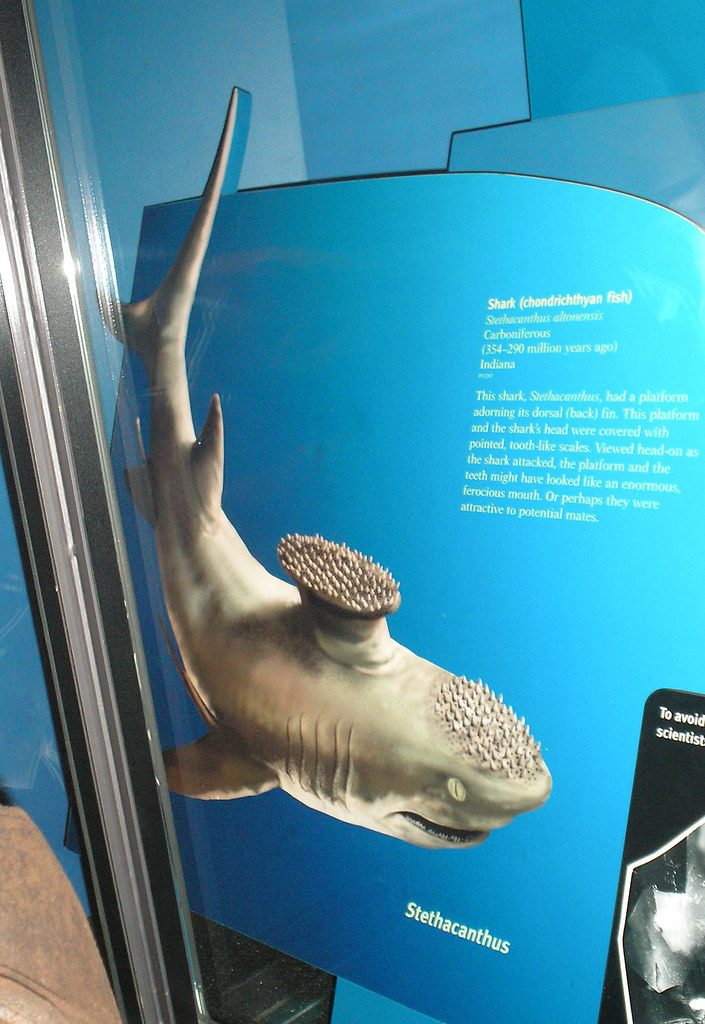
Stethacanthus lived roughly 380 million to 300 million years ago during the Late Devonian and Carboniferous periods. At that time, dinosaurs did not exist yet. The oceans were filled with strange fish, armored predators, and early relatives of modern sharks. Fossils of Stethacanthus have been discovered in North America, Europe, and Asia, showing that it was widely spread across ancient seas. The animal lived during a time when shark-like fish were rapidly evolving into many different forms.
Although it is commonly called a shark, Stethacanthus was not exactly the same as modern sharks. Scientists place it among an ancient group of cartilaginous fish that shared some features with sharks and some with chimaeras, also known as ghost sharks. Like modern sharks, its skeleton was made mostly of cartilage rather than bone. This lighter body structure helped many early shark relatives become successful ocean predators.
The fin that made it famous
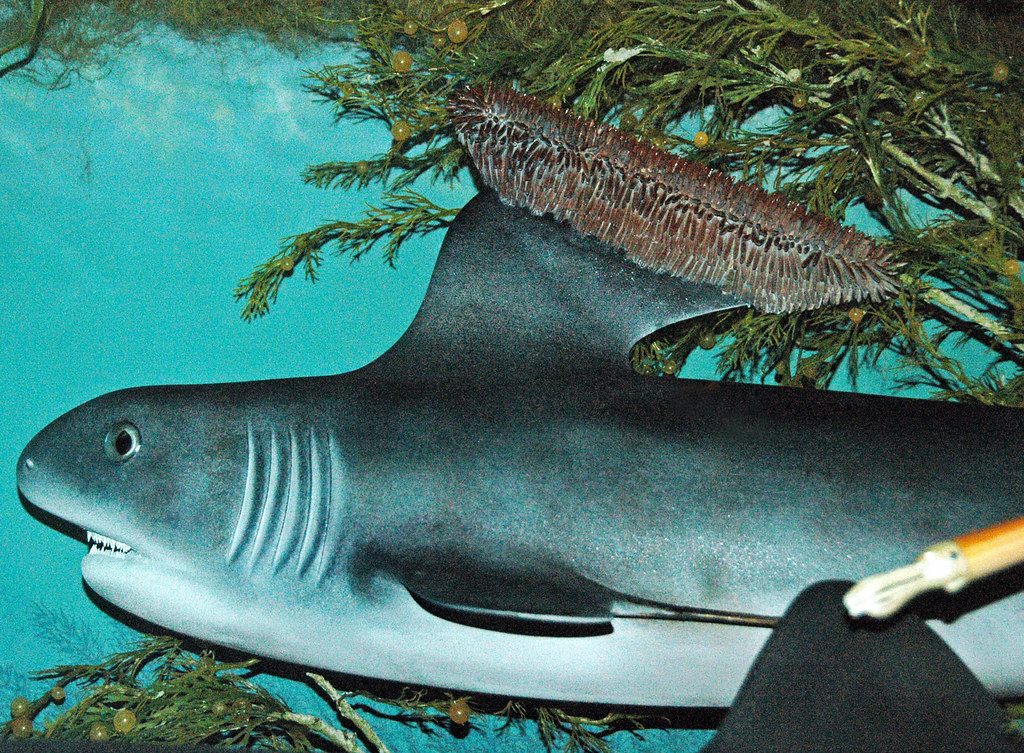
The most remarkable feature of Stethacanthus was its unusual dorsal fin. Most sharks have a pointed fin on their backs that helps them stay balanced while swimming. Stethacanthus had something completely different. Mature males possessed a broad, flat structure shaped like an anvil or an ironing board. The surface was covered with enlarged denticles, which are tiny tooth-like scales that also cover shark skin.
Scientists believe the strange fin gave Stethacanthus a very different appearance from any living shark. The top of the head also carried similar rough denticles, creating what researchers call a spine-brush complex. Because of this bizarre structure, Stethacanthus is often nicknamed the “ironing board shark.” Even among hundreds of known prehistoric shark species, few animals possessed a body feature as unusual or distinctive.
Why scientists think the fin existed

One of the biggest mysteries surrounding Stethacanthus is the purpose of its remarkable fin. Scientists have proposed several ideas over the years. One possibility is that the fin played a role in courtship and mating. Researchers noticed that the unusual structure appeared mainly in mature males, suggesting it may have helped attract females or display fitness to potential mates.
Other theories suggest the fin may have helped scare away predators or make the animal appear larger than it really was. Some scientists have also suggested that the rough surface could have helped during mating by providing grip between individuals. While no single explanation has been proven beyond doubt, the mating-display theory is currently one of the most widely accepted ideas because of the strong connection between the fin and male specimens.
Size, appearance, and hunting habits

Compared with some giant prehistoric sharks, Stethacanthus was relatively small. Many specimens measured between about 2 and 10 feet long, depending on the species. Its body shape otherwise looked fairly shark-like, with a streamlined form, pectoral fins, a tail fin, and rows of sharp teeth designed for catching prey. Despite its unusual fin, it was still a capable predator in its environment.
Its diet likely included small fish, cephalopods, brachiopods, and other marine animals. The teeth of Stethacanthus were sharp enough to grip slippery prey. Because it was not a giant hunter like some later sharks, it probably focused on smaller animals that were easier to catch. Scientists believe it spent much of its time swimming through shallow seas where food was abundant and competition was intense.
How fossils revealed its secrets
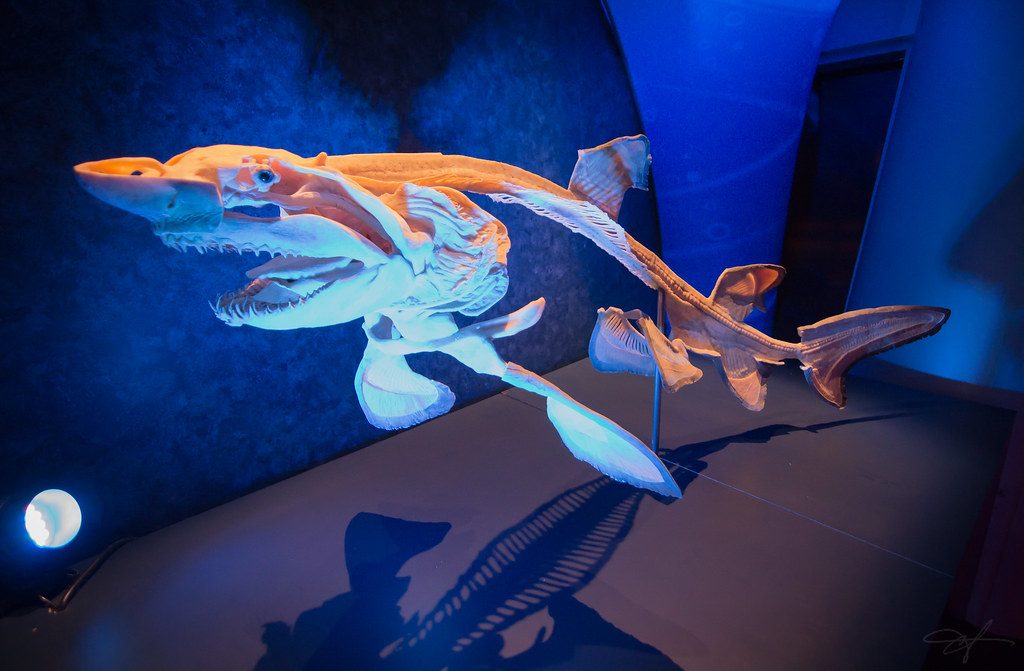
Learning about Stethacanthus has not been easy because sharks rarely leave complete fossils. Since shark skeletons are made mostly of cartilage, they break down much more easily than bones. For many years, scientists discovered only isolated fin spines and teeth, making it difficult to understand what the animal actually looked like. Early researchers even struggled to identify the strange fin structure correctly.
Over time, more complete fossils were uncovered, especially from sites containing exceptionally preserved marine life. These discoveries allowed paleontologists to reconstruct the animal with greater accuracy. Fossils showed the unusual fin, the rough denticles on the head, and other body features that helped researchers place the species within the broader family of ancient cartilaginous fishes. Each new fossil added another piece to the puzzle of this remarkable prehistoric predator.
What Stethacanthus teaches us about shark evolution
Stethacanthus shows that ancient sharks were far more diverse than many people realize. Modern sharks generally follow familiar body designs, but prehistoric oceans were home to species with strange fins, unusual teeth, and unique body shapes. The existence of Stethacanthus demonstrates that evolution often experiments with different structures before settling on forms that survive for millions of years.
The shark also reminds scientists that many ancient ocean animals remain poorly understood. New fossil discoveries continue to reshape what researchers know about prehistoric life. Features that seem strange today may have provided important advantages in ancient ecosystems. By studying animals like Stethacanthus, scientists gain valuable clues about how sharks evolved into one of the ocean’s most successful groups of predators.
Leave a Reply