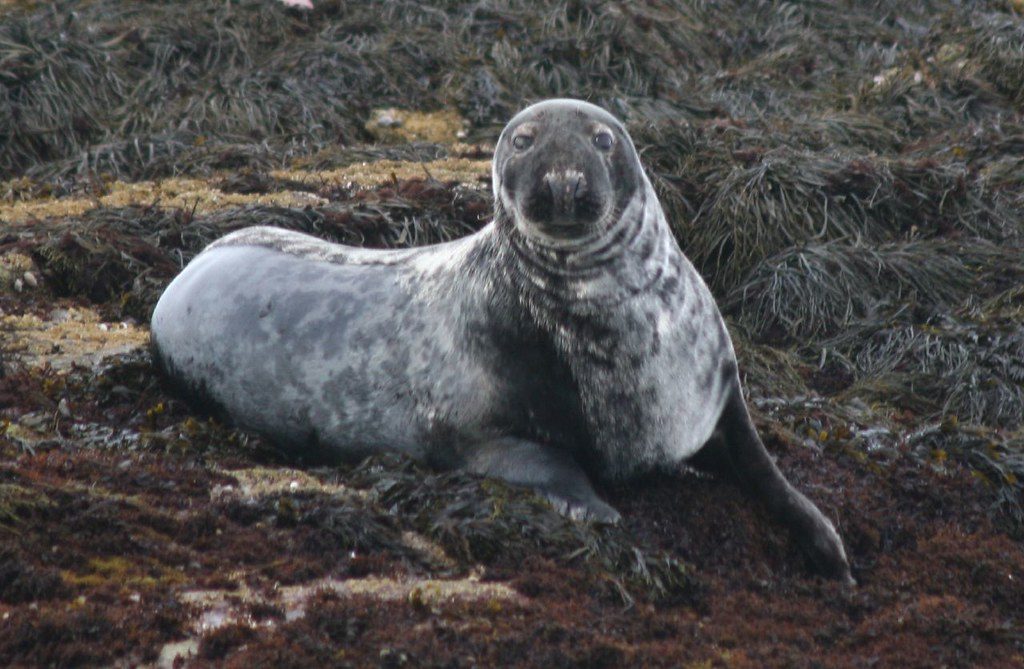
Getting close to a large male Cape fur seal during breeding season can disturb far more than one animal. So when conservationist Naude Dreyer spotted a bull with a fabric-like entanglement wrapped around his head and passing through his mouth, he tried a different approach. Instead of rushing into the colony, Naude slowly crawled toward the seal while carrying a new rescue tool he had built himself.
The prototype pole measured about 3 meters long and had a cutting hook at its end. If Naude could catch the material without frightening the surrounding seals, he might be able to free the bull from a distance. The first real test of the new tool ended with exactly that result.
The bull had fabric wrapped around its head
Naude noticed a large male seal carrying an unusual entanglement around its head. The material looked almost like a bandage and passed through the animal’s mouth. That position made the problem especially difficult because the material could not simply be ignored while the seal continued moving around the colony. Removing it required getting close enough to reach the entanglement without making the situation worse.
Cape fur seals along Namibia’s coast regularly become trapped in human-made debris. Ocean Conservation Namibia says its teams patrol seal colonies looking for animals caught in fishing line, nets, plastic straps, and other discarded material. Between 2020 and 2025, the organization says it rescued more than 5,000 Cape fur seals from dangerous entanglements. The object around this bull was different from many ordinary fishing line cases, but it created the same basic problem. The seal could not simply remove it himself.
The breeding season made the rescue more difficult
The encounter happened during the early breeding season, when disturbing a large group of seals could create extra problems. Instead of immediately running toward the bull with a rescue net, Naude wanted to avoid causing the surrounding animals to scatter. A normal chase could send many seals toward the water while also making the targeted male much harder to reach.
That forced Naude to depend on patience. He lowered himself close to the ground and slowly crawled toward the bull rather than approaching at full speed. Every bit of distance he covered brought him closer to the entanglement while also increasing the possibility that the seal would notice him and move. The goal was not to touch or restrain the animal. Naude needed only to get close enough for the new tool to reach the material wrapped around the seal.
A 3-meter prototype gave him extra reach
Naude had built a prototype rescue pole measuring roughly 3 meters long. At the far end was a sharpened hook designed to catch and cut entangling material. The long handle allowed him to remain several meters away from the seal while still reaching the object around its head. That extra distance was the main reason the tool could work in a situation where physically catching the animal might disturb the colony.
Ocean Conservation Namibia already uses cutting hooks during some seal rescues. The organization explains that hooks can be useful when an entanglement is too tight for scissors because scissors require enough space to slide underneath the material. Pulling hard enough to create that space can sometimes push tight debris deeper against an animal. A narrow cutting hook can therefore provide another option. Naude’s longer prototype applied the same basic idea while allowing him to work from much farther away.
The rescuer had to catch only the material
Reaching the bull was only the first part of the challenge. The cutting hook needed to catch the entanglement rather than the seal. With the material positioned around the animal’s head and through its mouth, accuracy mattered. Naude could not simply swing the pole toward the seal and hope it connected with the right object.
He carefully positioned the tool until the hook reached the fabric. Once the material was caught, the sharpened edge could do the work. The goal was to create enough tension for the hook to slice through the entanglement while leaving the seal untouched. The long pole meant Naude had less direct control than he would have had while holding the material in his hands, but it also allowed the rescue to happen without a chase and physical restraint.
One cut released the trapped bull
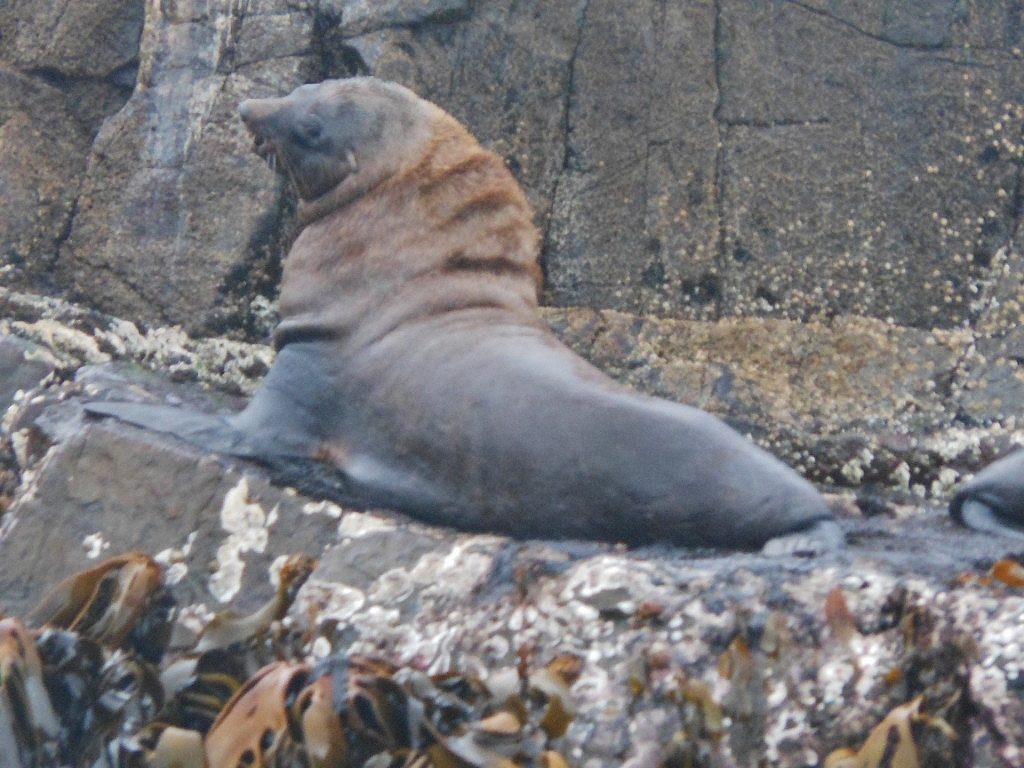
The prototype worked on its first real rescue. Naude caught the fabric with the hook and sliced through it, freeing the large male seal from the material that had been wrapped around his head. The bull did not need to be captured in a net or physically restrained for the entanglement to be removed.
That outcome made the rescue unusual compared with the method Ocean Conservation Namibia often uses. In many cases, team members first identify an entangled animal, chase it, catch it with a net, restrain it, and then cut away the debris. This time, the new pole allowed Naude to complete the key part of the rescue from several meters away. It also meant the surrounding colony did not need to be disrupted simply to reach one animal.
Featured Image: “bull seal @ isles of shoals” by steelheadwill is licensed under CC BY-NC-SA 2.0
Leave a Reply