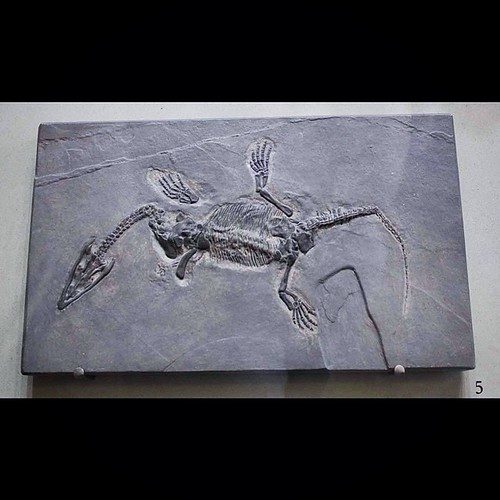
A fossil found in Switzerland has preserved something paleontologists almost never get to study: the skin of an animal that lived about 240 million years ago. The nearly complete specimen belongs to Lariosaurus valceresii, a small aquatic reptile from the Middle Triassic period. It was discovered at Monte San Giorgio, a UNESCO World Heritage area famous for exceptionally preserved fossils.
Unlike earlier Lariosaurus remains, this specimen preserves skin across much of its body, including clear evidence of scales and webbing between its fingers and toes. The discovery gives researchers a much better idea of what the animal looked like and how it moved through prehistoric seas. It may even change how scientists understand the swimming style of this ancient group of marine reptiles.
The fossil was found at Monte San Giorgio
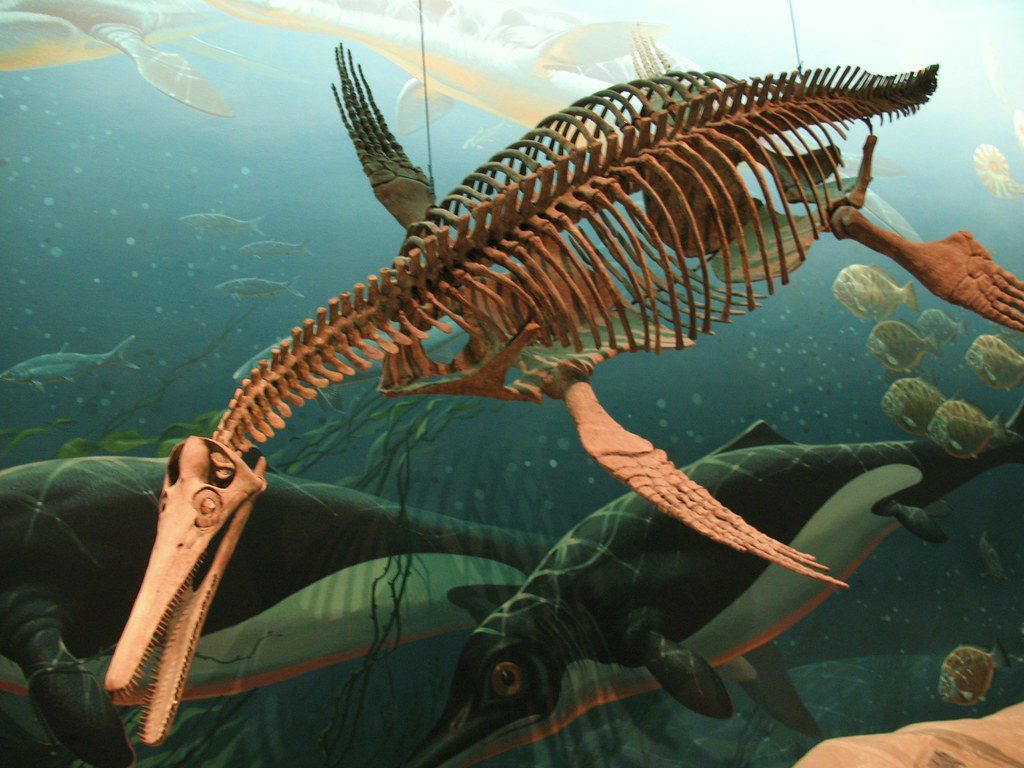
The specimen was collected during paleontological fieldwork in 2023 on the Swiss side of Monte San Giorgio. It came from the Meride Limestone, a rock formation that preserves animals from the Middle Triassic period. Researchers identified the fossil as Lariosaurus valceresii, an extinct marine reptile that lived during the late Ladinian age. The specimen is about 820 millimeters long and is preserved with most of its skeleton still connected. Its skull suffered some damage from cracks in the surrounding rock, but much of the body remained in remarkable condition.
Monte San Giorgio lies along the border between Switzerland and Italy and is famous for fossils from an ancient marine environment. The area has produced exceptionally preserved fish and marine reptiles for many years. This particular discovery is important for 2 reasons. It is the first confirmed Lariosaurus valceresii specimen discovered on the Swiss side of Monte San Giorgio, and it is the first known Lariosaurus fossil with preserved remains of the skin. That second feature gives scientists information that bones alone could never provide.
The skin survived as a thin carbon film
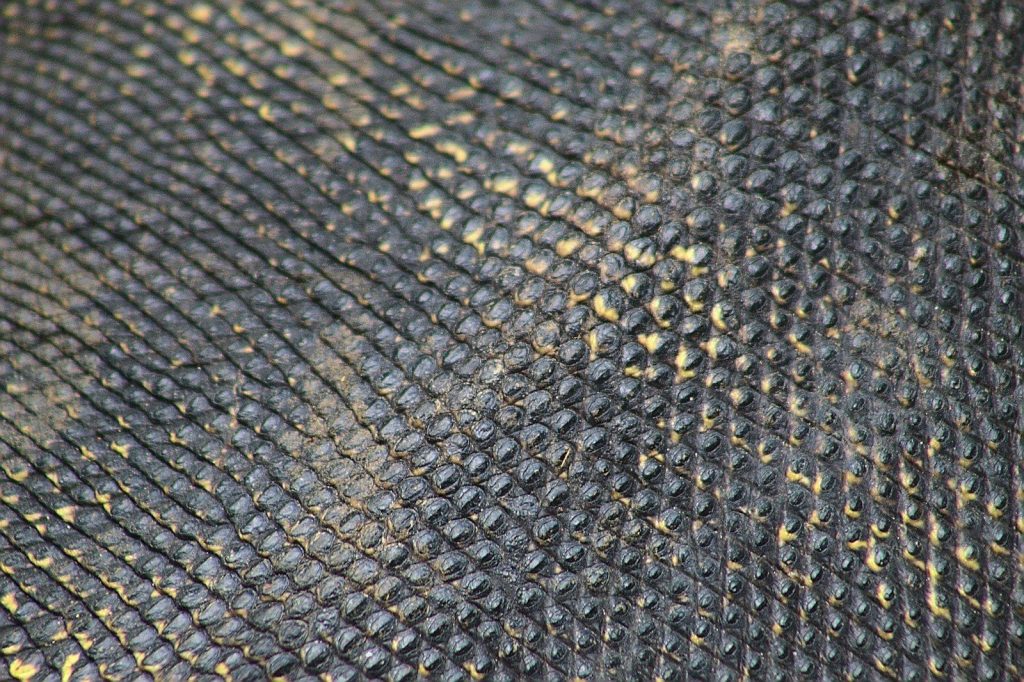
Soft tissue normally disappears long before an animal becomes a fossil. Skin, muscles, and organs usually decay or are consumed after death, leaving bones and teeth as the most common remains. In this specimen, however, parts of the original skin were preserved as a thin carbon film around the skeleton. The fossilized skin traces the outline of the body and limbs and even preserves the shapes of individual scales in some places. Researchers used detailed photography and close examination to study these structures.
The skin is preserved across much of the body, although some areas are clearer than others. Researchers believe the animal was probably covered largely in scales of different sizes and thicknesses. Some patches were lost during fossilization, so areas without visible scales should not automatically be interpreted as having been smooth in life. The important point is that enough skin survived to show the shape of the limbs and body. This allowed researchers to reconstruct the animal with much greater confidence than would have been possible from the skeleton alone.
Its hands and feet were clearly webbed
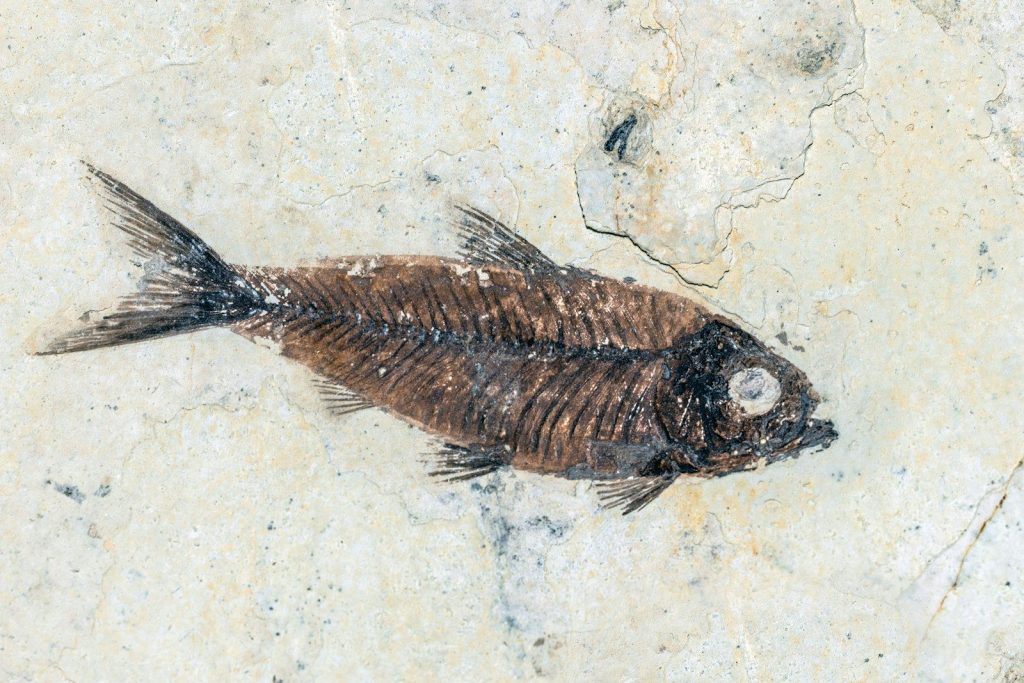
One of the clearest discoveries came from the skin surrounding the hands and feet. The preserved outline shows membranes extending between the digits. In other words, Lariosaurus valceresii had webbed hands and feet. Wrinkles are even visible in parts of the membrane between the toes. These details provide direct evidence that the limbs were adapted for moving through water rather than simply looking paddle-shaped because of their bones.
Webbing would have increased the surface area of each limb. When the animal pushed its hands and feet through the water, the larger surface could move more water and produce greater thrust. This is similar in basic principle to the advantage created by webbed feet in many living aquatic animals. The discovery does not mean Lariosaurus moved exactly like any modern species, but it gives paleontologists a much stronger foundation for reconstructing its swimming. Instead of guessing from bones alone, they can now see the actual outline of the animal’s limbs.
Powerful forelimbs may have driven rapid swimming
The preserved body outline also revealed something unexpected around the shoulders and upper front limbs. The skin behind the humerus forms a broad area that researchers believe may reflect large and powerful muscles used to pull the forelimbs backward. Some of the apparent width was probably increased when the animal was flattened during fossilization, but the researchers argue that compression alone cannot explain the unusually broad shape. Strong forelimb muscles appear to have been an important part of the animal’s anatomy.
That led the team to propose a swimming style described as flying rowing. In this model, the front limbs would have moved in a way that produced strong bursts of propulsion, somewhat comparable in basic function to the forelimb-driven swimming of modern eared seals. The comparison does not mean Lariosaurus looked or moved exactly like a seal. Instead, it suggests that its front limbs may have played a much greater role in acceleration than researchers previously recognized. The webbed hands and large retractor muscles together provide the strongest evidence for this idea.
The discovery changes ideas about nothosaur swimming
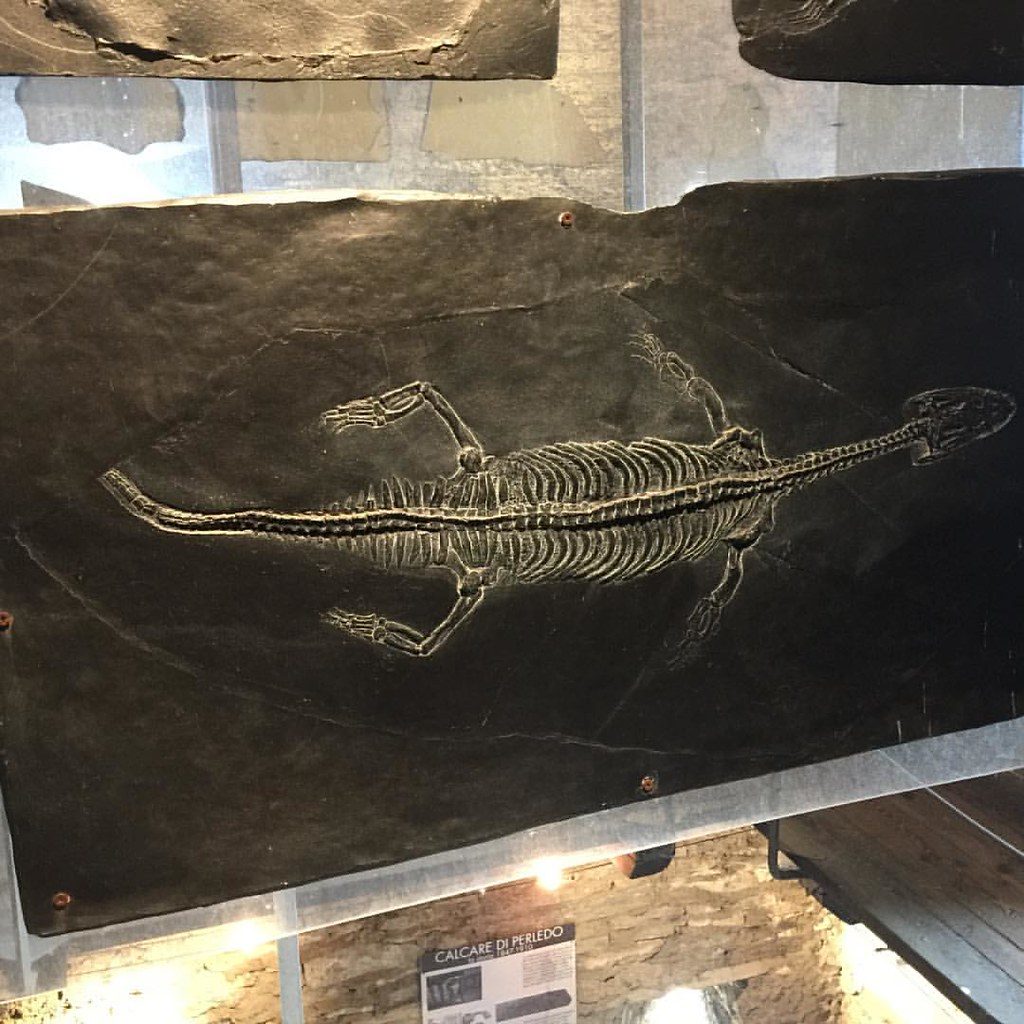
Lariosaurus belonged to a group of marine reptiles called nothosauroids. These animals were part of the larger sauropterygian lineage, which also included relatives connected to the later evolution of plesiosaurs. Earlier reconstructions often gave the tail a major role in nothosaur movement. Their long bodies and tails made tail driven propulsion seem like a reasonable explanation, especially when researchers had only skeletons available for study.
The preserved skin of this fossil suggests the picture was more complicated. Lariosaurus valceresii may have used its forelimbs much more actively than previously expected, especially when it needed quick acceleration. The researchers do not argue that the tail became useless. Instead, the evidence suggests several parts of the body may have contributed to movement in different ways. This finding is important because closely related marine reptiles did not necessarily swim in exactly the same manner. Different species could evolve different solutions for moving efficiently through the same ancient seas.
Monte San Giorgio helped preserve extraordinary detail
The quality of the fossil is closely connected to the environment in which the animal died. During the Middle Triassic, the Monte San Giorgio region was part of a warm marine setting with areas where conditions near the bottom could limit decay and disturbance. Poor circulation and low oxygen helped reduce the activity of scavengers and other organisms that would normally destroy a dead animal before fossilization could begin. Fine sediment could then cover remains and protect delicate structures.
Monte San Giorgio has produced other fossils with unusual soft tissue preservation, including skin and internal structures in several ancient animals. Even within this exceptional fossil site, however, the new Lariosaurus remains stand out. It is the first known member of the genus preserving skin across much of the body. The discovery shows why paleontologists continue returning to well-studied fossil sites. A location that has already produced important fossils for decades can still contain specimens that answer questions that researchers did not previously have enough evidence to solve.
Featured Image: “Small marine diapsid reptile (cast) Lariosaurus balsami Middle Triasic Lake Como, Italy LL.11814 (Manchester Museum) Triasic (251-205 million years ago) The climate was hot, but with wet and dry seasons. Huge rivers developed that occasionally floode” by akhenatenator is licensed under CC CC0 1.0
Leave a Reply