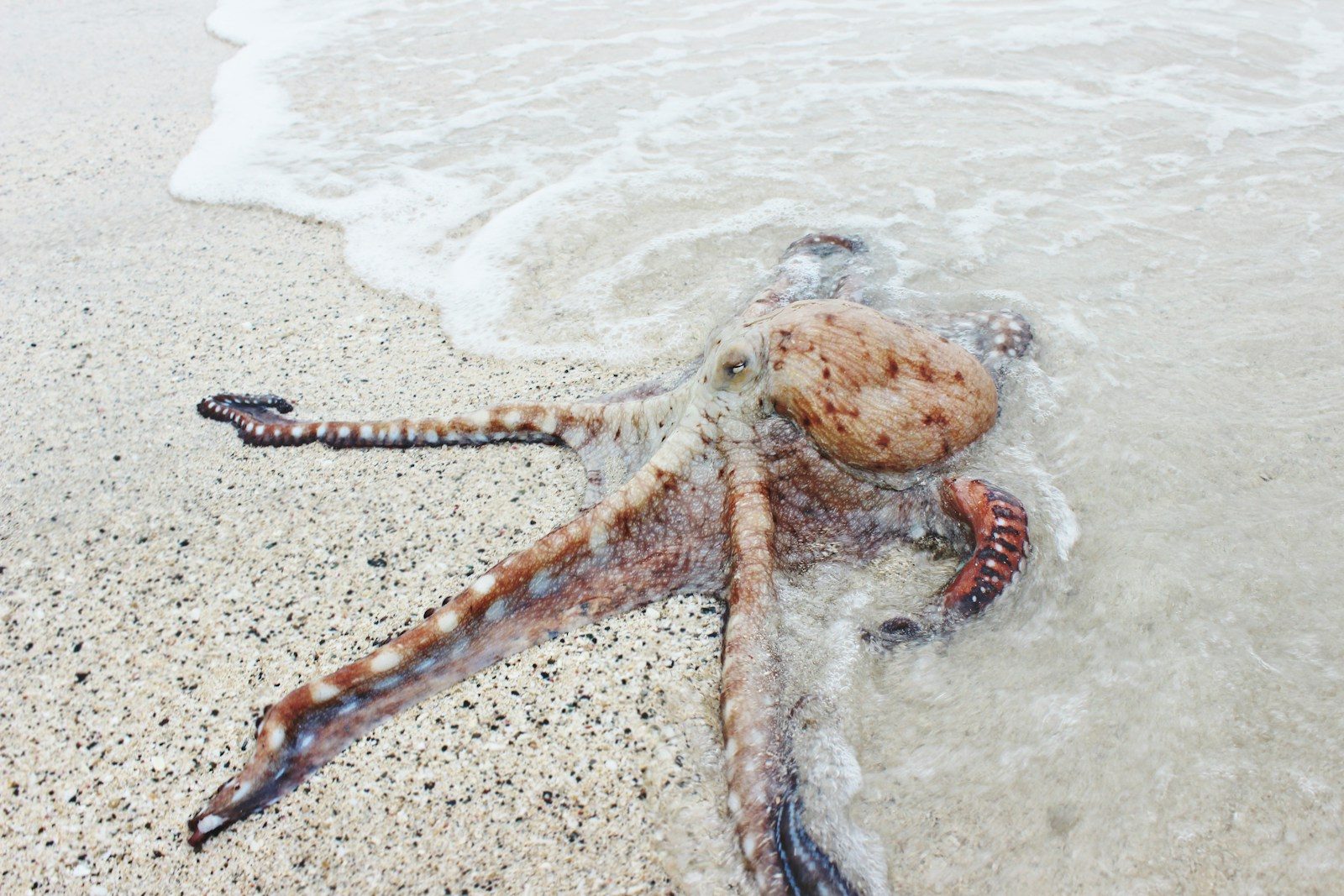
Imagine watching an octopus approach a hole that looks far too small for its body. An arm goes through first, then another, and soon the entire animal seems to pour through the opening. Octopus escapes can look impossible, but their unusual bodies help explain how they do it. Unlike animals with rigid skeletons, octopuses have soft and highly flexible bodies.
Their hard beak is one of the main limits on the spaces they can enter. Yet anatomy is only part of the story. Research also shows that octopuses can learn, explore objects, solve problems, and change their behavior when a challenge changes. Together, flexible bodies and flexible behavior make them remarkable escape artists.
Octopuses have incredibly flexible bodies
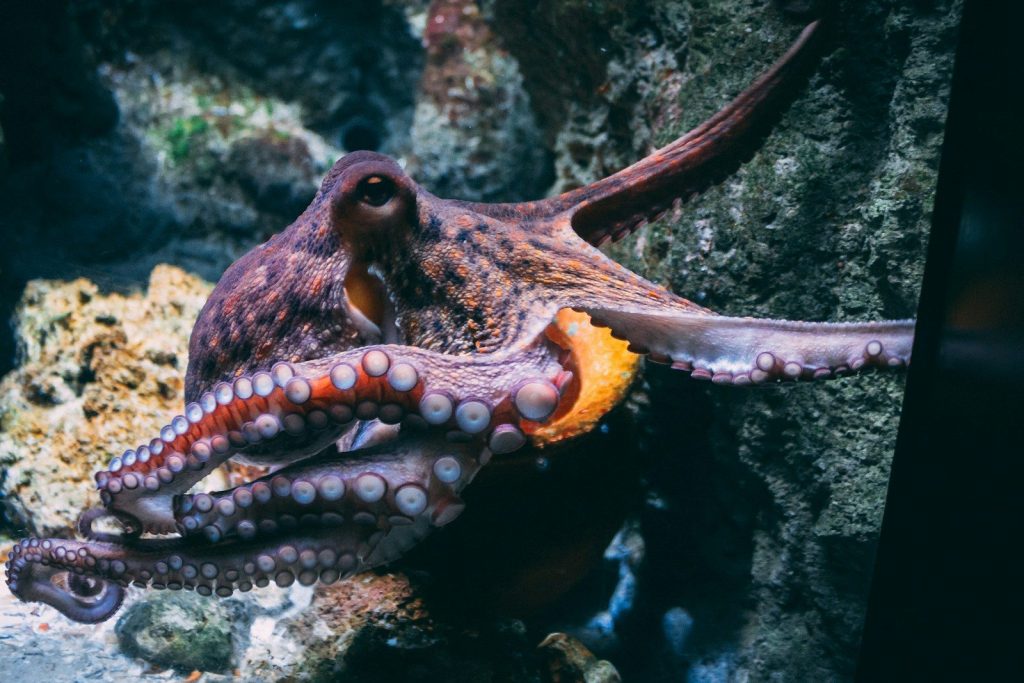
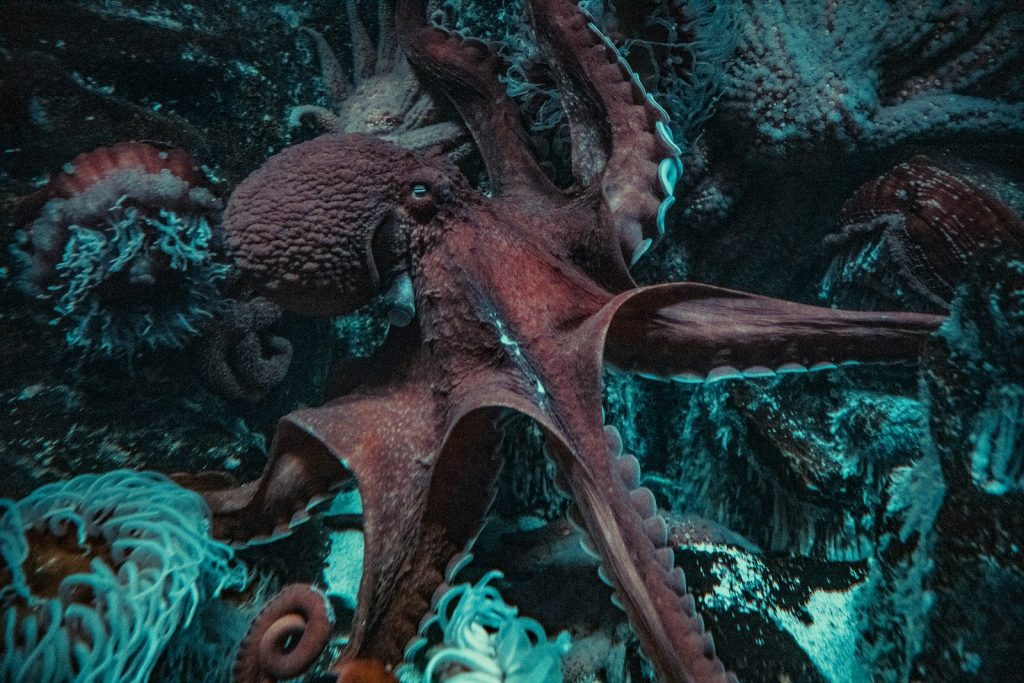
An octopus does not have a skeleton like a fish, bird, or mammal. Its body is soft and flexible, and its eight arms can bend, twist, reach, and explore in many directions. This unusual design allows the animal to change its shape as it moves through its environment. A narrow crack that would stop an animal with a rigid skeleton may present much less of a problem for an octopus.
This flexibility is one reason octopuses can appear to flow through spaces instead of simply crawling through them. Their arms can enter an opening first and interact with surfaces on the other side. The rest of the animal can then follow as its soft tissues change shape. This ability is useful far beyond aquarium escapes. In nature, a flexible body can help an octopus enter cracks, find shelter, search for food, and quickly move away from danger.
The hard beak sets an important limit
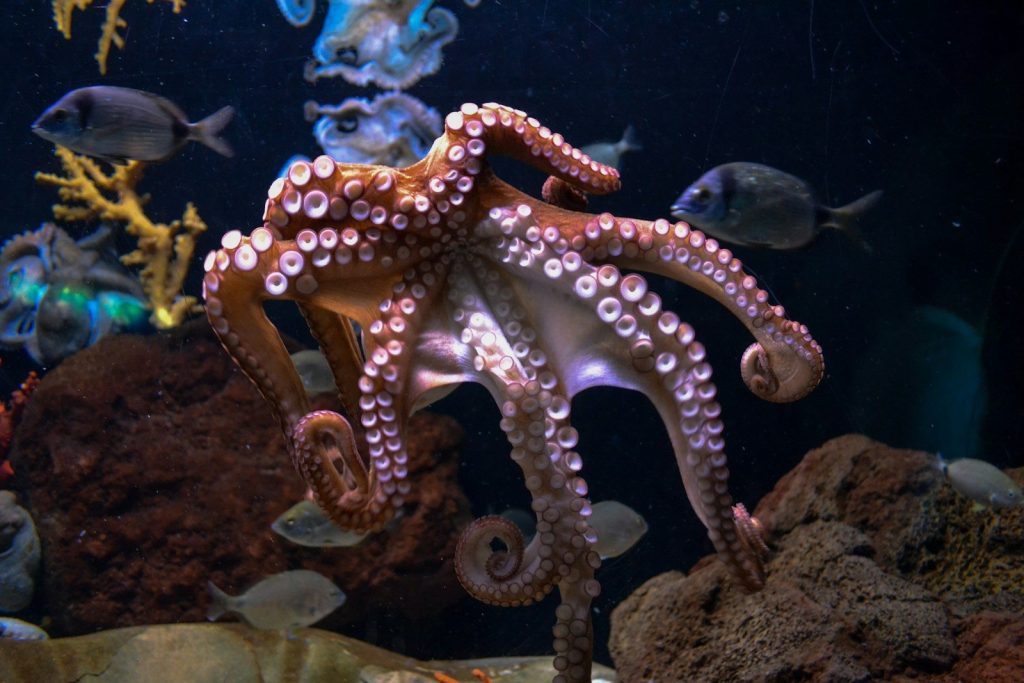
Octopuses may look completely soft, but they do have a hard beak. That structure creates an important physical limit when the animal tries to enter a small opening. Smithsonian describes the beak as the only hard part of the giant Pacific octopus’s body and explains that the animal can fit through an opening only slightly larger than its beak.
This helps explain videos that appear to show an octopus passing through an impossibly small gap. The viewer naturally compares the opening with the animal’s normal body size. That comparison can be misleading because the octopus is capable of changing its shape dramatically. If the hard parts can pass through an opening, much of its softer body may be able to follow. The result can look almost impossible when viewed from the perspective of animals with bones and rigid body shapes.
Eight arms help an octopus explore
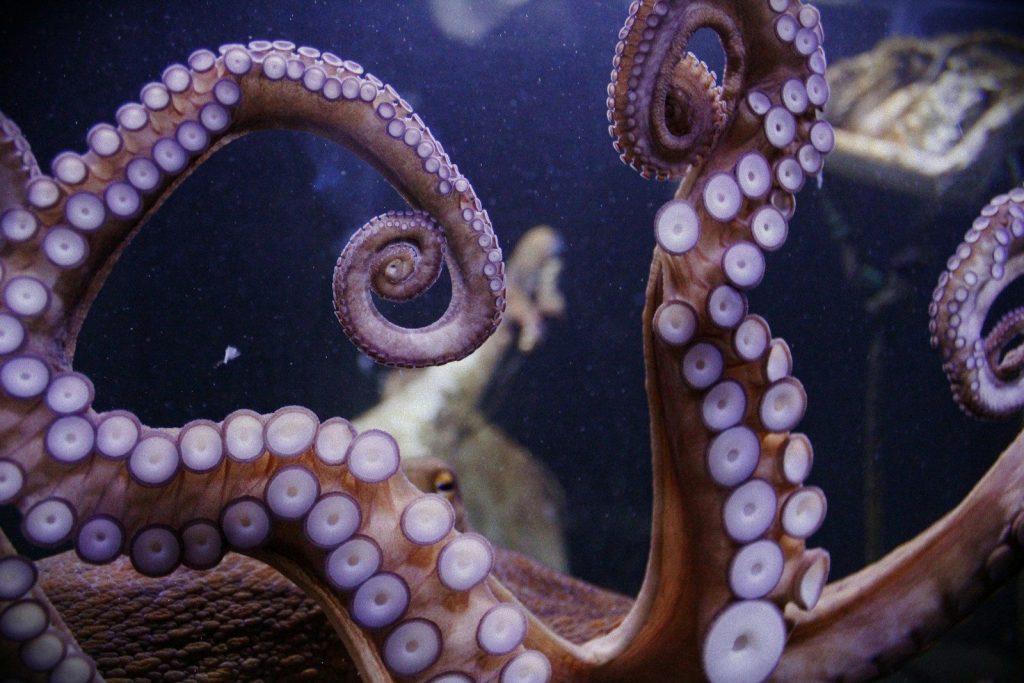
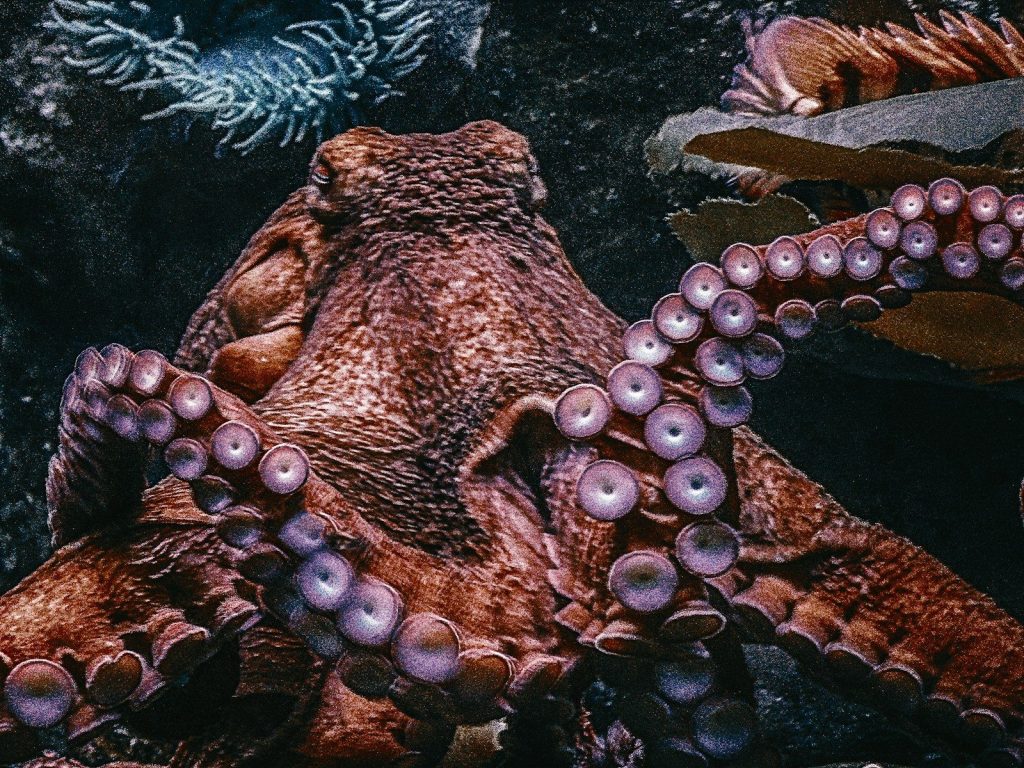
The arms are more than flexible tools for movement. Octopus arms have extraordinary sensory and motor abilities that allow the animal to explore objects and surfaces around it. This becomes important when an octopus meets an unfamiliar barrier. Rather than depending only on its eyes, it can physically investigate openings and objects with its arms. Research into octopus biology shows an unusual relationship between the animal’s nervous system, flexible arms, senses, and behavior.
That combination can make an octopus appear almost methodical as it works around an obstacle. One arm may explore an opening while others remain attached to nearby surfaces. The animal can manipulate its surroundings while controlling a body with an enormous range of possible movements. Researchers have noted that this flexibility actually creates a difficult control problem because the arms can move in so many different ways. The octopus’s nervous system has evolved to manage this unusual body successfully.
Octopuses can learn how to solve problems
Physical flexibility alone does not explain everything scientists observe. Experiments have shown that octopuses are capable of learning solutions to problems. In one study, common octopuses were presented with transparent glass jars containing crabs. The jars were closed with plastic plugs. Over repeated trials, the animals became better at removing the plug and reaching the food, providing evidence that they could learn how to solve the task.
Another experiment gave seven common octopuses a more complicated series of challenges. They first learned to open a container and later had to move it through a tight opening in a barrier. Researchers then changed the orientation and conditions of the task. All seven animals eventually succeeded at every level, and they adapted quickly after conditions changed. The researchers concluded that the results showed behavioral flexibility rather than a response that worked only under one fixed set of conditions.
Escape behavior combines body and brain
This combination of anatomy and behavior helps explain why octopus escape stories are so believable. Smithsonian describes octopuses as expert escape artists and notes that they can untie knots and open jars and other containers. Their soft bodies allow them to use openings that would stop many other animals, while their ability to explore and manipulate objects gives them more ways to respond when they meet a barrier.
However, it is important not to turn every escape into proof of humanlike planning. An octopus leaving an enclosure does not automatically mean it studied the entire situation and developed a detailed plan in advance. Scientists test intelligence through controlled experiments because a single behavior can have several explanations. What research does support is impressive enough. Octopuses can learn from experience, explore unfamiliar objects, remember information, and change their behavior when a problem changes.
Octopus intelligence evolved very differently
Octopus intelligence is especially interesting because these animals are invertebrates. Their evolutionary path is very different from that of humans and other mammals. Yet they still show complex behavior and impressive learning abilities. Scientists have therefore used octopuses to explore broader questions about how intelligence can develop in animals with completely different bodies and nervous systems. Their abilities remind researchers that complex behavior does not require a mammal-shaped body or brain.
Their bodies may actually be an important part of understanding their intelligence. An octopus has to control eight extremely flexible arms while processing information from the environment and reacting to changing situations. Its nervous system and body work together in ways unlike those of most familiar animals. This combination helps explain why an octopus squeezing through a tiny opening is more than a strange physical trick. It demonstrates how an unusual body and flexible behavior can work together to solve problems in a challenging environment.
Featured Image: Photo by Bryan Burgos on Unsplash
Leave a Reply