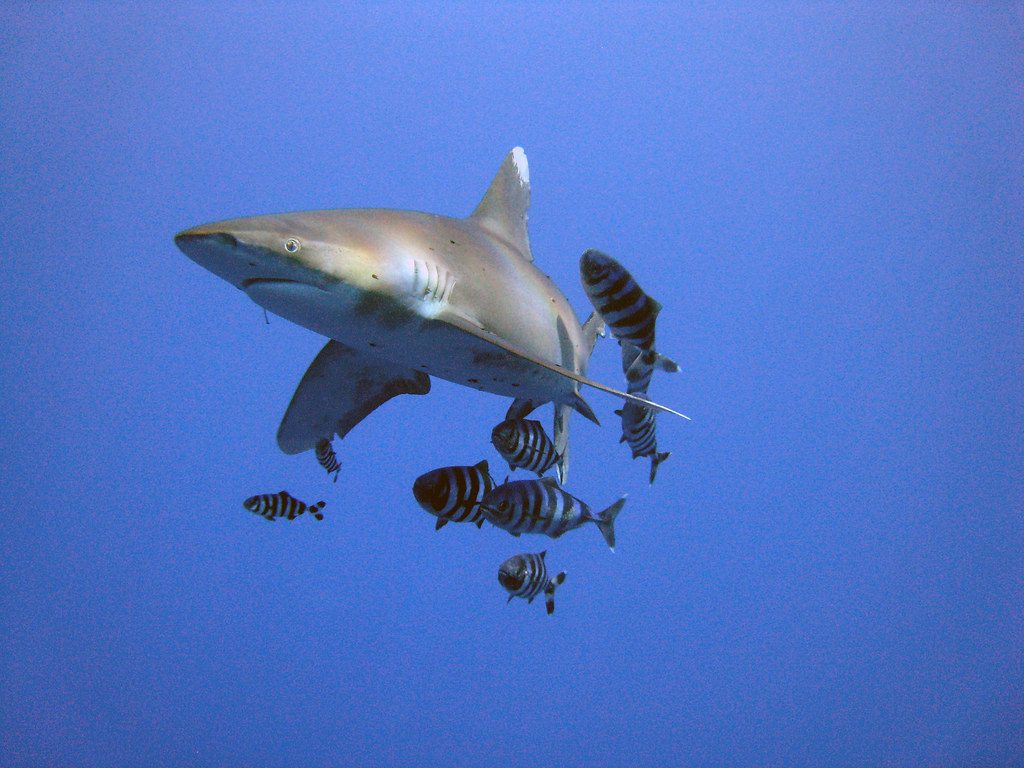
Far from shore, where rescue may take days to arrive, one shark earned a reputation that few others could match. The oceanic whitetip shark spent centuries roaming the open ocean, often following ships and investigating anything floating on the surface. Its behavior around shipwrecks led many sailors to fear it more than coastal sharks. Yet today, this famous predator faces a very different challenge.
Once among the most common large sharks in the open sea, it has declined dramatically across much of its range. This article explores why the oceanic whitetip became so feared, how it behaves, and why protecting it has become an important conservation goal.
A shark built for the open ocean
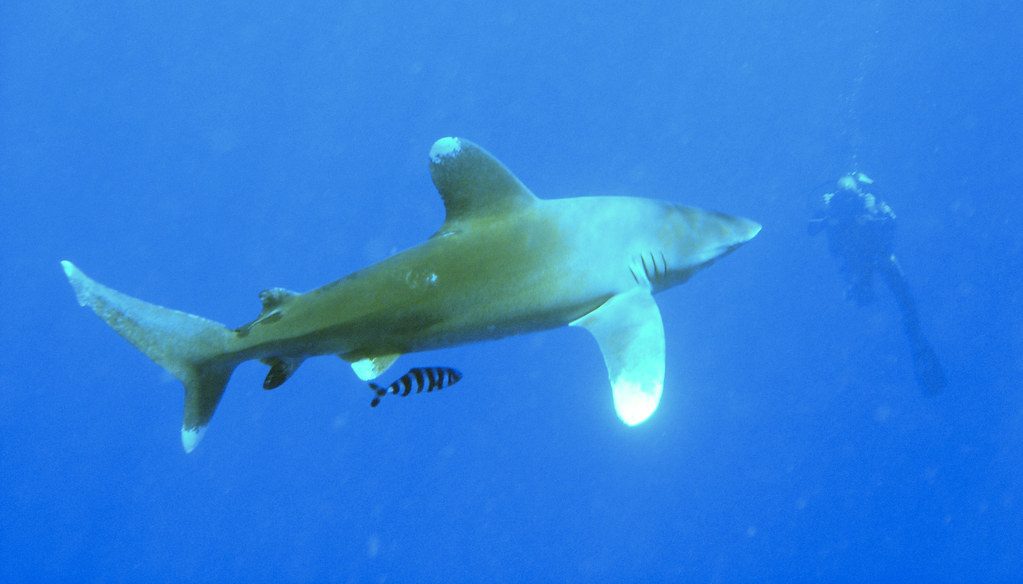
Unlike many sharks that stay near coastlines, the oceanic whitetip spends most of its life far offshore in warm tropical and subtropical waters. It is easy to recognize by its long, rounded pectoral fins marked with bright white tips.
This shark usually patrols the upper layers of the open ocean, where it searches for fish, squid, and other marine animals. Because it lives so far from land, people rarely encounter it during normal beach activities.
Why sailors feared this species
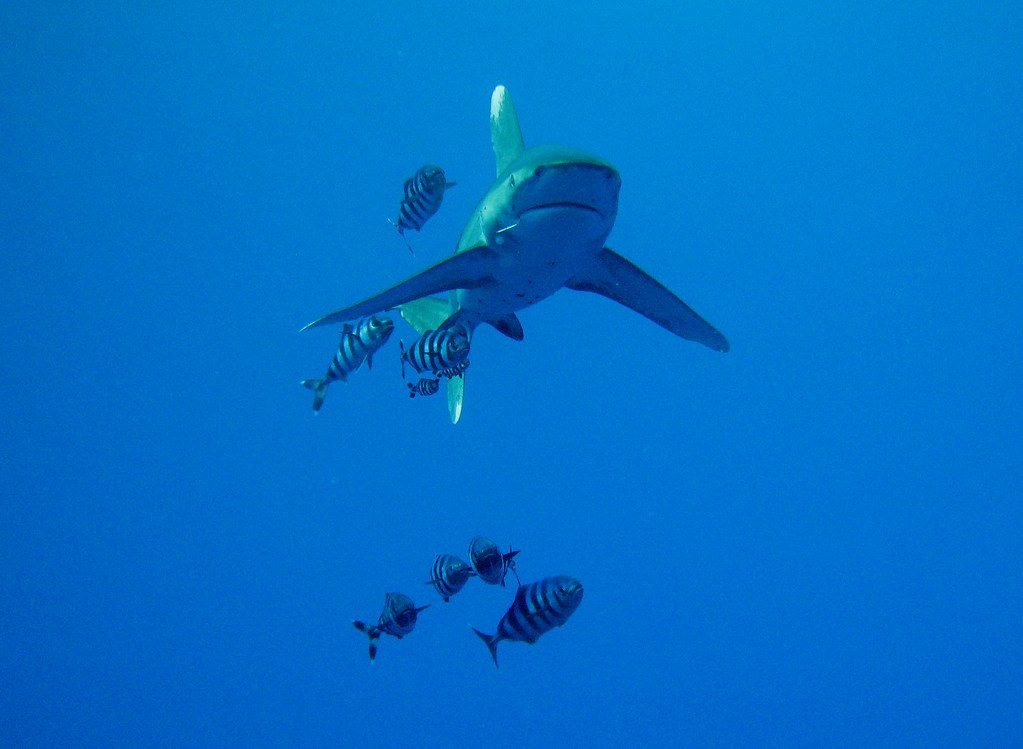
For centuries, sailors called oceanic whitetips “sea dogs” because they often followed ships crossing the open ocean. They were known to investigate floating objects and animals struggling near the surface.
This behavior became especially significant during shipwrecks and aircraft crashes. Survivors waiting in the water sometimes encountered oceanic whitetips, contributing to the shark’s reputation as one of the most feared predators far from shore. Although some historical fatalities are linked to this species, exact numbers remain uncertain.
Curiosity makes them effective hunters
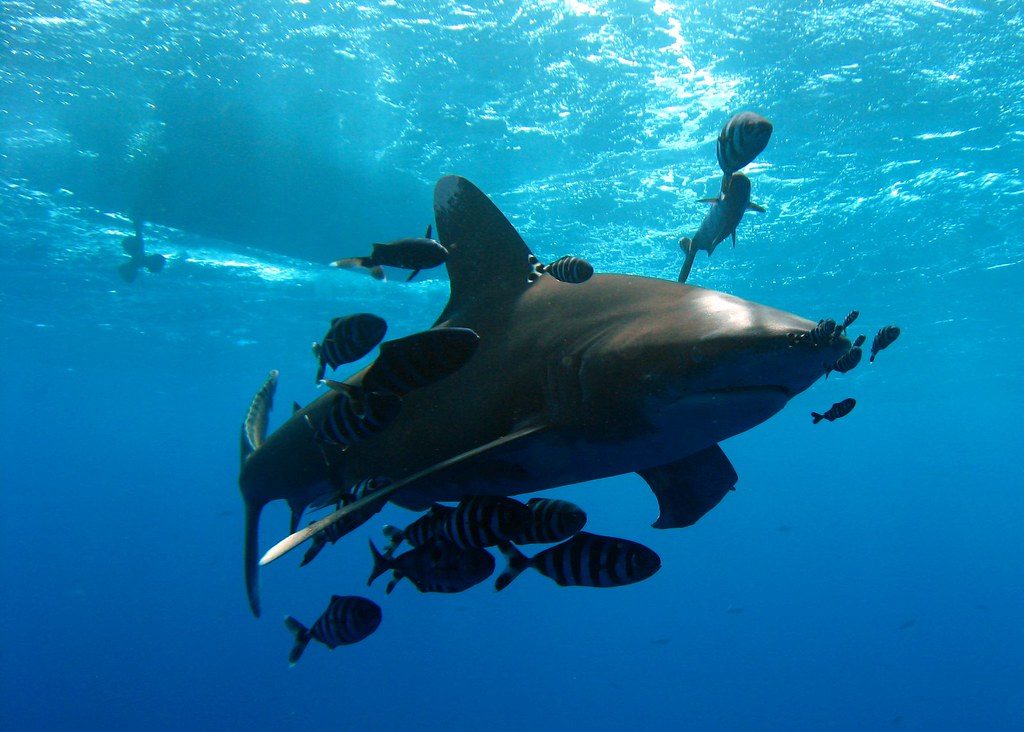
Oceanic whitetips are opportunistic predators that investigate potential food sources carefully. They often approach slowly before deciding whether to continue or leave the area.
Their varied diet includes fish, squid, and other marine animals. This flexible feeding strategy helped them become one of the most successful predators in the open ocean for thousands of years.
A species now facing serious decline
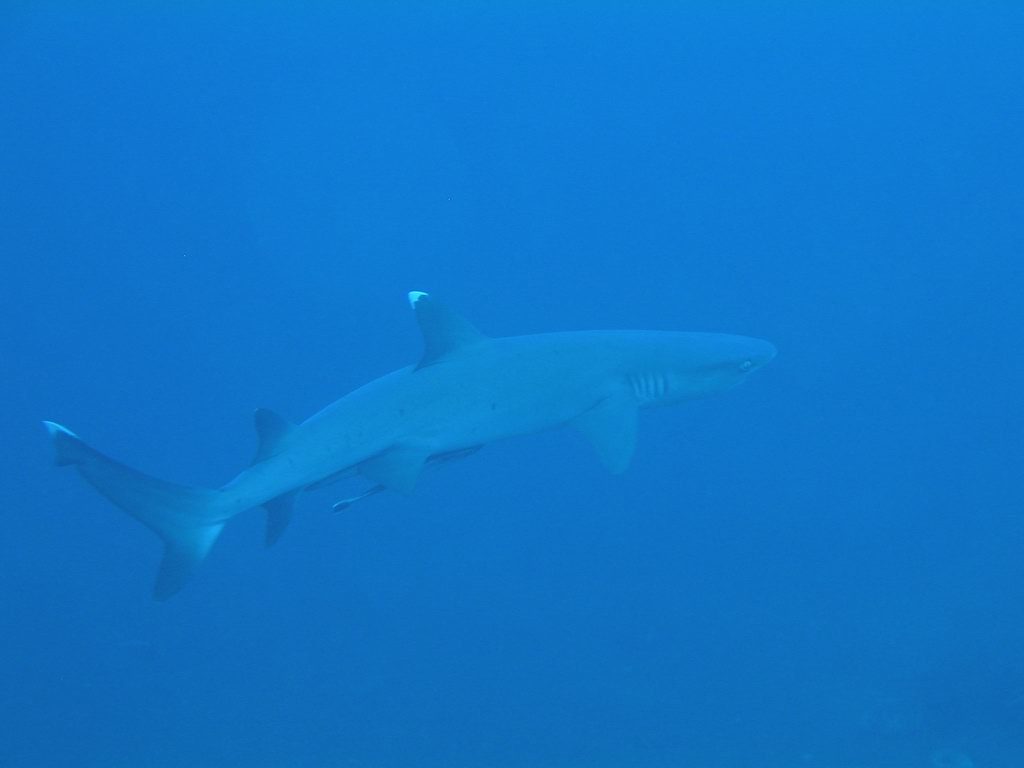
Despite their fearsome reputation, oceanic whitetip sharks are now far more threatened by humans than humans are by them. Commercial fishing, accidental bycatch, and the international shark fin trade have caused populations to fall sharply across much of their range.
Because of these declines, the species is listed as Critically Endangered by the International Union for Conservation of Nature. In many areas where they were once common, sightings have become increasingly rare.
Conservation is becoming the priority
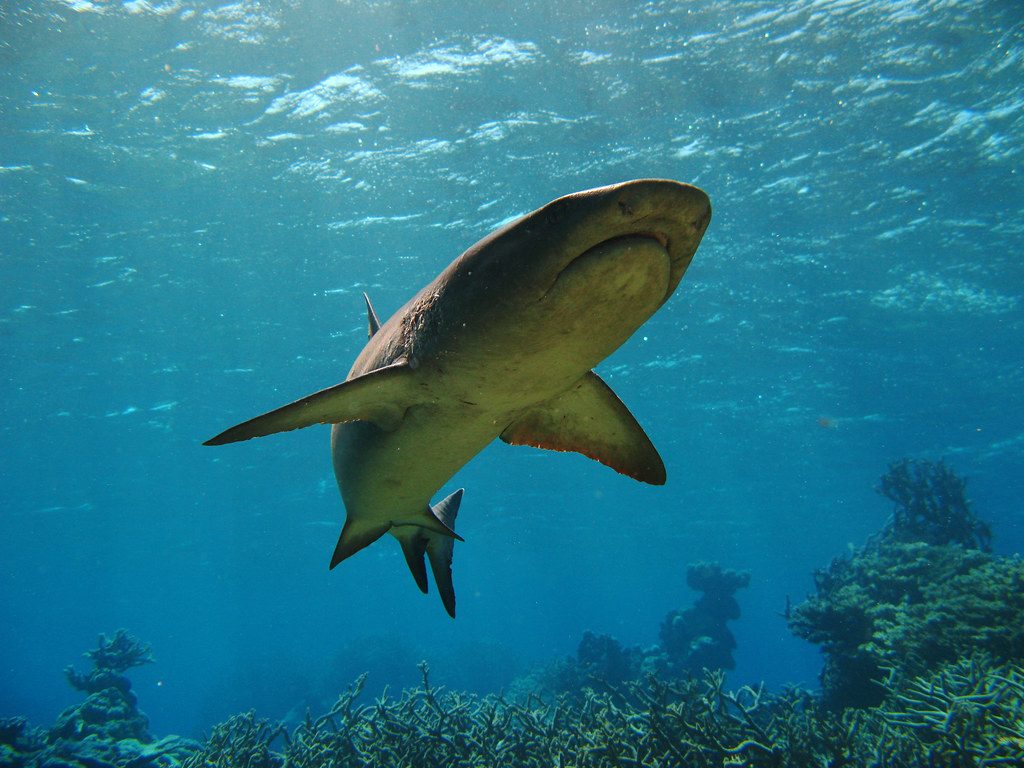
Governments and conservation organizations have introduced protections aimed at reducing fishing pressure on oceanic whitetips. International agreements now limit or prohibit parts of the commercial trade involving this species.
Scientists continue tracking shark populations to better understand migration routes, breeding areas, and the effectiveness of conservation efforts. These studies help guide future protection measures.
A predator worth protecting
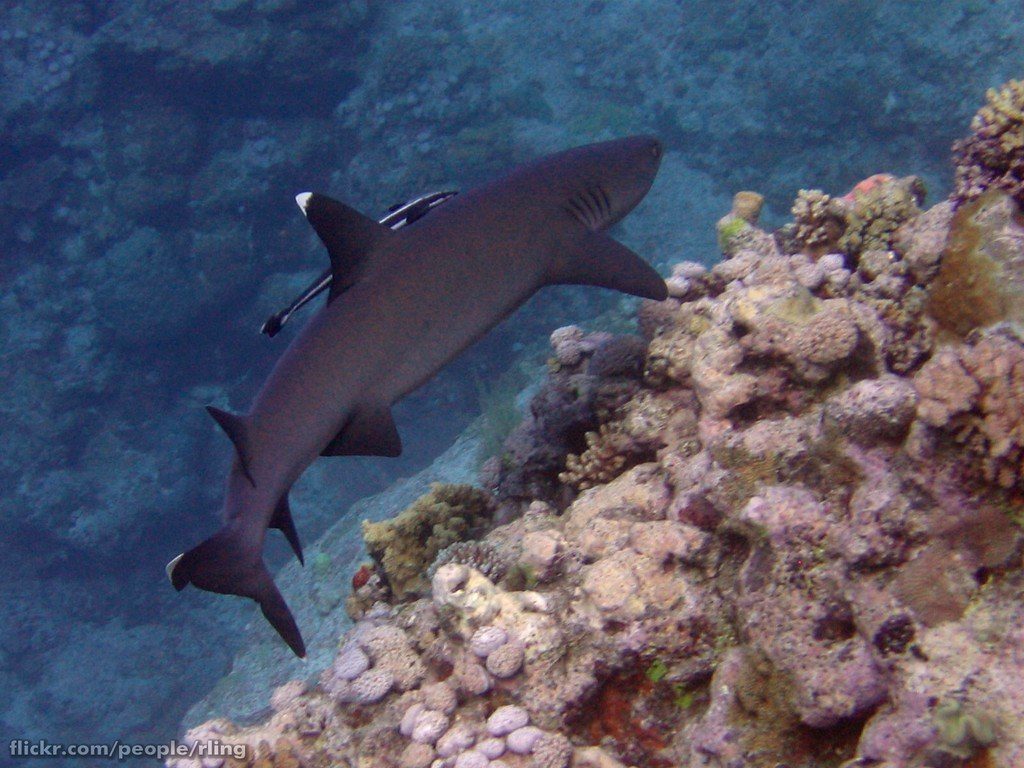
The oceanic whitetip remains one of the open ocean’s most remarkable predators. Its history explains why generations of sailors respected and feared it, but its future depends on successful conservation rather than old legends.
Understanding the true story of this shark replaces myth with science. It reminds us that even powerful apex predators can become vulnerable when human activity changes the balance of the ocean.
Leave a Reply