Earth’s oceans and rivers were once filled with strange creatures long before dinosaurs appeared. Many ancient fish groups vanished during mass extinctions, but a handful survived and continue to swim today. These remarkable animals are often called “living fossils” because their lineages stretch back hundreds of millions of years.
While these fish have continued to evolve, they still preserve traits that help scientists understand the history of life on Earth. From air-breathing fish to jawless predators and deep-sea survivors, these ancient species provide clues about the evolution of vertebrates, limbs, lungs, and even the human body. Here are six of the most fascinating ancient fish lineages still alive today.
Coelacanth
The coelacanth became one of the most famous fish in the world after a living specimen was discovered off the coast of South Africa in 1938. Before that, scientists believed the species had disappeared about 65 million years ago. The discovery shocked researchers and became one of the greatest zoological surprises of the twentieth century.
This deep-sea fish belongs to a group of lobe-finned fishes that dates back roughly 400 million years. Genetic studies later showed that lungfish, not coelacanths, are the closest living relatives of land vertebrates. Researchers also found that many coelacanth genes evolve more slowly than those of most other vertebrates.
Sturgeon
Sturgeons are large freshwater fish protected by rows of bony plates. Their lineage extends back more than 200 million years, making them among the oldest fish groups still alive today. Fossils show that modern sturgeons still resemble many of their ancient ancestors.
Scientists studying sturgeon genomes discovered evidence of an ancient whole-genome duplication that occurred about 180 million years ago. Despite carrying multiple sets of chromosomes, sturgeons have experienced relatively slow evolutionary change compared with many other vertebrates. Today, many species face threats from dams, pollution, habitat loss, and the caviar trade.
Lungfish
Lungfish are extraordinary because they can breathe air using true lungs. They belong to the same broad group of lobe-finned fishes that eventually gave rise to four-limbed vertebrates, including humans. Some species can survive droughts by burying themselves in mud and slowing their metabolism.
Recent genome studies have made lungfish even more remarkable. Researchers found that the South American lungfish possesses the largest animal genome ever sequenced, containing about 91 billion DNA bases, roughly 30 times larger than the human genome. These discoveries are helping scientists understand how vertebrates first adapted to life on land.
Lamprey
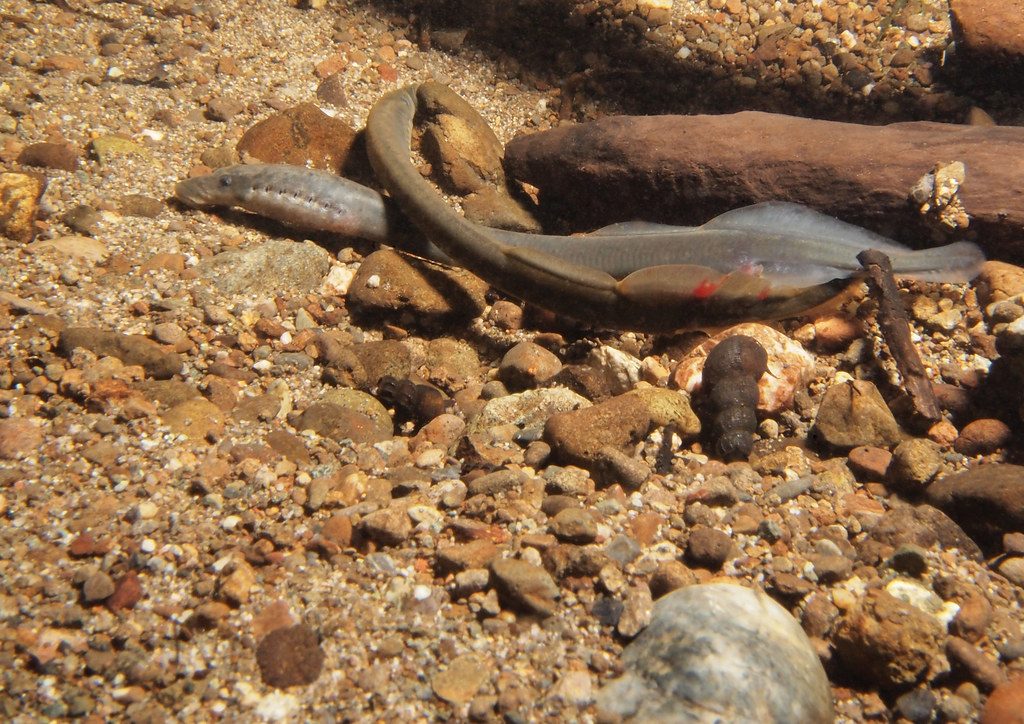
Lampreys look unlike most living fish. They have long eel-like bodies and circular mouths lined with rows of teeth. Some species attach themselves to other fish and feed on blood and body fluids, giving them a fearsome reputation.
Their lineage stretches back more than 340 million years. Lampreys split from the evolutionary branch leading to jawed vertebrates before jaws and paired fins became common. Despite their primitive appearance, researchers have found that important parts of lamprey brain development use genetic systems similar to those found in humans, making them valuable for scientific research.
Hagfish
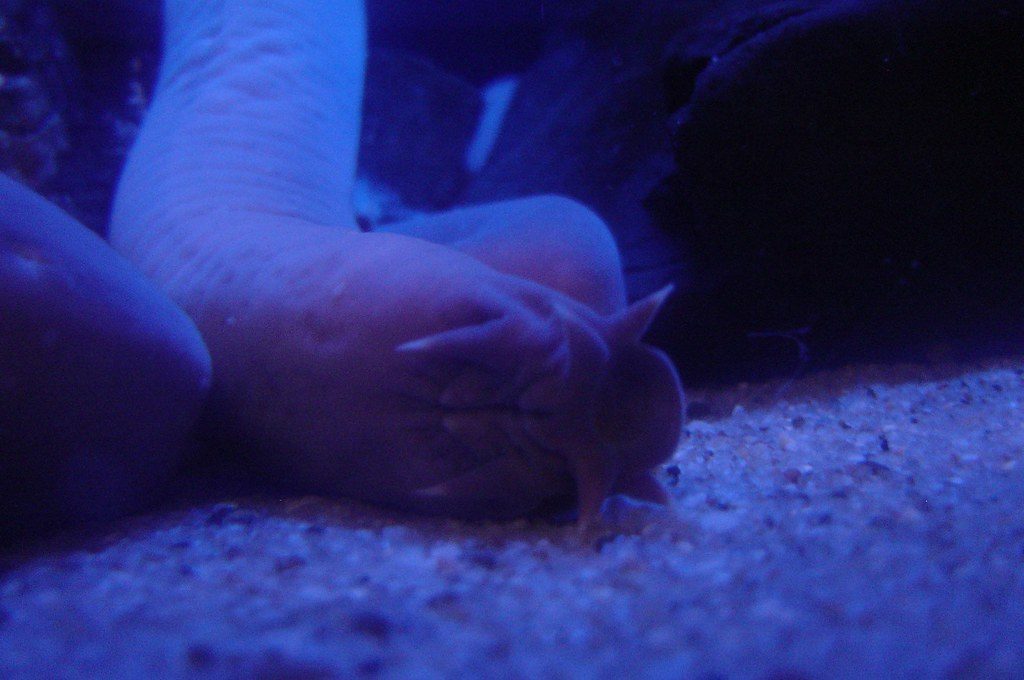
Hagfish are famous for their ability to produce huge amounts of slime when threatened. This mucus can clog predators’ gills, giving the hagfish time to escape. They also lack jaws and have a body structure unlike that of most modern fish.
Originating around 500 million years ago, hagfish are among the oldest branches of the vertebrate family tree. Recent genome research has helped scientists better understand early vertebrate evolution, revealing major genomic changes, chromosome rearrangements, and the loss of genes associated with structures such as eyes and cartilage. These findings offer insights into the deep ancestry of all vertebrates, including humans.
Paddlefish
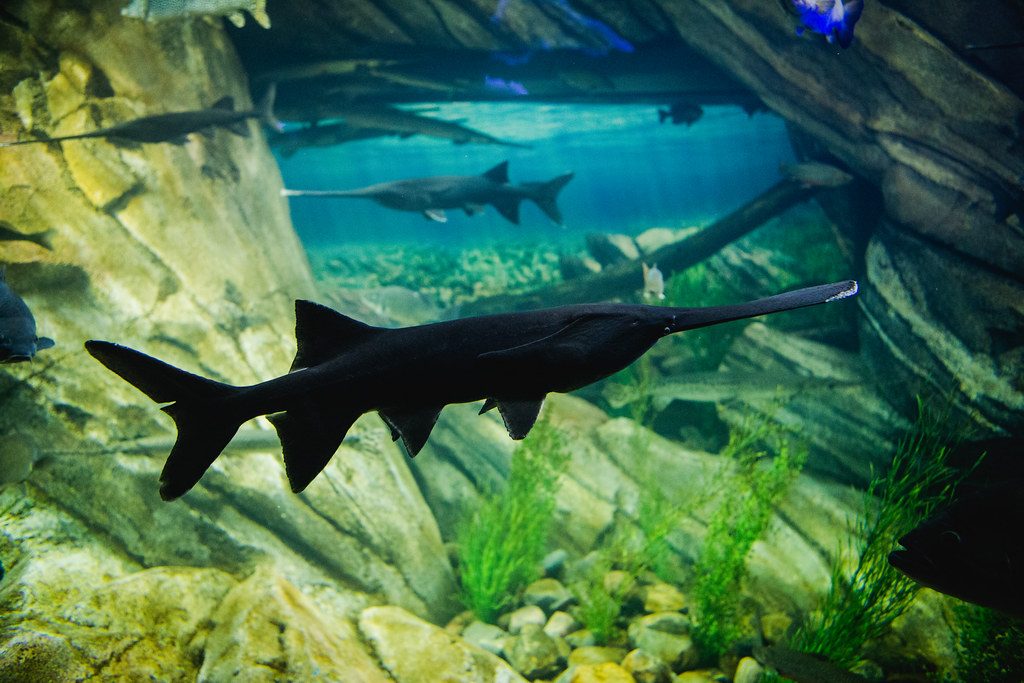
The American paddlefish is one of the strangest freshwater fish alive today. It has a long paddle-shaped snout covered with sensors that help detect tiny prey in muddy rivers. Paddlefish belong to the same ancient order as sturgeons, with roots that may extend back more than 300 million years.
Genetic studies have shown that paddlefish experienced ancient whole-genome duplication events, similar to those found in sturgeons. These genetic changes may have helped them survive major extinction events throughout Earth’s history. Sadly, their relatives have not all been as fortunate. The Chinese paddlefish was recently declared functionally extinct, leaving the American paddlefish as the only surviving member of its family.
Leave a Reply