Colorado’s new House Bill 26-1342, titled “Negligently Luring Bears,” took effect on August 12, 2026. The law changes when someone can be cited for leaving food or edible waste where it has a reasonable probability of attracting a wild bear.
Previously, prosecutors had to deal with a standard based on intentionally luring a bear. The enacted law instead covers a person who knowingly places food or edible waste in the open under circumstances where there is a reasonable probability that a bear will be attracted to it.
First offenders no longer get a warning

One significant change is the removal of Colorado’s mandatory warning for a first violation. Under the previous framework, the first offense resulted in a warning before later violations could bring criminal penalties.
The new law makes qualifying conduct a misdemeanor without requiring officials to issue that initial warning. That gives wildlife authorities greater ability to intervene when human food sources are creating potentially dangerous interactions between people and black bears.
Repeat violations can cost up to $5,000

Colorado also substantially increased the maximum financial penalty for persistent violations. A third or subsequent offense can now result in a fine of as much as $5,000, compared with a previous maximum of $2,000.
The change is meant to put more responsibility on people to prevent bears from gaining access to human food. The legislation specifically identifies food and edible waste, while providing exceptions including certain agricultural activities and food growing in the open before harvest.
Human food can create dangerous bears
The problem extends beyond a bear simply getting into someone’s garbage. When bears repeatedly obtain food around people, they can become accustomed to visiting homes, campsites, and other developed areas instead of relying entirely on natural food sources.
That can increase the potential for conflicts with people and ultimately create serious consequences for the animals themselves. Colorado lawmakers specifically cited the importance of properly managing attractants to prevent black bears from being drawn into situations involving human conflict.
Colorado has already removed many bears
Colorado’s legislation points to earlier conflict statistics to demonstrate the scale of the problem. In 2024, 68 black bears were relocated, and 98 were euthanized following incidents involving humans, with the bill stating that many of those incidents resulted from human negligence.
Those figures help explain why lawmakers focused on prevention rather than waiting until a bear has repeatedly entered developed areas. Keeping edible waste and other food sources inaccessible can reduce opportunities for bears to associate neighborhoods with easy meals.
The measure passed despite opposition
House Bill 26-1342 did not pass unanimously. The Colorado House approved it 40 to 25 on April 22, while the Senate passed it 23 to 11 on May 8. Governor Jared Polis signed the measure on May 27.
The measure was sponsored primarily by Representatives Katie Stewart and Meghan Lukens and Senator Janice Marchman. Its effective date was August 12, making its tougher enforcement provisions part of Colorado law during the busy summer period for human and bear interactions.
Prevention could protect people and bears
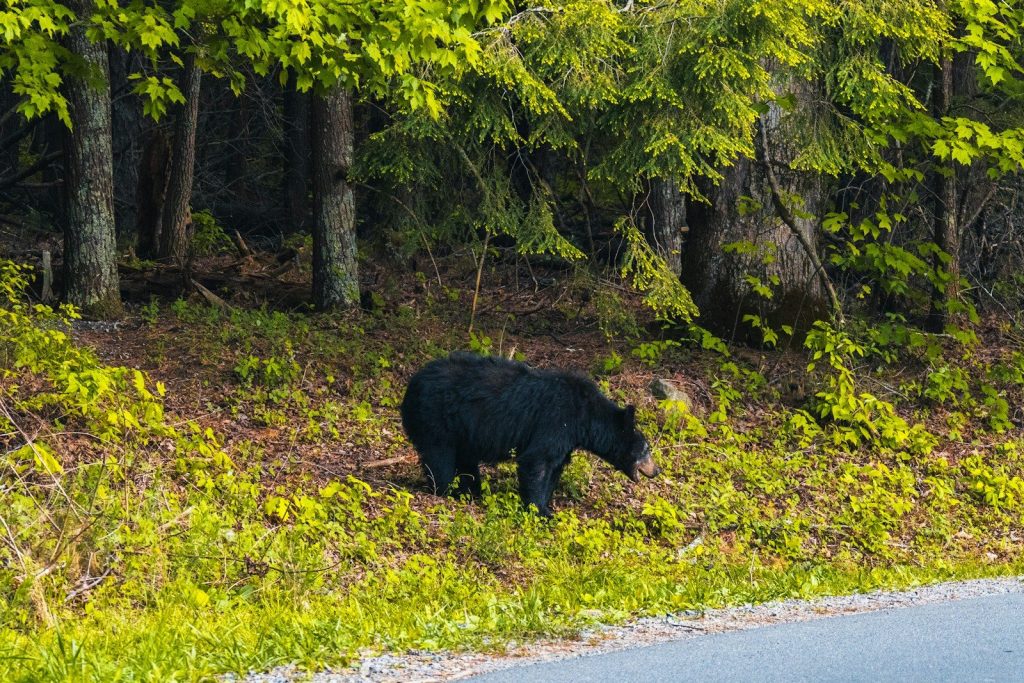
Colorado’s approach places greater responsibility on people before a situation develops into a serious wildlife conflict. Rather than focusing only on deliberately feeding a bear, the law can apply when someone knowingly leaves edible material where there is a reasonable probability of attracting one.
That distinction matters because bears do not need to be intentionally fed to become attracted to human food sources. By reducing access to edible waste before bears repeatedly return, Colorado is trying to prevent encounters that can end with property damage, risks to people, and removal of the animal.
Featured Image: Photo by Zdeněk Macháček on Unsplash
Leave a Reply