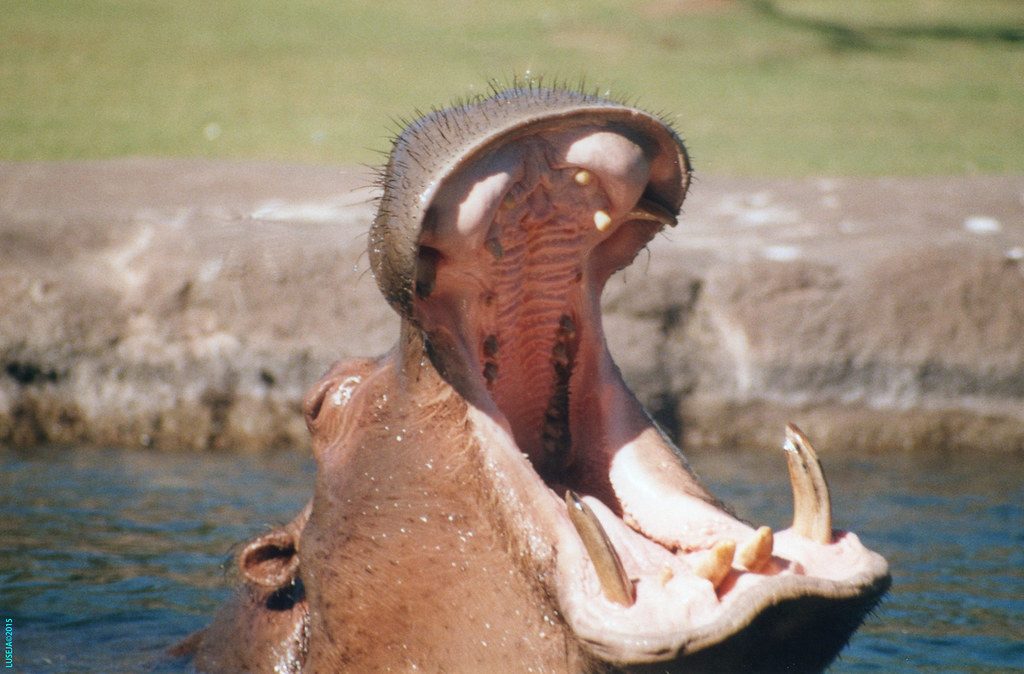
A hippopotamus resting quietly in a river can appear remarkably calm. That impression can change quickly when the enormous animal perceives something nearby as a threat. Hippos are powerful semiaquatic mammals capable of responding aggressively when their space is disturbed.
Despite their intimidating reputation, hippos are primarily herbivores rather than predators hunting people for food. Their potential danger comes instead from their enormous size, powerful jaws, and defensive behavior, particularly around the waterways where they spend much of the day.
Hippos can weigh several tons
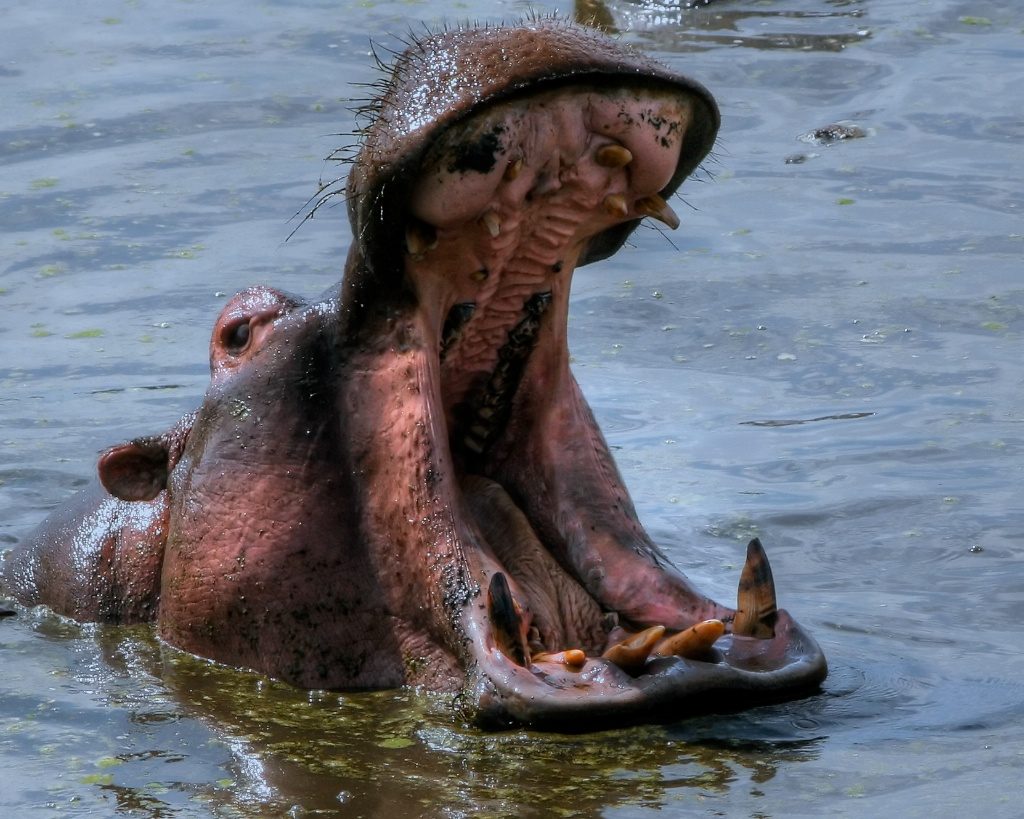
The common hippopotamus is one of the world’s largest land mammals. Adult males can weigh thousands of pounds, with exceptionally large individuals approaching 10,000 pounds.
Their bodies may appear rounded and cumbersome, but their appearance is deceptive. A hippo combines tremendous mass with strong legs and surprisingly fast movement over short distances.
They can move remarkably fast on land
Running away from a hippo is not as simple as its body shape might suggest. National Geographic reports that hippos can reach approximately 22 mph over short distances on land.
San Diego Zoo gives a more conservative figure of up to 14 mph when a hippo is agitated. Exact maximum-speed estimates, therefore, vary, but both sources make the important point clear: a hippo can move much faster than its appearance suggests.
Water is where hippos spend their days
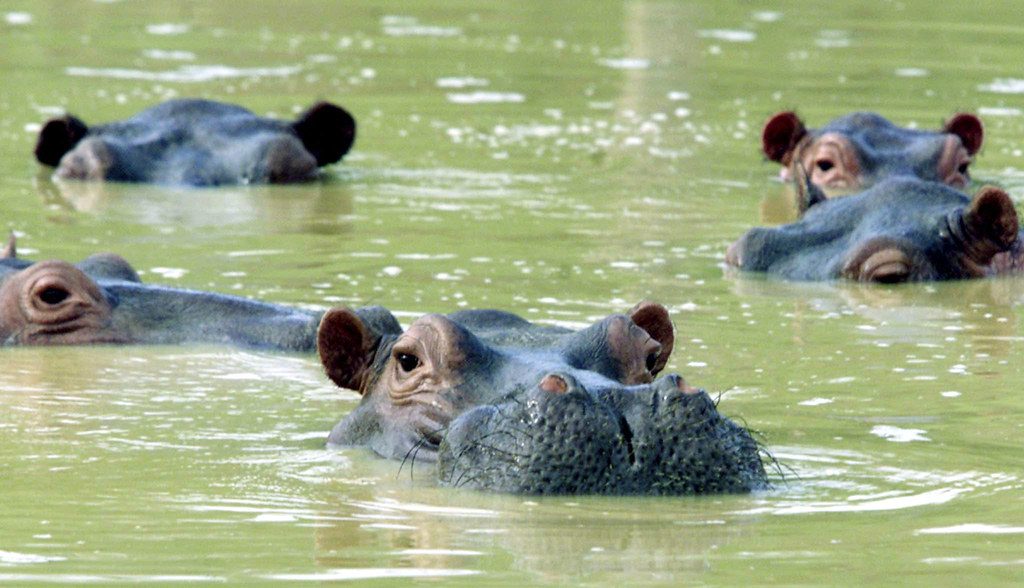
Hippos typically spend daylight hours in rivers, lakes, and mud to keep their sensitive skin wet and protected from the sun. They usually emerge after sunset to feed on grass.
Their aquatic habitat is also an important social space. Adult males can defend areas of water, making unexpected encounters with boats or other animals potentially dangerous.
Their mouths contain formidable teeth
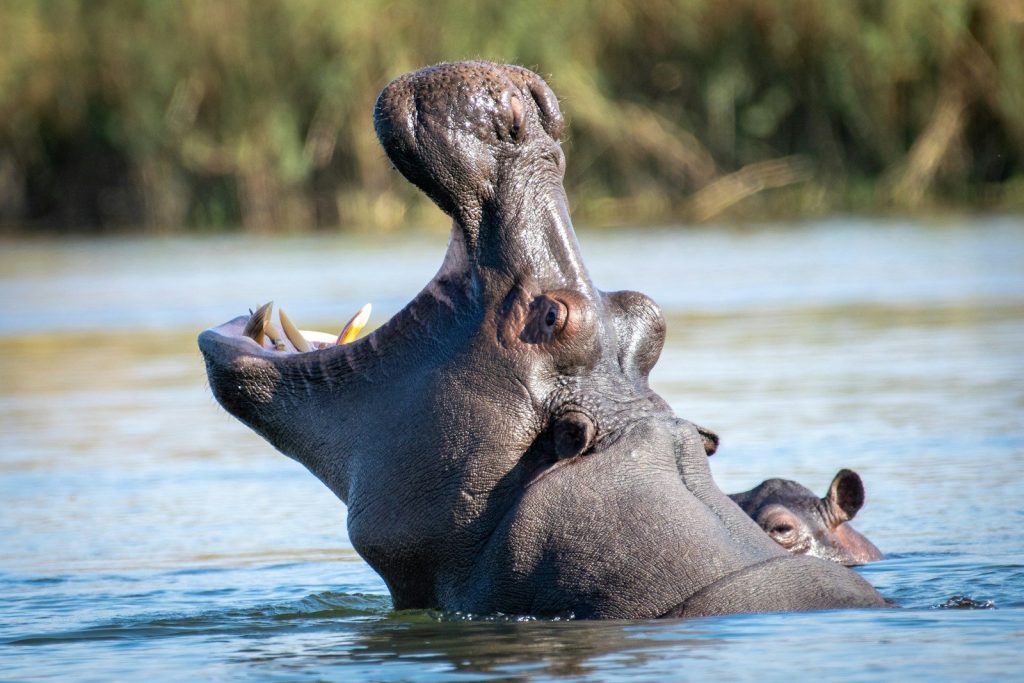
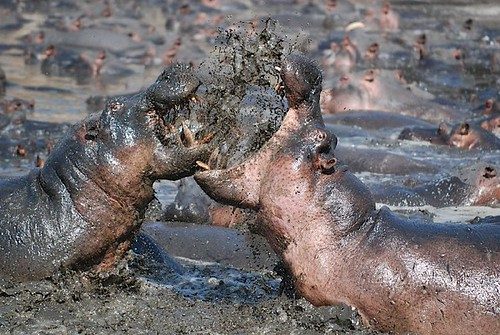
A hippo’s enormous mouth is one of its most recognizable features. National Geographic reports that the canine teeth can grow as long as 20 inches and are primarily used during fighting rather than for chewing vegetation.
When confronted by another hippo or a perceived threat, those teeth become effective defensive weapons. This helps explain how an animal that survives primarily on vegetation can still pose a serious danger during a close encounter.
Hippos don’t actually swim like fish
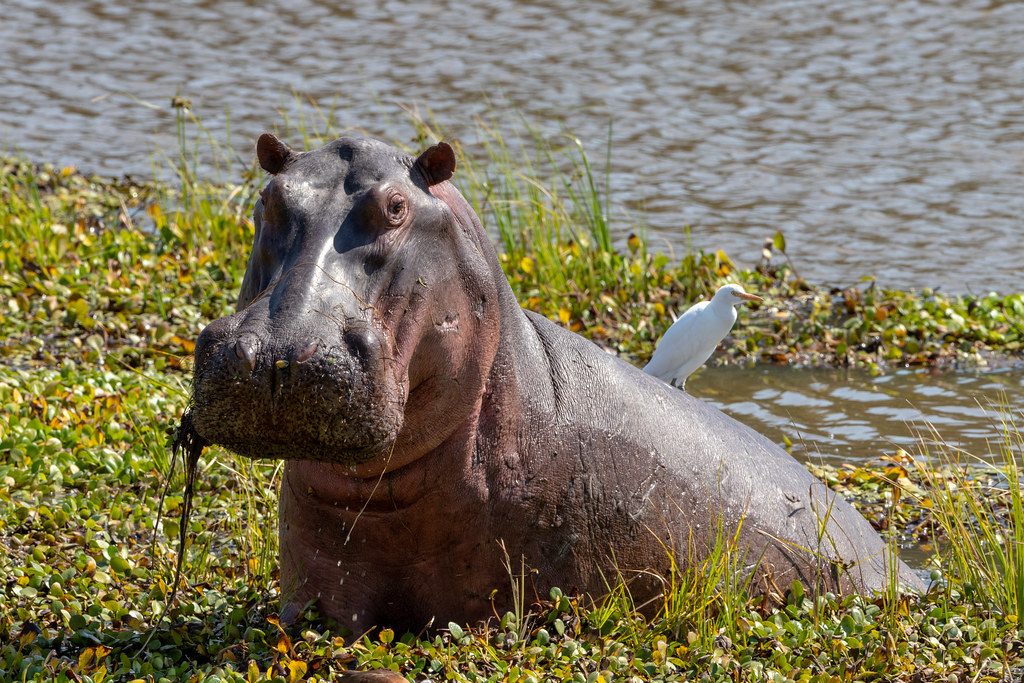
Hippos spend much of their lives surrounded by water, but their method of underwater movement is unusual. Rather than continuously swimming with conventional strokes, they frequently push against the bottom.
Their dense bodies allow them to remain submerged while walking or bounding along river and lake beds. This can make their movement surprisingly difficult to anticipate from a boat because much of the animal may remain below the surface.
A charge doesn’t mean the hippo is hunting
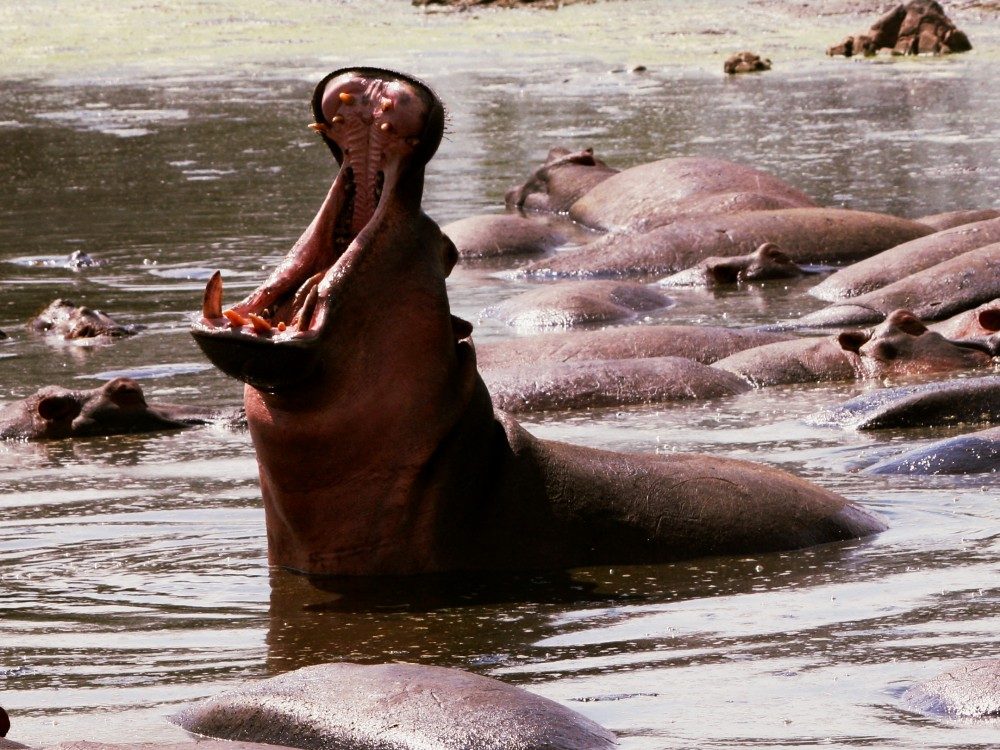
A charging hippo should not automatically be described as trying to eat someone. Common hippos primarily feed on vegetation, especially grasses that they consume during nighttime feeding trips.
Aggression can instead occur when an animal senses danger or when something enters its surroundings. That distinction makes hippos unusual compared with large carnivores because their potential danger does not depend on viewing another animal as prey.
Featured Image: “Hippo” by LUSEJA is licensed under CC BY-NC-SA 2.0
Leave a Reply