Author: Ethan

  • The heartbreaking reason some of Earth’s most amazing animals cannot live in zoos

    The heartbreaking reason some of Earth’s most amazing animals cannot live in zoos

    Modern zoos and aquariums have successfully cared for thousands of animal species, but some wild animals remain almost impossible to keep in captivity. Their bodies, behaviors, and survival strategies are so closely tied to their natural environments that even the best human care cannot fully replace what nature provides.

    From Antarctic predators to deep ocean hunters, these animals have evolved for conditions that are difficult or impossible to recreate. This article explores why certain species struggle in captivity, how evolution shaped their unique needs, and what their stories teach us about wildlife conservation.

    Evolution created highly specialized animals
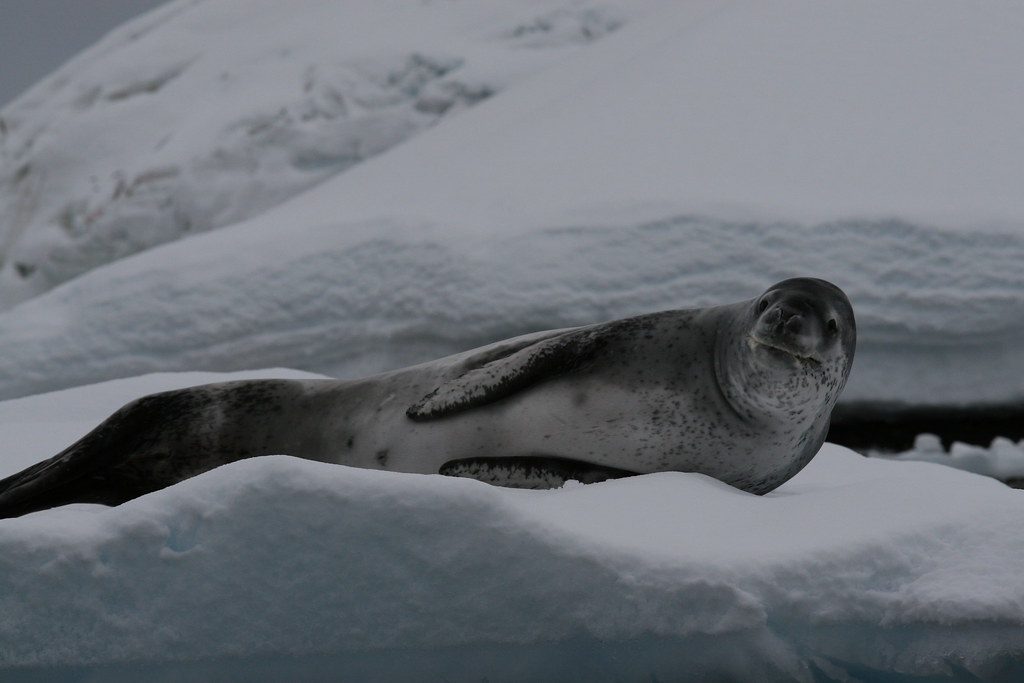
    Leopard seal” by xeno_sapien is licensed under CC BY-NC 2.0

    Every animal evolves to survive in a particular environment. Over millions of years, species develop behaviors, diets, and physical adaptations that match the places where they live.

    For highly specialized animals, even small changes to temperature, habitat, food, or social structure can create serious challenges. Some species depend on conditions that simply cannot be reproduced outside the wild.

    Leopard seals belong in Antarctica
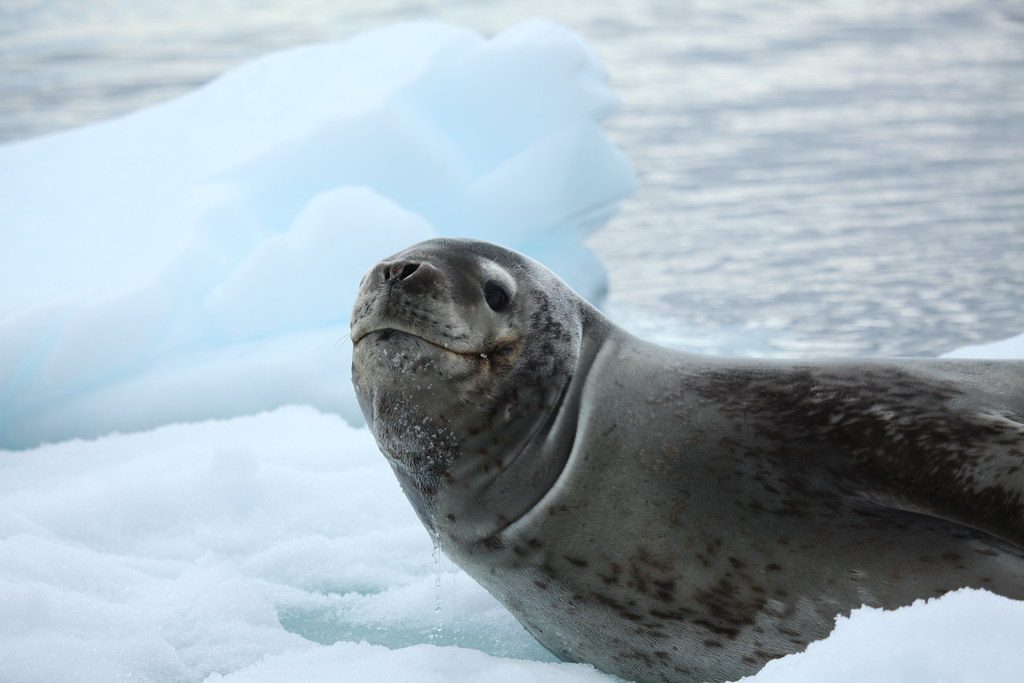
    Leopard Seal in Pléneau Bay, Antarctica” by Liam Quinn is licensed under CC BY-SA 2.0

    Leopard seals are powerful predators that live among Antarctic sea ice. They hunt fish, squid, penguins, and other seals while spending much of their lives in one of the harshest environments on Earth.

    Very few leopard seals have ever been kept in captivity, and those that have were usually rescued animals that could not safely return to the wild. Their specialized diet, solitary behavior, cold habitat, and large space requirements make long-term care extremely difficult.

    A tragedy changed how scientists viewed leopard seals
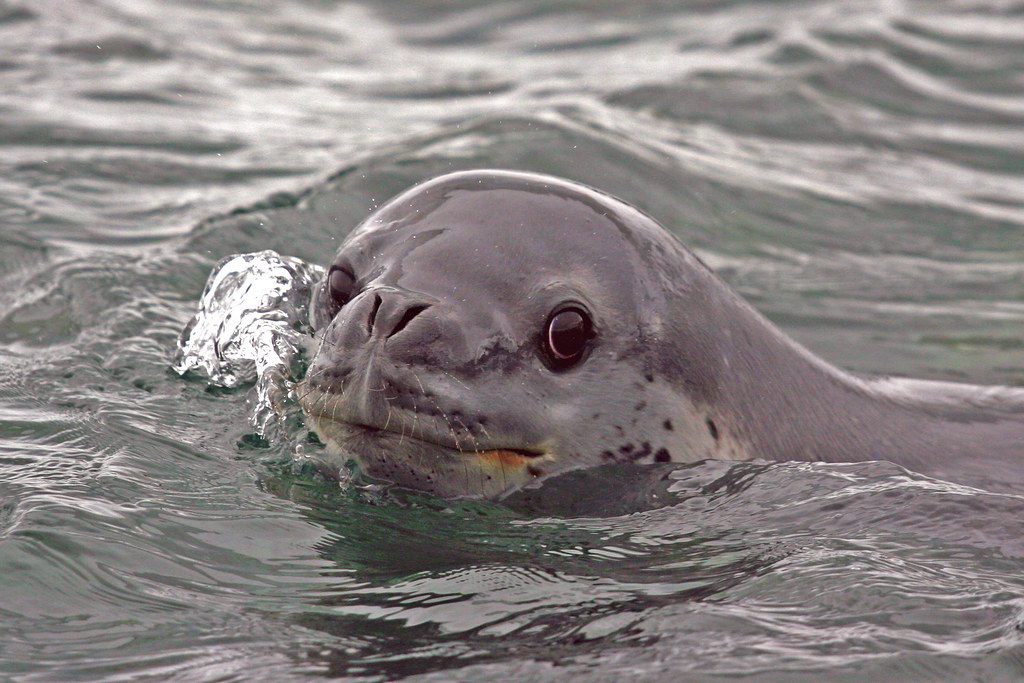
    A leopard seal” by xeno_sapien is licensed under CC BY-NC 2.0

    In 2003, British Antarctic Survey marine biologist Kirsty Brown was killed while conducting underwater research near Antarctica. A leopard seal dragged her underwater, making it the first recorded fatal leopard seal attack on a human. Investigators concluded that such attacks are extremely rare.

    The incident highlighted both the power of leopard seals and how little scientists still knew about their behavior. It also led to greater attention toward research safety when working around these large Antarctic predators.

    Other species face similar challenges
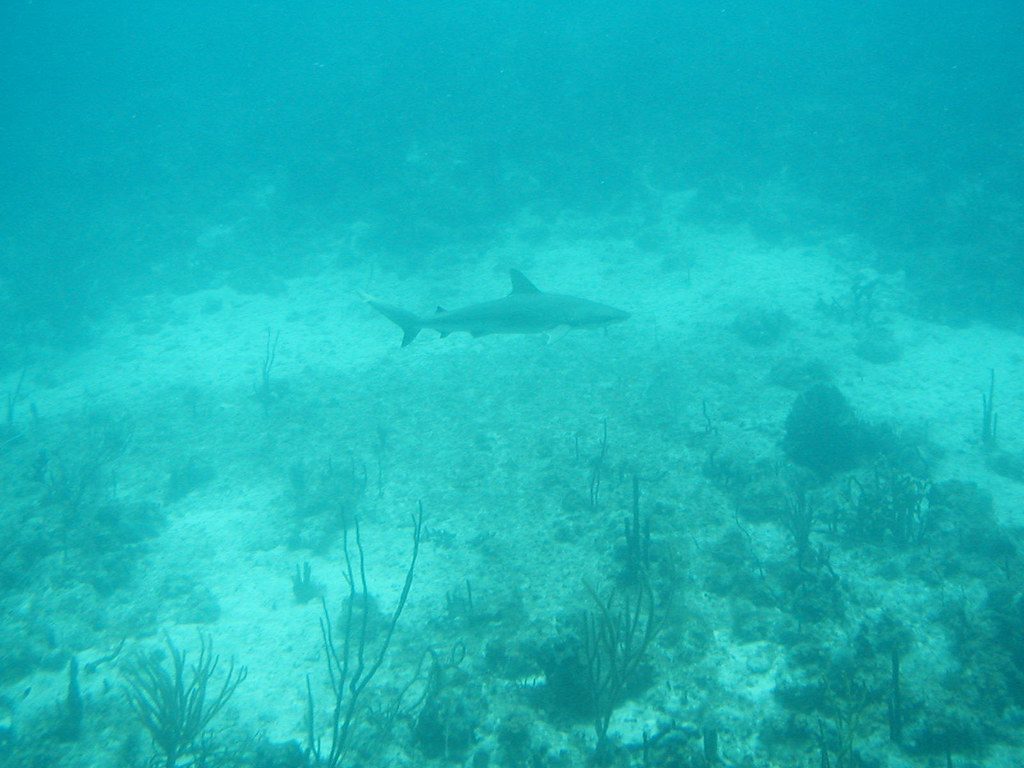
    Small shark near the reef, St. Thomas” by Beth M527 is licensed under CC BY-NC 2.0

    Leopard seals are not the only animals that struggle in captivity. Some deep-sea fish require crushing pressures, while certain whales, sharks, and marine mammals need enormous ranges, complex social lives, or highly specialized diets that are difficult to provide.

    Even when expert care is available, captivity may not fully meet the biological or behavioral needs of these animals. Their survival often depends on conditions found only in natural ecosystems.

    Conservation often works better than captivity
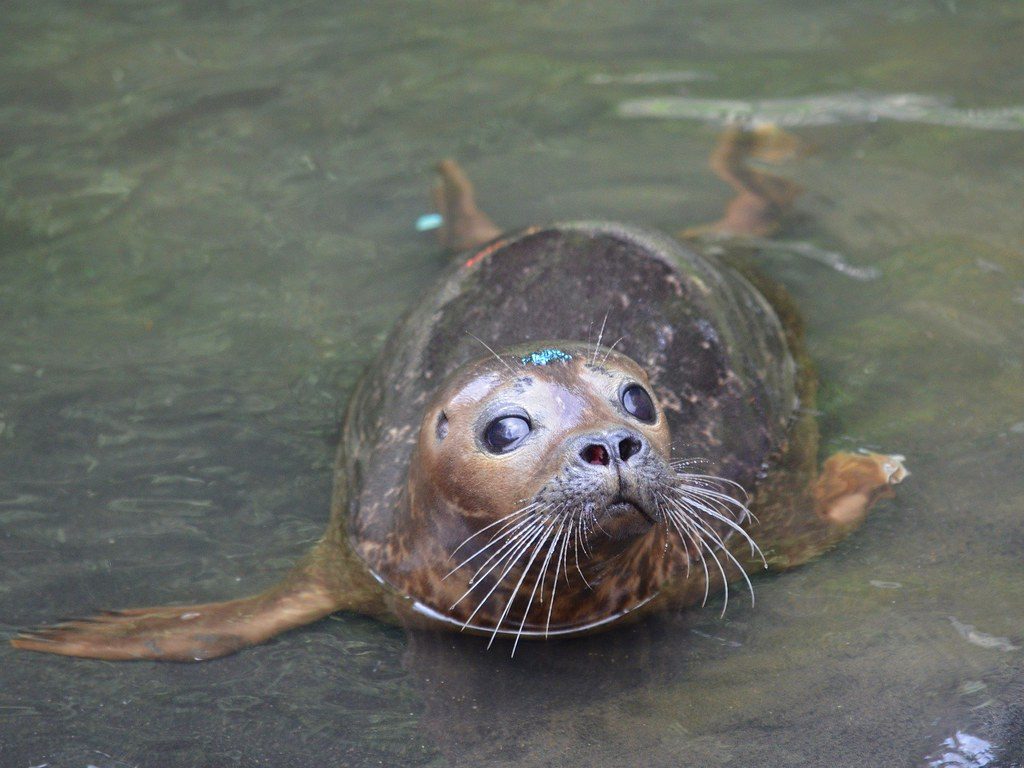
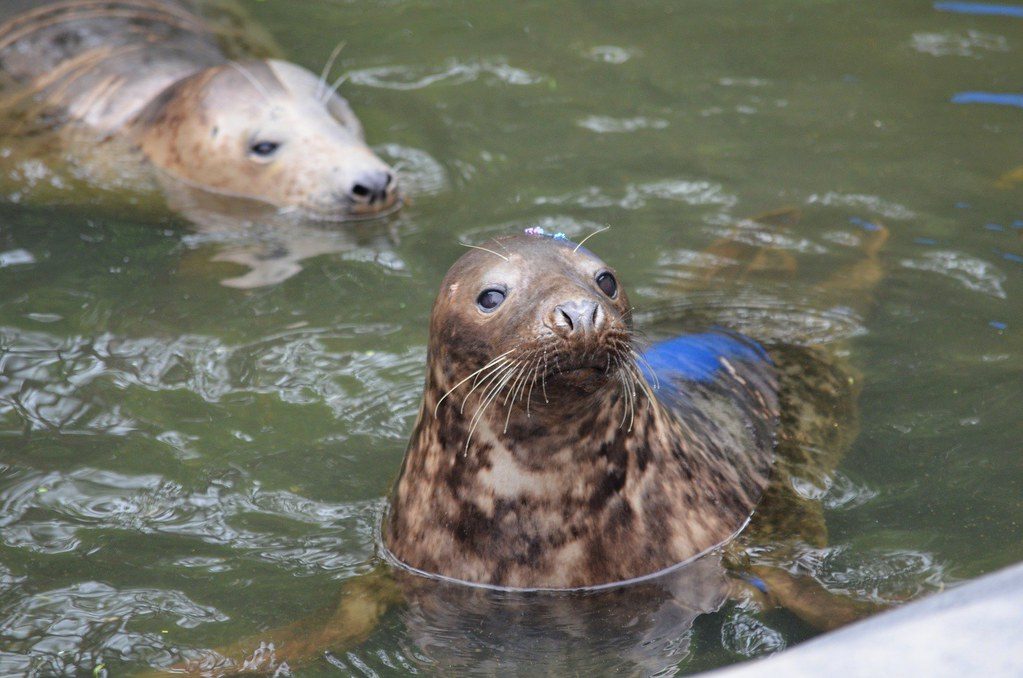
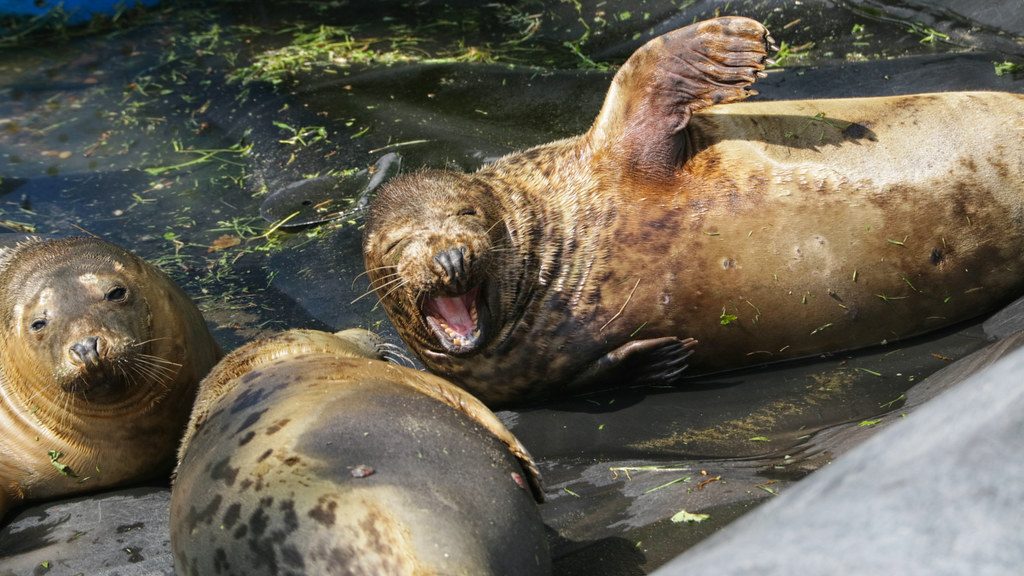
    Seal Rescue Ireland” by chripell is licensed under CC BY-SA 2.0

    Because some species adapt poorly to captivity, protecting their natural habitats has become one of the most effective conservation strategies. Healthy ecosystems allow animals to continue behaving and reproducing naturally.

    Scientists increasingly focus on habitat restoration, anti-poaching efforts, and reducing pollution rather than relying only on captive breeding for species with highly specialized needs.

    Nature still sets the limits
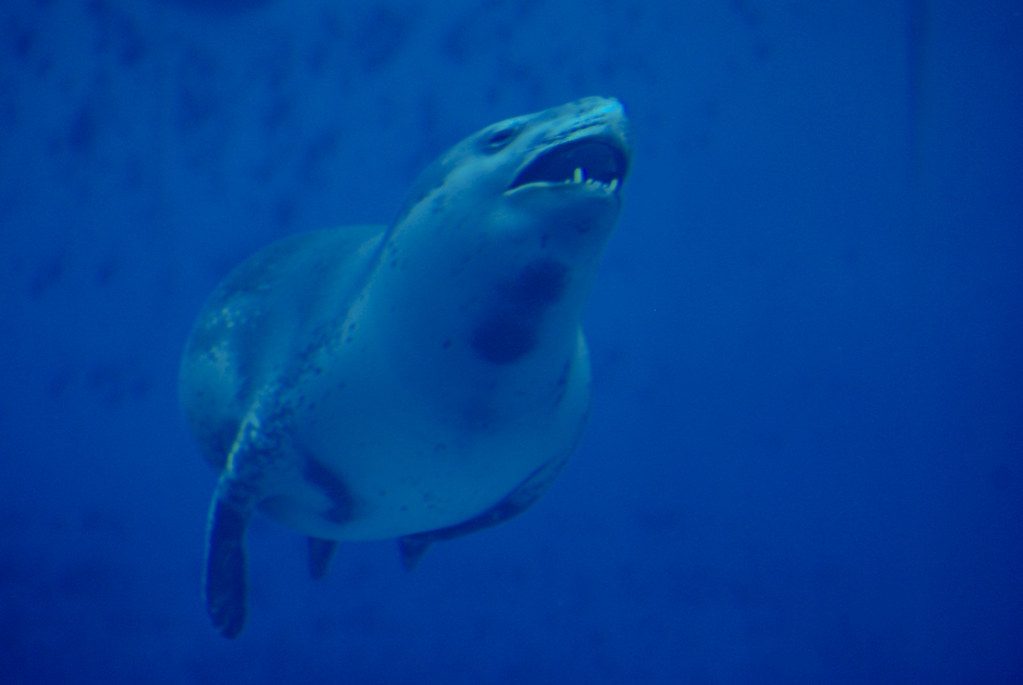
    Leopard Seal” by AegirPhotography is licensed under CC BY-NC 2.0

    Human knowledge and technology continue to improve, but some animals remain better suited to life in the wild than behind barriers. Their remarkable adaptations are reminders that evolution has shaped them for environments unlike anything humans can fully recreate.

    The story of animals that cannot thrive in captivity also highlights the importance of protecting the habitats where they naturally belong. For many species, conserving the wild is the best chance for long-term survival.
  • The incredible moment a protective Labrador scared away a visiting black bear

    The incredible moment a protective Labrador scared away a visiting black bear

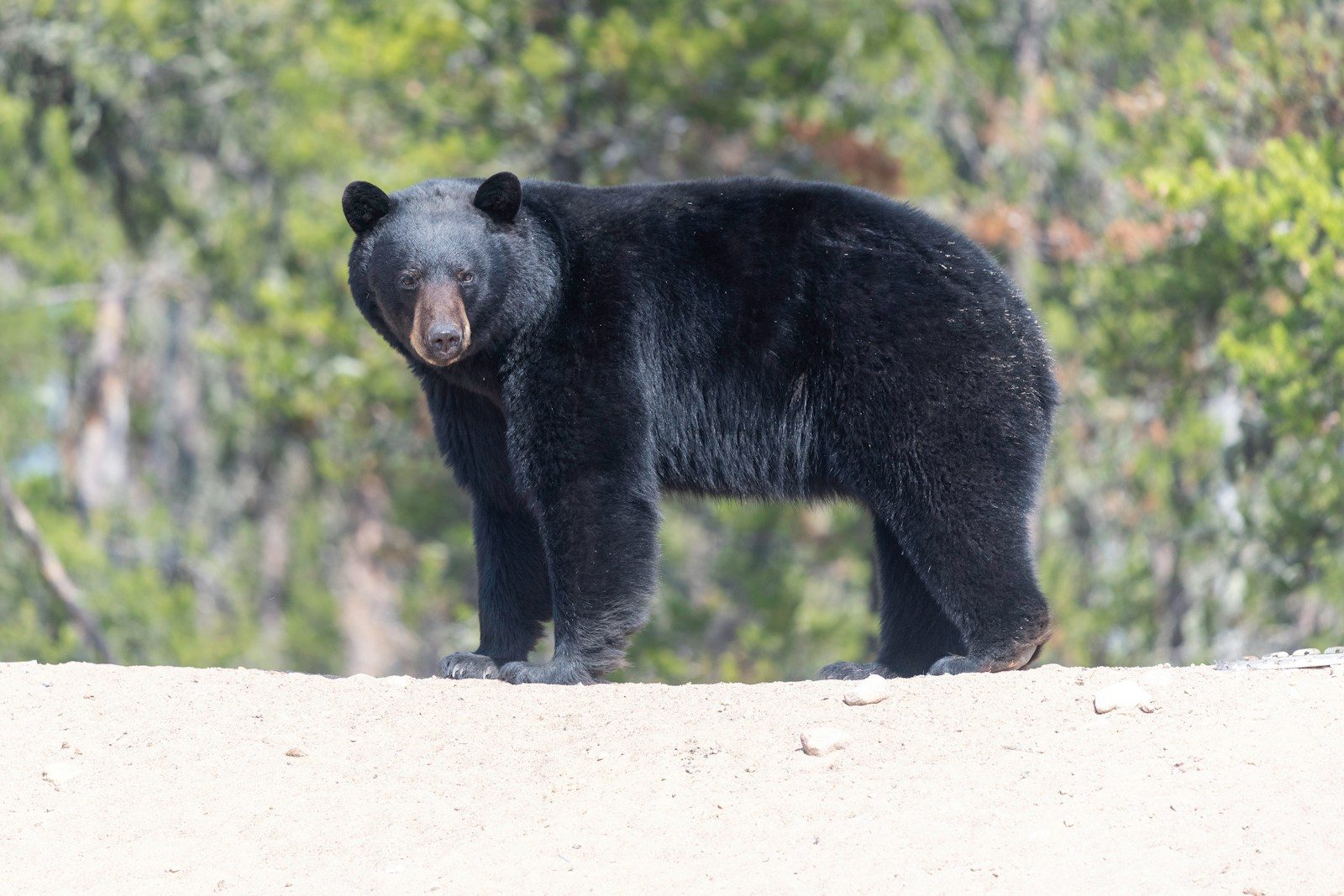
    Most dogs bark at strangers, but few ever confront a wild bear. That is exactly what happened when a curious black bear walked up to the back door of a home in Asheville, North Carolina. Inside, a yellow Labrador Retriever named Bennett immediately sprang into action, barking and growling through the glass as the bear stood only inches away.

    The tense encounter quickly became a viral video, reminding viewers how unpredictable wildlife encounters can be. This article explains what happened, why the bear likely approached the house, and how people can safely respond when living in bear country.

    A curious visitor arrived at the door

    black bear on green grass during daytime
    Photo by Pete Nuij on Unsplash

    Bennett was relaxing at home when a young black bear wandered onto the property and walked directly to the back door. The two animals were separated only by a glass door as they watched each other from just a few inches apart.

    The Labrador reacted instantly by barking and growling to defend his home. Startled by the sudden noise, the bear quickly backed away, ending the unexpected encounter without either animal being harmed.

    Bennett followed his natural instincts

    medium short-coated white dog lying on green grass field
    Photo by Angel Luciano on Unsplash

    Labrador Retrievers are known for being friendly, but they are also loyal family dogs that often alert their owners when something unusual appears near the home. Bennett’s reaction reflected that protective instinct.

    Although the bear was much larger than the dog, the glass barrier kept both animals safely separated. The encounter demonstrated how household pets often respond to unfamiliar wildlife entering their territory.

    Why did the bear come so close

    a black bear is sitting in the woods
    Photo by Michael Anfang on Unsplash

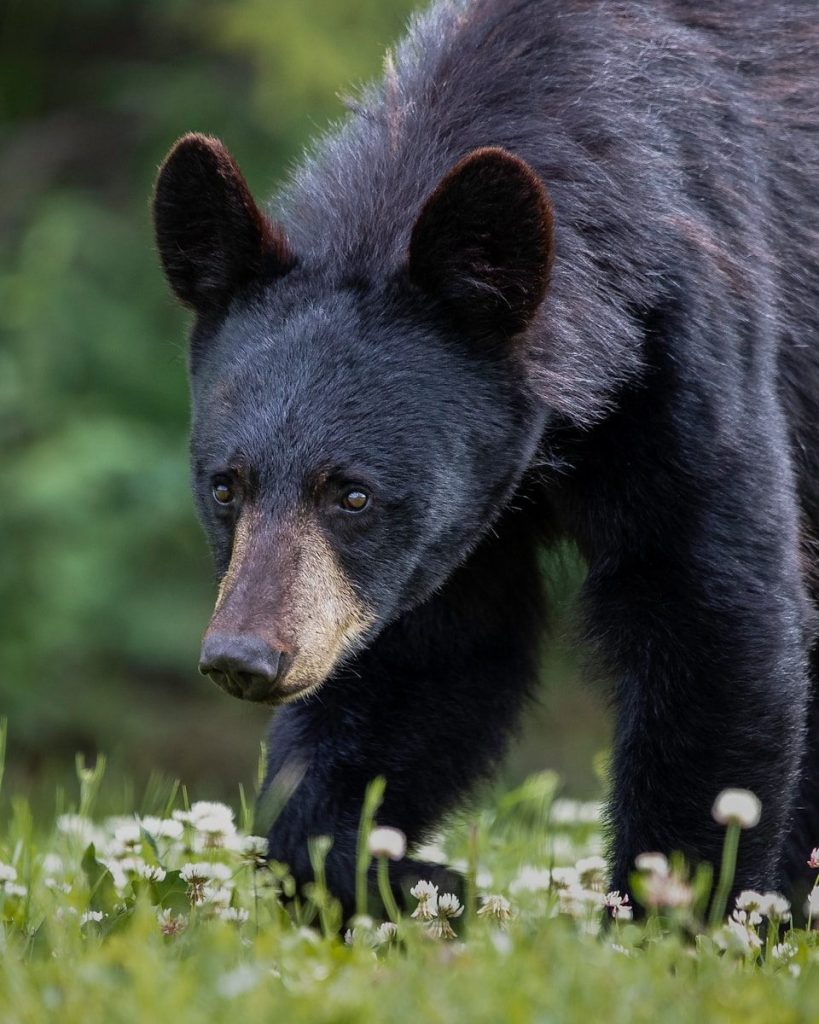
    Wildlife experts believe the visitor was likely a young black bear exploring its surroundings. Yearling bears often leave their mothers and begin searching for food and suitable habitat on their own.

    Residential neighborhoods in western North Carolina frequently overlap with black bear habitat. Curious bears sometimes investigate yards, porches, or doors while searching for food or simply exploring unfamiliar areas.

    Living safely in bear country

    black bear on green grass during daytime
    Photo by Pete Nuij on Unsplash

    Black bears usually avoid people whenever possible. If a bear is seen near a home, experts recommend keeping a safe distance, staying calm, and allowing the animal room to leave on its own.

    Removing food sources such as unsecured garbage, pet food, and bird feeders can also reduce the chances of attracting bears to residential areas. These simple steps help both people and wildlife remain safe.

    Bears are rarely looking for conflict

    black bear on yellow flower field during daytime
    Photo by Danika Perkinson on Unsplash

    Although large and powerful, black bears generally prefer to avoid confrontations with humans. Most encounters end peacefully once the bear realizes people or pets are nearby.

    Young bears are especially curious as they learn to survive on their own. Their investigations are usually driven by food or exploration rather than aggression, even if they sometimes surprise homeowners.

    A memorable reminder to respect wildlife

    black bear on green grass during daytime
    Photo by Pete Nuij on Unsplash

    The viral video captured an exciting moment, but it also highlighted the importance of respecting wild animals. Bennett successfully protected his home, while the young bear wisely chose to leave without escalating the situation.

    As communities continue expanding into bear habitat, encounters like this may become more common. Staying aware, securing attractants, and giving wildlife space help ensure that both people and bears can safely share the landscape.

  • How a sunken World War II submarine turned into one of history’s greatest treasure hunts

    How a sunken World War II submarine turned into one of history’s greatest treasure hunts

    In the final years of World War II, a Japanese submarine carrying a secret cargo disappeared beneath the Atlantic Ocean. On board were 2.2 tons of gold, valuable raw materials, and military supplies destined for Nazi-occupied Europe. For more than 50 years, the submarine’s resting place remained unknown, turning it into one of history’s greatest underwater mysteries.

    Then a determined researcher finally located the wreck nearly three miles below the surface. This article explores the story of the Japanese submarine I-52, its secret mission, the search that uncovered it, and why its legendary treasure still remains lost.

    A secret mission across the Atlantic

    silhouette of windmill during sunset
    Photo by Marc-Antoine Déry on Unsplash

    The Japanese submarine I-52 departed from Kure, Japan, in March 1944 on a highly secret mission. It was heading toward German-occupied France to exchange valuable cargo for military technology that Japan hoped would strengthen its war effort.

    Among its cargo were 2.2 tons of gold packed into metal boxes, along with tungsten, molybdenum, opium, caffeine, and other strategic materials. After stopping in Singapore, the submarine also loaded rubber, tin, and quinine before continuing into the Atlantic.

    Allied intelligence uncovered the plan

    a submarine floating on top of a large body of water
    Photo by Daniil Zameshaev on Unsplash

    The mission was meant to remain completely secret, but Allied cryptologists had already broken important enemy communications. Intercepted messages revealed the submarine’s planned route and rendezvous with a German U-boat.

    A United States Navy hunter-killer task force centered on the aircraft carrier USS Bogue was sent to intercept the submarine. During the night of June 23, 1944, aircraft located I-52 and attacked it with acoustic homing torpedoes. The submarine sank with everyone on board.

    The mystery lasted for decades

    empty seats inside vehicle with fire extinguishers
    Photo by Michal Mrozek on Unsplash

    Although debris was recovered after the sinking, including rubber, silk, and other cargo, the submarine’s exact location remained unknown. The gold disappeared with the wreck beneath thousands of meters of water.

    Years later, Vietnam War veteran and maritime historian Paul Tidwell began searching government archives for clues. He examined thousands of military records, intelligence reports, and decoded wartime messages to reconstruct the submarine’s final journey.

    Finding the lost submarine

    person wearing diving suit near sunken ship
    Photo by NOAA on Unsplash

    By 1995, Tidwell had secured funding for a deep ocean expedition. Working with ocean exploration specialists, the search team corrected navigation records from the original attack and expanded the search area.

    On May 2, 1995, sonar finally located the wreck nearly 17,000 feet below the surface of the Atlantic Ocean between Barbados and the Cape Verde Islands. After more than five decades, the missing submarine had finally been found.

    The treasure remained out of reach

    yellow and black gas lamp
    Photo by NOAA on Unsplash

    Several years later, another expedition returned with Russian Mir submersibles capable of reaching the wreck. Explorers documented the damaged submarine and recovered several artifacts from the surrounding debris field.

    The team found tin ingots, a metal box containing opium, and traces of gold in nearby sediment. However, the famous gold bars were never recovered. Some sections of the submarine remain inaccessible, leaving open the possibility that the treasure still rests inside. The wreck is also recognized as a war grave, requiring respectful treatment during any future exploration.

    Why the mystery continues

    Interior view of a submarine's narrow corridor.
    Photo by Diogo Cardoso on Unsplash

    The story of I-52 combines history, archaeology, technology, and one of the world’s most famous lost treasures. Modern deep-sea exploration has revealed much about the submarine, but many questions remain unanswered.

    Researchers continue to hope that future technology may allow scientists to document areas of the wreck that have never been explored. Whether the missing gold is eventually found or not, the submarine remains an important reminder of the hidden history that still lies beneath the world’s oceans.

  • This rescued seal got a second chance, but thousands more still need help

    This rescued seal got a second chance, but thousands more still need help

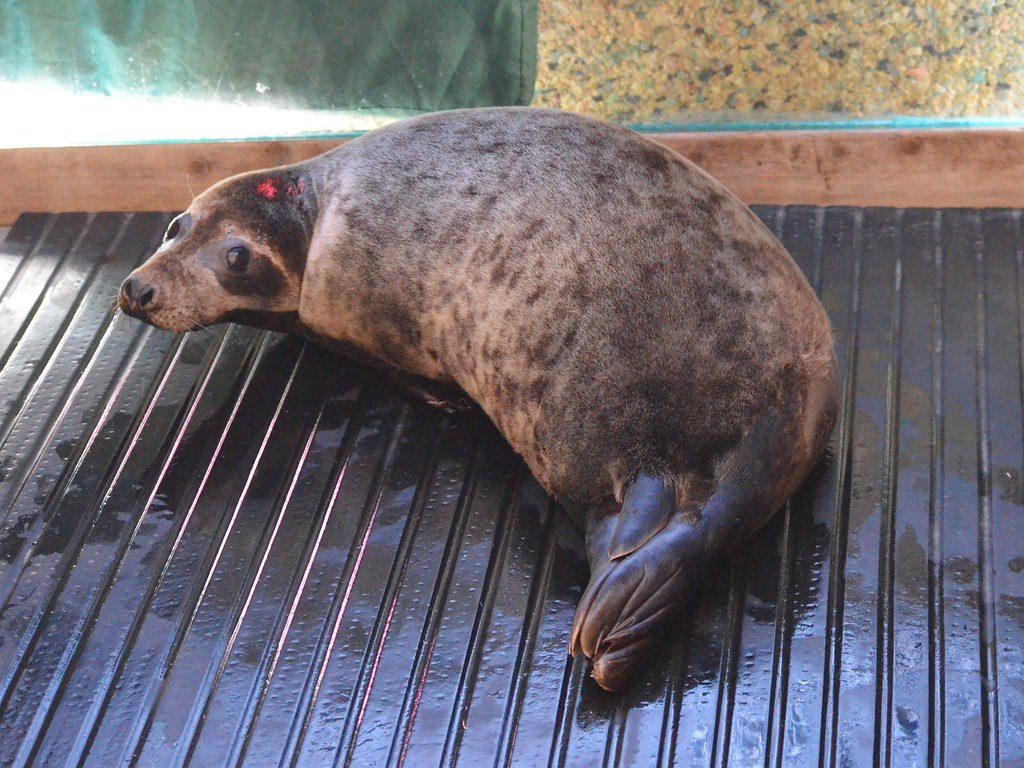
    One seal escaped a painful trap, but his rescue uncovered a much larger problem. Around the world, seals and other marine animals become trapped in discarded fishing gear, plastic waste, and other human-made debris every year. While this seal was fortunate enough to be found in time, many others are never rescued.

    Their injuries often become worse with time, making it difficult to swim, hunt, or avoid predators. This article explains how one rescue highlights a global conservation challenge and why reducing marine pollution is essential for protecting ocean wildlife.

    One rescue changed everything

    baby seal rescue” by rossbeane is licensed under CC BY-SA 2.0

    The rescue began with a single seal trapped in marine debris. Unable to free itself, the animal continued carrying the dangerous material while struggling to survive.

    Rescuers safely removed the entanglement and gave the seal a second chance. The emotional moment showed how quickly a single piece of discarded waste can become life-threatening for a wild animal.

    Thousands of seals face the same danger

    Seal Rescue Ireland” by chripell is licensed under CC BY-SA 2.0

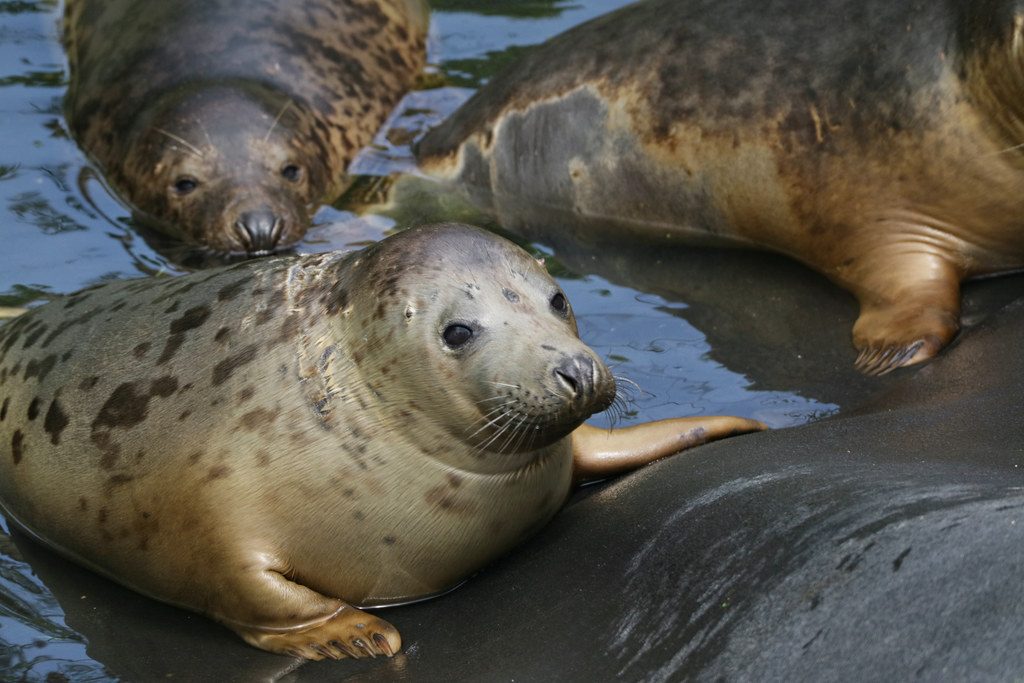
    Although this seal survived, countless others remain entangled in fishing gear, rope, plastic loops, and other marine debris. Many are never discovered before their injuries become fatal. Entanglement is a global threat affecting seals, sea lions, whales, dolphins, and sea turtles.

    Conservation organizations estimate that hundreds of thousands of marine animals die each year because of entanglement or plastic pollution. Many more survive while suffering from severe wounds, infections, or starvation.

    Why marine debris is so dangerous

    Seal Rescue Ireland” by chripell is licensed under CC BY-SA 2.0

    Fishing gear is designed to be strong and durable, making it especially dangerous when lost or discarded. Nets, ropes, and fishing lines can continue trapping wildlife long after they enter the ocean. This abandoned equipment is often called ghost gear.

    As seals continue to grow, tight loops can cut deeper into their skin. Animals may lose the ability to swim normally, find food, or escape predators, turning a minor entanglement into a slow, painful struggle.

    Rescue teams cannot reach every animal

    Seal Rescue Ireland” by chripell is licensed under CC BY-SA 2.0

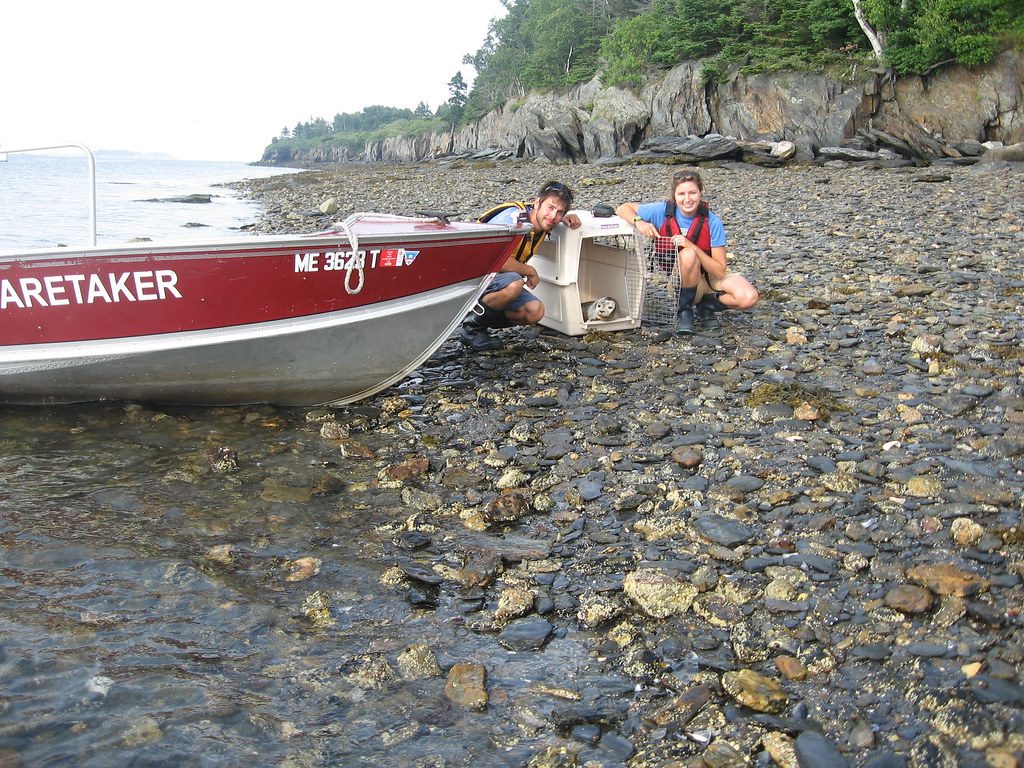
    Wildlife rescue teams work tirelessly to free entangled seals whenever they are found. These rescues require experience, specialized equipment, and careful handling to protect both the animals and the rescuers.

    However, many entangled animals live in remote coastlines or spend most of their time at sea. As a result, countless seals never encounter people who can help them before it is too late.

    Preventing pollution saves wildlife

    Seal Rescue Ireland” by chripell is licensed under CC BY-SA 2.0

    Removing marine debris before it reaches the ocean is one of the most effective ways to protect wildlife. Proper disposal of fishing gear, reducing plastic waste, and supporting cleanup efforts can prevent future entanglements.

    Every piece of litter kept out of the water removes one potential hazard for seals, whales, sea turtles, dolphins, and many other marine species. Prevention is often far more effective than rescue after an animal has already become trapped.

    One seal became a symbol of a larger problem

    Seal Rescue Ireland” by chripell is licensed under CC BY-SA 2.0

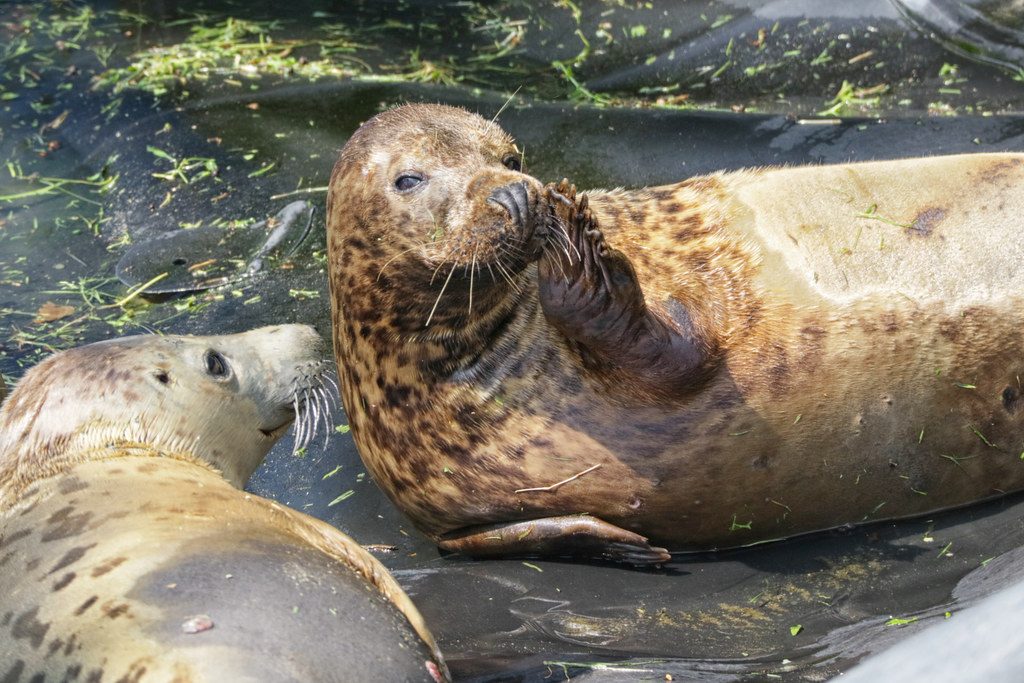
    The rescued seal’s story is inspiring because it ends on a hopeful note. Yet it also reminds us that the same danger continues to threaten marine wildlife every day across the world’s oceans.

    Saving one seal is a meaningful success, but lasting change depends on reducing the pollution that causes these tragedies. Protecting the ocean today helps ensure that fewer animals will need rescuing tomorrow.

  • How invasive Burmese pythons are transforming the Florida Everglades one meal at a time

    How invasive Burmese pythons are transforming the Florida Everglades one meal at a time

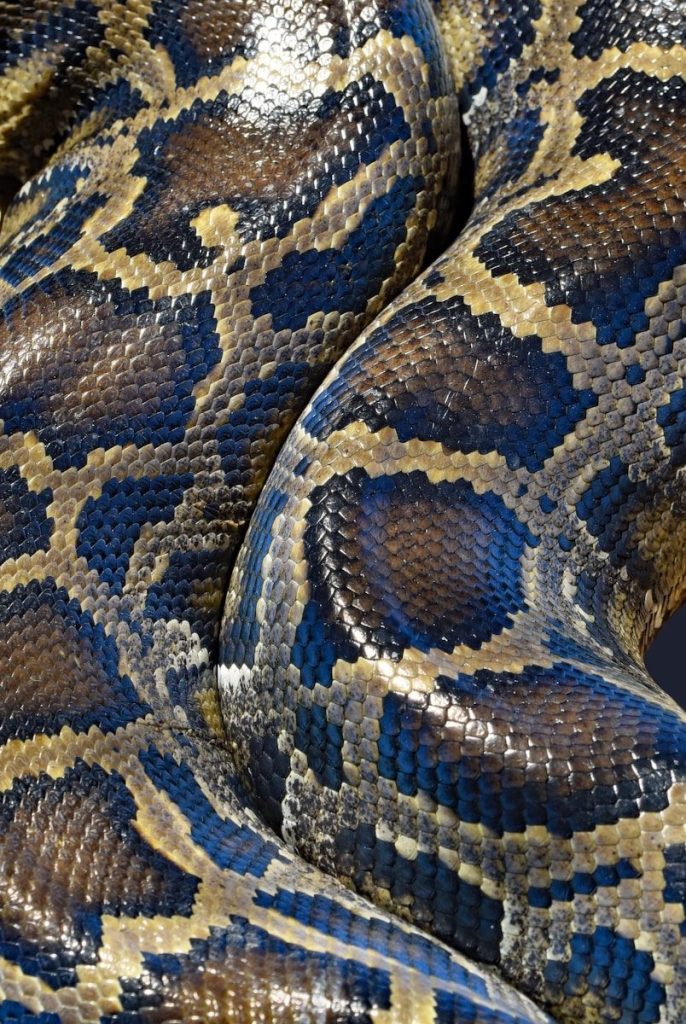
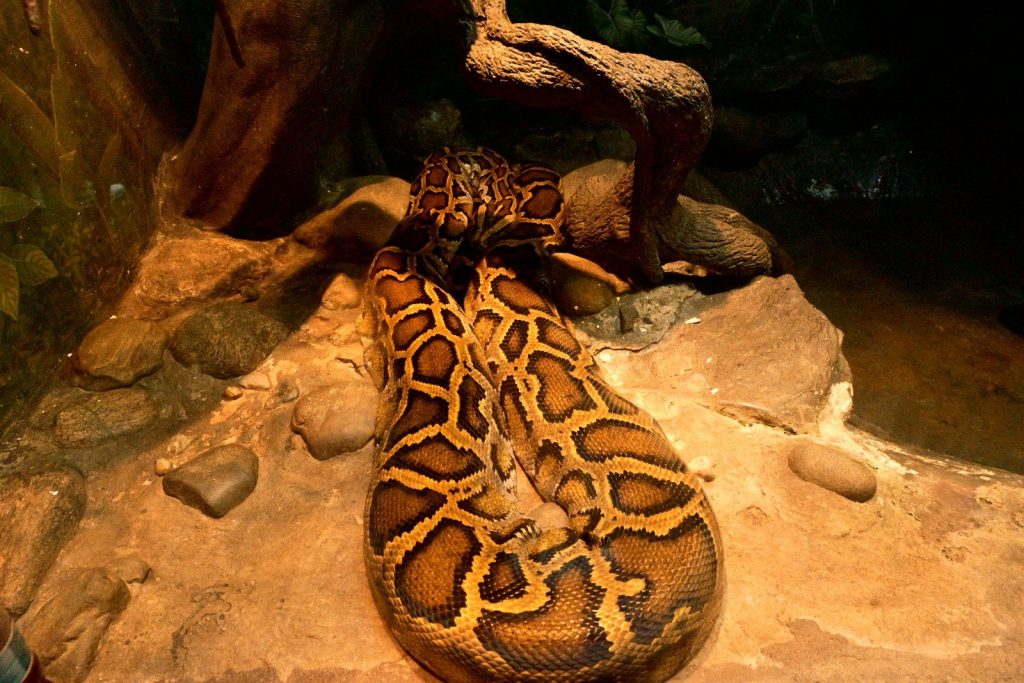
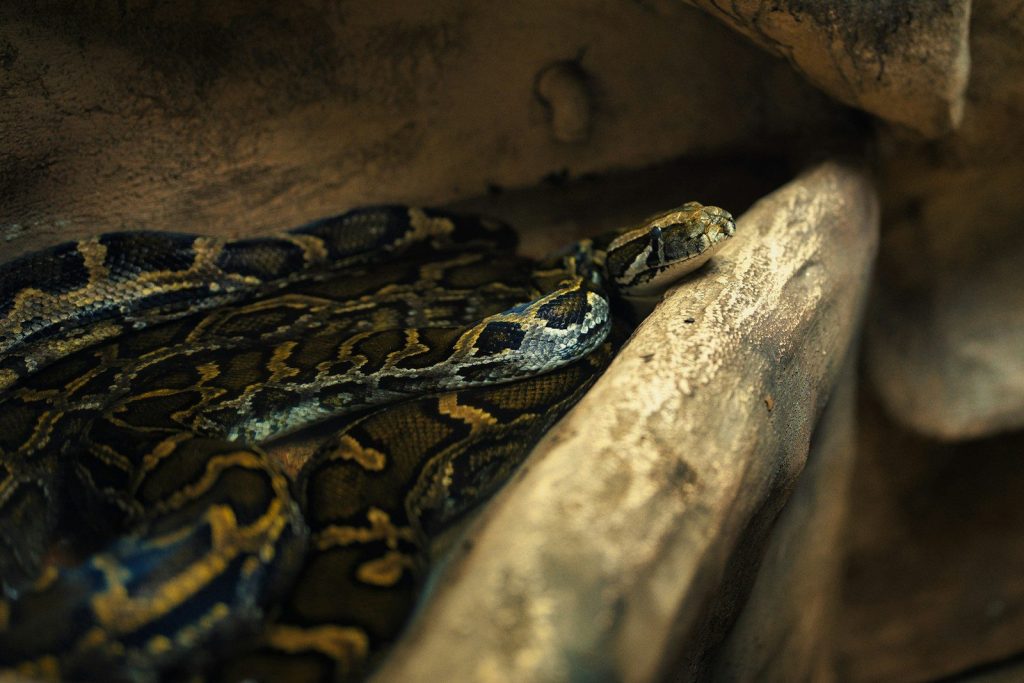
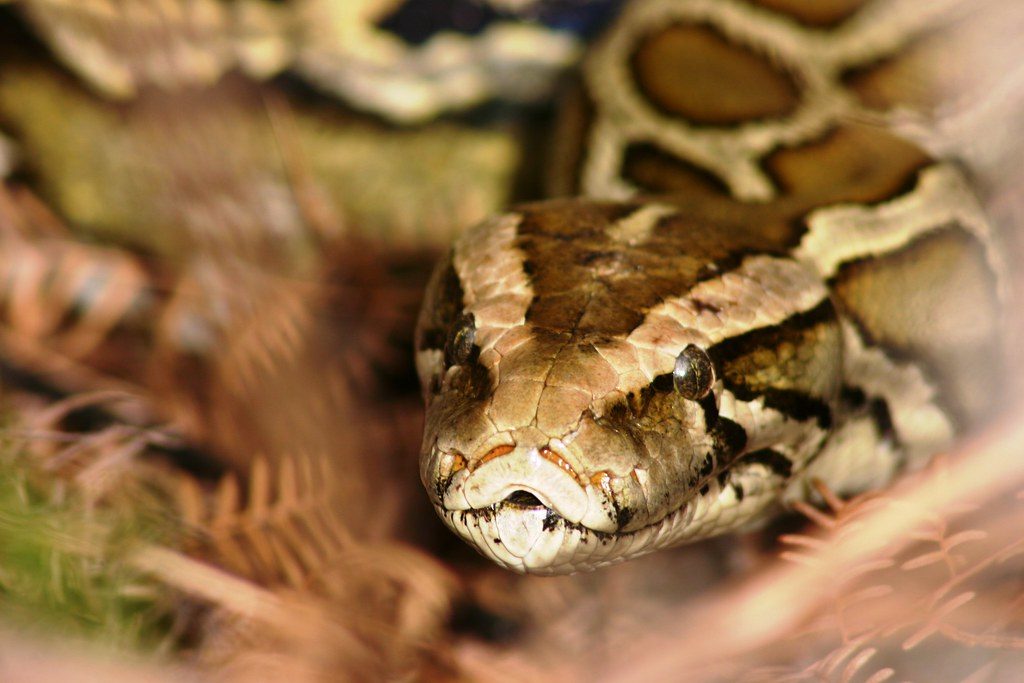
    The Florida Everglades is home to one of the world’s most famous wetlands, but it is also the center of one of America’s largest invasive species problems. Burmese pythons, originally brought into the United States through the pet trade, have established a breeding population that continues to spread across South Florida.

    These giant snakes can grow more than 5 meters long, swallow surprisingly large prey, and reproduce rapidly. This article explains how Burmese pythons became established in the Everglades, why they are so difficult to control, and how they continue to affect native wildlife.

    How the invasion began

    brown and green snake
    Photo by Joshua J. Cotten on Unsplash

    Burmese pythons are native to Southeast Asia but were imported into the United States as exotic pets. Over time, released or escaped snakes established breeding populations in the Florida Everglades, where the warm climate allowed them to thrive.

    Once the population became established, the snakes spread through wetlands, forests, and marshes. Their secretive behavior and excellent camouflage made them extremely difficult to detect, allowing their numbers to grow largely unnoticed.

    Built to become successful predators

    brown and black snake
    Photo by David Clode on Unsplash

    Burmese pythons are among the largest snakes in the world. Adults can exceed 5 meters in length, weigh up to 90 kilograms, and females may lay dozens of eggs in a single clutch, allowing populations to increase quickly.

    These powerful constrictors feed on a wide variety of animals. Scientists have documented them consuming birds, mammals, reptiles, and even alligators, making them one of the Everglades’ most adaptable predators.

    Native wildlife has suffered dramatic declines

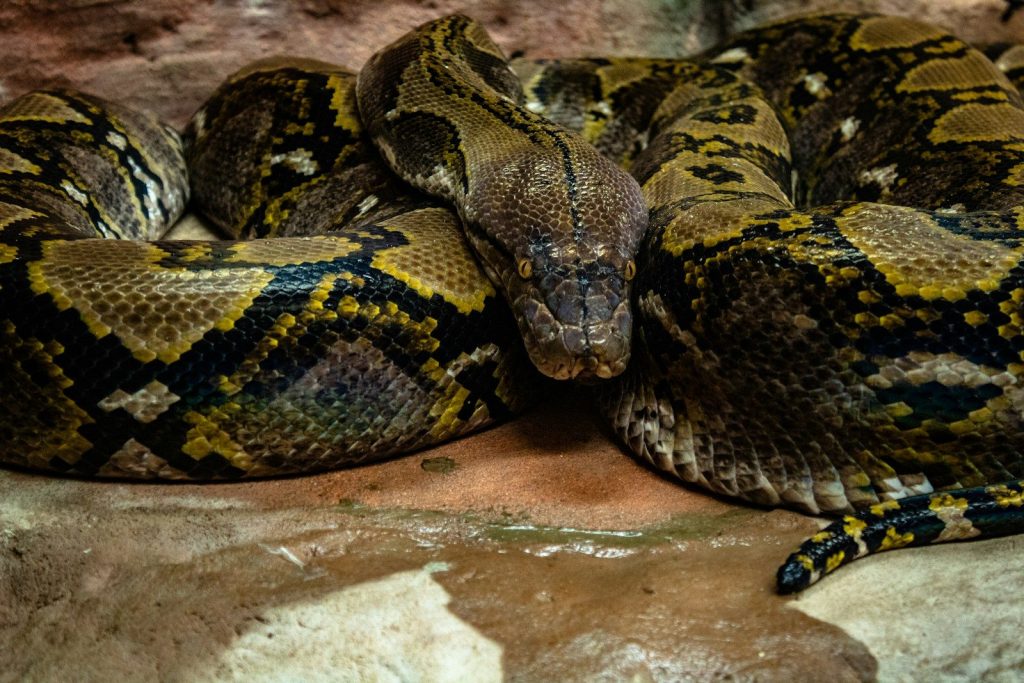
    A patterned python snake coiled on brown rocks.
    Photo by Y on Unsplash

    Researchers have linked the spread of Burmese pythons with major declines in several native mammal populations. A landmark study found that raccoon sightings dropped by 99.3%, opossum sightings by 98.9%, and bobcat sightings by 87.5%, while rabbits became extremely rare or disappeared from some heavily invaded areas.

    Although ecosystems are influenced by many factors, evidence strongly suggests Burmese pythons have become a major driver of these declines within Everglades National Park. Their broad diet allows them to prey on many different native species.

    Why is removing them so difficult

    Two pythons coiled together on a branch.
    Photo by Jadon Barnes on Unsplash

    Unlike many invasive animals, Burmese pythons spend much of their time hidden beneath dense vegetation or in water. Their camouflage and secretive behavior make them extremely difficult to locate, even for experienced hunters.

    Florida has organized removal programs, professional hunting teams, and annual python challenges that have removed thousands of snakes. However, wildlife experts agree that complete eradication is unlikely because many pythons remain undetected and continue reproducing.

    Scientists continue searching for better solutions

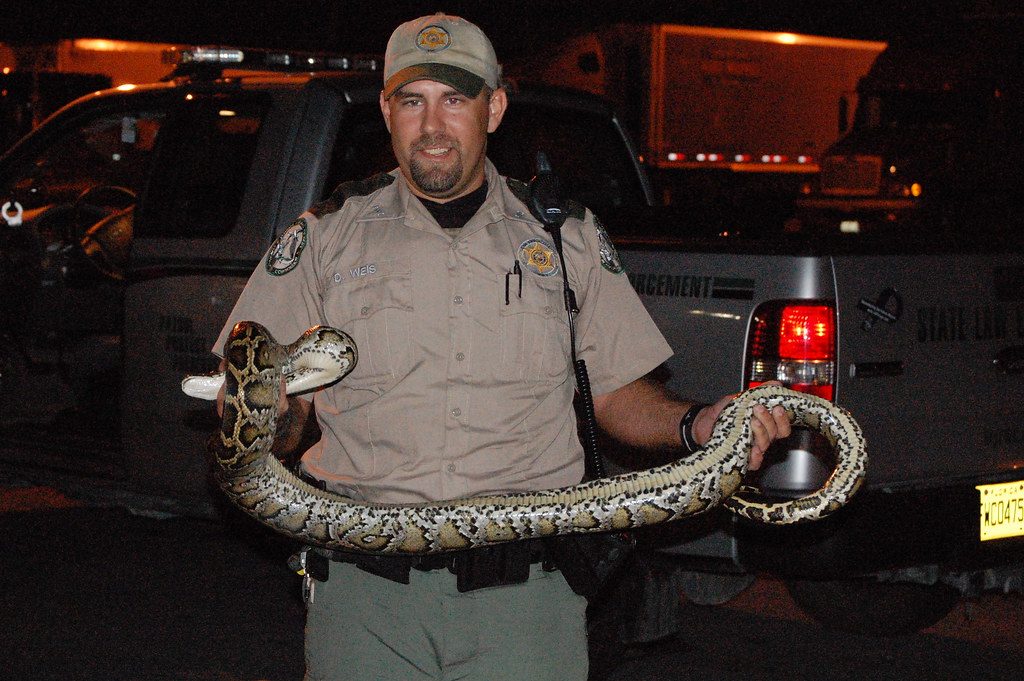
    Burmese Python Closeup” by MyFWC Florida Fish and Wildlife is licensed under CC BY-ND 2.0

    Researchers are developing new methods to locate invasive pythons, including radio telemetry, trained detection animals, and improved tracking techniques. These tools help wildlife managers remove more snakes and better understand how they spread.

    Conservation agencies also continue to monitor native wildlife to assess the long-term effects of python predation. The information helps guide future management strategies throughout the Everglades.

    The Everglades remains a conservation challenge

    a couple of people on a boat in a body of water
    Photo by Richard Sagredo on Unsplash

    The Burmese python invasion shows how quickly an introduced species can reshape an ecosystem. A small number of released pets eventually became one of the most significant wildlife management challenges in North America.

    Although thousands of snakes have been removed, protecting the Everglades will require continued monitoring, research, and public awareness. The story serves as a reminder that preventing invasive species is often far easier than eliminating them once they become established.

  • How the mighty Barbary lion disappeared from the wild after centuries of hunting

    How the mighty Barbary lion disappeared from the wild after centuries of hunting

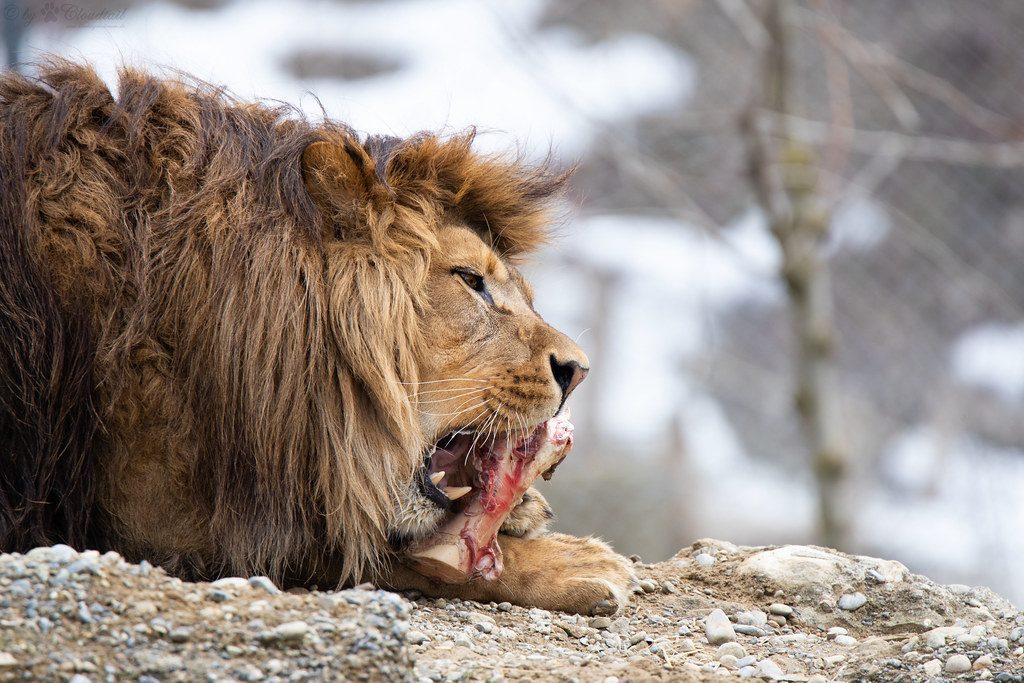
    The Barbary lion was once one of the most impressive predators in North Africa. Known for its large size and thick, dark mane, it lived across the Atlas Mountains and surrounding regions for thousands of years. Today, it no longer survives in the wild. Heavy hunting, expanding human settlements, and habitat loss gradually pushed this remarkable lion toward extinction.

    Yet its story may not be completely over. Scientists continue studying captive lions that could still carry part of their genetic heritage. This article explores the rise and fall of the Barbary lion and the ongoing search for its surviving legacy.

    A lion unlike any other

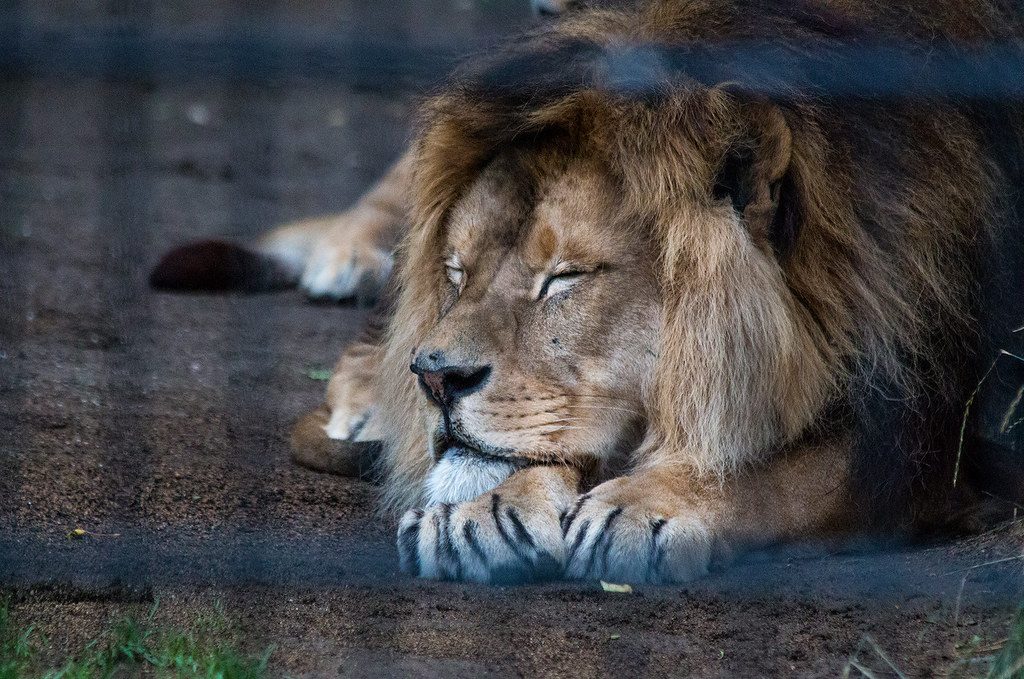
    Barbary Lion” by flickkerphotos is licensed under CC BY-SA 2.0

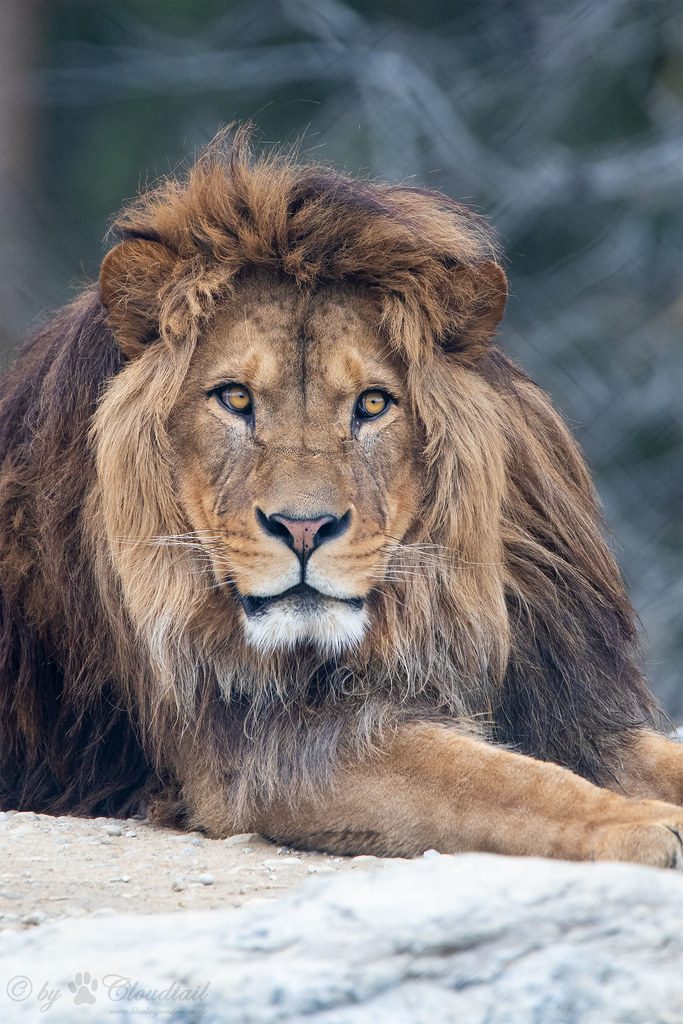
    The Barbary lion once roamed across North Africa, from Morocco to Egypt. It lived in forests, mountains, and scrublands, where it hunted large mammals and stood at the top of the food chain.

    The lions were famous for their impressive appearance. Many males developed thick, dark manes that extended over their shoulders and chest, although scientists now believe mane size was influenced by both genetics and environmental conditions rather than being unique to this population.

    Human expansion changed everything

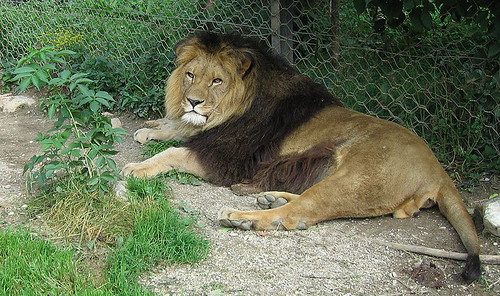
    Barbary Lion” by Artbandito is licensed under CC BY-NC-ND 2.0

    As firearms became more common and human settlements spread across North Africa, Barbary lions faced growing pressure. Governments even offered rewards for killing lions because they were seen as threats to livestock and people.

    Over time, hunting and shrinking habitat led to their numbers collapsing. Small groups survived longer in remote mountain regions, but the population continued to decline until the species disappeared from the wild.

    The last wild Barbary lions

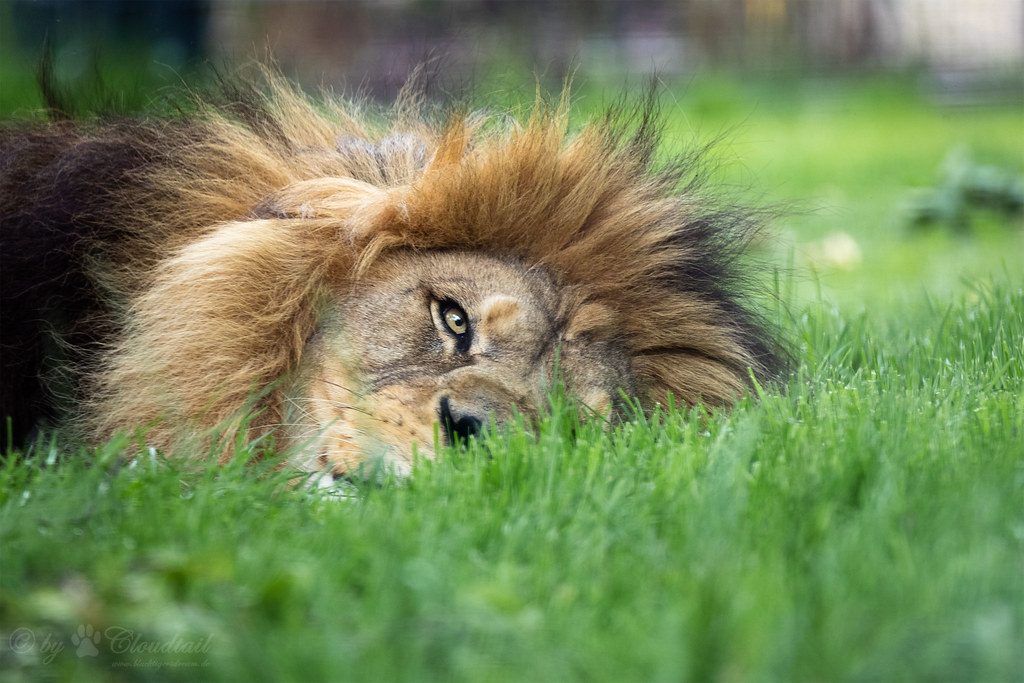
    Barbary lion” by Cloudtail the Snow Leopard is licensed under CC BY-NC-ND 2.0

    For many years, people believed the Barbary lion disappeared much earlier than it actually did. Historical records suggest that isolated groups survived in Algeria and Morocco well into the twentieth century, with the last known wild populations disappearing during the 1960s.

    This gradual disappearance shows that extinction is often a slow process rather than a single event. Small populations may survive for years before finally vanishing from their natural habitat.

    Could its bloodline still survive

    Barbary lion portrait” by Cloudtail the Snow Leopard is licensed under CC BY-NC-ND 2.0

    Although the Barbary lion is extinct in the wild, researchers continue studying captive lions descended from the historic Moroccan royal collection. Some of these animals may still carry portions of the Barbary lion’s genetic ancestry.

    However, scientists have not confirmed that any living lion represents a completely pure Barbary lion. Modern genetic research suggests these captive lions contain mixed ancestry, making the question far more complex than once believed.

    Why the Barbary lion still matters

    Barbary lion” by Cloudtail the Snow Leopard is licensed under CC BY-NC-ND 2.0

    The story of the Barbary lion highlights how quickly human activity can transform an ecosystem. Losing a top predator affects prey populations, habitats, and the balance of nature throughout an entire region.

    Its history also demonstrates the importance of protecting species before they become critically endangered. Once wild populations have disappeared, restoring them becomes far more difficult than preventing their decline in the first place.

    Hope through conservation science

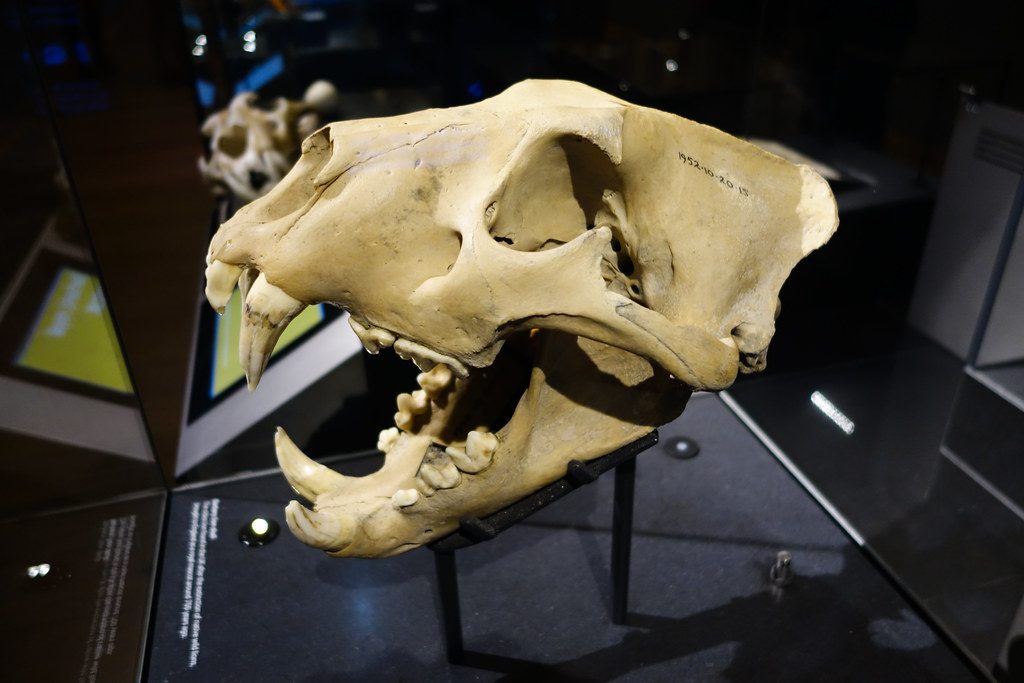
    Skull of a Barbary Lion” by quinet is licensed under CC BY 2.0

    Researchers continue using genetics to better understand the history of North African lions and identify animals that may preserve part of the Barbary lion’s heritage. These studies could guide future conservation efforts, even if a true Barbary lion can never be fully restored.

    The Barbary lion remains one of the world’s most famous lost predators. Its story serves as both a warning about the impact of human activity and a reminder that science still has much to learn about the animals that once ruled our planet.

  • The shocking moment an alien fish hunted a brilliant blue crayfish

    The shocking moment an alien fish hunted a brilliant blue crayfish

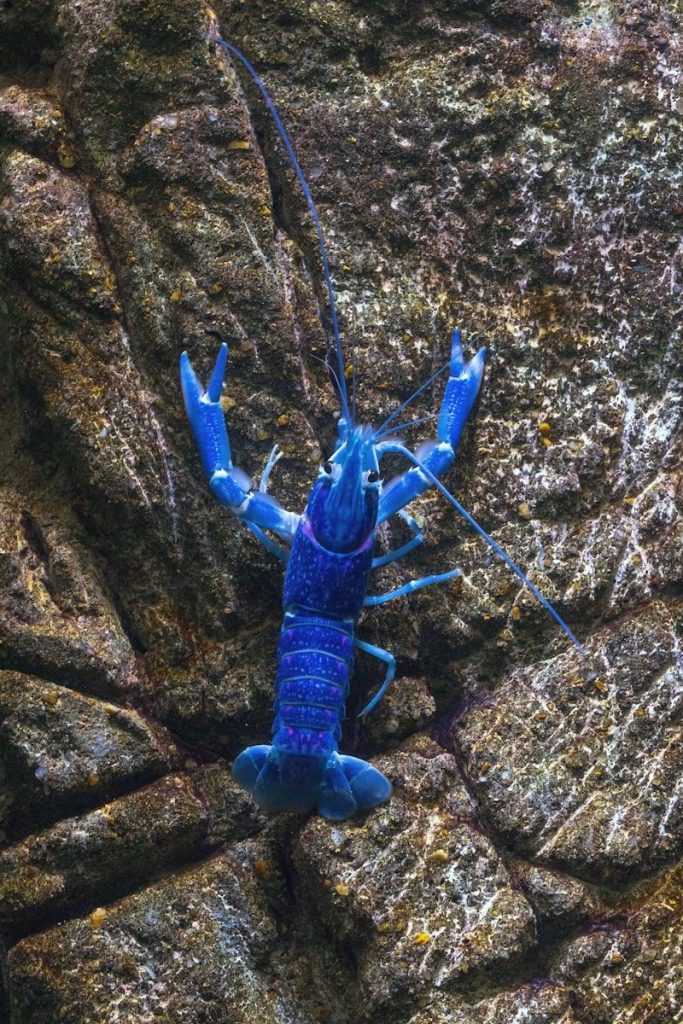
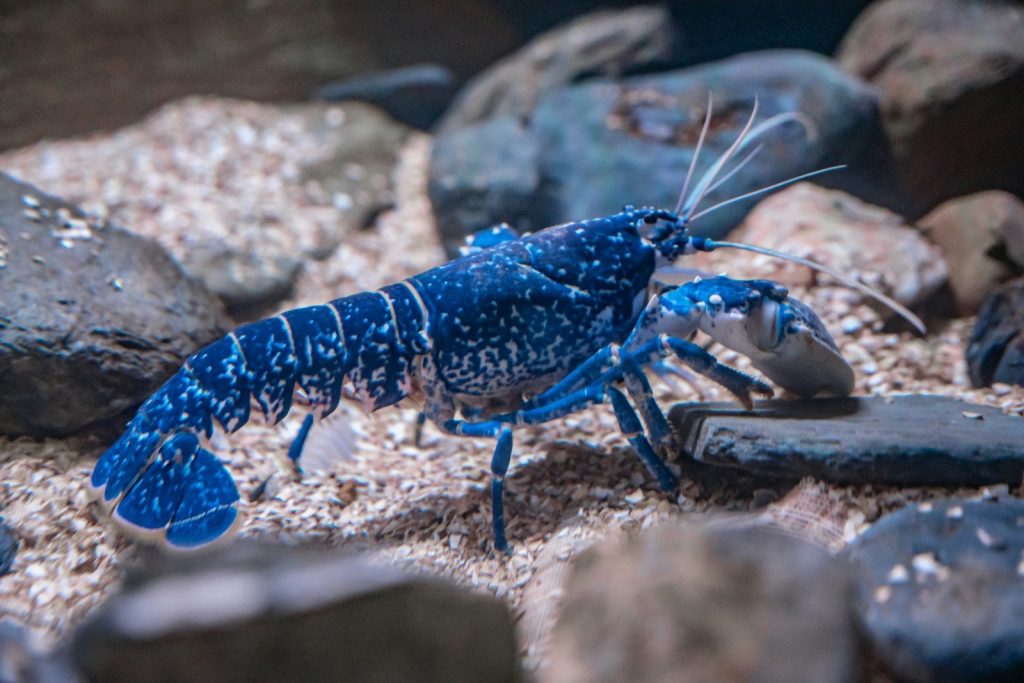
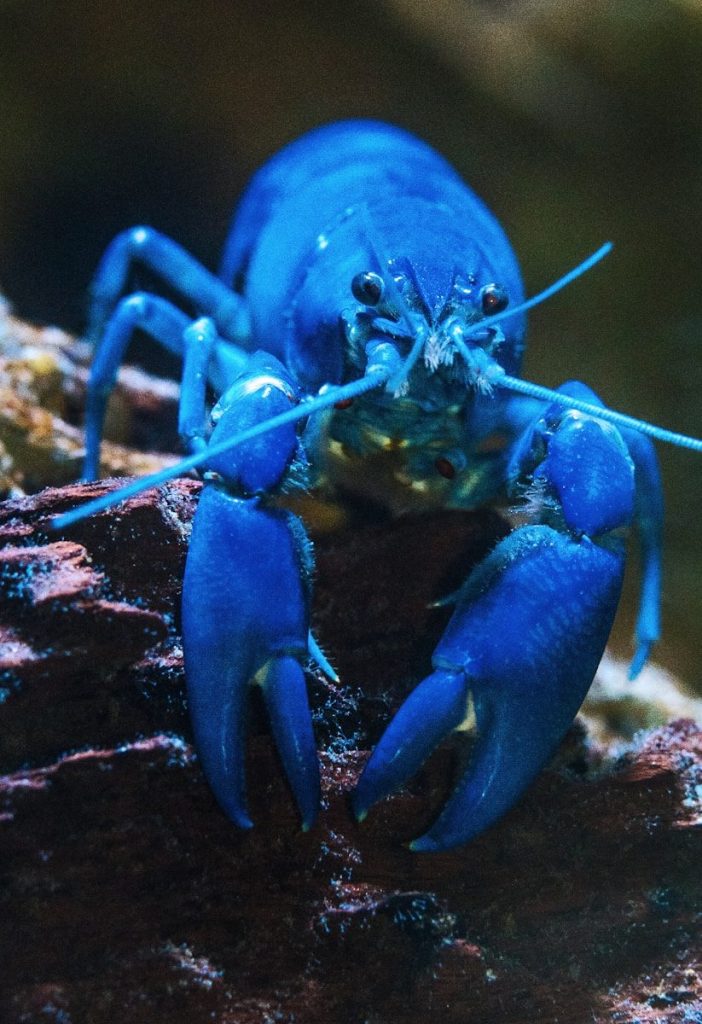
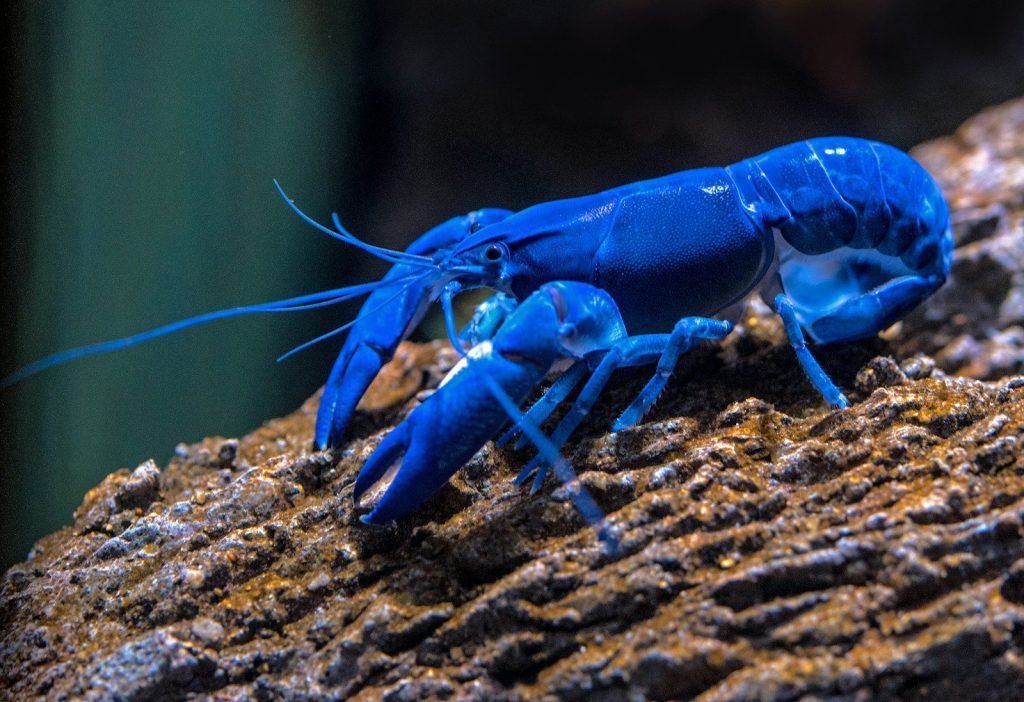
    Few underwater encounters are as striking as watching a brightly colored blue crayfish face an unusual predatory fish. The brilliant blue shell created a stunning contrast against the strange appearance of the so-called alien fish, turning an ordinary feeding into a dramatic display of instinct and survival.
    Every movement happened in seconds as predator and prey reacted to one another. This article explores why the encounter was so fascinating, what makes blue crayfish so unusual, and how specialized predators have evolved to hunt efficiently in aquatic environments.

    An unforgettable underwater encounter

    A blue lobster sitting on top of a rock
    Photo by David Clode on Unsplash

    The feeding began when a rare blue crayfish entered the water, while an unusual predatory fish waited nearby. The bright colors made the encounter especially eye-catching as both animals reacted to each other’s movements.

    Within moments, instinct took over. The predator responded with remarkable speed, showing how quickly feeding behavior can unfold in aquatic environments where hesitation often means losing a meal.

    Why blue crayfish are so unusual

    blue lobster on rock
    Photo by David Clode on Unsplash

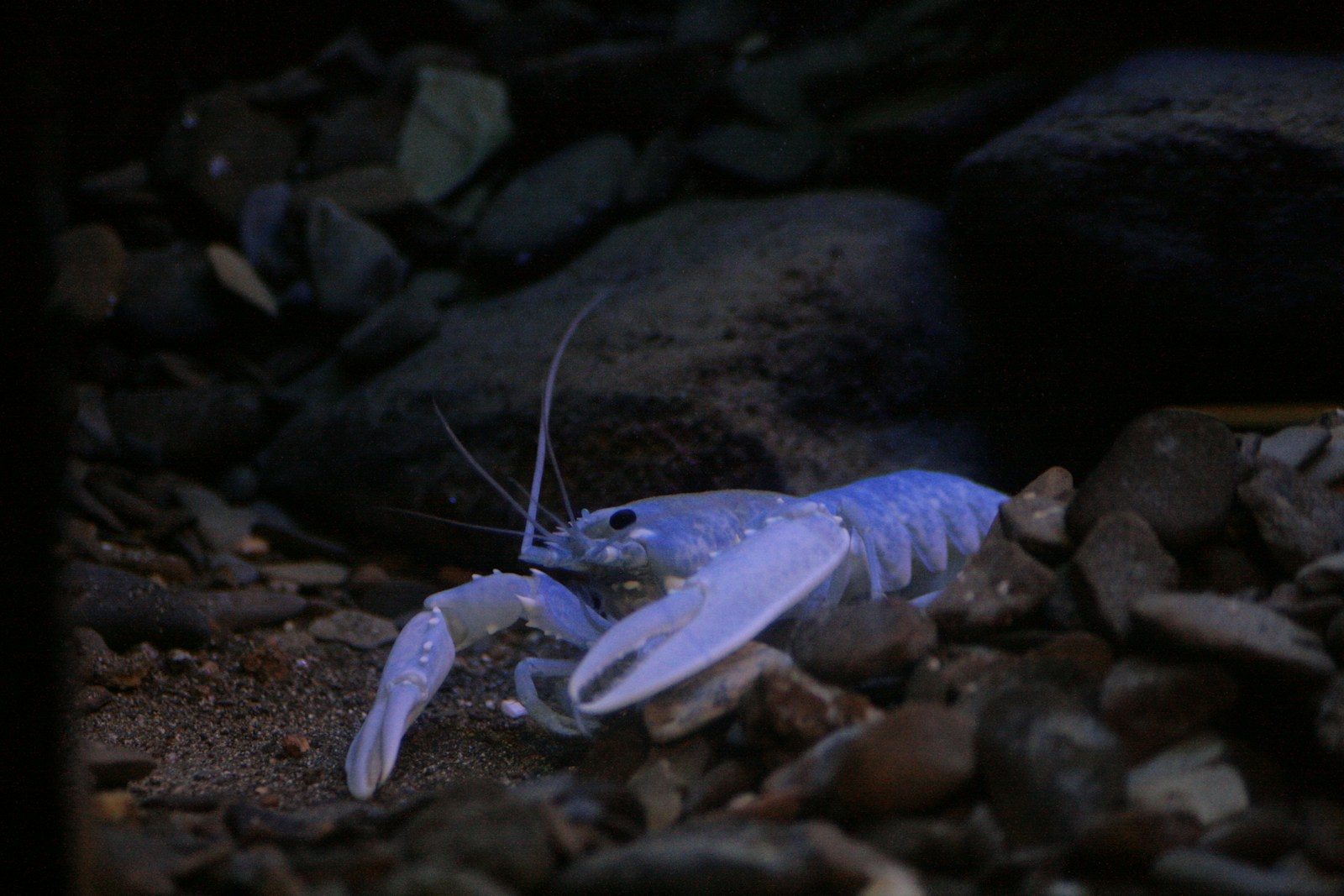
    Blue crayfish stand out because of their remarkable coloration. In the wild, blue individuals are uncommon in many species and usually owe their appearance to genetic differences that affect shell pigments, although selectively bred aquarium strains are much more common.

    Their bright color makes them visually impressive but may also reduce natural camouflage. Depending on the habitat, a vivid blue shell can make a crayfish easier for predators to spot.

    A predator built for hunting

    Aquarium Fish” by david.torcivia is licensed under CC BY 2.0

    Many unusual aquarium fish have evolved specialized jaws, powerful bites, or rapid strike speeds that allow them to capture prey before it can escape. These adaptations are the result of millions of years of evolution.

    Instead of relying solely on strength, aquatic predators often depend on perfect timing. A single fast strike is usually more effective than a long chase, especially in environments where prey can quickly hide.

    Every feeding is a survival test

    Barcelona Aquarium fishes” by Oh-Barcelona.com is licensed under CC BY 2.0

    Predators hunt to survive, while prey rely on defensive behaviors, hard shells, and quick reactions to avoid becoming food. Every encounter becomes a contest between attack and escape.

    Even heavily armored crayfish are not completely protected. Their strong claws and shell provide important defenses, but determined predators can still overcome them under the right conditions.

    Nature is both beautiful and unforgiving

    a blue lobster is standing on some rocks
    Photo by Winston Tjia on Unsplash

    The vivid colors of the blue crayfish made the encounter visually stunning, but the event also demonstrated an important ecological reality. Feeding interactions are essential for maintaining healthy aquatic food webs.

    Although dramatic to watch, these behaviors are part of the natural balance that exists in rivers, lakes, and aquariums. Predators and prey have evolved together over millions of years.

    A closer look at aquatic ecosystems

    blue lobster
    Photo by David Clode on Unsplash

    Watching unusual species interact helps people better understand animal behavior and survival strategies. Every feeding event reveals adaptations shaped by evolution.

    The encounter between the alien fish and the blue crayfish also reminds us that aquatic ecosystems contain extraordinary diversity. From brilliantly colored crustaceans to highly specialized predators, life beneath the surface is often more remarkable than it first appears.

  • The deep-sea predator that takes on giant squid

    The deep-sea predator that takes on giant squid

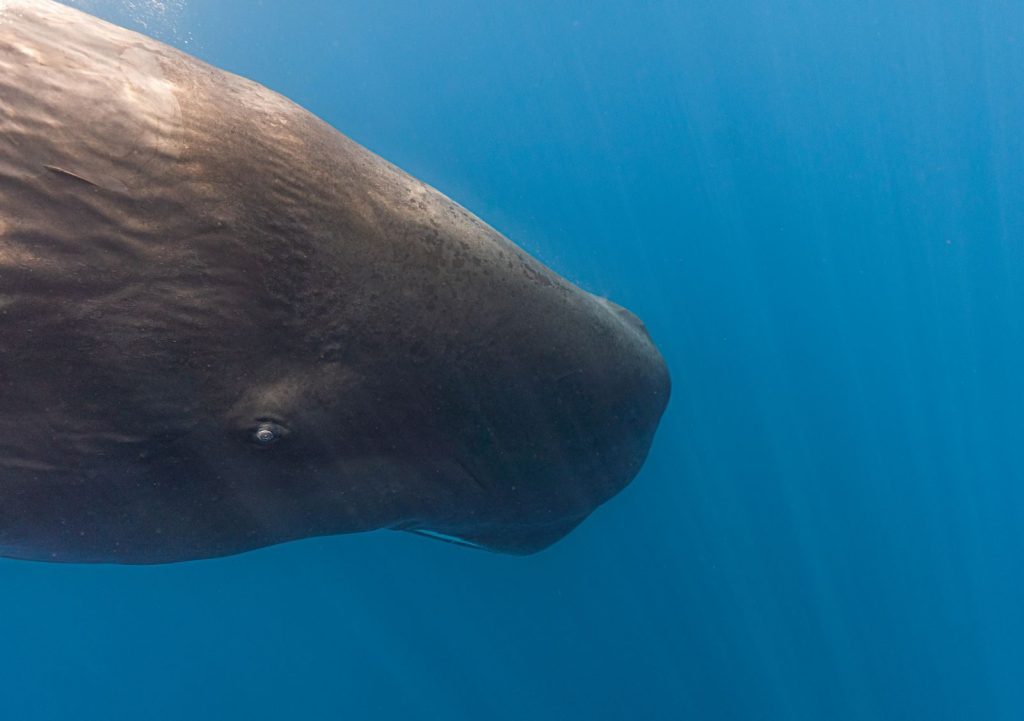
    Far below the ocean’s surface, one predator rules the deep in ways that still amaze scientists. The deep-sea predator that hunts giant squid is the sperm whale, a massive marine mammal built for life in dark, cold water.

    Many people wonder how any animal can catch one of the ocean’s largest squid, but the sperm whale has special features that make it an expert hunter. In this article, you will learn how sperm whales find giant squid, how these fierce battles happen, and why both animals are important to the deep-sea ecosystem.

    Why the sperm whale is the top deep-sea hunter

    Captivating close-up of a sperm whale swimming underwater near Sri Lanka's coast.
    Photo by Emma Li on Pexels

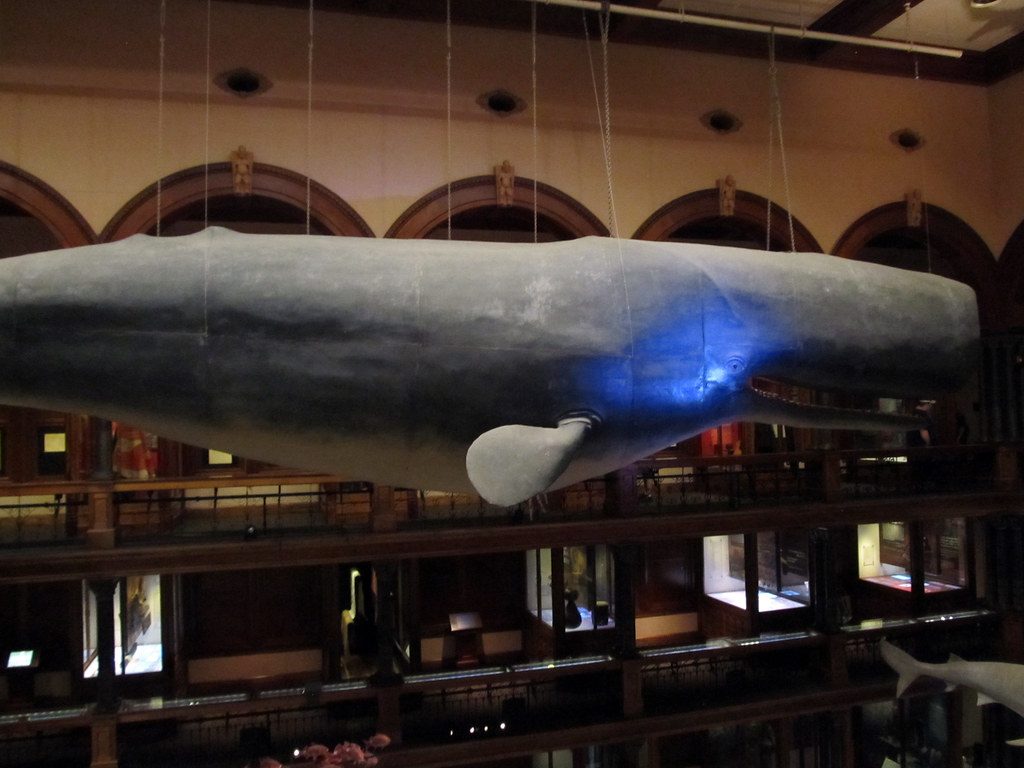
    The sperm whale is the largest toothed predator on Earth. Adult males can grow over 50 feet long and weigh more than 45 tons. They spend much of their lives searching for food in deep water, where sunlight never reaches. Their favorite prey includes large squid, and giant squid are one of the biggest animals they hunt.

    Unlike many whales that feed near the surface, sperm whales are built for deep diving. Their huge heads help them produce powerful clicking sounds that let them explore the darkness. These skills make them one of the few animals able to hunt giant squid in their natural home.

    How sperm whales find giant squid

    Physeter macrocephalus (sperm whale) (Wrightsville Beach, North Carolina, USA) 5” by James St. John is licensed under CC BY 2.0

    The deep ocean is almost completely dark, so sperm whales cannot depend on eyesight alone. Instead, they use echolocation. They send out loud clicking sounds that bounce off objects and return as echoes. This helps them locate squid, even when they are hundreds of feet away.

    Scientists believe sperm whales can dive deeper than 6,500 feet during long hunts that may last over an hour. They search slowly through the deep sea until they detect the shape and movement of a squid. Once they find it, they move in quickly before the prey can escape.

    What happens during the underwater battle

    Ocean” by Chris.L.Dodds is licensed under CC BY-SA 2.0

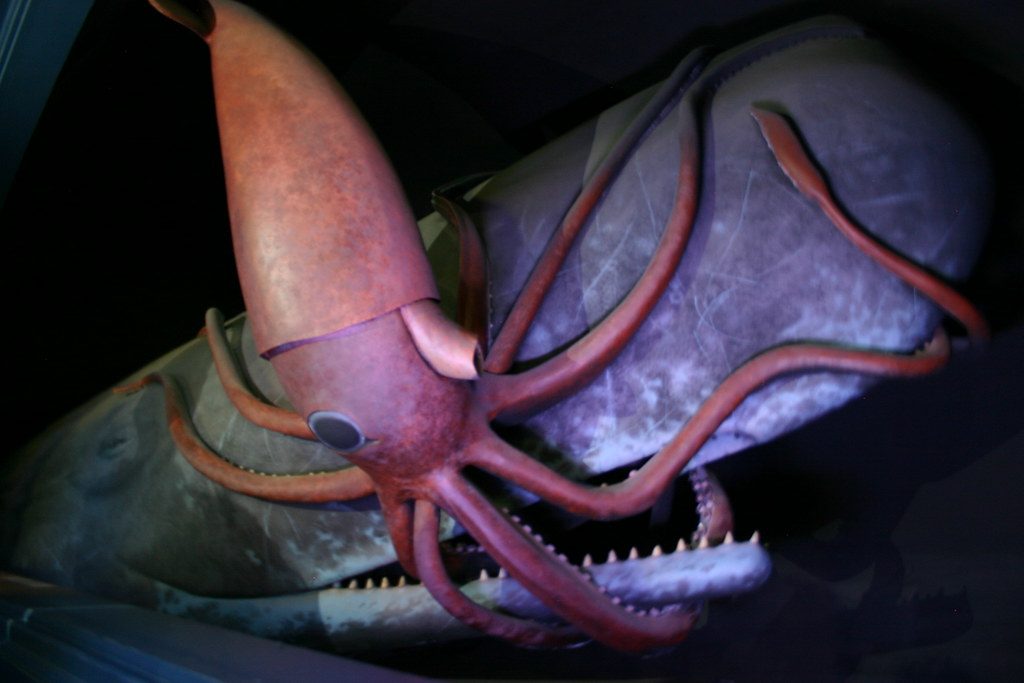
    When a sperm whale attacks, the giant squid does not give up easily. Giant squid have long feeding arms and two even longer tentacles lined with powerful suckers. Each sucker has sharp, tooth-like edges that can grip tightly and leave round scars on the whale’s skin.

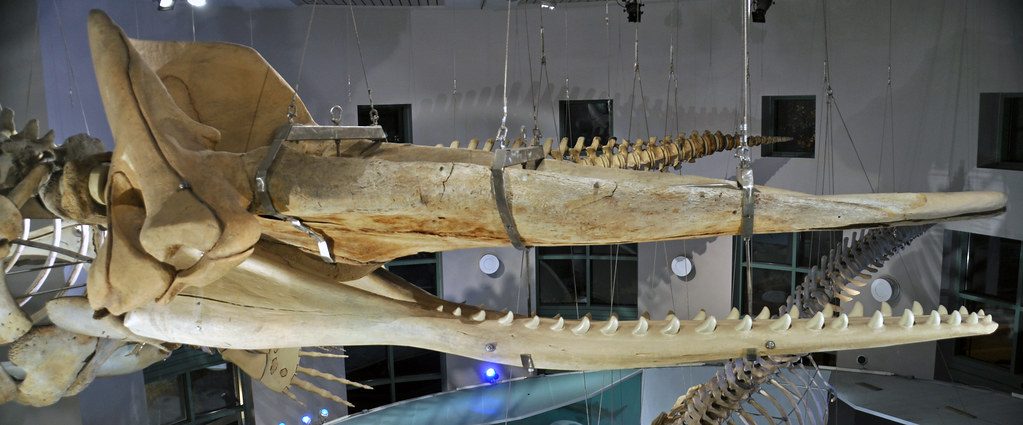
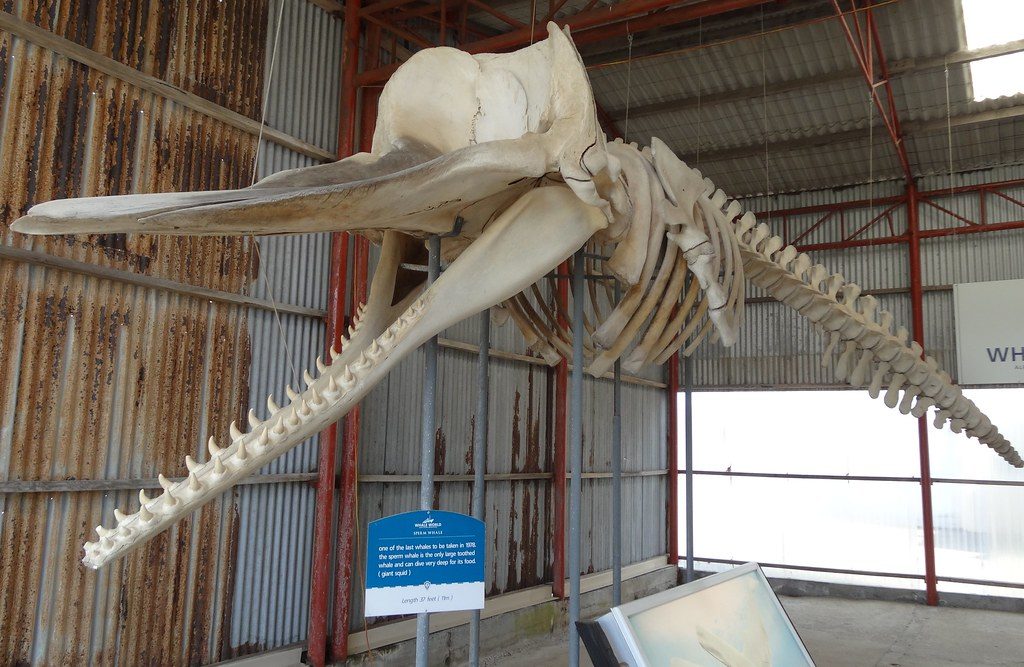
    Many sperm whales carry these scars for life, showing they have fought large squid. Even so, the whale usually has the advantage. Its powerful jaws hold strong conical teeth that can seize the squid before swallowing it. Most giant squid become part of the whale’s diet, although the struggle can be intense.

    Amazing adaptations for life in the deep

    Albany Whale World. Whale skeleton exhibit. Sperm whale 37 feet long.” by denisbin is licensed under CC BY-ND 2.0

    Sperm whales have several features that help them survive deep dives. They store large amounts of oxygen in their muscles and blood, allowing them to stay underwater much longer than most mammals. Their bodies also slow down during deep dives to save energy.

    Giant squid are also well adapted to this harsh environment. They have the largest eyes in the animal kingdom, helping them detect faint light and the movement of predators. Their soft bodies and long tentacles allow them to move through deep water while searching for fish and smaller squid.

    What scientists have learned from these predators

    three people in lab coats looking at a tablet
    Photo by National Cancer Institute on Unsplash

    Directly watching battles between sperm whales and giant squid is very difficult because they happen so deep underwater. Instead, scientists study whale dive records, scars, stomach contents, and underwater sound recordings to understand their hunting behavior.

    Research has shown that giant squid are an important food source for many sperm whales, especially adult males. Every new deep-sea expedition gives researchers a better understanding of these mysterious animals and the hidden world where they live.

    Why these deep-sea animals matter

    Sperm Whale” by daryl_mitchell is licensed under CC BY-SA 2.0

    The relationship between sperm whales and giant squid helps keep the deep ocean balanced. Predators control prey populations, while healthy prey populations support large hunters. This natural cycle is an important part of marine ecosystems.

    Both animals also remind us how much of the ocean remains unexplored. Protecting deep-sea habitats from pollution, climate change, and harmful human activities will help scientists continue learning about these remarkable creatures and the important roles they play.

  • Why this ancient whale was one of history’s fiercest hunters

    Why this ancient whale was one of history’s fiercest hunters

    What made one ancient whale so much more dangerous than the whales we know today? The answer lies in a giant predator that ruled the oceans millions of years before humans existed. This ancient whale was built for hunting, with powerful jaws, sharp teeth, and the strength to chase large prey.

    Unlike modern baleen whales that filter tiny animals from the water, it hunted other sea creatures. In this article, you will learn what made this ancient whale such a fierce hunter, how it lived, what it ate, and why scientists still study its fossils to better understand the history of life in Earth’s oceans.

    The giant predator of ancient seas

    A stunning whale skeleton suspended inside the grand interior of the Natural History Museum in London.
    Photo by Eleanore Stohner on Pexels

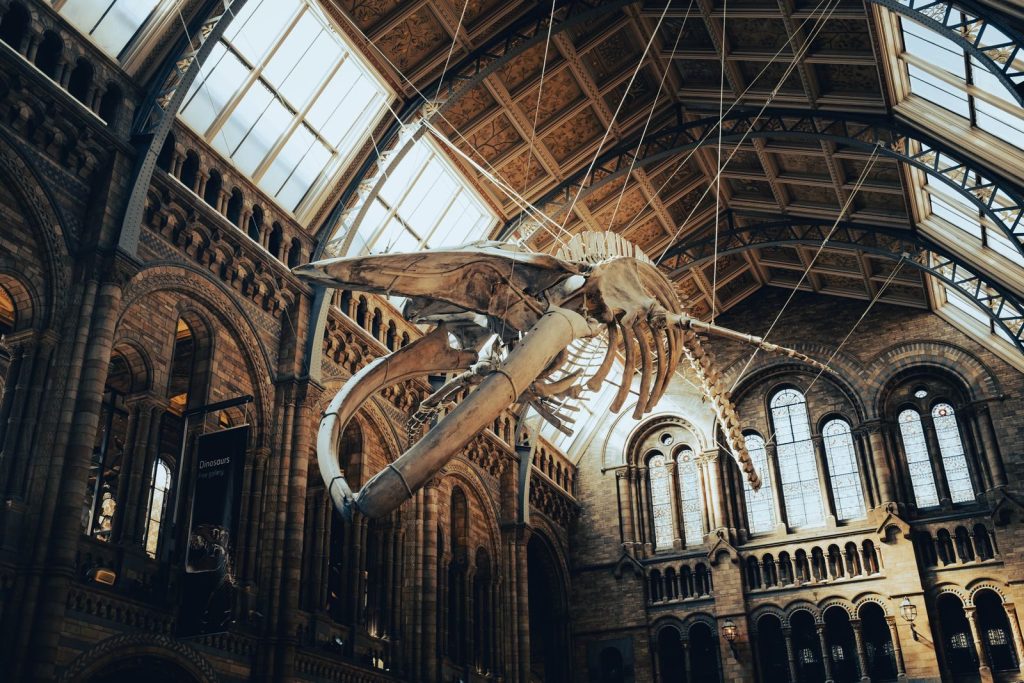
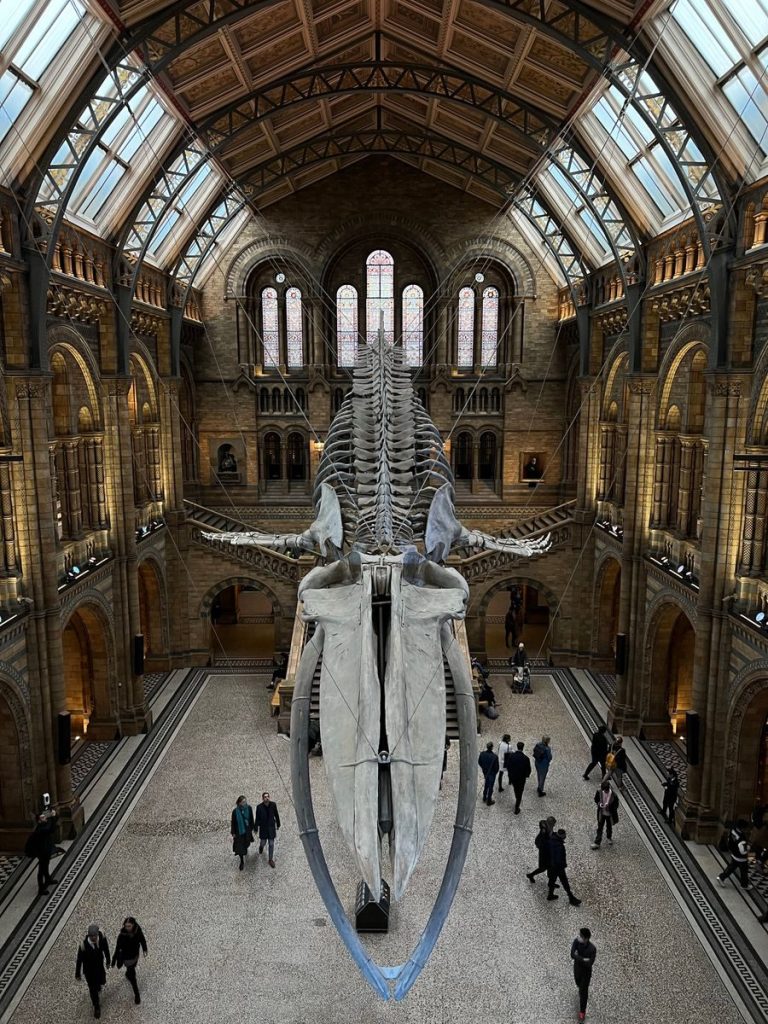
    One of the fiercest ancient whales was Livyatan, which lived about 12 to 13 million years ago during the Miocene Epoch. It was named after the biblical sea monster Leviathan and is one of the largest meat-eating whales ever discovered. Scientists estimate it reached around 44 to 57 feet long.

    Unlike today’s sperm whales, Livyatan had huge teeth in both its upper and lower jaws. Some of these teeth were over one foot long, making them among the biggest biting teeth of any known animal. This gave the whale a powerful grip on struggling prey.

    Built for powerful attacks

    Explore the stunning atrium featuring a large whale skeleton display and historic architecture.
    Photo by Yelena from Pexels on Pexels

    Livyatan had a massive head filled with strong jaw muscles that created an incredibly forceful bite. Its body was shaped for swimming quickly through open water, allowing it to surprise large animals before they could escape.

    The whale also used echolocation, much like modern sperm whales. By sending out sound waves and listening for echoes, it could find prey even in dark or cloudy water. This skill made it an effective hunter in many ocean conditions.

    Hunting large marine animals

    Elephant Seals” by D-Stanley is licensed under CC BY 2.0

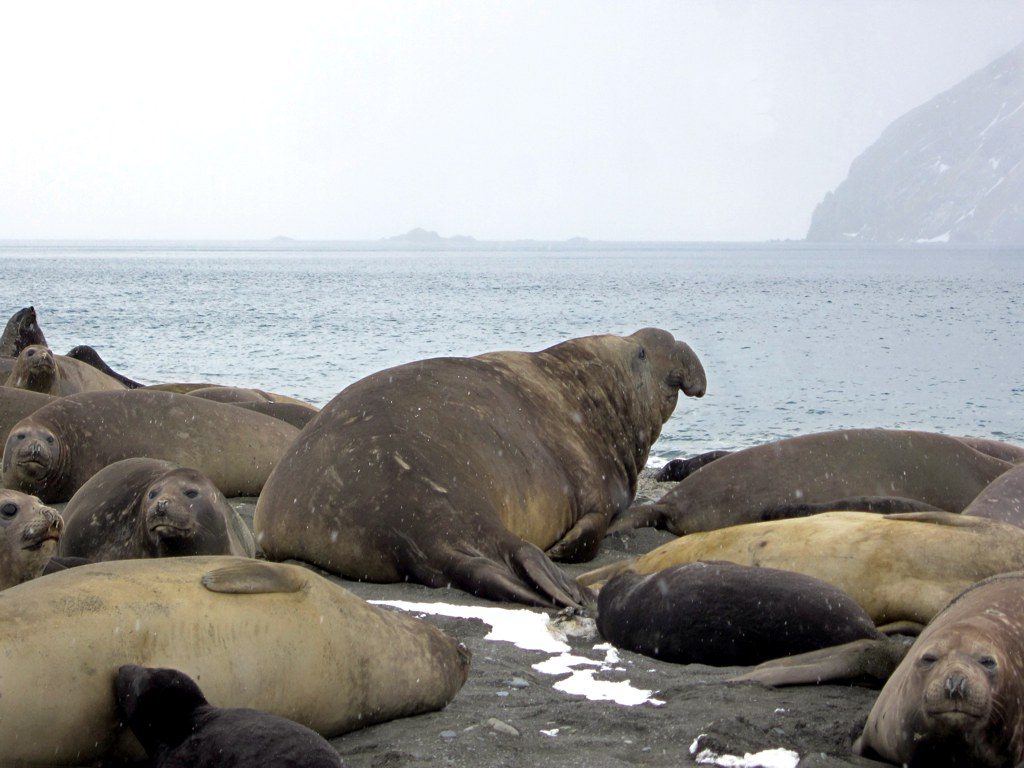
    Instead of feeding on tiny fish or plankton, Livyatan hunted large marine mammals. Scientists believe it preyed on smaller whales, dolphins, seals, and other sizable sea animals. Fossils from the same time period show that many whale species lived alongside this giant predator.

    Its long, thick teeth were perfect for grabbing, tearing, and holding slippery prey. Unlike sharks that often relied on replacing broken teeth, Livyatan depended on its powerful bite to overpower animals with force.

    A rival of the giant megalodon

    Carcharocles megalodon” by Gunnar Ries zwo is licensed under CC BY-NC-ND 2.0

    Livyatan shared the oceans with the famous giant shark known as Megalodon. Both were top predators that hunted large marine mammals, and they likely competed for many of the same food sources.

    Scientists cannot prove that Livyatan and Megalodon regularly fought each other, but they almost certainly crossed paths. Their fossils have been found in rocks from the same time period, showing they lived in many of the same ancient oceans.

    Why this whale disappeared

    Ocean” by Chris.L.Dodds is licensed under CC BY-SA 2.0

    Livyatan did not survive to the present day because the oceans changed over millions of years. Climate shifts affected sea temperatures and changed where many marine animals lived. As food sources became less common, large predators faced greater challenges.

    The disappearance of many medium-sized whales may have also reduced the amount of prey available. Like many ancient species, Livyatan could not adapt fast enough to these changing conditions and eventually became extinct.

    What fossils reveal today

    three people in lab coats looking at a tablet
    Photo by National Cancer Institute on Unsplash

    The first major Livyatan fossils were discovered in Peru in 2008. They included a large skull and enormous teeth that helped scientists understand how this whale hunted. Even though only part of the skeleton has been found, the fossils provide valuable clues about its size and behavior.

    Today, Livyatan remains one of the best examples of an apex predator from the ancient oceans. Its fossils remind us that whales were once among the most fearsome hunters on Earth, filling a role very different from that of most whales alive today.

  • How an injured swan reunited with its lifelong companion

    How an injured swan reunited with its lifelong companion

    Swans are known for forming strong, long-term bonds, so it is heartbreaking when an injury separates a pair. The story of how an injured swan reunited with its lifelong companion shows just how powerful those bonds can be.

    Wildlife rescuers have seen many cases where a healthy swan waits near a rescue site or returns to the same area until its partner comes home. This article explains why swans stay loyal to each other, what happens when one is injured, how rehabilitation works, and why a successful reunion is so important for their survival.
    Swans often stay with one partner

    Embarrassing parents – swan duckling” by @Doug88888 is licensed under CC BY-NC-SA 2.0

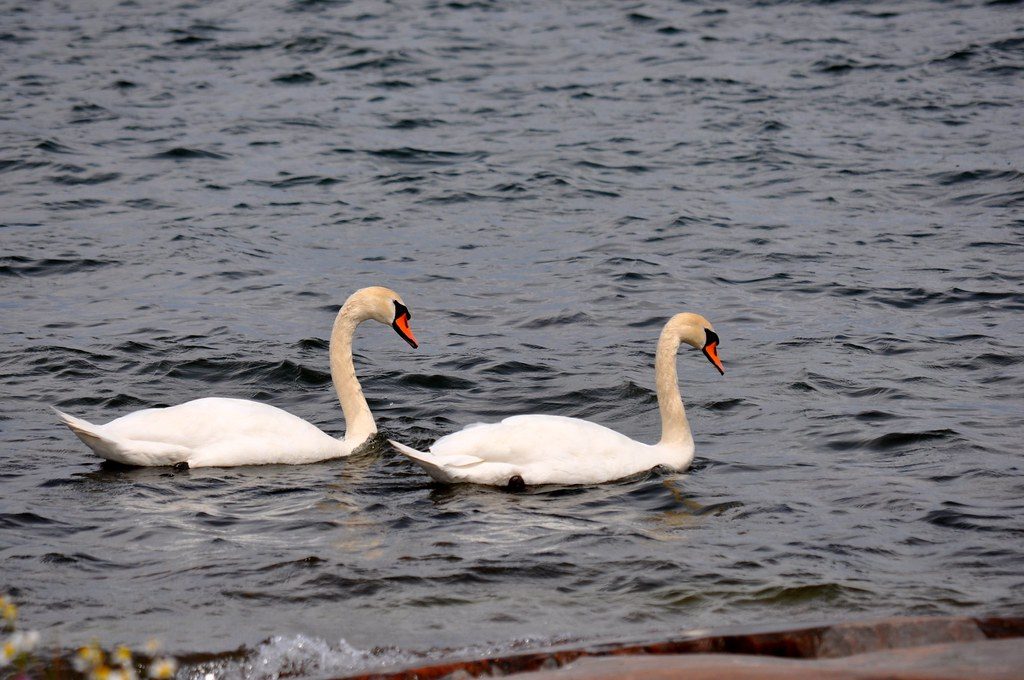
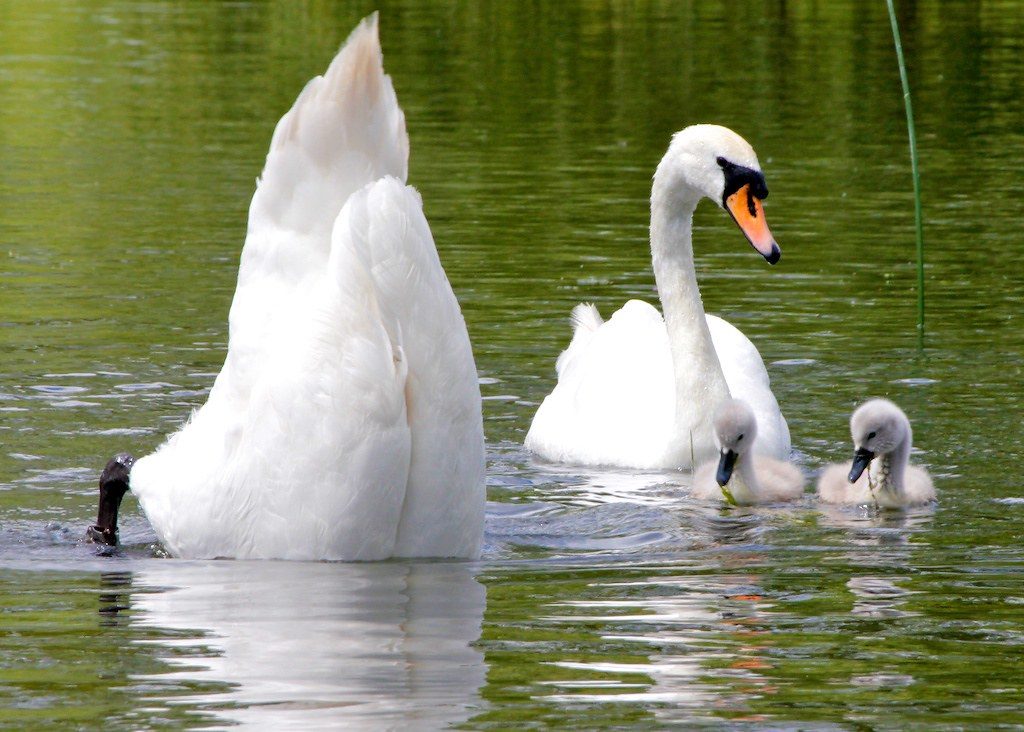
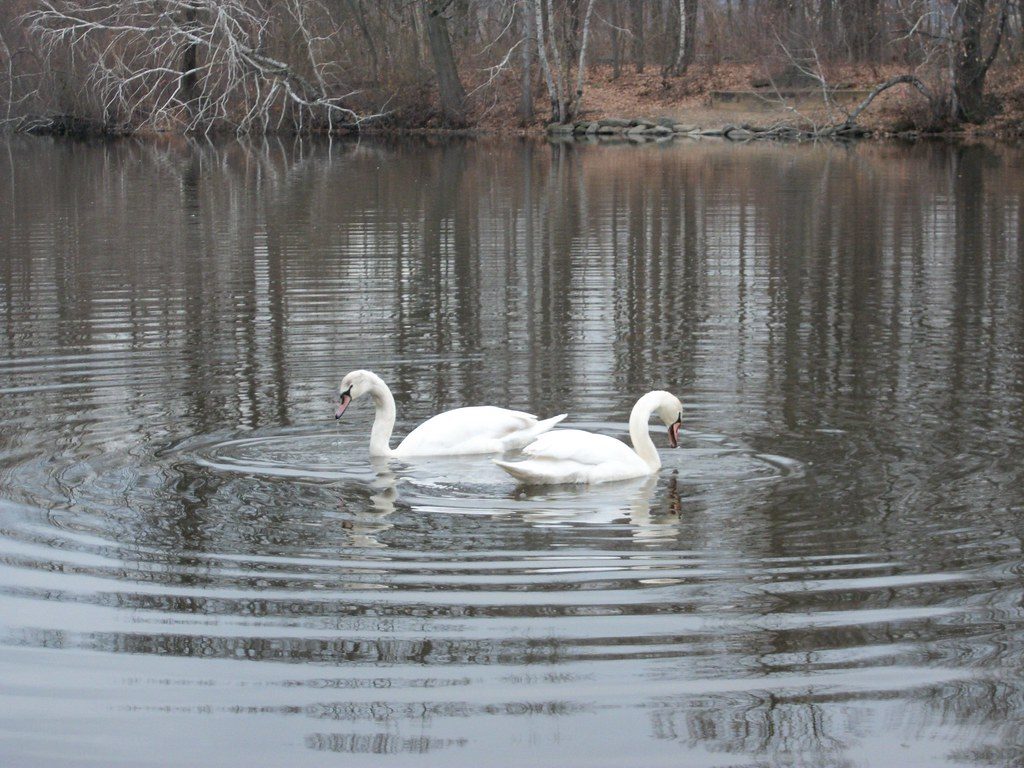
    Many swan species, including mute swans, trumpeter swans, and tundra swans, usually form long-term pair bonds. Most adult pairs stay together for many years, and many remain together for life if both birds survive. They work as a team to defend their territory, build nests, and raise their young.

    Their close bond helps them succeed in the wild. A pair communicates with body movements and calls, making it easier to protect eggs and cygnets. While not every pair stays together forever, lifelong partnerships are common among healthy adult swans.

    An injury can separate a devoted pair

    Swan wings.” by hegarty_david is licensed under CC BY-NC 2.0

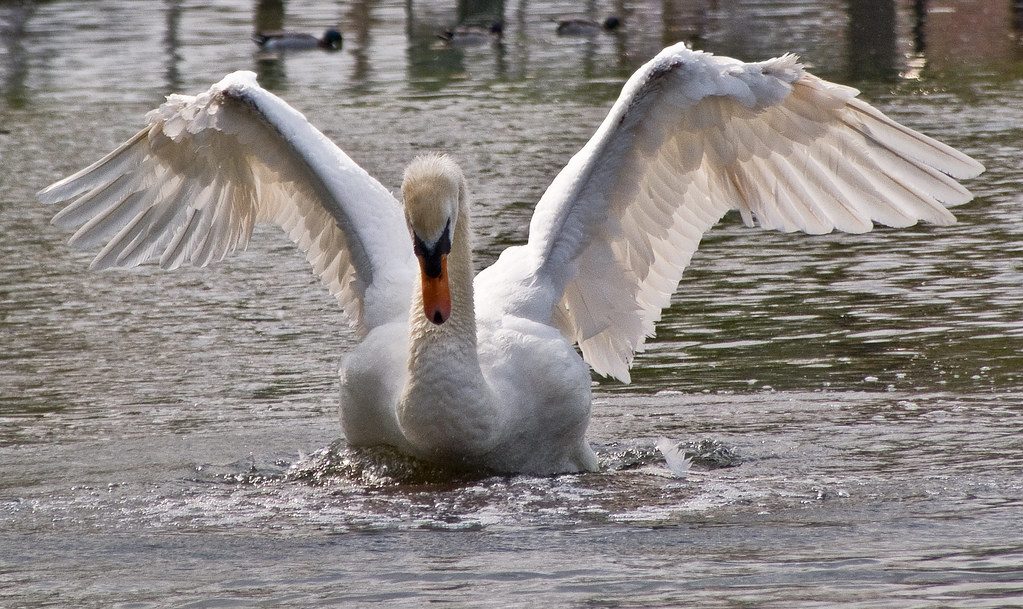
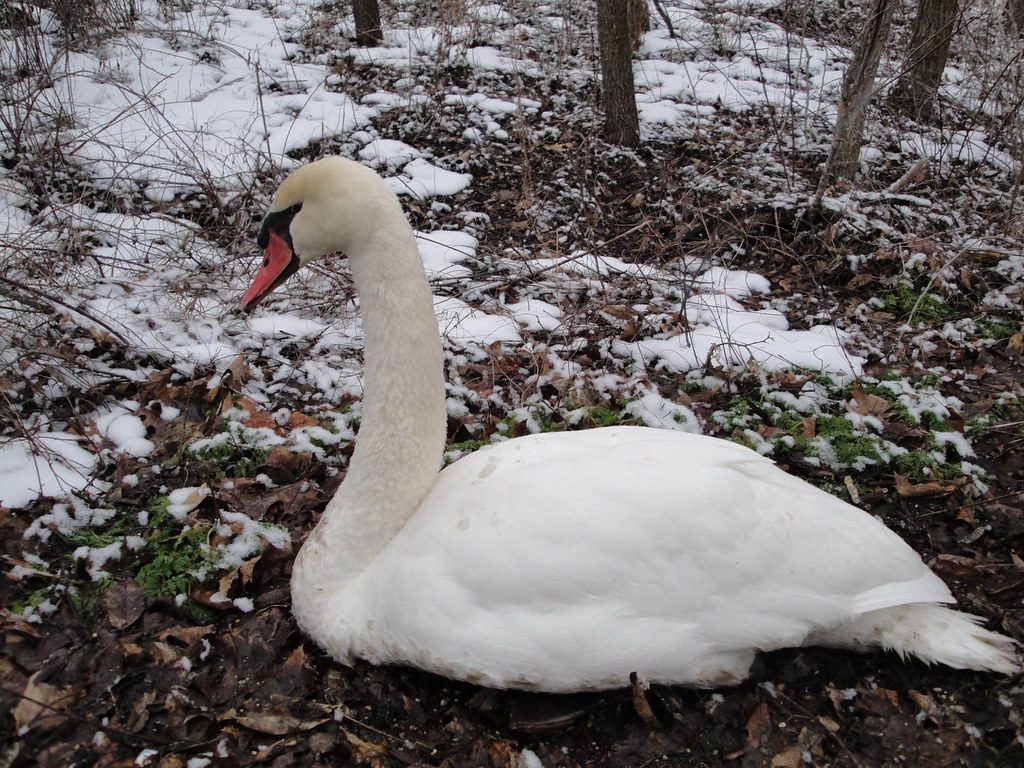
    Swans may be injured by fishing line, collisions with power lines, predators, or human-made objects. When one bird cannot fly or swim well, wildlife rescuers often step in because the injury could become life-threatening.

    The healthy partner sometimes stays nearby instead of leaving. Wildlife rehabilitation centers have reported cases where the uninjured swan remained close to the rescue location or returned often until its mate recovered. This behavior reflects the strong pair bond seen in many swan species.

    Wildlife experts help the injured bird recover

    My swan rescue” by IrishErlina is licensed under CC BY 2.0

    After rescue, trained wildlife rehabilitators examine the swan for broken bones, infections, or other injuries. The bird receives proper food, clean water, medication if needed, and a safe place to heal with as little stress as possible.

    The goal is always to return the swan to the wild once it is healthy enough. Releasing a bird too early could reduce its chances of survival, so experts carefully watch its strength, swimming ability, and flight before making that decision.

    The reunion can be an emotional moment

    Swan Couple” by Keith Marshall is licensed under CC BY-NC-SA 2.0

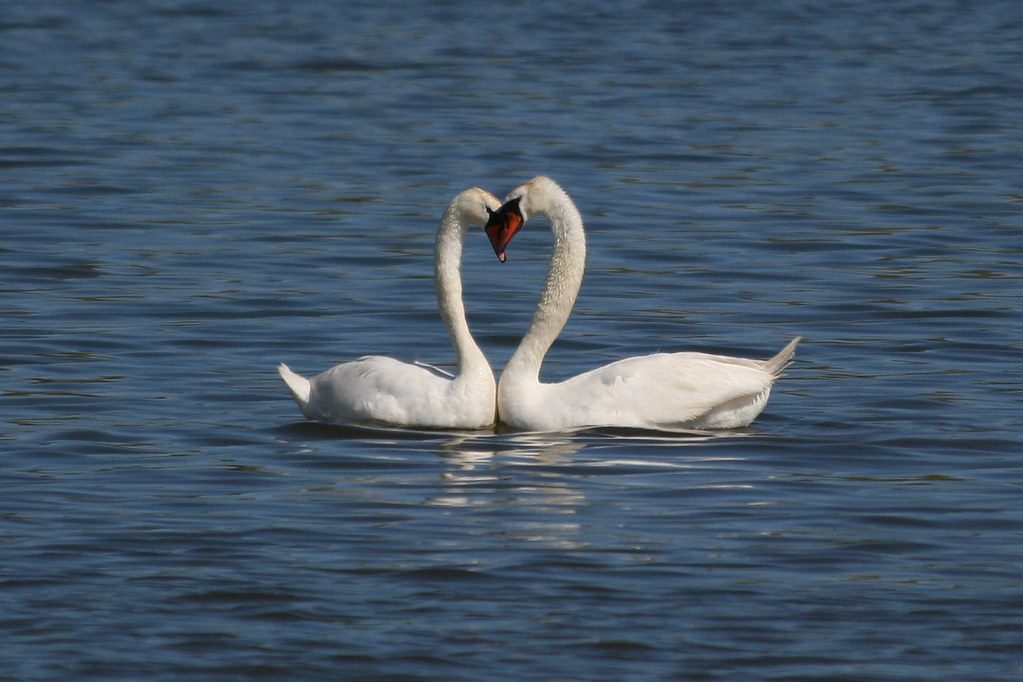
    When the recovered swan is released, rescuers often return it to the same area where it was found. If its partner has remained in the territory, the two birds may recognize each other through familiar calls and behavior.

    Many reunions happen peacefully. The pair may swim side by side, touch bills, or move together almost immediately. While every case is different, successful reunions show how important long-term pair bonds are in the lives of swans.

    Staying together improves survival

    SWAN COUPLE 1” by @IOTAGLOBAL is licensed under CC BY 2.0

    A reunited pair has a better chance of defending its territory and raising young. Two healthy adults can watch for danger, gather food, and protect their nest more effectively than a single bird.

    If the reunion happens before the breeding season, the pair may continue nesting as usual. Keeping an established pair together also supports stable swan populations because experienced adults are often successful parents.
    These stories inspire people to protect wildlife

    Man is looking at a screen with his head down.
    Photo by Alicia Christin Gerald on Unsplash

    Stories about injured swans finding their lifelong companions remind people that wild animals have strong social connections. They also show how trained wildlife rehabilitators can make a real difference when birds receive proper care.

    People can help by keeping lakes and rivers free of trash, avoiding disturbing nesting birds, and reporting injured wildlife to licensed rescue organizations. Small actions can protect swans and give injured birds the best chance of returning to their partners.