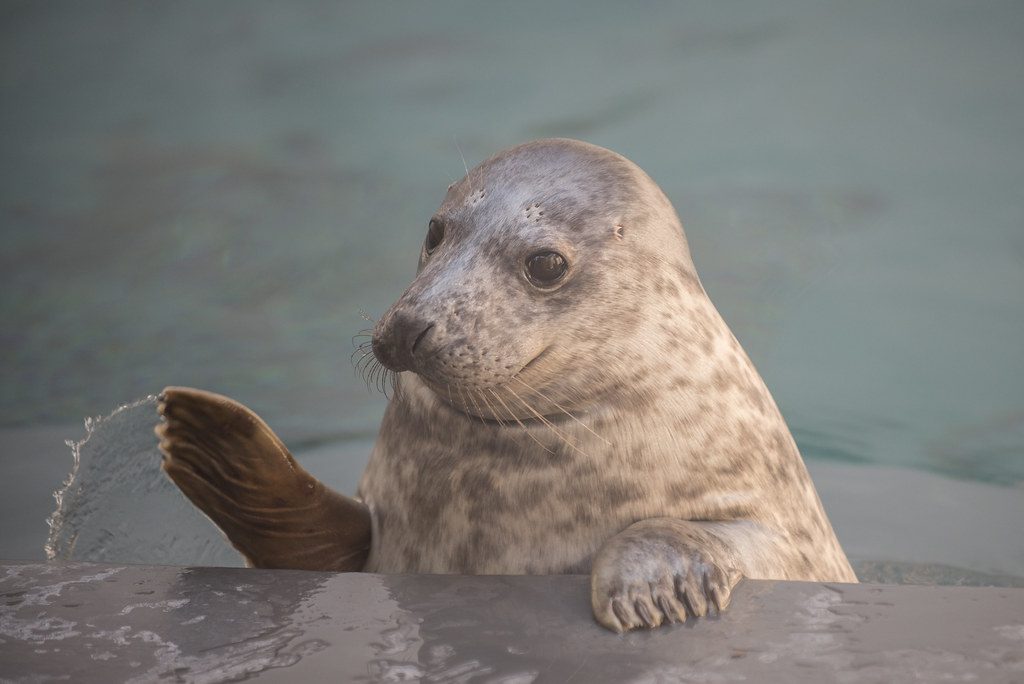
An injured young seal was resting near the water with a rubber ring trapped tightly around its neck when a rescuer saw an opportunity to help. Removing debris like this can be critical because rings, fishing gear, ropes, and other discarded materials can remain trapped as marine animals grow, potentially causing serious injuries. Similar seal entanglements involving rubber rings have been documented by wildlife observers and rescuers around the United Kingdom.
This rescue, however, came with an unexpected complication. Another young seal stayed nearby and appeared unwilling to abandon its companion. When the rescuer approached the entangled animal, the second seal seemingly interpreted the intervention as a threat and rushed toward him. Instead of an easy rescue, the situation suddenly became a delicate attempt to help one animal while avoiding frightening the other.
A rubber ring had become trapped around its neck
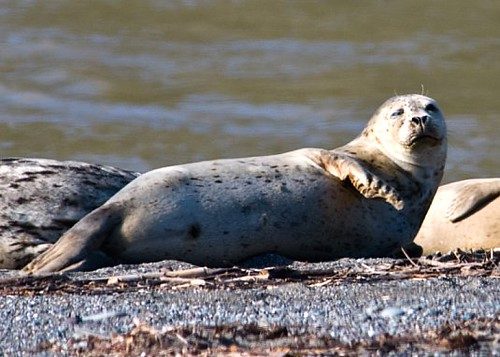
Circular pieces of marine debris can be particularly dangerous for seals because an animal may push its head through an opening when it is young and then become unable to remove it. As the seal grows, the object can become increasingly restrictive. Documented cases have involved seals becoming caught in rubber rings, fishing line, rope, and other discarded materials.
In this case, the young animal had a rubber ring around its neck and needed assistance getting free. The rescuer could not simply rush toward it because seals are wild animals and may flee into the water when frightened. That meant waiting nearby and watching for an opportunity to approach without causing unnecessary panic.
The rescuer had to wait for the right moment
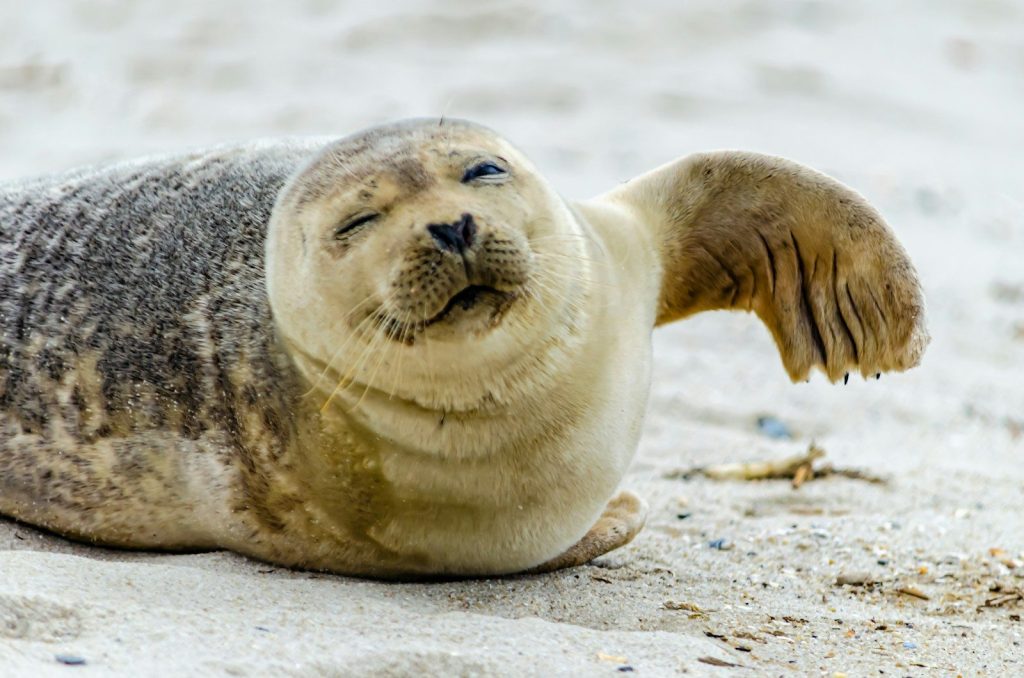
Wildlife rescues involving seals can require considerable patience. Even when an entanglement is clearly visible, getting close enough to remove it safely is another challenge entirely. Other documented seal rescues have required responders to spend time gaining an animal’s trust or carefully positioning themselves before attempting to remove debris.
The rescuer therefore waited while the injured youngster remained on the pier. When the opportunity finally appeared, he moved toward the seal and began working to free it. But another animal nearby was closely watching what was happening.
His tiny friend suddenly rushed to protect him
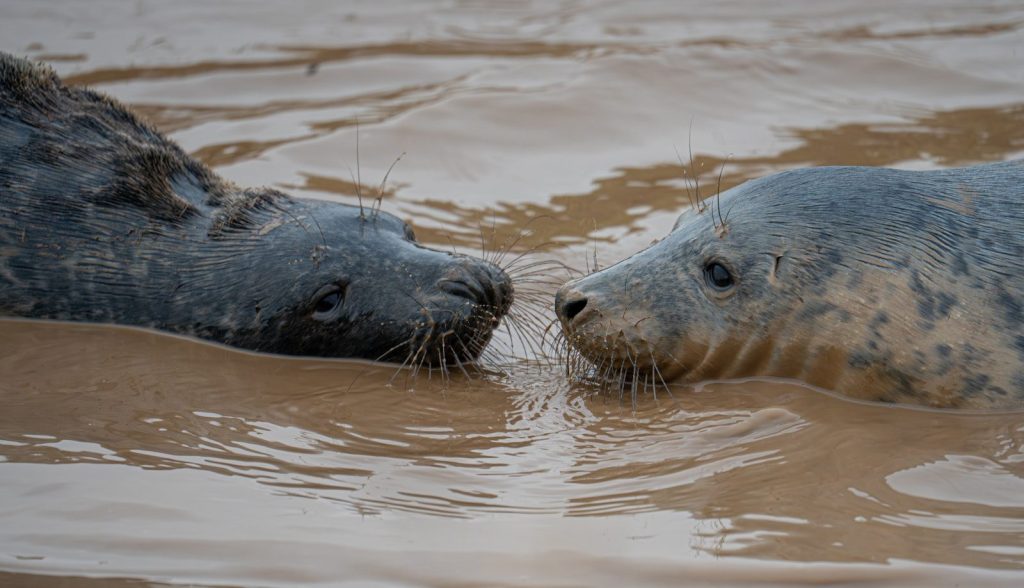
The second young seal apparently did not understand that the human approaching its companion was trying to help. As the rescue began, the protective youngster moved toward the rescuer and came close enough that he had to watch his legs while continuing to focus on the entangled seal.
From the animal’s perspective, the reaction is understandable without assuming it deliberately understood the concept of a rescue. Seals can respond defensively when they perceive something unfamiliar as threatening. Wildlife authorities routinely warn people to maintain distance from seals because even young animals remain wild and can react unpredictably when stressed. NOAA gives similar warnings around Hawaiian monk seals, particularly when protective behavior is involved.
The rescue became a two-seal problem
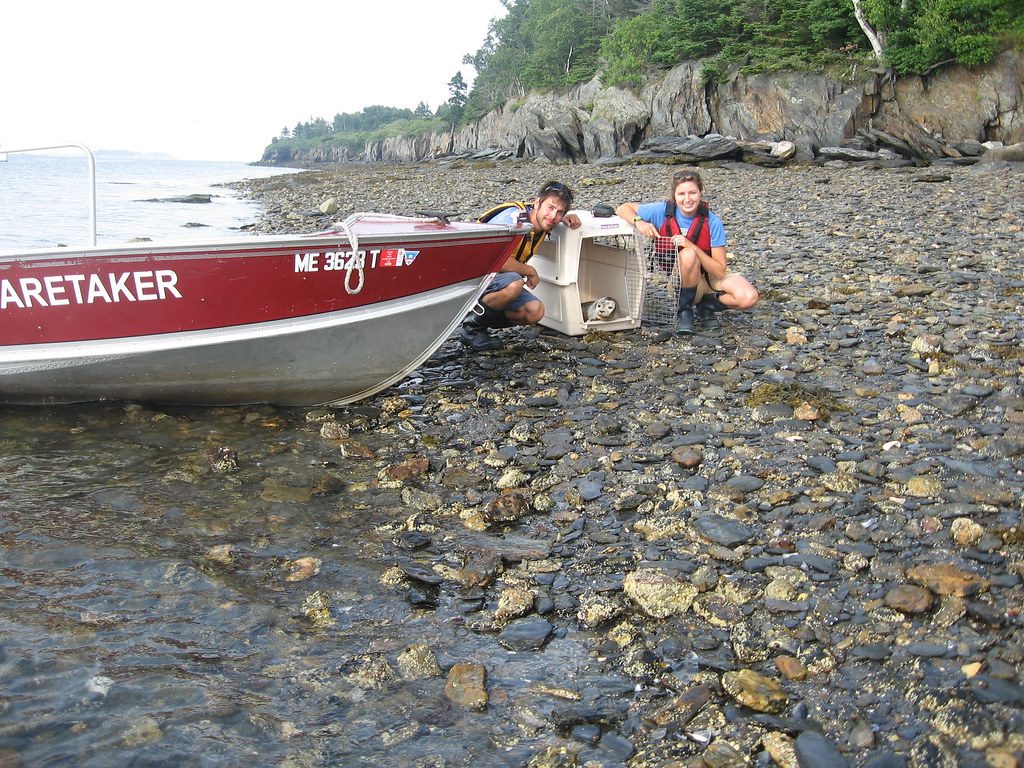
The rescuer now had 2 things demanding his attention. He needed to remove the ring from one animal while making sure the other did not get close enough to interfere. What began as a straightforward attempt to cut away an entanglement had turned into a much more complicated encounter.
The second seal’s behavior also created one of the most memorable parts of the footage. To a viewer, it can look almost as though the youngster is telling the rescuer to stay away from its friend. It is safer scientifically to describe that as apparent protective or defensive behavior rather than claim the seal understood exactly what was happening.
The trapped youngster was finally freed
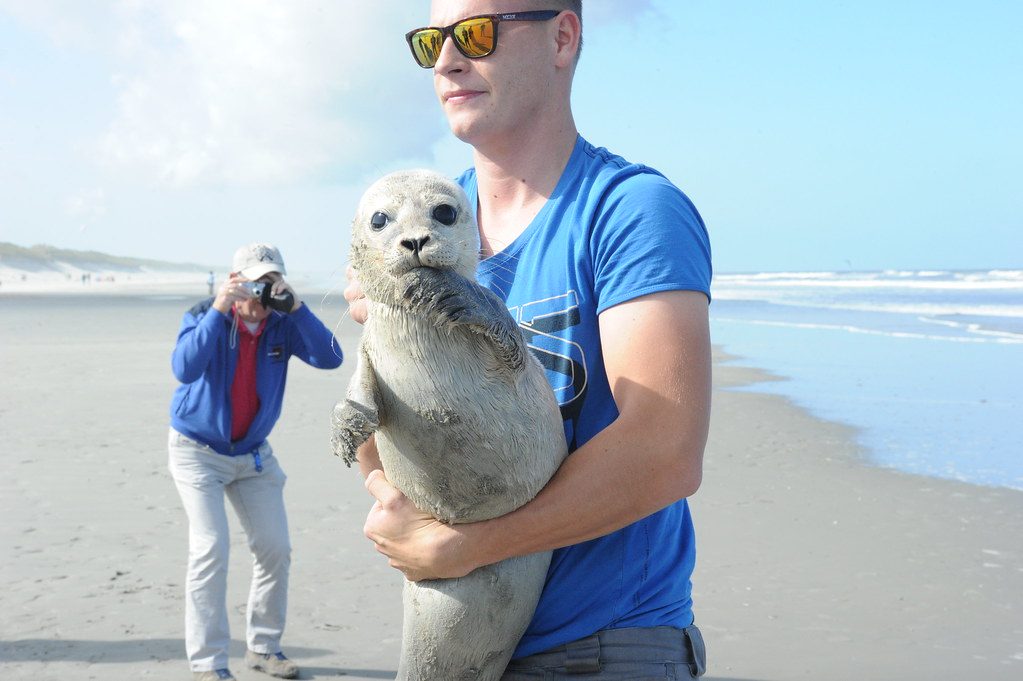
Despite the interruption, the rescuer managed to complete the job and remove the rubber ring. That eliminated an object that could have continued restricting the animal as it grew. Marine debris entanglement is a genuine threat to seals and other wildlife, and documented incidents show that fishing equipment, ropes, nets and discarded objects can cause severe problems when animals become trapped in them.
The youngster was able to leave without the ring around its neck. Meanwhile, its determined companion had unintentionally made the rescue considerably more difficult by apparently trying to defend the very animal the human was attempting to save.
The little protector made the rescue unforgettable
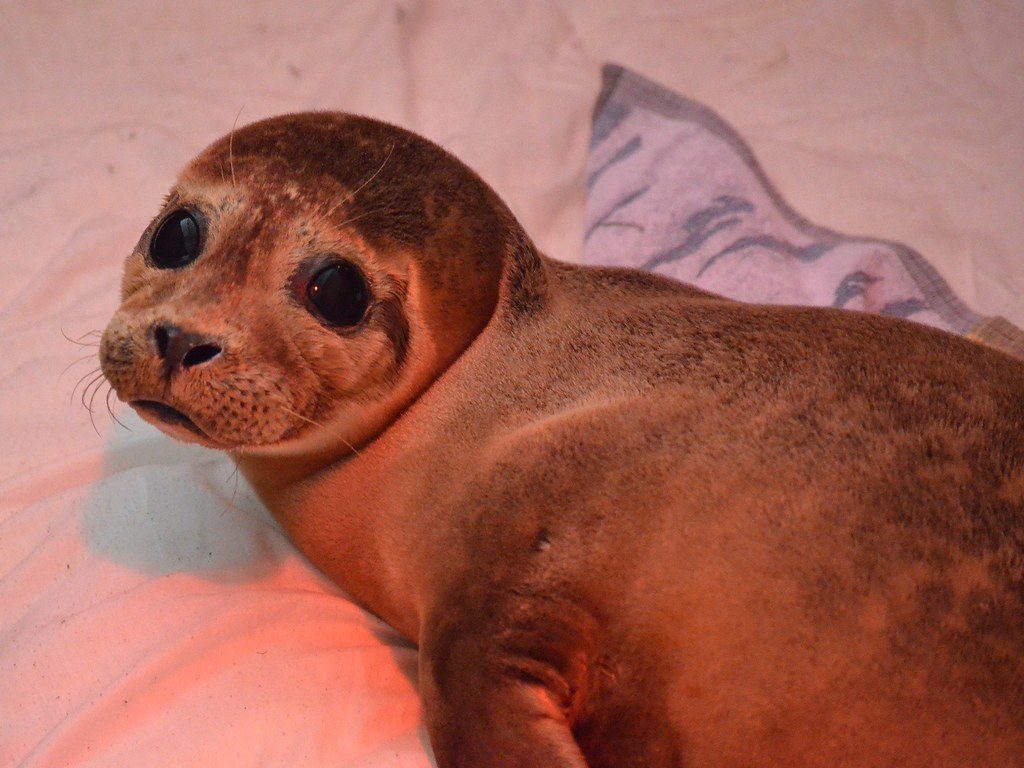
What makes the encounter stand out is not simply that an entangled animal was freed. It is the behavior of the second youngster, which stayed nearby and reacted when a human approached its companion. Calling that behavior “friendship” is an appealing interpretation, although the footage alone cannot establish what the seal was thinking.
What is clear is that the rescuer faced an unusual challenge while helping an entangled animal. The incident also highlights a much larger problem. Objects discarded or lost around the ocean can become dangerous traps for marine wildlife long after people have stopped thinking about them, making successful interventions like this especially important.
Featured Image: “Gray Seal Pup Update at the Smithsonian’s National Zoo” by Smithsonian’s National Zoo is licensed under CC BY-NC-ND 2.0
Leave a Reply