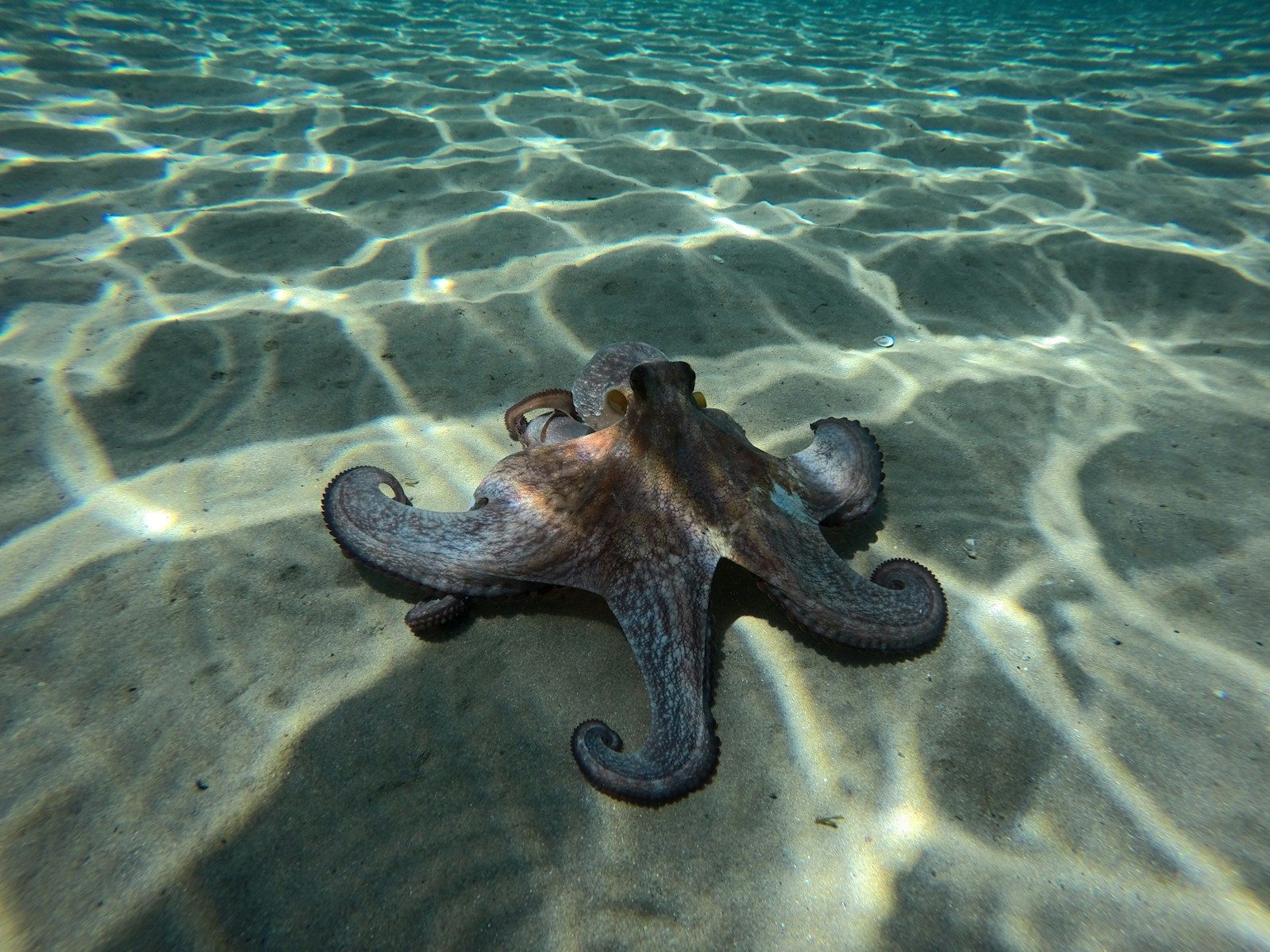
An octopus has several ways to escape when a predator gets too close. It can change its appearance, squeeze into narrow spaces, and move quickly across the seafloor, but one of its most dramatic defenses involves releasing a dark cloud of ink.
The ink can temporarily hide the octopus and distract an approaching predator while the animal escapes. This defense works alongside the octopus’s camouflage, flexible body, and highly developed nervous system, giving the soft-bodied animal several ways to avoid becoming a meal.
Octopus ink creates an underwater smokescreen
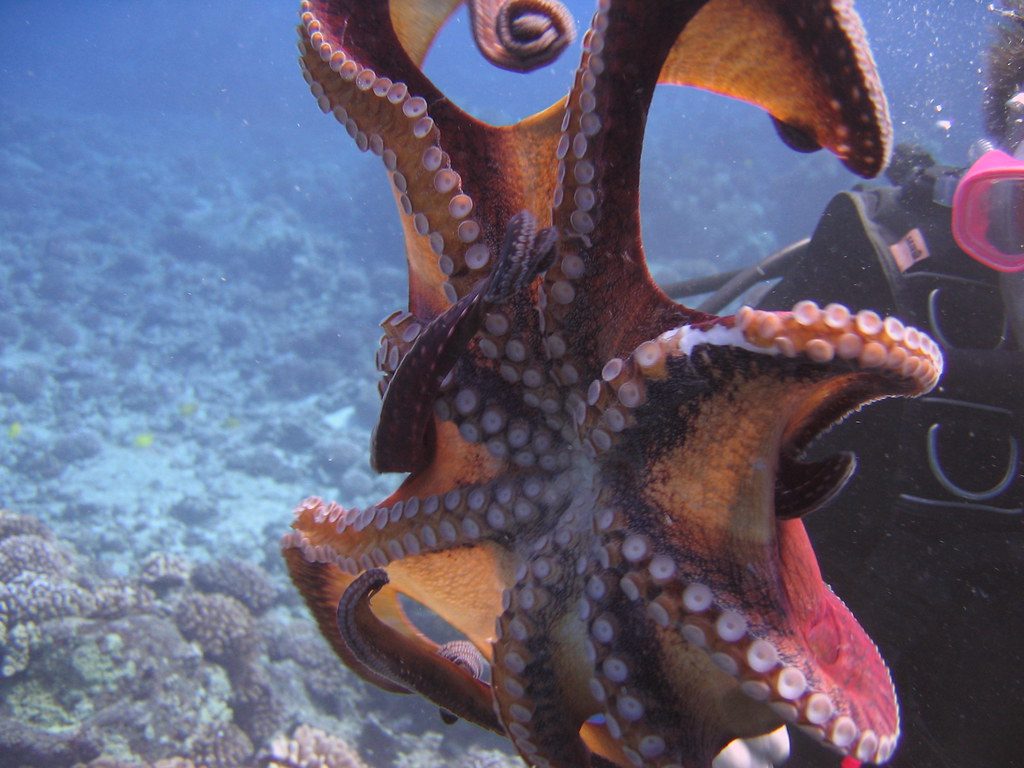
Most octopuses have an ink sac containing material that can be rapidly released when the animal feels threatened. The dark ink contains melanin mixed with mucus and other substances.
Once released into the surrounding water, the ink can form a dense cloud between the octopus and its attacker. The octopus can then move away while the predator deals with the sudden loss of visibility.
Some ink clouds become convincing decoys
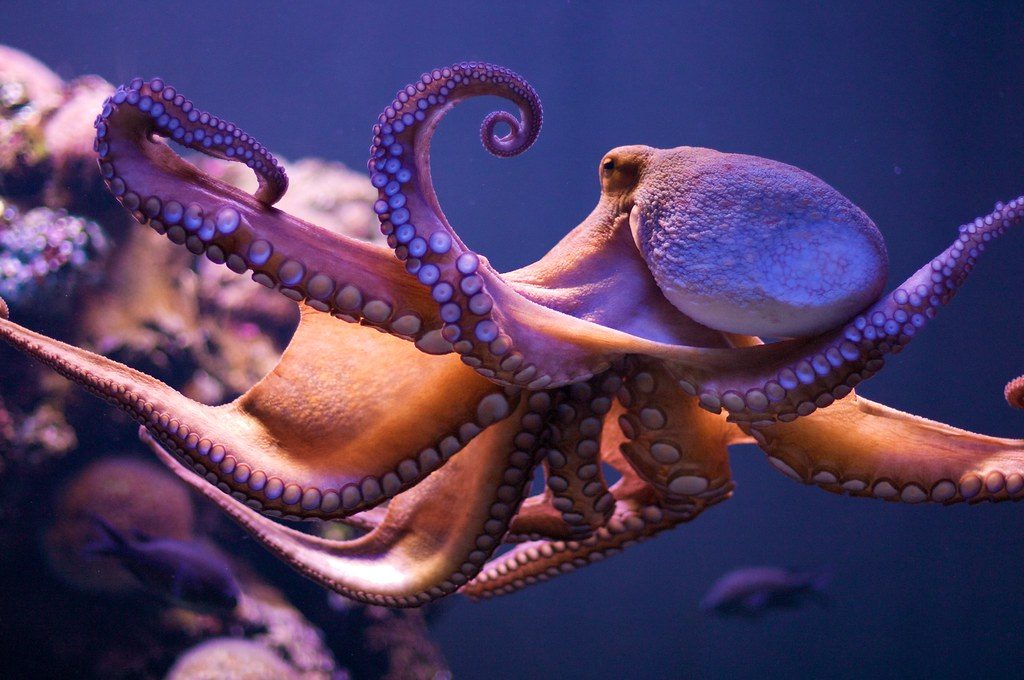
An octopus does not always release its ink as a simple expanding cloud. In some situations, ink and mucus can form thicker shapes that temporarily remain together in the water.
These formations are sometimes called pseudomorphs because they can resemble the size and general shape of the animal that released them. A predator may focus on the dark object while the real octopus moves in another direction.
The ink can affect more than vision
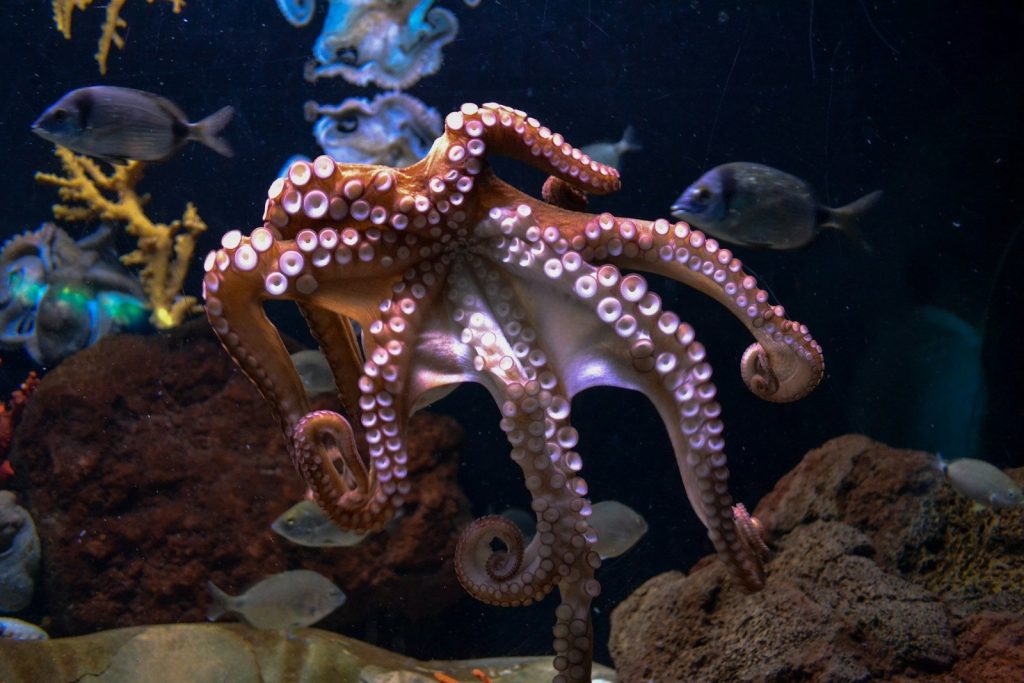
Octopus ink is more complicated than dark pigment mixed with water. Research has identified substances, including melanin and the enzyme tyrosinase, in cephalopod ink.
Smithsonian reports that these chemicals can interfere with a predator’s senses, including smell and taste. That means an ink release can potentially create both a visual distraction and an additional sensory obstacle during an escape.
Octopuses can disappear without using ink
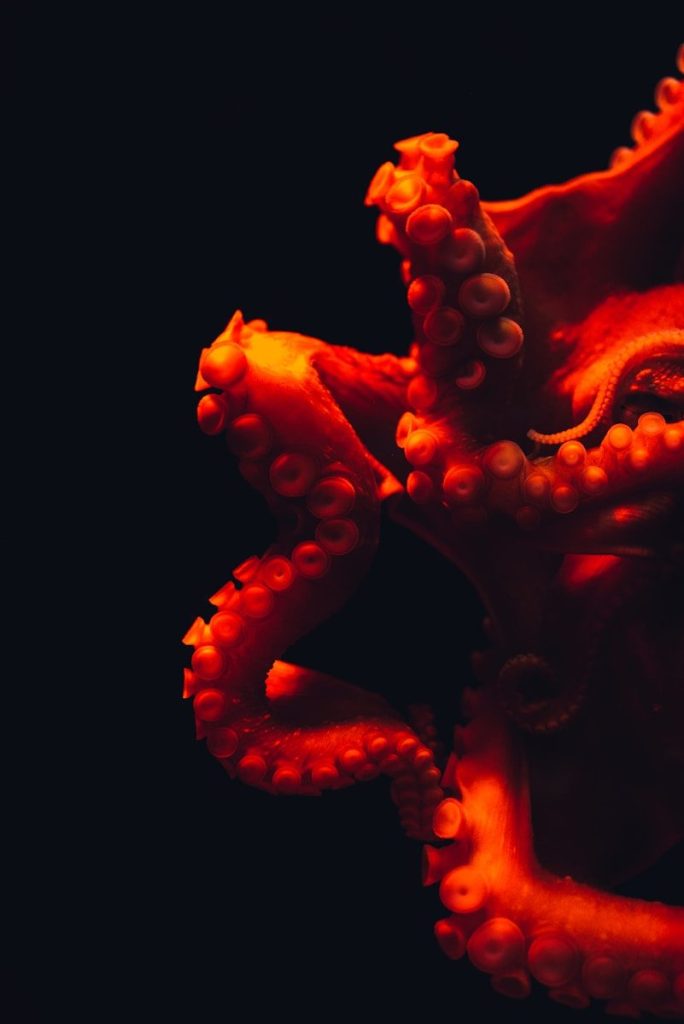
Before releasing ink, an octopus can rely on its extraordinary camouflage. Thousands of pigment-containing structures called chromatophores allow many species to rapidly change the visible colors and patterns across their skin.
Some species can also change the texture of their skin using muscular structures called papillae. By combining color, pattern, and texture, an octopus can closely resemble rocks, coral, algae, and other parts of its surroundings.
A flexible body provides another escape route
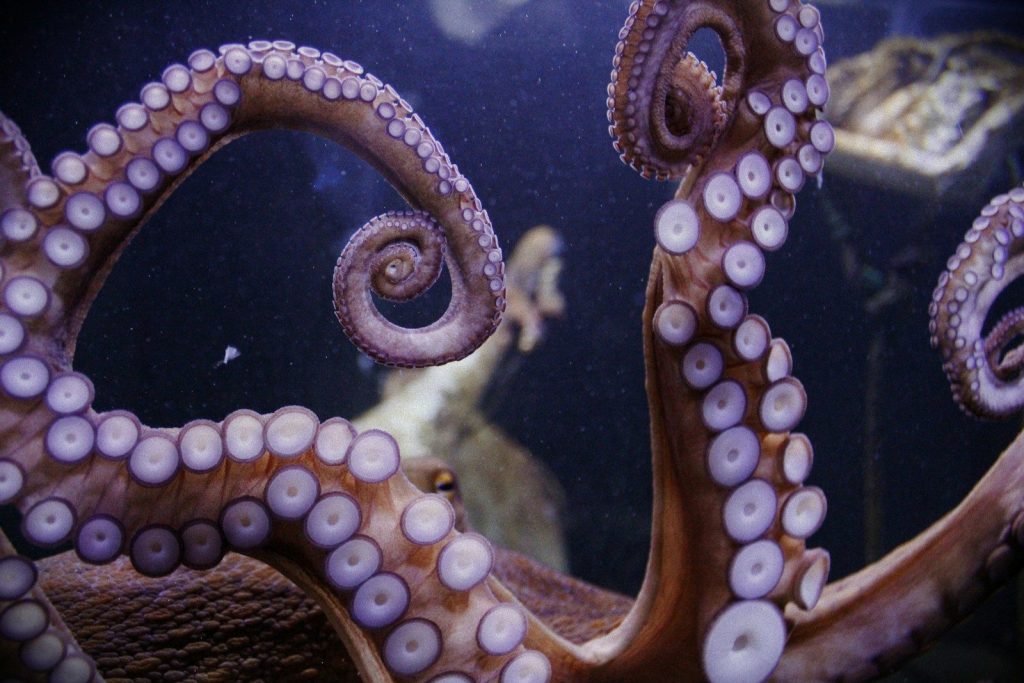
Octopuses have no rigid internal skeleton. Their hard beak is one of the main solid structures limiting the size of an opening through which their soft bodies can pass.
This allows an octopus to retreat into narrow cracks and crevices that many predators cannot enter. The same flexibility also gives its eight arms an enormous range of movement for crawling, exploring, and manipulating objects.
Their nervous system controls remarkable movements

An octopus needs sophisticated control to coordinate eight highly flexible arms while simultaneously processing information from its environment. Its nervous system is unusually distributed, with a large proportion of its neurons associated with its arms.
The arms contain extensive neural networks that help process sensory information and coordinate movement. This unusual arrangement contributes to the octopus’s ability to explore objects, manipulate its surroundings, and respond rapidly when danger appears.
Ink is one part of a larger defense system
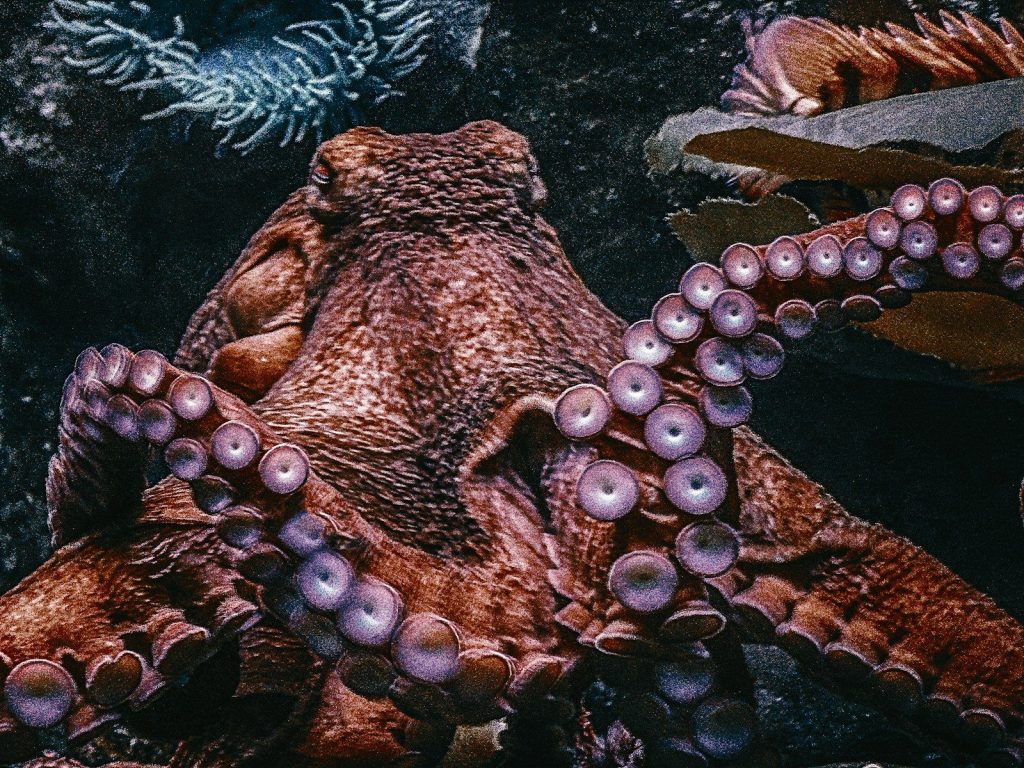
Ink alone does not explain why octopuses are so effective at escaping predators. Their survival depends on several defenses working together, including camouflage, flexible movement, rapid escape responses, and the ability to hide inside confined spaces.
When those defenses are combined, an approaching predator can face a difficult target. An octopus that was visible moments earlier can change its appearance, release a cloud of ink, and move away, leaving the predator searching through darkened water for an animal that has already escaped.
Featured Image: Photo by Kostas Morfiris on Unsplash
Leave a Reply