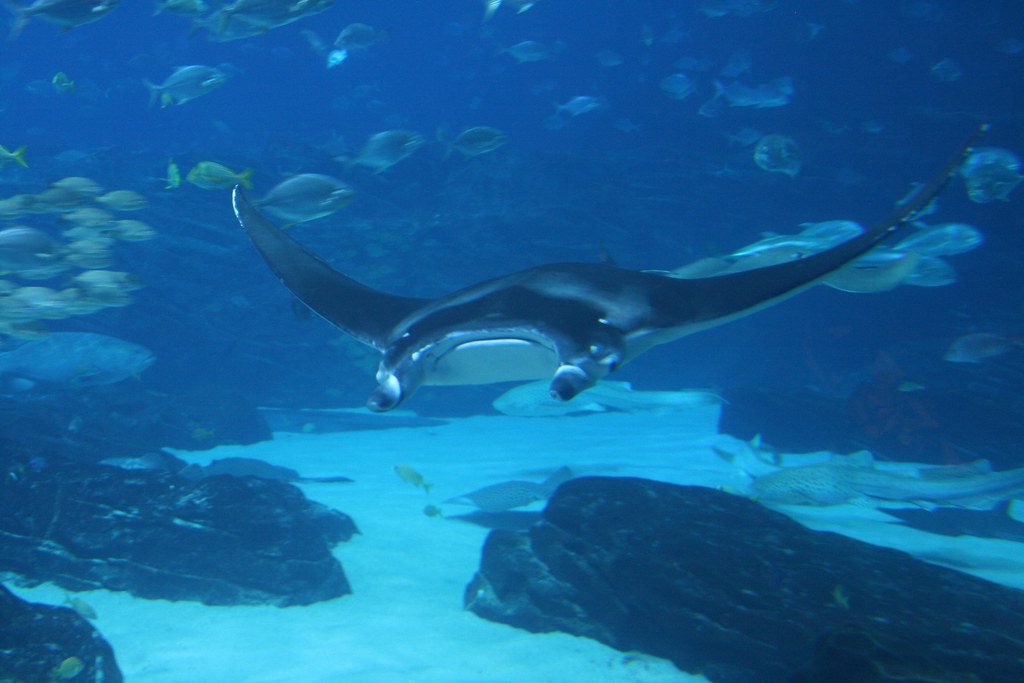
Imagine an animal wider than a car suddenly launching its entire body above the ocean. The giant manta ray can create an incredible sight when it breaks through the surface, but its life below the water may be even more remarkable. Giant manta rays are the largest living rays and can reach about 26 feet across. They travel through coastal and open ocean waters, dive to great depths, and feed on tiny animals despite their enormous size.
Scientists have also recorded rapid changes in their skin markings and unusual behavior around mirrors. Yet many questions remain about these ocean giants, making every new observation another piece of a much larger puzzle.
Giant manta rays can reach enormous sizes
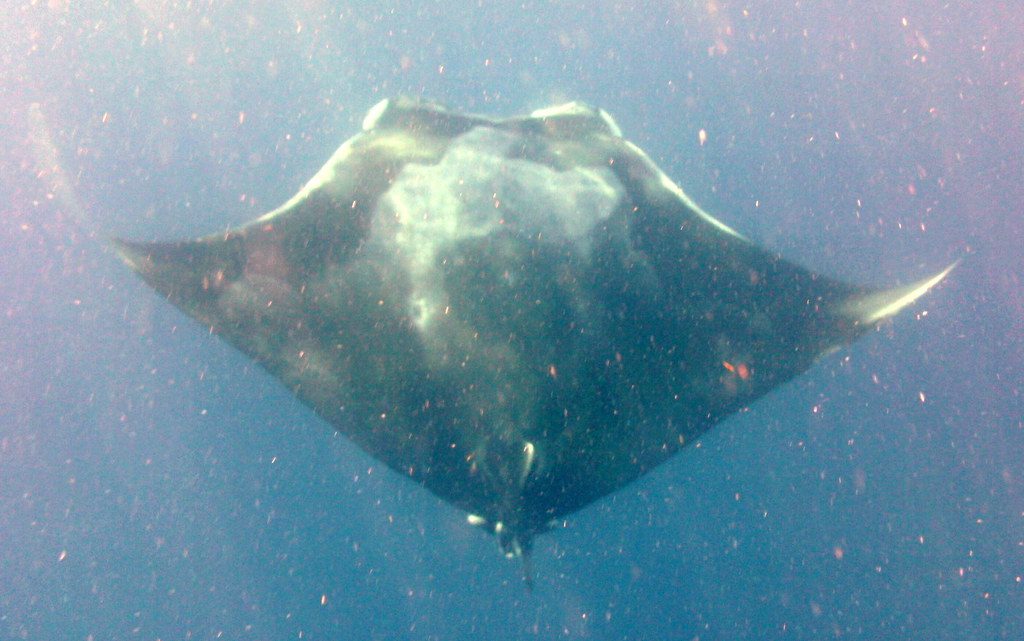
The giant manta ray is the largest living ray species. NOAA reports a maximum disc width of about 26 feet, or 8 meters, with some unconfirmed reports suggesting even larger animals. Their size is measured across the broad body from one winglike fin to the other. A giant manta can therefore create an impressive shape underwater, even though its body is relatively flat compared with many other large marine animals.
Their huge size can make them look threatening, but giant manta rays are not built to hunt large animals. Their feeding strategy is almost the opposite. They swim through water while using their specialized head fins to help direct water and prey toward the mouth. Water passes across structures around the gills that help the manta collect tiny food. Their enormous bodies are therefore supported by feeding on much smaller organisms rather than attacking large prey.
Giant mantas can disappear into deep water
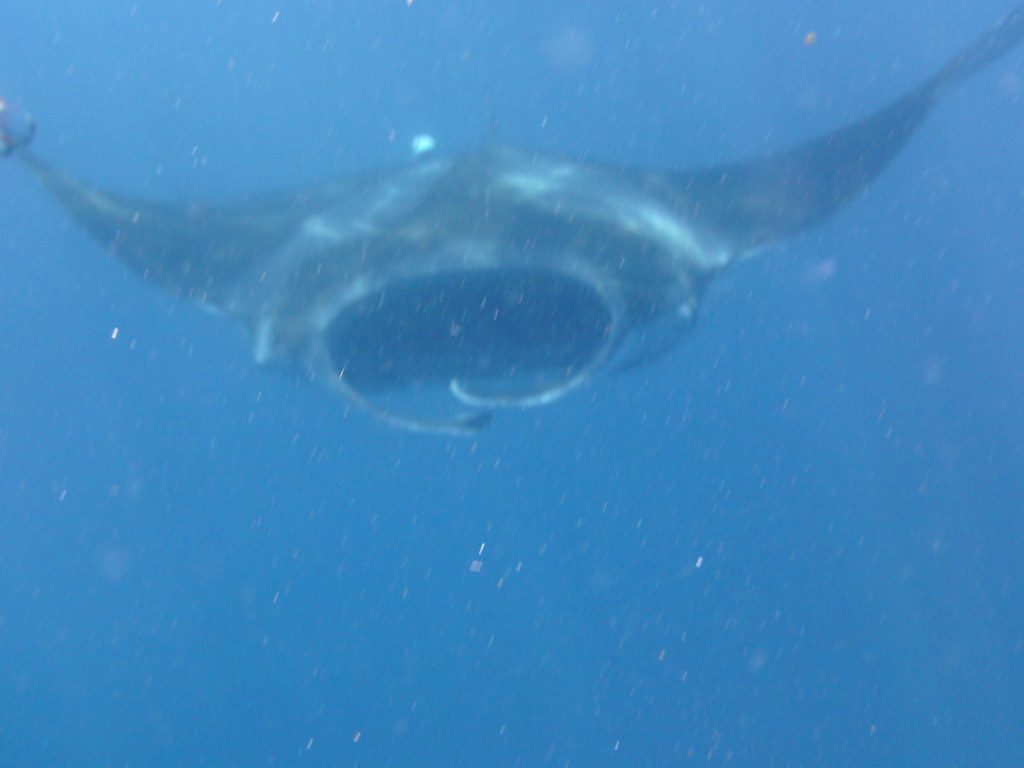
A giant manta swimming near the surface may only be showing a small part of its normal range. NOAA says these rays display great variation in the depths they use. During some feeding events, groups may gather in shallow water less than 10 meters deep. At other times, tagged manta rays have traveled hundreds of meters beneath the surface and have been recorded diving beyond 1,000 meters.
Scientists have used tags to learn more about these movements because directly following a manta into deep water is extremely difficult. Research on tagged giant manta rays has also provided evidence that they can forage at depth rather than simply traveling through deep water. Their movements may change with the seasons and with the location of prey. This ability allows a giant manta to move between bright surface waters and a dark ocean environment far below.
Their feeding behavior can be surprisingly complex
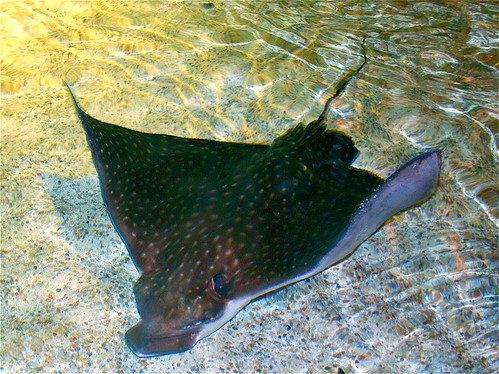
Giant manta rays do more than simply swim forward with their mouths open. NOAA describes several feeding methods used by the animals. One is barrel rolling, in which a manta repeatedly turns through the water while feeding. Mantas can also form feeding chains with other individuals. These behaviors help them take advantage of areas where large amounts of suitable prey have gathered.
Their head fins also play an important role. When feeding, mantas can position these fins so they help funnel water and food toward their mouths. The water then passes across the gill plates while food is collected. This feeding system explains one of the strangest things about the giant manta ray. An animal that can measure several meters across survives as a filter feeder rather than depending on large prey. Size and hunting power are not always connected in the ocean.
Manta rays can rapidly change their markings
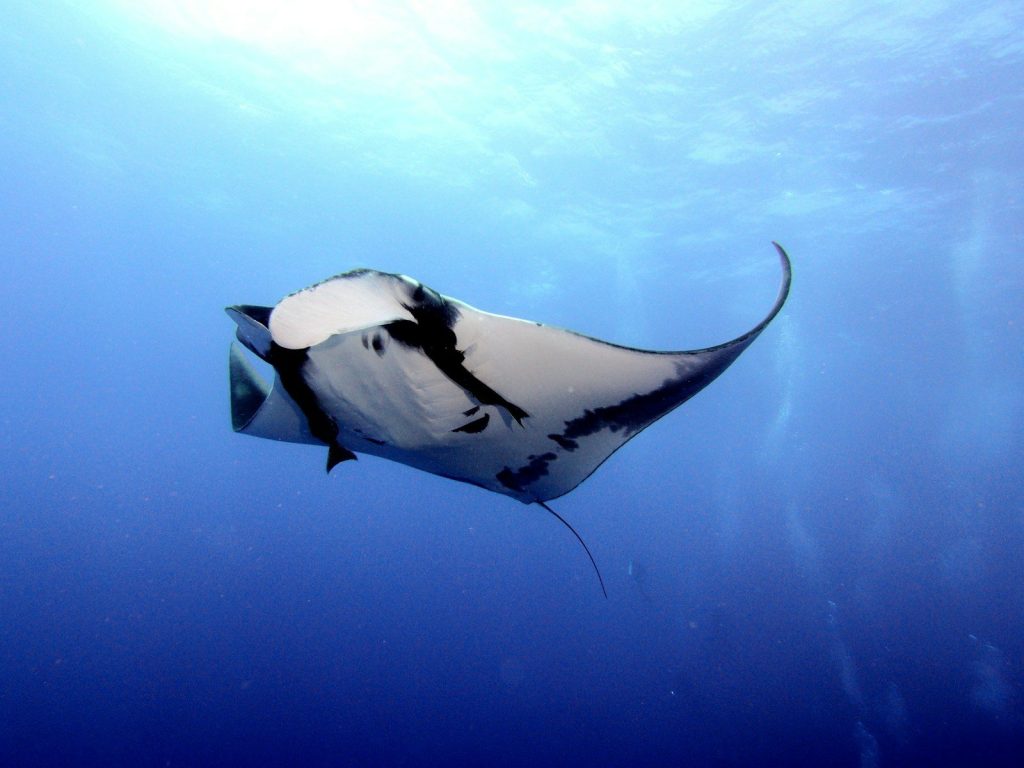
Scientists have also observed manta rays making rapid changes in their appearance. Research highlighted by Nature described observations of five manta rays in which white markings appeared and disappeared within only a few minutes. The changes occurred on areas including the back, fins, and head. Two of the animals involved in those observations were giant manta rays.
The reason for these changes remains less certain. Researchers noticed that they appeared around feeding and interactions with other manta rays, raising the possibility that the changes may play some role in communication. That possibility is fascinating because manta rays also have structured social lives. Research on reef manta rays has found social affiliations that can persist for weeks or months. Scientists are still working to understand what visual changes and social behavior may mean to the animals themselves.
The mirror experiment raised new questions
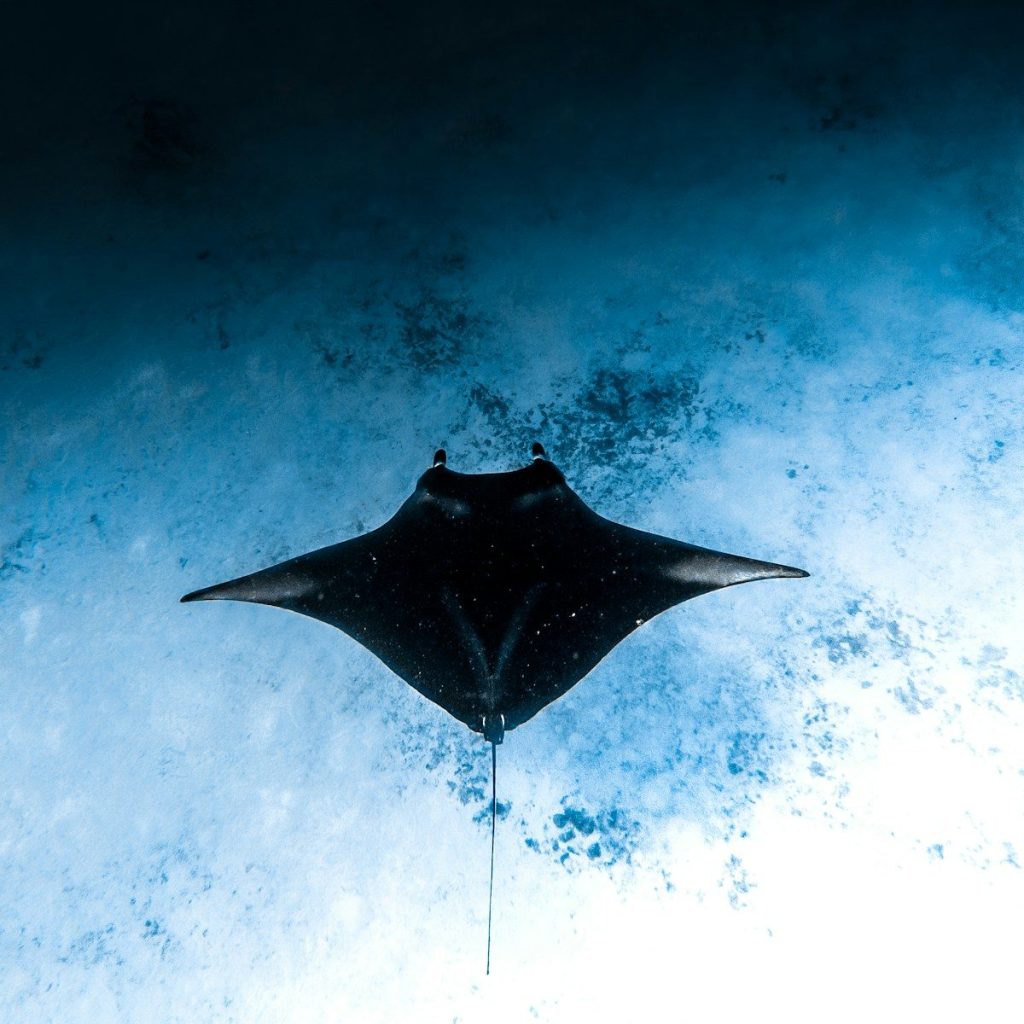
One of the most interesting manta experiments involved mirrors. Researchers placed mirrors in front of two captive giant manta rays and watched how the animals responded. The mantas did not simply behave toward their reflections as though another manta were present. Instead, researchers observed repeated unusual movements and behaviors that they interpreted as possible contingency checking. This happens when an animal appears to test whether movements seen in a reflection match its own movements.
However, saying that manta rays have proven they can recognize themselves goes beyond the evidence. The original researchers described the behaviors as prerequisites associated with self-awareness rather than definitive proof. Other manta researchers later argued that some of the observed actions could instead represent normal social behaviors. The experiment, therefore, produced an intriguing scientific question rather than a final answer. Mantas may possess impressive cognitive abilities, but their level of self-awareness remains unsettled.
Scientists still have much to discover
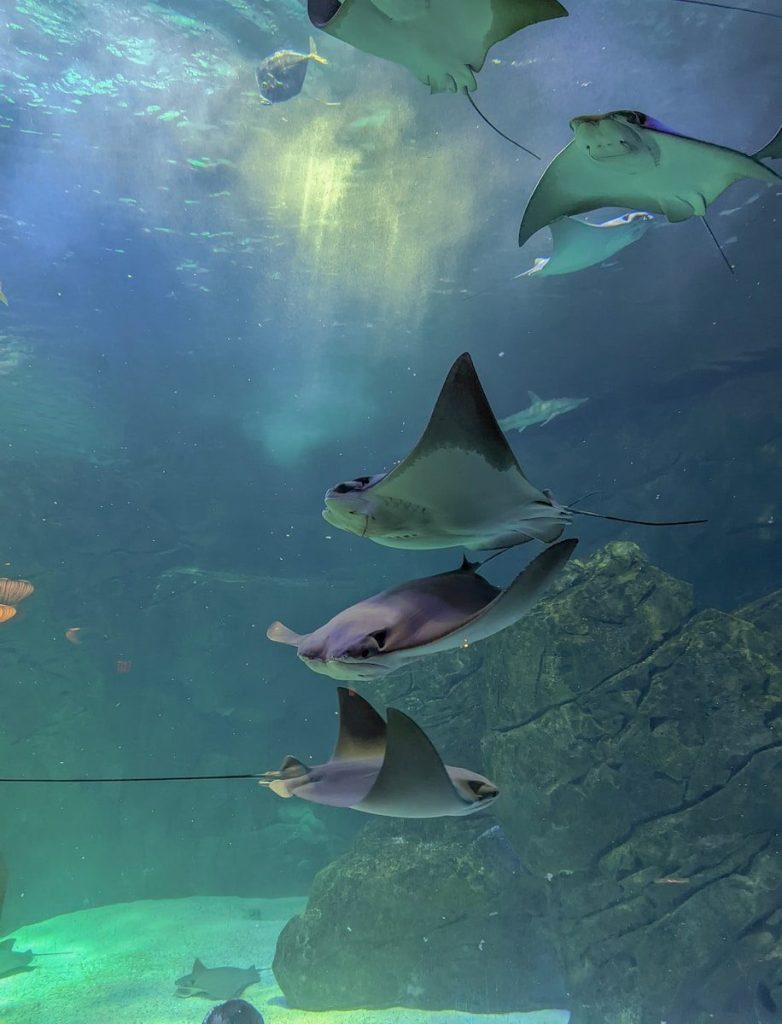
Giant manta rays demonstrate how little people still know about some of the largest animals in the ocean. Researchers know that these rays can travel between shallow and very deep water, use several feeding strategies, and respond to their surroundings in complex ways. Their behavior around other mantas and their unusual responses to mirrors have also opened new questions about how they process information and experience their environment.
Even something as dramatic as a manta launching above the surface can leave questions behind. A spectacular leap makes great footage, but researchers must be careful about assigning a purpose to a behavior without enough evidence. That same caution applies to claims about intelligence and self-recognition. What scientists have already documented is remarkable without exaggeration. Giant manta rays combine enormous size, deep diving ability, unusual feeding behavior, social interactions, and a complex brain in an animal that remains surprisingly difficult to fully understand.
Featured Image: “Giant Manta Ray” by Wendell Reed is licensed under CC BY-NC-SA 2.0
Leave a Reply